Cleaning Guides · 5 min read · 18 March 2026
How to Get Rid of Mould on Bathroom Ceilings and Walls (For Good)
Those black speckles above your shower are the most common callout complaint we see all winter. Here is the exact kit, method and prevention routine we use — and when to stop scrubbing and worry.
By the Nims Casa editorial team — written from professional cleaning experience and checked against our editorial standards.
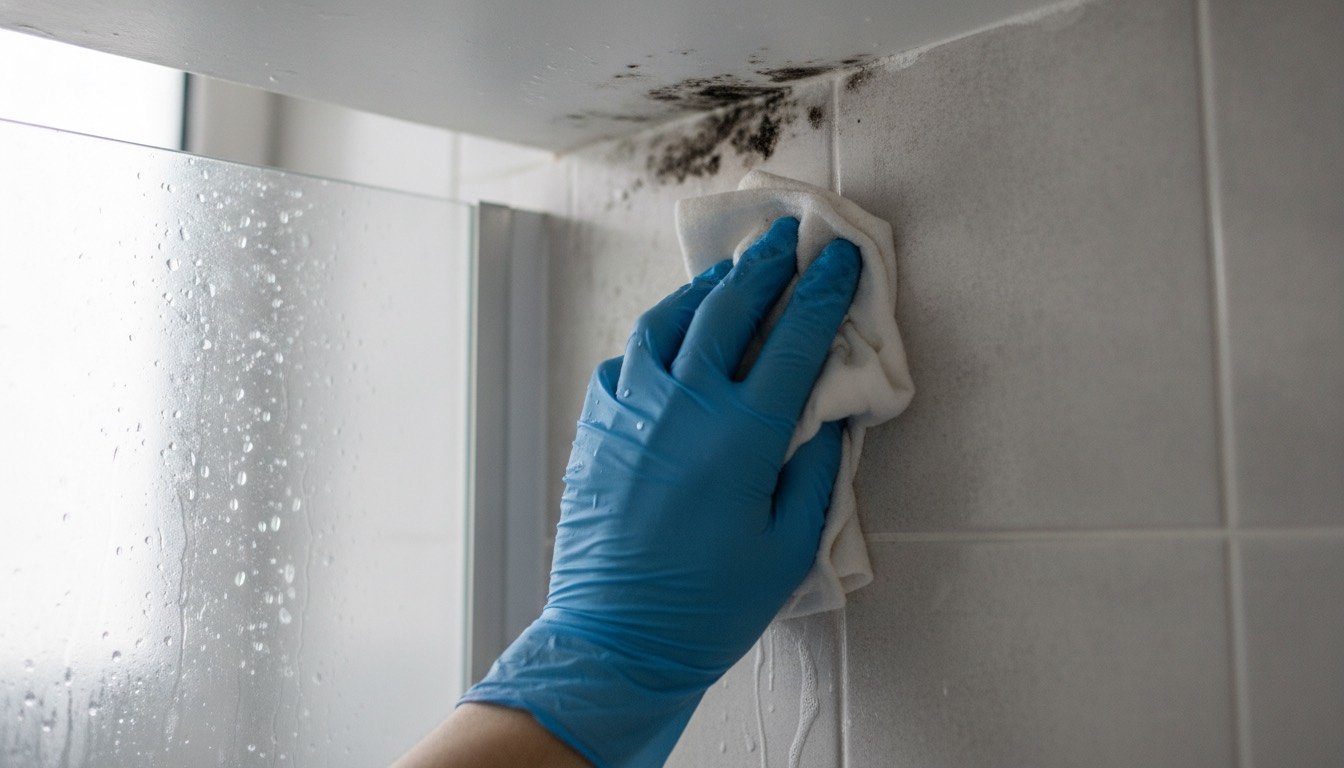
Every British bathroom grows mould eventually — it is the one room steamed to 100% humidity twice a day, and the ceiling is the coldest surface all that warm, wet air touches. Condensation forms and sits; within a fortnight in winter you have grey speckles, and a season later, black colonies rooted into the paint. We treat dozens of these every year, and 90% of cases are a 45-minute job with about £10 of kit.
The bad news: killing what is there is the easy half. Change nothing about the room's moisture and it is back within six to eight weeks. So this guide covers both halves: removal today, prevention permanently.
Mould or mildew? A 30-second diagnosis
Mildew is the early, surface-level stage: powdery grey or white patches, sitting flat, wiping off with almost anything. Mould is what mildew becomes when left — black or dark green spots with roots in the paint film, plaster, grout or silicone. Mildew is a wipe; mould is a treatment.
Quick test: dab a spot with a drop of household bleach on a cotton bud. If it lightens within two minutes, it is organic growth and treatable. If nothing changes, you are likely looking at a leak mark — moisture from somewhere other than everyday steam — and our damp and mould diagnosis guide will help you identify condensation, penetrating or rising damp before you spend anything. Renting? Mould that traces back to the building itself is the landlord's job to fix, on the timescales in our landlord repair deadlines guide.
The kit — roughly £10 to £15 all in
Skip the miracle gadgets. This is everything we carry for a standard bathroom mould job:
- •A sodium hypochlorite mould remover spray — HG Mould Spray (around £6 at Sainsbury's or Screwfix) or Astonish Mould & Mildew Blaster (about £1.50 at Home Bargains and B&M). Both outperform vinegar on established mould by a distance; vinegar is fine for fortnightly maintenance wipes, not for black colonies.
- •Rubber gloves, and goggles — non-negotiable for ceiling work, because whatever you apply overhead will drip.
- •An FFP2 or FFP3 mask (£2–£4 from any DIY shed). Disturbed mould launches spores; you do not want them in your lungs.
- •Two or three microfibre cloths you are willing to bin afterwards, plus a bin bag.
- •A stable step stool or ladder, and an old towel or dust sheet over the bath, basin and floor.
Step by step: ceilings first
Ceilings need one change from every product label: never spray upwards, or atomised bleach solution drifts straight back into your face. Instead:
- •Open the window, shut the bathroom door, and keep children and pets out for the duration plus an hour.
- •Put on gloves, goggles and mask before you open the bottle.
- •Spray the mould remover generously onto a folded microfibre cloth — not the ceiling — and press it onto the affected area. For larger patches, a sponge on a pole works.
- •Leave the product to work for 15–30 minutes (check the label; HG says 30). The chemistry does the killing, not your elbow.
- •Wipe off with the same cloth, turning to a clean face as you go. Never dry-brush mould — that is how you seed the whole room with spores.
- •Stubborn black spots: re-apply and wait again. Two gentle passes beat one paint-stripping scrub.
- •Finish with a clean, water-damp cloth to rinse residue, then leave the window open until the ceiling is bone dry.
- •Tie all cloths into the bin bag and bin them. They are not worth laundering.
Walls, grout and sealant
Painted walls get the same cloth-application treatment as ceilings. Tiled walls are easier — spray directly, as the mould usually lives in the grout lines rather than the glaze. If grout stays shadowy after treatment, that is residual staining in the porous surface; our grout cleaning method lifts most of it with an oxygen bleach paste.
Silicone sealant is the special case. Mould roots deep into silicone, so surface spraying only lightens it. Soak strips of kitchen towel in mould remover, pack them along the sealant bead, and leave for three to four hours. If black marks survive that, the silicone is finished — cutting it out and re-running the sealant takes under an hour and costs about £7 for a tube of anti-fungal sanitary silicone.
A word on black mould — and when to stop DIY-ing
"Black mould" gets used loosely; most dark bathroom mould is common Cladosporium or Aspergillus rather than the notorious Stachybotrys. You do not need a lab report, just sensible thresholds: if the affected area is bigger than roughly one square metre, if it returns within weeks despite good ventilation, if the plaster underneath stays damp to the touch, or if anyone in the house has asthma or another respiratory condition, stop and get professional help rather than repeatedly disturbing it.
Renters: persistent damp and mould is your landlord's problem to fix, not yours to bleach every month. Since Awaab's Law came into force in late 2025, social landlords must investigate and fix damp and mould hazards within strict timescales, and the protections are being extended to the private sector — photograph everything, report it in writing, and keep copies. And once the underlying moisture is sorted, remember that soft furnishings in a mouldy room hold spores and that musty smell; a professional deep clean of the affected rooms is the proper reset.
Stopping it coming back: the part most people skip
Mould needs moisture sitting on a cold surface for around 24 hours to establish. Break that cycle and it cannot return, whatever spores are floating about:
- •Run the extractor fan during every shower and for 15 minutes after. If yours is feeble or absent, a humidistat fan (£40–£80 plus fitting) is the single best upgrade a mouldy bathroom can get.
- •Squeegee or window-vac the tiles and screen after showering — 60 seconds, removing litres of water per week at source.
- •Keep the bathroom door closed while showering and for 20 minutes after, window cracked open if you have one. Venting steam into a cold landing just moves the problem.
- •Do not dry laundry in the bathroom with the door shut and fan off — if indoor drying is unavoidable, do it properly with our guide to drying clothes indoors without damp.
- •In persistently damp bathrooms, a small compressor dehumidifier run for an hour after showers holds the room below the 60% humidity mould needs.
- •Once the ceiling is clean and fully dry, repaint with a proper anti-mould bathroom paint (Dulux Easycare Bathroom or similar, about £22 for 2.5L) — the fungicide in the film buys you years, not weeks. Our round-up of the best anti-mould paints compares the options.
The honest summary
One £6 bottle, 45 careful minutes with the right protection, then a two-minute daily habit with a squeegee and a fan: that is the whole answer for the vast majority of bathroom mould in UK homes. Treat the growth, then starve it of moisture — do only the first half and we will see you again in spring.
Found this useful?
There's plenty more — hundreds of guides and honestly-tested product reviews for every corner of your home.
Browse All Guides