Roofing & Exterior · 6 min read · 3 May 2026
How to Fix a Leaking Gutter (UK Parts, Prices and When to Stop)
Most gutter leaks are a £6 part and forty minutes of work. The catch is that the part sits four metres up, and nine out of ten failed repairs fail because of what happened before the sealant came out.
By the Nims Casa editorial team — written from professional cleaning experience and checked against our editorial standards.
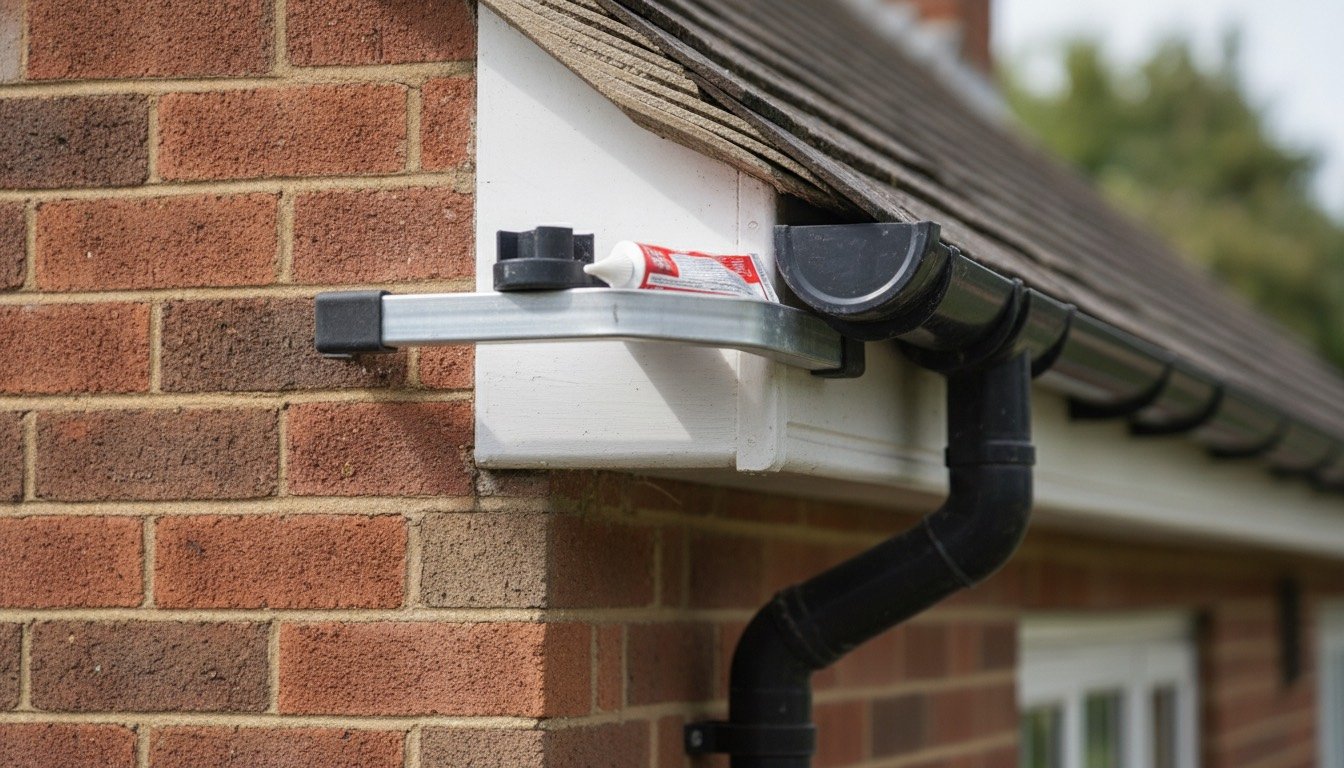
Most gutter leaks come down to a £6 part and forty minutes of work. The catch is that the part sits four metres above a concrete path, and the difference between a repair that lasts fifteen years and one that fails by November is all in the preparation done before the sealant leaves the tube.
We have stripped off sound guttering because a homeowner was told from the pavement that the whole run was shot, and seen a bedroom wall ruined across two winters by one dripping joint nobody could reach. Here is the diagnosis, the repair and honest numbers.
Safety First: The Ladder Is More Dangerous Than the Gutter
Gutter work puts you side-on at the top of a ladder with both hands busy, which causes more serious DIY injuries in the UK than any power tool.
- •Pitch the ladder at 75 degrees, one metre out for every four up, on a board if the ground is soft.
- •Never rest the ladder on the guttering. A stand-off (£25-£45 at Screwfix) holds you clear of the fascia.
- •Keep your belt buckle between the stiles. A 4m run needs three repositionings, not one long lean.
- •Above single-storey eaves, or for anything needing two hands, hire an alloy tower: £70-£120 a week.
- •Before raising an aluminium ladder, check where the overhead electricity cable lands — on older terraces it arrives at the eaves.
- •Grey cement guttering on a pre-2000 garage may be asbestos cement: do not cut, drill or pressure-wash it.
- •Cast iron is heavy — 15kg for a 1.8m length — so it is a two-person job from a tower.
Tools and Materials, With Real Prices
Nine out of ten uPVC leaks are one of three faults: a perished EPDM seal in a union bracket, a hairline split, or a run dropped out of level so water stands and creeps over a joint.
- •Union bracket with new EPDM seal, £3-£6. Photograph the profile first — half-round, square-line and ogee are not interchangeable.
- •Fascia brackets, £1.50-£3 each, fixed at 800mm centres and tightened to 600mm on exposed elevations.
- •Gutter and downpipe: £7-£11 for 2m of half-round, £9-£14 for 2.5m of 68mm downpipe.
- •MS polymer sealant such as CT1, £8-£14 a tube. Bathroom silicone will not bond to cold, damp uPVC.
- •Butyl gutter repair tape, 100mm x 5m, £15-£25, for splits longer than 100mm.
- •Filling knife, water-pump pliers, 120-grit abrasive, methylated spirits, rags, a hose and a bucket.
- •Washing-up liquid as a seal lubricant — never petroleum jelly, which destroys EPDM.
Realistic Time and Cost, and Where the Money Goes
Allow 30-45 minutes to reseal one union joint once the ladder is set, 45 minutes plus cure time for a hairline split, and up to 2.5 hours to re-hang a 4m run. A ladder and stand-off is £120-£220, so buy once — our ladder buying guide covers what lasts.
Paid, a handyman is £30-£45 an hour and a two-man roofing firm £200-£300 a day, £280-£380 in London and the South East. Minimum charges of £70-£120 are why a fifteen-minute repair never costs fifteen minutes of money.
Watch where the money goes. A £120 joint repair contains £6-£10 of materials; the rest is access and risk, which is why small jobs look dear. On a full replacement expect roughly 30-35% materials to 65-70% labour, with scaffolding the swing factor at £400-£900 per two-storey elevation — added to a bungalow job, that is padding. Our gutter installation cost guide breaks replacement down by property type.
- •Reseal or replace one leaking union joint, ladder access: £80-£150
- •Replace a damaged 3-4m section, single storey: £130-£240
- •Re-hang a full run, correct the fall, new brackets: £200-£400
- •Clear a blocked downpipe and the gulley beneath: £70-£140
- •Full uPVC replacement, three-bed semi at 25-35 linear metres: £900-£1,800
- •Cast iron replacement on a period property: £3,500-£9,000
The Repair, Step by Step
- •1. Find the real leak, not the wet patch. Run a hose in two metres upstream while someone watches from below: water tracks along the underside of uPVC, so the drip shows 300-600mm downhill of the fault.
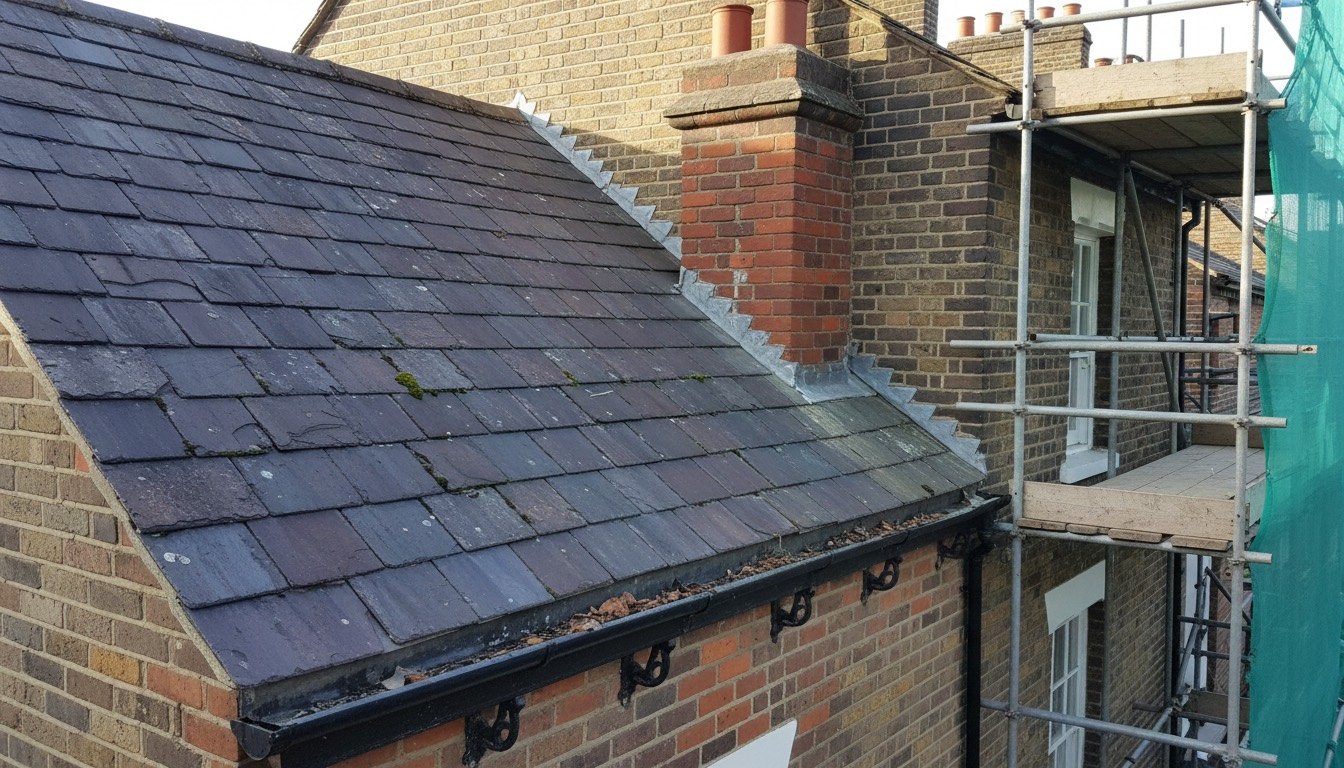
- •2. Clear the run first, because a gutter holding silt weeps at every joint; our safe gutter cleaning method avoids wrecking the brackets.
- •3. Check the fall with a string line: 3mm of drop per metre to the outlet. Standing water over 5mm deep means the brackets are at fault, not the seal.
- •4. Squeeze the gutter sides inward, release the clip, lift the section out and peel out the old seal. Check the bracket body for cracks while it is down.
- •5. Scrape the seal channel, abrade both gutter ends with 120-grit and wipe with meths. Dirty surfaces cause most repairs that fail inside a year.
- •6. Fit the new seal dry, smear washing-up liquid across it and clip the gutter back against the moulded stops, leaving the marked expansion gap. uPVC moves about 1mm per metre a year; butted tight, it splits.
- •7. For a hairline crack work from inside: dry, abrade, degrease, then lay a 3mm bead of MS polymer 25mm either side, tooled flat with a wet finger. Butyl tape anything over 100mm.
- •8. Test it: plug the outlet with a rag, fill the run, pull the rag and watch every joint for three minutes, checking behind for water tracking down the fascia.
Troubleshooting When the Repair Does Not Hold
- •Still dripping after resealing: contamination, or the wrong product. Bathroom silicone on damp uPVC peels away in one strip within a season.
- •Overshooting at one spot in heavy rain: the roofing felt has sagged into the gutter or stops short of it. An eaves protector tray, £4-£7, prevents the damp patch that shows at the top of an upstairs wall.
- •Downpipe weeping at the swan-neck only in downpours: those joints are push-fit by design, so the real fault is a partial blockage lower down.
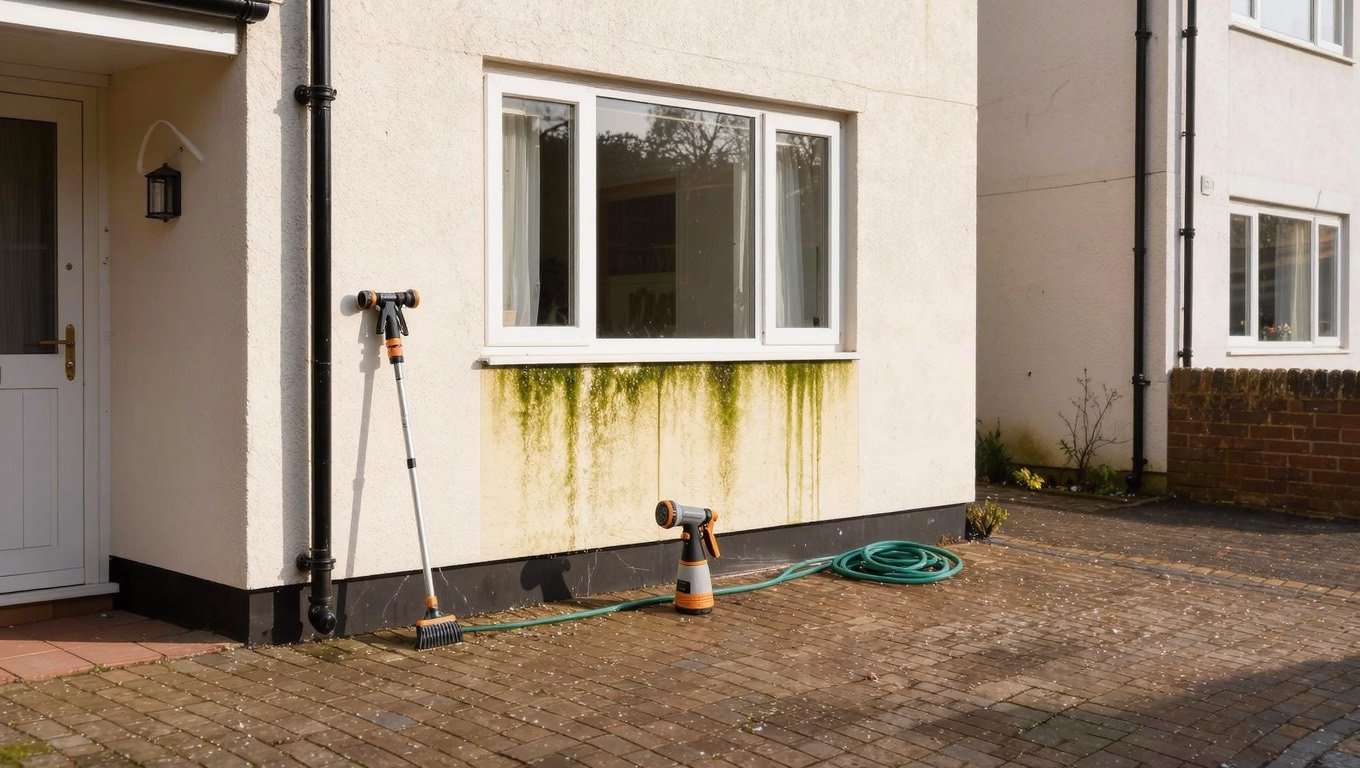
- •Green staining down the wall: chronic slow overflow that saturates brickwork and eventually appears indoors — see our damp and mould guide.
- •Gulley backing up in every downpour: the gutter is fine, the ground drainage is not. Improving garden drainage is the actual fix.
When to Stop, and What a Fair Quote Looks Like
Stop and pay someone if the gutter is two storeys up, sits above a conservatory roof, is cast iron, or runs behind a parapet or into a valley. If the fascia behind it is soft, that is joinery, not drainage.
Get two quotes over £400 and compare what each says is wrong, not just the totals. If both land on replacement, ask which failure they saw: perished ogee joints, sun-degraded plastic, rusted cast iron ears. Signs your gutters need replacing sets out what genuine end-of-life guttering looks like.
- •Good sign: a written quote naming profile and material, with labour, materials and access listed separately.
- •Good sign: a firm willing to do the £110 joint repair, and photographs of the defect taken from the ladder before work is agreed.
- •Warning sign: a price quoted from the pavement, or a cold-caller conveniently working on a roof nearby — most UK doorstep gutter scams open that way.
- •Warning sign: scaffolding priced into a bungalow, cash only, or a large deposit before anything is ordered.
Found this useful?
There's plenty more — hundreds of guides and honestly-tested product reviews for every corner of your home.
Browse All Guides