Roofing & Exterior · 6 min read · 6 May 2026
Signs Your Gutters Need Replacing (And When a Repair Will Do)
Most overflowing gutters are simply blocked. But there is a point where cleaning stops working and you are paying to prop up a system that has already failed. Here is how to tell the difference.
By the Nims Casa editorial team — written from professional cleaning experience and checked against our editorial standards.
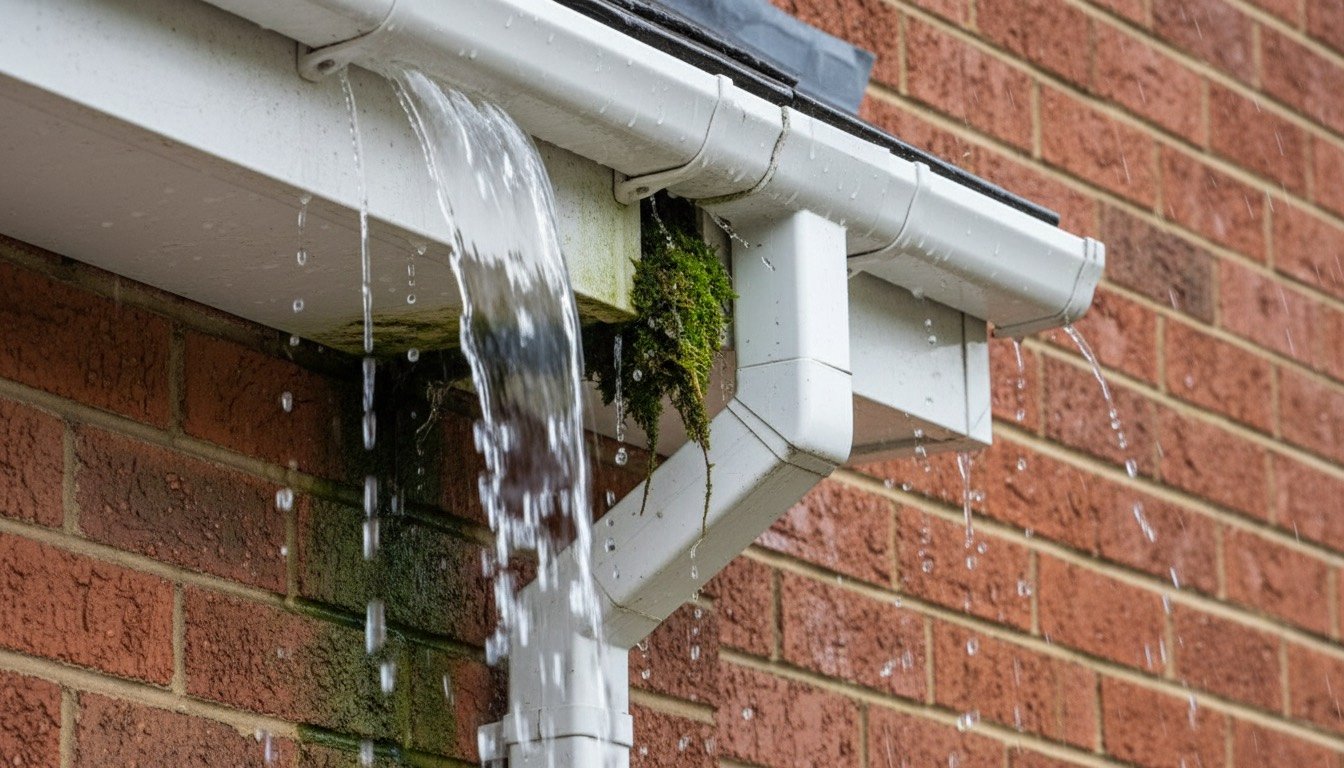
Nine times out of ten, a gutter that spills water is simply full of moss and sycamore seeds. The tenth time it has failed structurally, and no amount of scooping will fix it. The trick is knowing which you have before spending £120 a year cleaning a run that needs pulling down.
The honest test is not how a gutter looks on a dry Sunday. It is what it does in rain, and what it feels like when you touch it.
The 10-Minute Wet-Weather Diagnosis
Wait for steady rain rather than a downpour, which overwhelms even a healthy gutter and tells you nothing. Watch from across the road, then check again on a dry day with a phone camera on full zoom: a sound run looks dead straight, falling about 1 mm per metre towards the downpipe.
- •Sheeting over the front lip along a whole section — blockage or lost fall. Usually fixable.
- •Dripping from the back, against the wall — a failed seal or a run tipped backwards. This is the one that causes damp.
- •Drips from one joint only — a single perished union seal, a £4 part.
- •Overflowing while nothing leaves the downpipe — a blockage at the outlet.
- •Water pooling at the foot of the downpipe — that is the gully, not the gutter.
- •A visible sag, or standing water a day after rain stops — the supports or the gutter have given up.
Symptom to Cause: What Each Sign Means
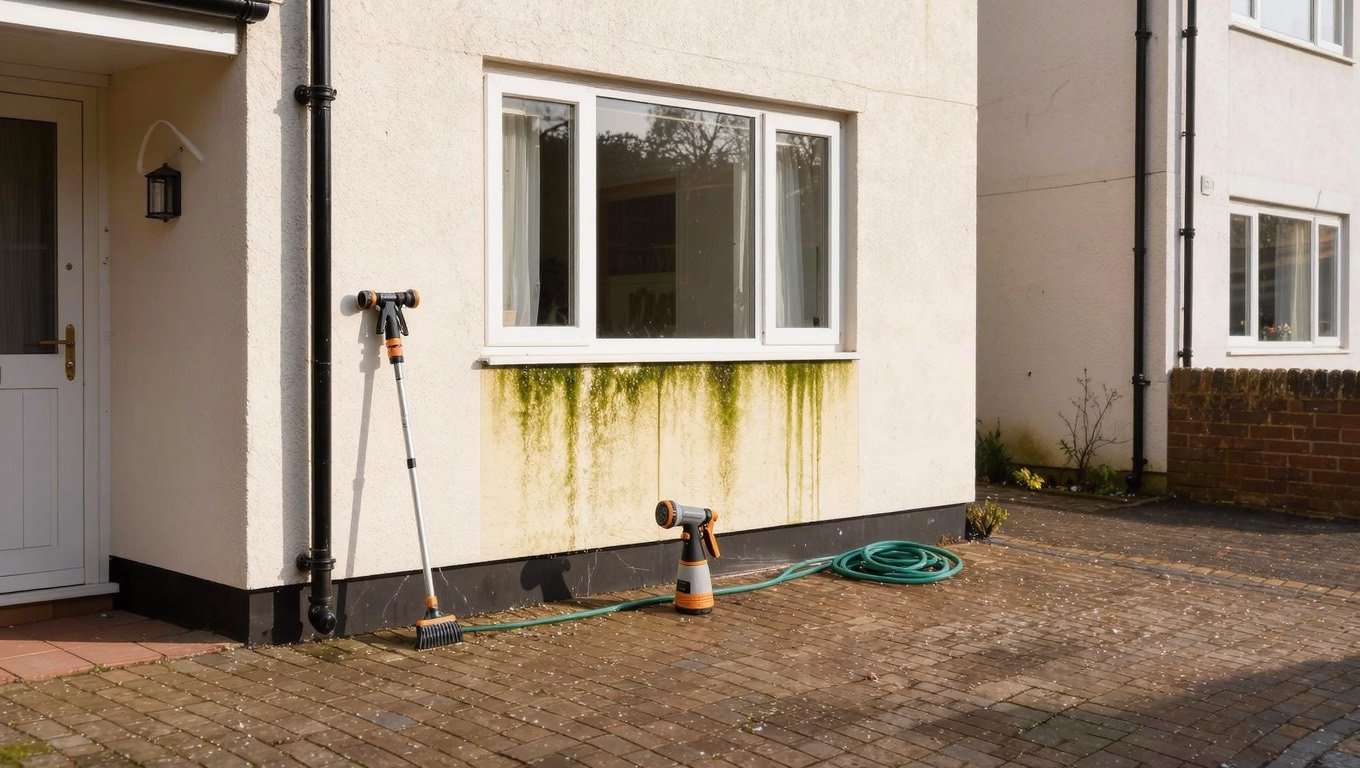
The symptoms that matter most are on the wall, not in the gutter. A green algae stripe down brickwork means water has run down that wall for two seasons or more, which is when it pushes through to the inside face — a hidden cause of patches usually blamed on rising damp or condensation.
- •Chalky white residue on your fingers after touching uPVC — UV degradation, typically at 18–25 years and worse on south-facing elevations. It will crack again beside any repair.
- •Hairline cracks radiating from clips or joints — freeze-thaw damage from water standing through a cold snap.
- •Rust blisters on cast iron — surface rust is paintable; holes you can push a screwdriver through are not.
- •Peeling paint or spongy fascia timber — a new gutter alone will not hold, because the brackets have nothing solid to bite into.
- •A damp patch high on an upstairs internal wall — very often gutter rather than roof.
The Most Likely Causes, In Order
On a typical UK semi the split is roughly 60% blockage, 20% brackets and fall, 15% seals, and only 5% a genuinely dead gutter. Clear the debris first — you cannot judge a fall on a gutter full of silt.
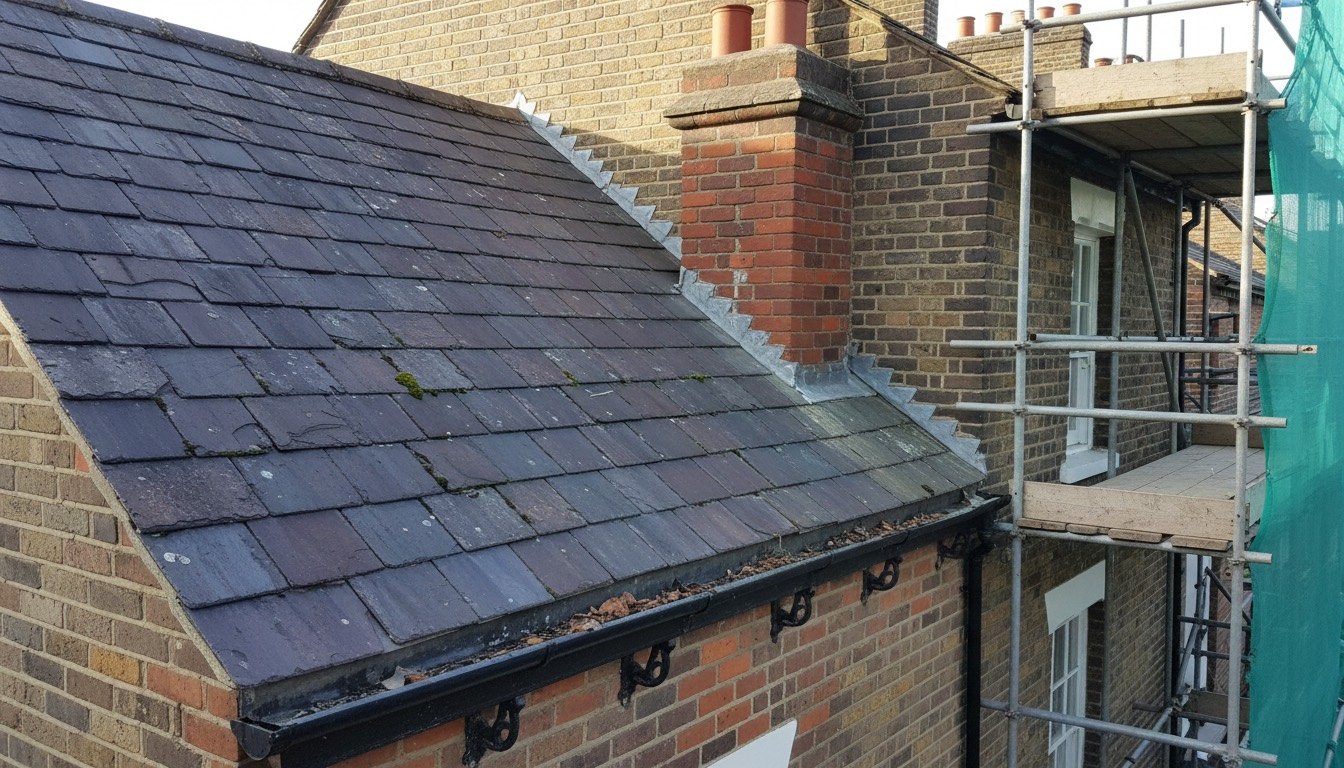
- •1. Blockage — leaf litter, moss off concrete tiles, nesting debris. Peak season October to December.
- •2. Bracket failure or spacing — supports belong at 800 mm centres; older installs often ran a metre or more.
- •3. Lost fall — brackets pulling out of softening fascia, tipping the run back towards the wall.
- •4. Perished union seals — EPDM gaskets harden and shrink after roughly 15 years.
- •5. Undersized system — 76 mm mini gutter on a big extension roof overflows in any cloudburst, however clean.
- •6. Material failure — brittle uPVC, holed cast iron, splits along the channel. The only one where replacement is honest.
Fixes, Ordered From Safest to Riskiest
Stop as soon as the problem goes away; the first three steps fix most cases for under £50. Use a ladder stand-off (£25–£40) so the stiles bear on the wall — leaning a ladder on uPVC is how a leaking gutter becomes a broken one.
- •Ground level, no risk: lift the gully grate at the foot of the downpipe and rod it clear. Ten minutes, nothing spent.
- •Ground level: telescopic gutter wand or vacuum pole (£40–£90). Slow, but effective at single-storey.
- •Low ladder: scoop and flush by hand — see how to clean gutters safely for the method.
- •Low ladder: swap a union seal or add a bracket beside a sagging one. Parts are £2–£5, and 112 mm half-round and 114 mm square profiles are still stocked everywhere.
- •Low ladder, 2–3 hours: unclip the run and re-fix brackets to a chalk line to reset the fall. Our leaking gutter repair guide covers the sealing detail.
Repair or Replace? Thresholds and Costs
Three thresholds decide it. If more than a third of a run's joints leak, replacing them individually costs more in ladder time than a new run. If an offcut snaps rather than flexes when bent, the whole run is UV-embrittled and every repair cracks a fresh hole beside it. And if the fascia is soft, you are buying fascia, soffit and gutter together.
UK pricing in 2026: uPVC is £35–£55 per linear metre installed at single-storey, £55–£90 once two-storey access is priced in. Front and back on a three-bed semi — about 24 m plus two downpipes — lands between £700 and £1,400. Cast iron like-for-like on a Victorian terrace is £130–£220 per metre, and listed buildings may need consent to change material at all. Sanity-check quotes against our gutter installation cost breakdown.
Two upsells to refuse: waterlogged ground round the downpipe is a drainage problem, so spend there on garden drainage instead. And guards cut cleaning frequency; they do not fix a fall or a split.
The Renter-Safe Version
Gutters are the landlord's responsibility in England and Wales under Section 11 of the Landlord and Tenant Act 1985, which names drains and gutters specifically. Tenants still live with the damp, so here is what is reversible and deposit-safe. If written requests are ignored, environmental health can assess gutter damp under the HHSRS.
Report it in writing, never by phone, with dated photos of the overflow in rain and of any internal staining; two a month builds a timeline no agent can argue with. Then stick to actions that leave no trace: clear the gully grate, sweep leaves from the foot of the downpipe, pull furniture 5 cm off any damp wall, and run a dehumidifier to protect your belongings.
What costs deposits: going up a ladder (most tenancy agreements prohibit it, and contents insurance will not cover you), sealant or paint on any gutter, drilling the fascia, and painting over damp, which reads as concealment at check-out.
Where DIY Must Stop
Falls from height remain the biggest cause of fatal accidents in UK construction, and domestic gutter work is where amateurs meet that risk. Stop too if damp has not dried a fortnight after the gutter is fixed — you are chasing something else, and our roof leak diagnosis guide is the next step.
- •Anything above single-storey, or above a conservatory where a ladder cannot be footed on level ground.
- •Cast iron: a 1.8 m length of 100 mm half-round weighs 12–15 kg and needs two people and a tower.
- •Asbestos-cement guttering — common on 1950s–70s stock, grey and fibrous. Never cut, drill or pressure-wash it; have it surveyed and removed.
- •Any gutter forming part of a valley, parapet or box gutter behind a wall. That is roofing.
- •Fascia rotted through to the rafter feet — a structural repair.
- •Overhead power or telephone cables within 3 m of the working position.
Found this useful?
There's plenty more — hundreds of guides and honestly-tested product reviews for every corner of your home.
Browse All Guides