Home Decor · 6 min read · 3 May 2026
How to Paint a Ceiling: The UK Method, Real Costs and When to Stop
A ceiling is the easiest surface in the house to paint badly: every lap mark and thin patch shows under one overhead light. Here is the trade method, the real material bill and what a decorator should charge.
By the Nims Casa editorial team — written from professional cleaning experience and checked against our editorial standards.
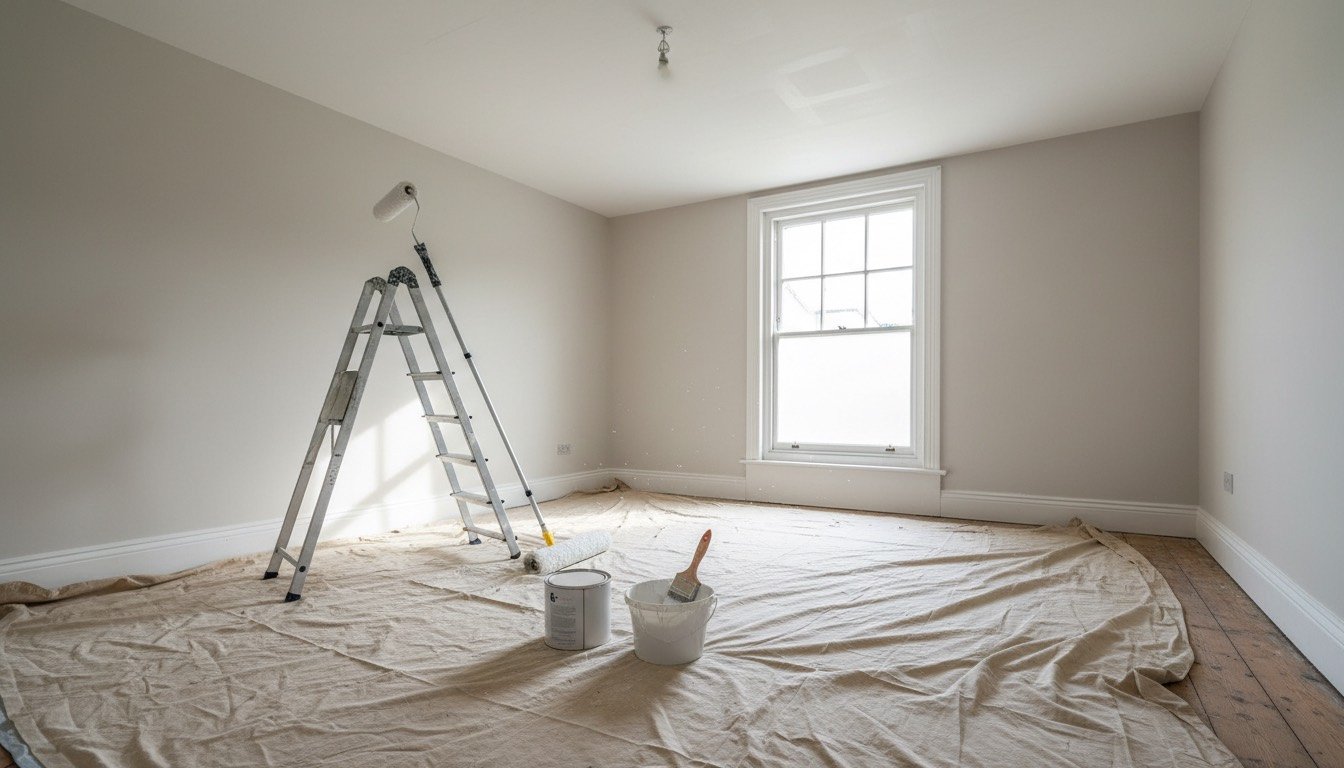
Ceilings punish shortcuts. A wall is broken up by furniture and shadow; a ceiling is one uninterrupted plane lit from below, so every thin patch and lap mark shows from the sofa. The work is not difficult — getting it flat is about preparation, keeping a wet edge, and not asking one coat to do the job of two.
Below is the sequence decorators use on UK plaster and plasterboard, with honest numbers: what the materials cost, how long it takes, and what a professional should charge.
Safety first: it is above your head, and so is the wiring
Almost all ceiling-painting injuries come from two things: the top of a stepladder, and fittings that are still live.
- •Never stand on the top two steps of a stepladder. A podium or hop-up lets you shuffle along rather than stretch sideways, which is where falls happen.
- •Before loosening a ceiling rose cover or downlight bezel, switch off at the consumer unit, not the wall switch — two-way landing circuits leave fittings live.
- •Anything textured and applied before 2000 may contain chrysotile asbestos. Never dry sand, scrape or wire-brush it.
- •Wear safety glasses, and never paint over an active water stain — wet plaster around downlights is an electrical problem first.
Tools and materials, and what each costs
Ceilings get matt because sheen catches raking light and turns minor undulations into visible waves; our guide to paint sheens room by room covers where each finish belongs. Trade matt covers 12-14 m² per litre per coat, so 5 litres does two coats on two and a half bedroom ceilings — check yours with our paint quantity guide before buying, as tinted tins cannot be returned.
- •5L trade matt emulsion (Dulux Trade, Johnstone's, Crown, Leyland): £28-£48 — contract matt for new plaster, vinyl matt for kitchens and bathrooms
- •Zinsser B-I-N shellac stain block, 400ml aerosol: £18-£24 — the only thing that stops water and nicotine stains bleeding through
- •Roller frame and two 9in sleeves — 12mm pile for smooth, 18mm for lightly textured: £10-£18
- •Telescopic extension pole, 1.2-2.4m: £12-£20, and non-negotiable on a ceiling
- •50mm cutting-in brush, cotton dust sheet, sugar soap, filler and a 120-grit pole sander: £45-£65 the lot
- •First-time total including kit: £75-£110. Every ceiling after that: £25-£40
Realistic time and cost, and what a decorator should charge
An average UK bedroom ceiling is 10-14 m²: 45-90 minutes of prep, then 35-40 minutes per coat with a 2-4 hour wait between them — two and a half hours of work across an afternoon. A greasy kitchen ceiling adds an hour of washing; a stairwell is a half-day and may need a tower at £45-£70 a week.
Decorator day rates in 2026 run £180-£260 across most of the UK and £250-£350 in London and the South East. A good decorator does three to four ceilings a day including prep, so ceiling-only work is priced at £8-£14 per m² for washing, filling, spot-priming and two coats. One ceiling alone carries a £120-£200 minimum; all eight in a three-bed semi should land near £500-£750 labour plus £80-£140 of materials. That 80/20 labour-to-materials split is why quotes vary far more than tin prices do — our interior painting cost guide has the room-by-room figures.
To check a quote, divide the labour by the local day rate. £950 for eight ceilings at £220 a day implies four-plus days for two and a half days of work — fair only with heavy stain blocking, an Artex skim or a stairwell.
- •Reasonable: names the paint and coat count, itemises prep, and mentions a mist coat on new plaster
- •Suspect: priced over the phone, especially in an older house where texture and stains are the whole variable
- •Suspect: under £6 per m² for prep and two coats — something is being skipped, usually the first coat
- •Suspect: a deposit over £150, when the whole material bill rarely exceeds that
- •Ask whether VAT is included: sole traders under the £90,000 threshold charge none, a registered firm adds 20%
The method, step by step
Work in this order and nothing gets painted twice. Ceilings always come first — the full room running order is in our guide to painting a room like a professional.
- •1. Clear the room, or move everything to the centre under one sheet, and cover the floor edge to edge.
- •2. Wash with sugar soap at roughly 1:20 using a sponge on a pole. Kitchen ceilings twice: emulsion will not bond to cooking grease. Rinse and leave an hour.
- •3. Fill cracks, screw pops and old fixing holes proud of the surface with a powder filler such as Toupret. Wall-ceiling junctions want flexible caulk, which moves without reopening.
- •4. Sand flat with 120 grit on a pole sander, then vacuum the ceiling and hoover the floor.
- •5. Spot-prime every stain and filler repair with shellac. Water marks bleed through emulsion indefinitely, and bare filler flashes matt against the rest.
- •6. On new plaster, mist coat first: contract matt thinned 70:30 with water. Vinyl matt straight onto fresh plaster peels off in sheets within a year.
- •7. Cut in a 50-75mm band around the perimeter and ceiling rose, one wall's length at a time, so the edge stays wet until the roller reaches it.
- •8. Roll in metre-square sections, laying off with light overlapping passes. Never go back over paint that has begun to set — that causes tramlines.
- •9. Recoat after 2-4 hours once touch dry, rolling the final coat towards the main window so lap lines run with the light.
- •10. Pull masking tape while the paint is soft, wash the sleeve, and ventilate for 24 hours.
Troubleshooting the things that go wrong
- •Patchy flashing in certain light: unsealed filler or bare plaster drinking the paint. Spot-prime the dull areas, then coat the whole ceiling. Never patch a coat.
- •Roller tramlines: too little paint on the sleeve, too much pressure, or a worn frame. Sand with 180 grit and recoat with a properly loaded roller.
- •Stains reappearing after two coats: you used a water-based blocker. Only shellac holds — and check the leak is genuinely fixed.
- •Black speckling returning in a corner: that is condensation, not paint failure. Deal with the moisture using our guide to mould on bathroom ceilings and walls before repainting.
- •Fine by day, patchy under LED downlights: they rake the surface and expose everything. Usually a third coat, sometimes a skim.
When to stop and call somebody in
Textured coatings applied before 2000 are the clearest line. Painting over sound Artex is fine; removing or sanding it is not, and needs testing first — costs and the legal position are in our Artex removal guide.
Hand over any ceiling that is bowing, cracking in a spiderweb pattern or sounding hollow when tapped — lath and plaster especially. That is a plastering repair at £350-£700 a room. Call someone too if the ceiling sits above a stairwell you cannot reach safely, if there is an active leak, or if a skim at £250-£400 a room would beat three coats of emulsion. Paint hides very little overhead, and paying a plasterer once is cheaper than painting a bad ceiling twice.
Found this useful?
There's plenty more — hundreds of guides and honestly-tested product reviews for every corner of your home.
Browse All Guides