Home Decor · 5 min read · 18 June 2026
How Much Paint Do I Need? UK Coverage and Cost Guide for 2026
Most people buy the wrong amount of paint because they price the room instead of the surface. Here is how to work out which wall you actually have, then the litres and the pounds.
By the Nims Casa editorial team — written from professional cleaning experience and checked against our editorial standards.
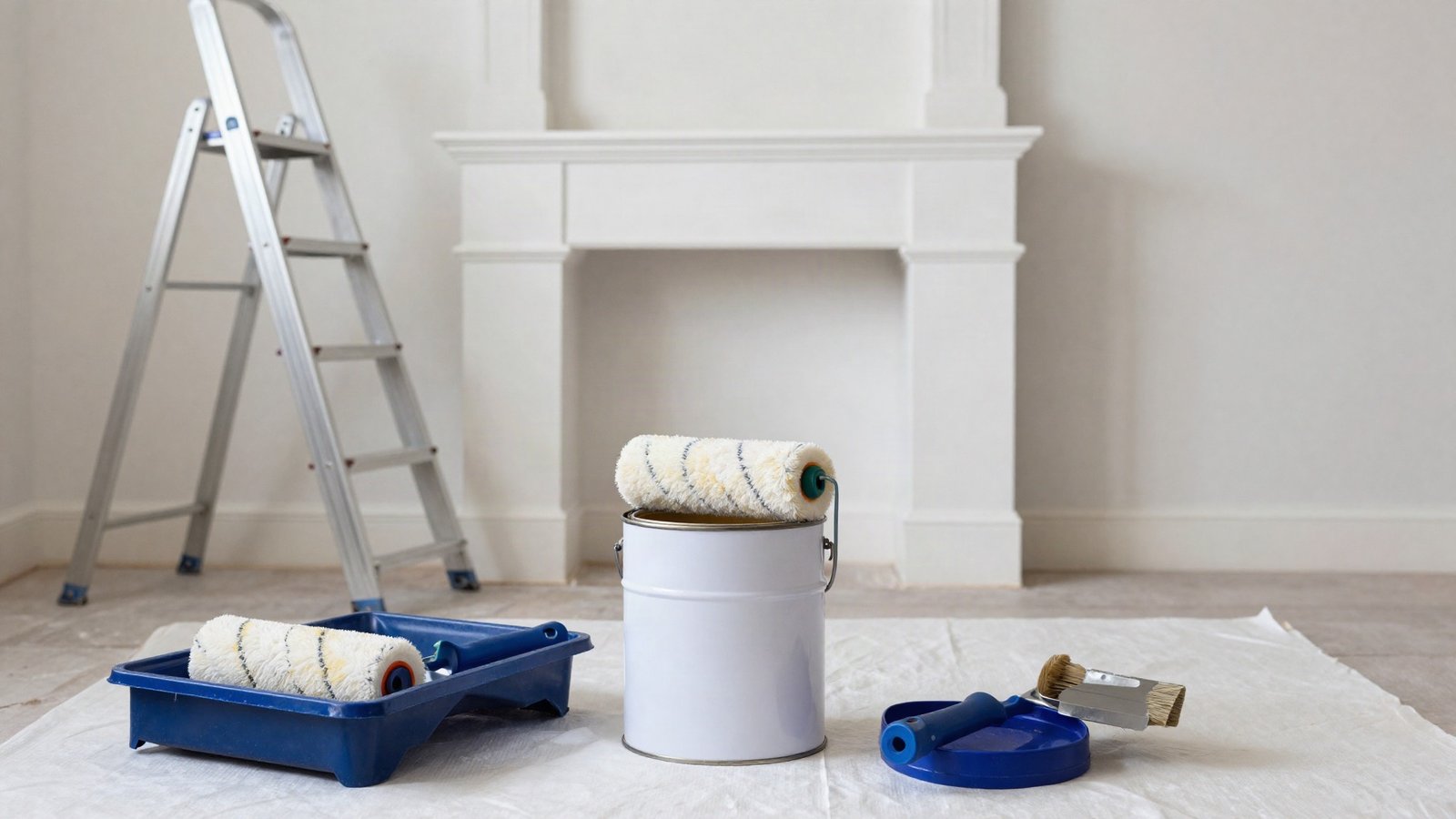
Nearly every over-buy and under-buy comes from the same mistake: someone measures the room, reads the spread rate off the back of a tin, and multiplies. That figure was taken on sealed, sound, mid-tone plaster. Your wall is almost certainly not that wall.
So before any arithmetic, work out which of five surfaces you are painting. That one decision moves the answer by 40 to 100 per cent, and it is the difference between one 5L tin and three.
Start here: which wall have you actually got?
Hold a torch at a shallow angle to the wall and run your hand over it, then match what you see to one of these. The coats figure is everything needed to reach an even, opaque finish.
If two apply, take the worse one. A patched wall also going from magnolia to inky blue is a three-coat wall, and no optimism at the till changes that.
- •Sound, previously painted, similar tone: 2 coats at 11-13 m² per litre. The cheapest scenario by a distance.
- •Sound, but a big colour jump (dark over pale, or any strong red, yellow or teal): 3 coats, or a tinted grey primer plus 2 topcoats. The primer route usually saves a litre and half a day.
- •Fresh plaster, under six weeks old and still cool to the touch: a mist coat of contract matt thinned 10-20 per cent with water, which drops effective coverage to 6-8 m² per litre, then 2 full coats.
- •Patched or newly filled: filler drinks paint and flashes matt through the topcoat. Spot-prime the repairs, then 2 coats. Do the filling and sanding properly or you will buy a third coat trying to hide it.
- •Stripped wallpaper, or stained by smoke, nicotine, water or damp: seal it. Emulsion over a water stain will show it again within a fortnight; a shellac-based stain block is the only reliable fix.
The measuring rule and the one-line formula
Measure the perimeter with a tape, not by pacing, and multiply by ceiling height. Most UK homes built after 1960 sit at 2.4m; Victorian and Edwardian rooms run 2.7-3.2m, which is why a period terrace costs more to decorate than a new-build of the same floor area.
Deduct openings only when they total more than about 3 m². A single internal door (1.5 m²) is not worth subtracting, because you lose that paint again on reveals and the inevitable second pass round the light switch.
The formula: litres = (wall area minus large openings) x coats, divided by your practical coverage, plus 10 per cent. Round up to whole tins, and buy 5L rather than two 2.5L tins where the colour allows: the larger tin is typically 20-30 per cent cheaper per litre and comes from one batch.
What paint actually costs in the UK in 2026
Emulsion prices span a factor of ten, so the tier you choose matters far more than the litres you get slightly wrong. Typical mid-2026 shelf prices at B&Q, Wickes, Screwfix and trade merchants.
- •Contract matt for mist coats and new plaster, 10L: £22-32 (£2.20-3.20 per litre)
- •Own-brand brilliant white matt, 5L: £16-24 (£3.20-4.80 per litre)
- •Mid-range branded emulsion in colour, 5L: £30-42 (£6-8.40 per litre)
- •Durable scrubbable matt for kitchens, bathrooms and hallways, 5L: £45-60 (£9-12 per litre)
- •Heritage and premium ranges, 2.5L: £58-72 (£23-29 per litre)
- •Water-based satinwood or eggshell for woodwork, 750ml: £16-24. One tin covers a room's skirting, one door and a window frame in two coats.
- •Shellac stain-block primer, 1L: £20-26. Sundries for a first room (dust sheets, roller kit, cutting-in brush, low-tack tape, filler, abrasives): £35-60.
Three worked examples, in litres and in pounds
Double bedroom, 3.5m x 3.0m, 2.4m ceiling, sound walls, gentle colour change. Perimeter 13m x 2.4m = 31.2 m², call it 30 m² after the window. Two coats = 60 m² at 12 m² per litre = 5 litres. One 5L tin of mid-range emulsion at £34, a 2.5L ceiling white at £18, a 750ml satinwood at £19, sundries £20: roughly £91 of materials.
Victorian front room, 4.2m x 3.6m, 2.9m ceiling, navy over magnolia. Perimeter 15.6m x 2.9m = 45 m², call it 41 m² after the bay. Three coats = 123 m² at 11 m² per litre = 11.2 litres, so two 5L tins plus a 2.5L. Mid-range, that is about £95 of wall paint; in a heritage range sold only in 2.5L tins, £280-320. Same litres, triple the bill.
Whole three-bed semi in one white. Around 260 m² of wall and 75 m² of ceiling, two coats each: roughly 56 litres, so five 10L tubs of trade white at £28 plus a 5L for touch-ins. Materials £160-190, plus £120 of woodwork paint and sundries. This is where trade tubs pay for themselves and where the order you paint a room in saves more time than any product does.
Labour versus materials: what a decorator's quote is made of
On a straightforward interior job, materials are only 15-25 per cent of the total; labour is the rest. Self-employed decorators charge £180-240 a day across most of England and Wales, £160-200 in the North East and Scotland's central belt, and £260-340 inside the M25. A bedroom is one to two days including prep; a hallway, stairs and landing is three to five because of access equipment and cutting in.
That ratio is why paying £40 more for better emulsion is close to irrelevant on a quoted job, and why asking a decorator to skip prep is a false economy. Prep is the labour, and the labour is the money. Our breakdown of what interior painting costs goes room by room.
What moves the price, and how to check a quote
Two quotes for the same room can differ by 60 per cent legitimately. These are the variables that explain it, and the questions that expose a quote that has been guessed rather than measured.
- •Ceiling height: a 2.9m Victorian room is 20 per cent more wall than a 2.4m one, before the ladder time.
- •Colour depth: strong reds, yellows and oranges have poor opacity and routinely need a fourth coat. Worth knowing before choosing the colour.
- •Sheen: silks and eggshells show every flaw, so the prep bill rises even though the litres do not. Our guide to paint sheens by room covers where each belongs.
- •Primer strategy: whether a quote uses a separate primer or a paint-and-primer-in-one changes both coats and cost.
- •Ask for litres and coats in writing. A decorator who has measured will say "15 litres, three coats, one mist" without hesitating.
- •Sanity-check the maths yourself: divide their stated litres by your wall area. Anything above 14 m² per litre per coat is optimistic; below 8 m² per litre, they are padding or the wall is worse than you think.
- •Be suspicious of a quote with no line for making good. Every real room needs filler; a quote without it is a quote where the filling has been left out.
How we arrived at these numbers
Coverage figures are manufacturers' stated spread rates derated by 15-20 per cent, which is the gap we consistently see between the tin and a roller in a real room with corners, radiators and reveals. Prices were checked in June 2026 across four national retailers and two trade merchants, and are shown as ranges rather than averages because paint is discounted heavily and unpredictably.
Labour rates are quoted day rates for self-employed decorators, not agency or main-contractor pricing, and exclude VAT where the trader is below the threshold. Re-check both before budgeting: emulsion pricing tracks resin costs and has been volatile since 2024. Buy one tin more than you think you need, keep the batch number, and treat the leftover as touch-up stock rather than waste.
Found this useful?
There's plenty more — hundreds of guides and honestly-tested product reviews for every corner of your home.
Browse All Guides