DIY & Maintenance · 6 min read · 9 July 2026
How to Remove Popcorn Ceiling (Artex) in a UK Home: Steps, Costs and the Asbestos Line
Nine times out of ten the British version of a popcorn ceiling is Artex, and if it went up before 2000 it may contain asbestos. Here is the safe method, the real costs, and where DIY has to stop.
By the Nims Casa editorial team — written from professional cleaning experience and checked against our editorial standards.
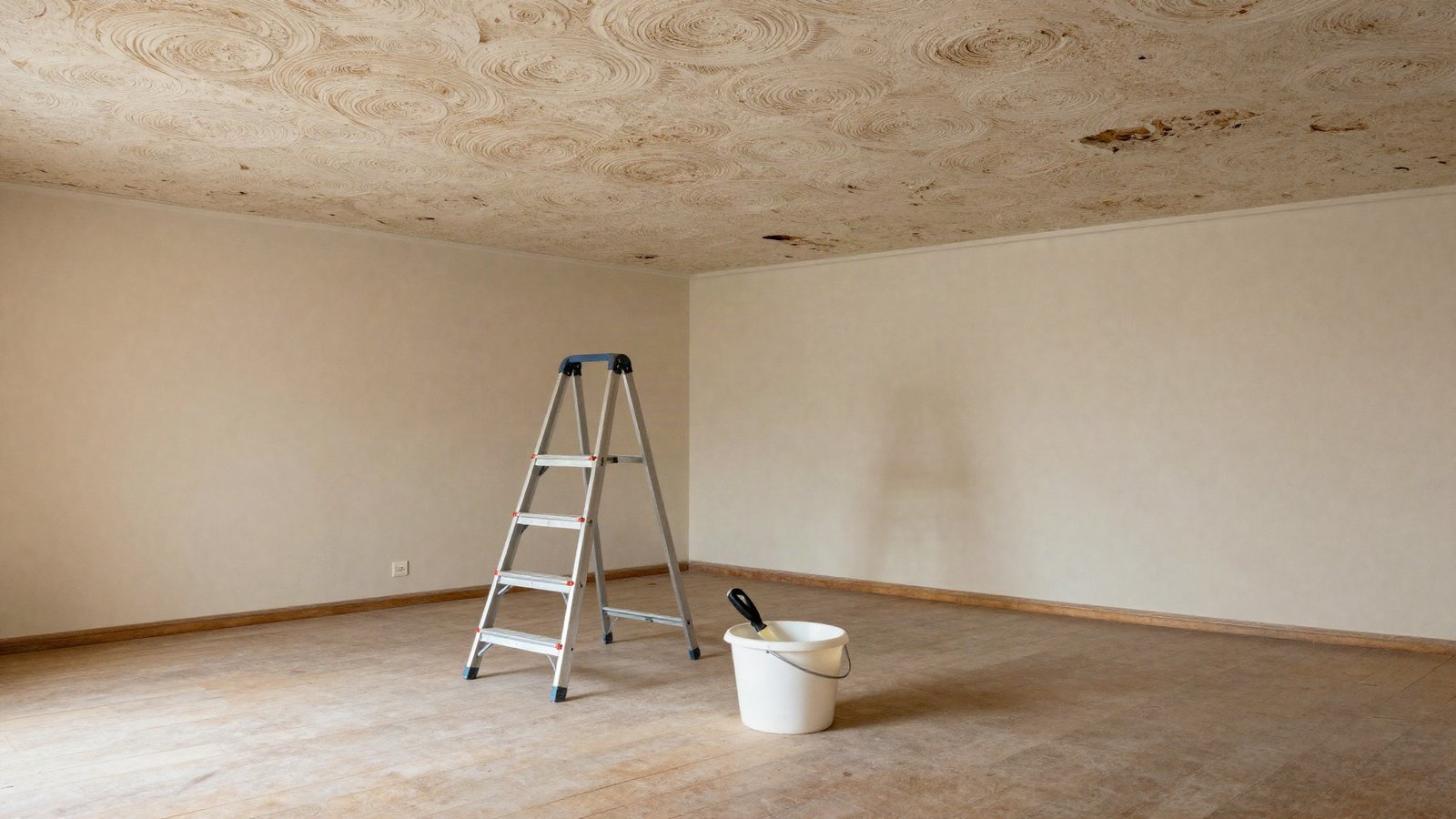
The British equivalent of the American popcorn ceiling is Artex: swirled, stippled or combed, trowelled on rather than sprayed. It dates a room instantly, traps dust in every peak, and is miserable to paint. It is also, in a great many UK homes, an asbestos-containing material.
The United States banned asbestos in textured ceiling coatings in 1977. Britain did not ban chrysotile in these products until 1999, and merchants sold remaining stock after that. So the rule here is stricter than any American tutorial will tell you: treat any textured ceiling applied before 2000 as containing asbestos until a laboratory says otherwise.
Safety First: Test Before You Touch It
Do not scrape, sand, drill or steam a textured ceiling of unknown age. Artex typically held 1-5% chrysotile bound into a gypsum matrix. Painted and left alone it is stable and harmless. Attacked with an orbital sander it releases fibres into a sealed room you then sleep in.
Get it tested. A UKAS-accredited laboratory will analyse a posted sample for around £30-£60, with results in two to five working days; a surveyor who takes the sample costs £90-£200 and is safer if the coating is already flaking. Negative, and this becomes ordinary decorating. Houses of that vintage carry other legacy hazards, so read up on lead paint safety in older properties before sanding anything else in the room.
- •FFP3 respirator, fit-checked; an FFP2 or a nuisance dust mask is not adequate
- •Type 5/6 disposable coveralls, hood up, taped at the wrists
- •Sealed goggles rather than safety glasses, since you are working directly overhead
Tools, Materials and Costs
Assume a 3.5m x 3.5m bedroom ceiling, roughly 12 square metres, on a coating that has tested clear.
- •Wallpaper steam stripper: hire £18-£30 a day, or buy for £45-£75
- •100mm stiff stripping knife, corners ground round so it cannot gouge: £10
- •Garden sprayer and wallpaper stripper solution: £15
- •PVA (£12 for 5 litres) or proper plaster bonding agent (£22)
- •Thistle Multi-Finish, 25kg covers about 10 square metres at 2mm: £12-£16 a bag, buy three
- •Trowel, hawk and mixing paddle if skimming yourself: £70-£110
- •Materials total for one room: £120-£220, excluding a plasterer
Realistic Time and Cost
Scraping is slow, wet work above your head. On 12 square metres, budget five to seven hours of scraping plus two masking and two clearing up. The ceiling must then dry fully before plaster, which in a British winter means two or three days with the heating on and a window cracked.
A plasterer charges £180-£280 a day outside London, £250-£400 inside the M25. Scrape-and-skim of one average ceiling lands at £300-£500; overboarding and skimming runs £400-£700 for the board and the second pair of hands. Our breakdown of Artex removal prices room by room covers per-square-metre rates. Scraping it yourself and paying a plasterer for the skim alone is the sweet spot.
The Step-by-Step Method for a Non-Asbestos Coating
- •1. Empty the room, lift or fully sheet the carpet, and tape polythene up the walls to 300mm so wet scrapings do not soak the skirting.
- •2. Isolate the lighting circuit at the consumer unit, prove it dead, and drop the fitting clear. Like-for-like refitting is not notifiable; re-siting or bathroom zones need an electrician.
- •3. If the texture is painted, score it. Drag a serrated scraper across in both directions, or rub over with a 60-grit block. Water will not pass an emulsion film otherwise.
- •4. Work one square metre at a time. Spray warm water with stripper solution, wait fifteen minutes, spray again. Two soaks beat one heavy one.
- •5. Hold the steam plate flat for 20-30 seconds per patch. If steam is running down your arm you are too slow; move on and come back.
- •6. Scrape at about 30 degrees with the wide knife, an open bin bag held underneath. Never let scrapings dry on the floor and turn to dust.
- •7. Sponge the bare ceiling with clean water to lift residue, then leave 48-72 hours until it dries a uniform pale colour.
- •8. Seal with PVA at one part to four parts water, or a bonding agent. Skim while it is tacky, not dry.
- •9. Apply two coats of Multi-Finish at roughly 2mm each. Flatten at 25-30 minutes, trowel at 60, polish with a wet trowel at 90-120.
- •10. Leave five to seven days, then mist coat with matt emulsion thinned 30%. Our guide to painting a ceiling properly covers roller order and cutting in.
If Asbestos Is Confirmed: Overboard, Do Not Remove
Encapsulation is the sane answer. New plasterboard screwed straight over the coating leaves the asbestos undisturbed and sealed, and gives a flat ceiling for a fraction of the cost and risk of removal. You lose about 15mm of head height, which rarely matters under a 2.4m ceiling.
Use 12.5mm tapered-edge board over joists at 400mm centres, fixed with 65mm plasterboard screws at 150mm spacing, because the screws pass through board and old coating before biting into timber. Mark the joist lines on the wall first. A full sheet weighs about 22kg, so this is a two-person job with a board lifter or props. In a flat or maisonette, check whether that ceiling forms part of a fire compartment before altering it.
- •Drill only where you must, at low speed, with a damp cloth held under the bit
- •Double-bag debris in proper asbestos sacks and book it in with your council waste site in advance
- •Never sand, dry-scrape, jet-wash or power-tool an asbestos textured coating
Troubleshooting the Problems That Actually Happen
- •Texture will not shift: it is painted, probably twice. Score harder and steam longer rather than leaning on the knife.
- •Brown patches appearing: old water staining. Seal with a stain blocker before skimming or it will ghost through the emulsion within weeks.
- •The ceiling flexes or drops crumbs: stop. That is lath and plaster, and steam saturates the plaster keys. See our guide to a ceiling that is already sagging first.
- •Skim dried with trowel lines: hold a torch flat against the surface to find them, sand lightly and mist coat before committing to topcoats.
The DIY-or-Pro Line: Where to Stop
A competent DIYer with the right mask can safely handle masking, light fitting removal, scoring, soaking, scraping and sealing of a coating that has tested clear. That is most of the labour on the job.
Hand over the rest without arguing: any coating that tests positive, unless you are strictly overboarding it undisturbed; any lath and plaster ceiling, which may need taking down entirely; any ceiling that is bowing, damp-stained or spongy, because that is a leak or structural problem the texture is hiding; and any electrical work beyond swapping a fitting on an isolated circuit. Skimming sits in between. You can learn it, but overhead in a room you live in is the wrong place to practise, and a plasterer will do it in four hours. If you are bringing someone in, our advice on vetting a contractor properly will save you more than the day rate.
Found this useful?
There's plenty more — hundreds of guides and honestly-tested product reviews for every corner of your home.
Browse All Guides