DIY & Maintenance · 5 min read · 26 June 2026
Outlet Not Working? Troubleshoot Your Dead Socket in This Order
Nine out of ten dead sockets come down to a blown plug fuse, a tripped breaker or a faulty appliance. Here is the exact order we check them in, and the warning signs that mean call an electrician.
By the Nims Casa editorial team — written from professional cleaning experience and checked against our editorial standards.
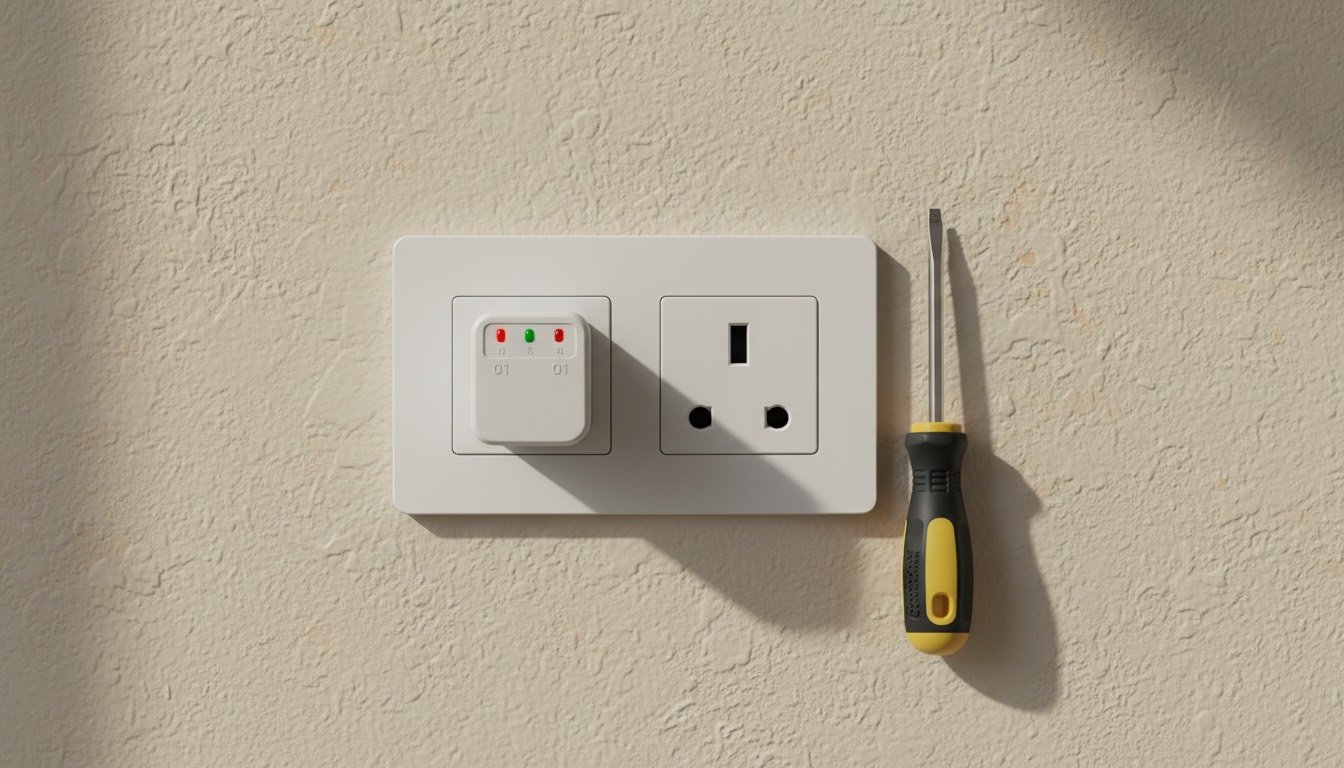
A dead socket is one of those faults that stops the morning in its tracks: the kettle will not boil, the phone will not charge, and the washing machine sits there silent. In the UK we say socket rather than outlet, but the troubleshooting logic is identical, and in nine cases out of ten you can find the cause yourself in under twenty minutes without touching a single wire.
One rule before anything else: diagnosis is DIY, repair often is not. Every step below can be done without removing a faceplate or exposing a conductor. The moment a fix needs more than resetting a switch or changing a plug fuse, you are into the legal and safety notes at the end. We maintain homes for a living and we follow the same order every time.
Start With the Plug, Not the Socket
Roughly half the dead outlet calls we hear about turn out to be a dead appliance or a blown plug fuse. Test the socket with something you know works, such as a bedside lamp or a phone charger. If the known-good item runs happily, the socket is fine and the original appliance is the patient.
If it does not, check the small stuff before heading to the fuse board. UK plugs are unusual: every BS 1363 plug carries its own cartridge fuse, 3A for lamps and chargers, 13A for kettles, heaters and vacuums. Prise it out with a flat screwdriver and swap in a spare; a mixed pack costs about £2 in any supermarket. Check the socket's own switch too. It sounds obvious, but switched sockets get knocked off by furniture and vacuum handles constantly. On end-of-tenancy cleans we test every socket in the property, and a flicked-off switch hidden behind a bed is the single most common fault we log.
Check the Consumer Unit Next
If a known-good appliance is dead in that socket, and especially if nearby sockets are dead too, go to your consumer unit (the fuse board), usually in the hallway, under the stairs or in the garage. You are looking for a switch sitting lower than its neighbours.
- •MCB tripped (one small switch down): flick it firmly back up. If it holds, note what you had plugged in at the time and carry on with your day.
- •RCD tripped (the wider switch covering several circuits): this is the residual current device that protects you from shocks. Reset it, but treat a trip as a message, not a nuisance.
- •Neither will reset: leave it off and skip to the final section. A breaker that trips instantly on reset means a live fault, not bad luck.
- •Older property with rewirable fuses instead of switches: budget £450 to £900 for a modern consumer unit. The RCD protection alone is worth it.
If the RCD Keeps Tripping, Find the Guilty Appliance
An RCD trips when current leaks to earth, and the leak is far more often a faulty appliance than the house wiring. Heating elements are the classic offenders: washing machines, dishwashers, kettles and tumble dryers all fail this way. The process of elimination takes ten minutes.
- •Unplug everything on the affected circuits. Actually unplug, do not just switch off at the socket.
- •Reset the RCD. If it now holds, the fixed wiring is probably fine and one of your appliances is leaking.
- •Plug items back in one at a time, switching each on fully, until the RCD drops out again. The last item you connected is your culprit.
- •If the RCD will not hold with everything unplugged, the fault is in the fixed wiring or a socket itself. That is electrician territory.
Half of a Double Socket Not Working
A double socket with one live side and one dead side is almost never a circuit problem, because both outlets share the same cables behind the faceplate. It is usually one of three things: a worn rocker switch that no longer makes contact, a loose internal connection on that side, or heat damage from years of running a 3kW heater or tumble dryer through it.
Wiggle-testing tells you a lot. If the dead side flickers to life when you press the plug in at an angle, the contacts are worn and the faceplate needs replacing. Keep using it and you will get arcing, which is exactly how scorch marks and melted plug pins start. A like-for-like faceplate costs £3 to £10, or £15 to £25 with USB ports, and an electrician will swap it in under half an hour.
A £10 Socket Tester Beats Guesswork
Before blaming the wiring, spend £8 to £15 on a plug-in socket tester from Screwfix, Toolstation or B&Q. The pattern of lights tells you instantly whether the socket is dead, wired correctly, or carrying a specific fault such as a missing earth or reversed live and neutral, faults that can sit invisible for years in an otherwise working socket.
One caveat from experience: basic testers can miss a poor earth connection, so treat a pass as reassuring rather than gospel. If the tester shows any wiring fault at all, stop using the socket and book an inspection. Reversed polarity in particular means an appliance can remain live even when its own switch is off.
When to Stop: Danger Signs and the Legal Bit
Some symptoms mean stop using the socket immediately and isolate the circuit at the consumer unit:
- •Scorch marks, browning or melting around the pin holes
- •A fishy or burning-plastic smell; overheating insulation gives off a distinctive fishy odour
- •Buzzing, crackling, or a faceplate that feels warm with nothing plugged in
- •Sparks bigger than the faint blue flick you sometimes see on plug-in
- •A breaker that re-trips the instant you reset it
Know the Rules, Then Know Your Limits
The legal position in England and Wales: under Part P of the Building Regulations, like-for-like replacement of a socket faceplate is permitted DIY, but new circuits, consumer unit work and most additions must be done or certified by a registered electrician, and all work must meet the BS 7671 wiring regulations regardless of who does it. In practice, do not lift a faceplate unless you can isolate the circuit and prove it dead with a voltage tester first. Confident is not the same as safe.
Costs are reasonable. Expect £45 to £80 per hour, or £60 to £120 fixed for a faceplate swap, and use an NICEIC or NAPIT registered electrician so the work is self-certified. If your home has not had an electrical inspection (EICR) in ten years, or five if it is rented out, a dead socket is a good excuse to book one at £150 to £300.
Two housekeeping notes from our rounds. Sockets on cold external walls in condensation-prone rooms corrode from the inside, so if the wall around a faceplate regularly feels damp, sort the moisture first; our guide to getting rid of damp and mould covers the fixes. And appliances cause their share of nuisance trips: a washing machine with a perished door seal or furred heater element is a serial RCD-tripper, and our washing machine cleaning guide covers the maintenance that keeps it honest. Finally, if the plaster comes away with the old faceplate, filling cracks and holes in walls is a straightforward Saturday job once the electrics are signed off.
Found this useful?
There's plenty more — hundreds of guides and honestly-tested product reviews for every corner of your home.
Browse All Guides