Cleaning Guides · 6 min read · 28 May 2026
How to Clean a Washing Machine (Smells, Mould & the Drawer of Doom)
If towels smell musty straight from the wash, the machine is the problem. The four-part clean that fixes it — including the filter you've never met.
By the Nims Casa editorial team — written from professional cleaning experience and checked against our editorial standards.
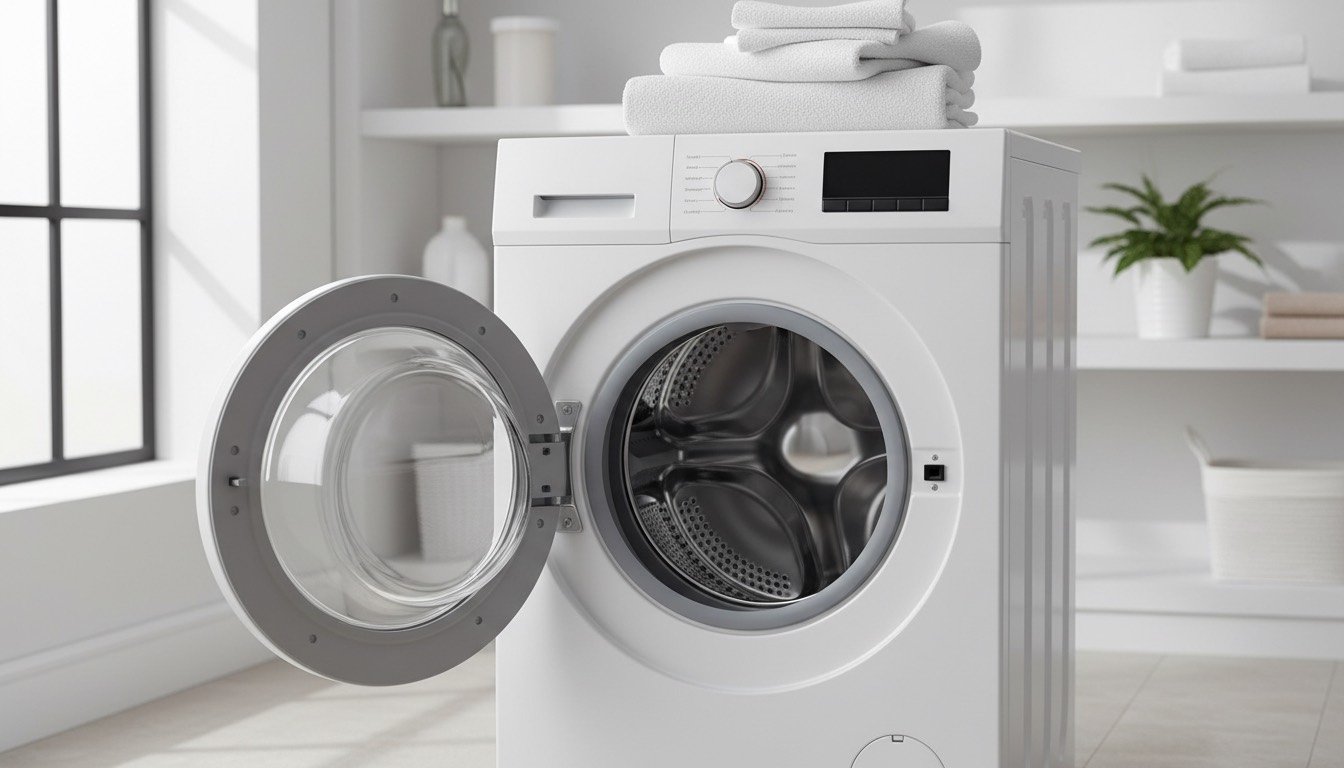
Musty towels are the classic sign, but it's rarely just the towels. A washing machine that smells is doing something specific: low-temperature cycles and gentle liquid detergents are kind to fabric and to energy bills, but they leave behind a thin film of grease, fibre and softener residue that never quite rinses away. Bacteria feed on that film, and after a few months it announces itself the moment you open the door.
Fixing it properly takes one focused session, not a service call. This guide covers the full service wash — drum, door seal, detergent drawer and the filter almost nobody has opened — with realistic UK prices, the habits that make the smell come straight back, and the point where a persistent problem stops being a cleaning job and becomes one for an engineer.
The Full Service Wash, Step by Step
- •Empty the drum completely and clear the pockets tray or drawer, so the machine runs on nothing but water and cleaner.
- •Run the hottest cycle on offer, ideally 90°C, empty, with a dedicated washing machine cleaner or around 200g of soda crystals in the drum. This dissolves the biofilm coating the drum and outer bowl — a 40°C fragrance wash won't touch it.
- •While that runs, fold back every pleat of the rubber door seal and wipe inside each fold with diluted mould cleaner. This is where black spot hides, and where most 'clean' machines still smell.
- •For established black mould, pack mould remover-soaked kitchen roll into the fold for 30–60 minutes before wiping and drying thoroughly.
- •Release the detergent drawer via its tab or catch (check the manual if it won't budge) and soak it in hot water for ten minutes to loosen softener sludge.
- •Scrub the drawer with an old toothbrush, then reach into the housing with a narrow bottle brush — mould collects on the cavity roof, not just the drawer you can see.
- •Open the filter hatch at the bottom front, towels down and a shallow tray underneath, and unscrew slowly. Expect trapped water, coins, hair grips and a decade of lint.
- •Rinse the filter, refit it firmly, wipe the door glass and rubber trim, and leave the door and drawer open until everything inside is dry.
Tools and Products You'll Need (and What They Cost)
- •Washing machine cleaner, tablets or liquid: £3–£6 for two treatments, widely stocked in supermarkets.
- •Soda crystals: £1–£2 per kilogram bag — a cheaper alternative for the hot drum cycle.
- •Mould and mildew remover spray or gel: £3–£5, for shifting black spot on the seal.
- •Narrow bottle brush or old toothbrush: under £2, for the drawer housing.
- •Microfibre cloths: £3–£4 for a pack of five, kept separate from kitchen cloths.
- •Descaler: £3–£5, worth adding every few months in hard water areas, where limescale builds up alongside the biofilm and strains the heating element.
Door Seal Mould: Getting Rid of Black Spots for Good
The rubber door seal causes the most ongoing smell complaints, because it stays damp and dark between washes — exactly what mould needs. Established black spot rarely lifts after one wipe; it lives in the texture of the rubber, so treat it as a weekly job for a month rather than a one-off fix.
If spraying and wiping isn't working, a well-diluted bleach solution (check your manual first, as some seals discolour) or mould remover left to sit for an hour usually finishes the job. The same fungal growth can spread to stored washing if a machine sits damp for long periods — our guide to mould on clothes and inside wardrobes covers what to do if it's already reached your laundry, and laundry stripping is worth knowing about if towels stay musty even once the machine itself is clean.
The Detergent Drawer and Filter Nobody Cleans
The drawer looks fine from the front, which is exactly why it's ignored. Behind the fascia, softener residue builds into a grey sludge that drips back into the housing every time it's closed, and the housing roof — visible only with a torch and mirror — is often where mould starts before it shows anywhere else.
The filter is ignored for even longer. It catches everything that shouldn't reach the pump — coins, buttons, hair, grit from trainer soles — and a blocked filter is one of the most common reasons a machine drains slowly, spins badly or throws an error code. If you're dealing with standing water rather than smell, check this filter before assuming the pump has failed.
Common Mistakes That Make Machines Smell Worse
- •Overdosing detergent 'for a better clean' — the excess doesn't rinse out and feeds the bacteria causing the smell.
- •Washing everything at 30–40°C with liquid detergent and never running a hot maintenance cycle, letting biofilm build unchecked for months.
- •Shutting the door and drawer straight after a cycle, trapping the warm, damp air mould thrives on.
- •Skipping the filter because it's fiddly — the most avoided step, and the one most likely to cause an actual fault.
- •Relying on fabric softener every wash instead of an occasional laundry sanitiser or hot service wash; softener residue is a major contributor to the sludge in both drawer and drum.
Keeping It Fresh Between Cleans
Ventilation is the cheapest prevention there is. Leave the door and drawer propped open between washes, and if the machine lives in a cupboard or utility room with poor airflow, that habit matters even more — the same damp-trapping conditions cause problems whether you're drying clothes indoors or storing a closed, still-wet machine.
Dose detergent to your water hardness and load size rather than by habit, run one genuinely hot wash a month even if your usual washing is all low-temperature, and give the seal a ten-second wipe when you pass. It's worth building into a wider appliance maintenance checklist alongside your other kit — machines kept to this routine stay odour-free for years, with drain pumps and seals lasting noticeably longer.
When to Call a Repair Engineer
A full service wash fixes most smell complaints, but treat it as a diagnostic step too. If the smell returns within days, or you're finding water pooling underneath, that's no longer a cleaning problem — check whether the washing machine is leaking from a seal, hose or pump first.
Standing water that won't drain after the filter is cleared, grinding or knocking on spin, or a repeating error code are all worth booking an engineer for. A standard UK call-out and diagnosis runs roughly £60–£90, with the full cost of appliance repair depending on the part needed — a new seal or drain pump is usually an affordable fix, while a control board fault on an older machine is often the point replacement makes more sense.
Frequently asked questions
**How often should I clean my washing machine?** Monthly if you mostly use liquid detergent and low-temperature cycles, or every six to eight weeks if you already run occasional 60°C+ washes with powder, which rinses more thoroughly.
**Why does my machine still smell even though I clean it regularly?** Usually one part is being missed — most commonly the filter or drawer housing roof, both easy to skip. A persistent smell after a proper clean can also point to a partially blocked drain hose rather than the machine itself.
**Can I use bleach in my washing machine?** Small amounts of well-diluted bleach on the seal are generally fine, but check your manual first, since it can discolour rubber over repeated use. Soda crystals or a dedicated cleaner in the drum are the safer default.
**Is it the detergent's fault, or the machine's?** Liquid rinses away less completely than powder at low temperatures, so it contributes more to biofilm — but any detergent overdosed or run only on cool cycles will eventually cause the same problem.
**Why is there water left in the drum or filter after a cycle?** A small amount sitting in the seal's base or filter housing is normal. Large amounts of standing water, or water that won't drain, usually means a blocked filter or a genuine fault.
Found this useful?
There's plenty more — hundreds of guides and honestly-tested product reviews for every corner of your home.
Browse All Guides