Costs & Hiring · 6 min read · 22 July 2026
Renovation vs Remodel: The Real Difference, UK Costs and Which Adds More Value
Two words that sound interchangeable but decide whether you need a structural engineer, Building Control and a 25 per cent contingency. Here is the difference as UK builders use it, priced.
By the Nims Casa editorial team — written from professional cleaning experience and checked against our editorial standards.
Ask three UK builders to define the difference and you get three answers. It is worth pinning down: the answer decides whether you need structural calculations, whether Building Control gets involved, and whether your contingency is 10 per cent or 25.
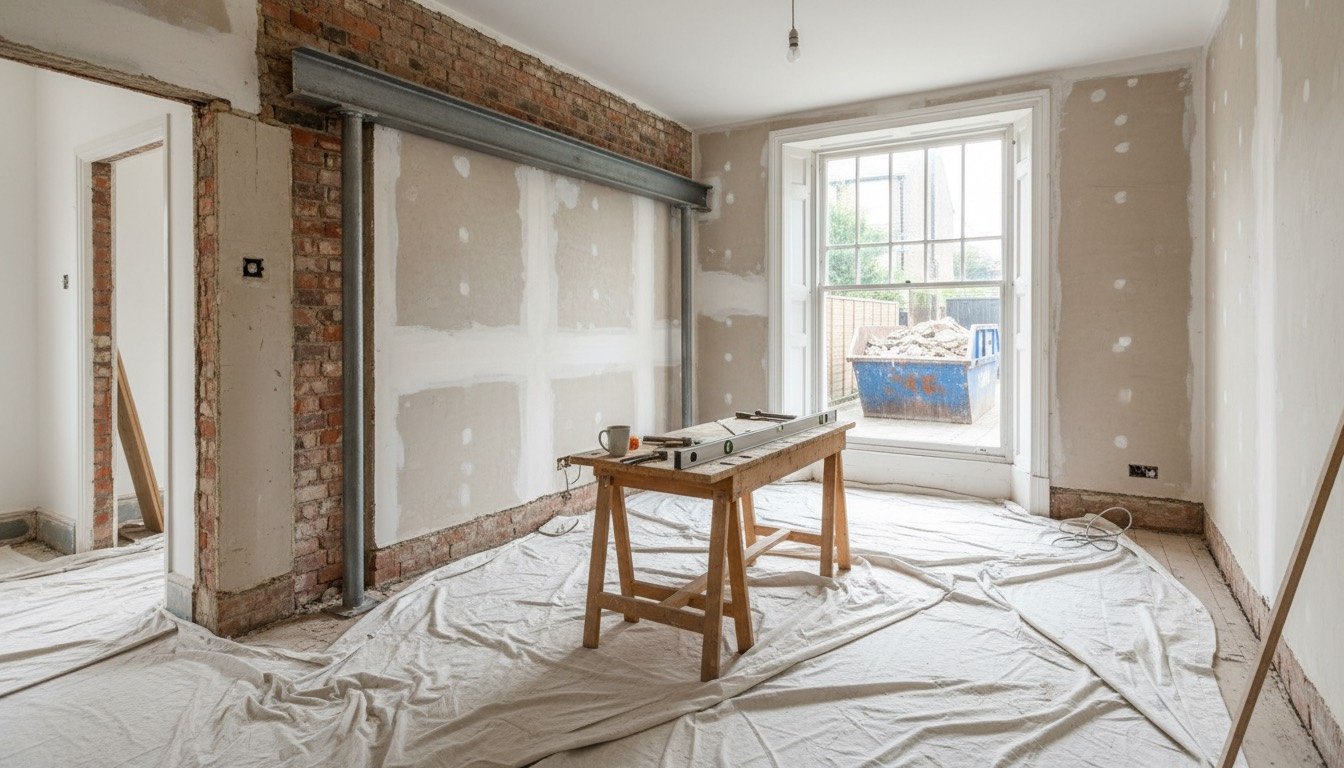
The site definition is simple. A renovation updates what is already there, inside the walls you have: new units in the same kitchen footprint, replastering, rewiring, a bathroom suite where the old one stood. A remodel changes the shape or servicing of the space, so walls come out, a soil stack moves, the stairs turn. Extensions and loft conversions behave like a remodel outdoors.
Renovation vs remodel: the side-by-side
Figures assume a three-bed semi in 2026; London and the South East run 20 to 35 per cent higher.
- •Structure - Renovation: none, or non-load-bearing stud partitions. Remodel: steel beams, padstones, lintels, occasionally underpinning.
- •Cost - Renovation: £450 to £950 per m2 for a whole-house refresh. Remodel: £1,300 to £2,400 per m2.
- •Timeline - Renovation: a room in 5 to 10 working days, a house in 6 to 12 weeks, and you can usually stay put. Remodel: add 3 to 8 weeks of design and approvals, then a fortnight without a kitchen.
- •Regulation and team - Renovation: notifiable only for electrics under Part P and gas; a competent builder suffices. Remodel: Building Regulations approval, structural calculations, often a Party Wall notice, plus an engineer.
- •Contingency - Renovation: 10 to 15 per cent. Remodel: 20 to 25 per cent, because opening walls in older stock always reveals something.
Performance: what each actually delivers
Renovation improves condition; a remodel improves how the house works. That sounds like marketing until you have spent £9,000 on a beautiful kitchen you still cannot cross carrying a full washing-up bowl. If the frustration is with surfaces, renovate; if it is with the route through the room, no worktop fixes it.
Renovation wins on one thing: it is the cheapest moment to improve fabric. With floors up and walls open, insulating between joists or topping loft insulation to 300mm costs a fraction of doing it later, and can shift an EPC band for a few hundred pounds. Sequence it with our guide to budgeting a home renovation.
Ten-year cost, resale value and funding
Cosmetic renovation typically returns 60p to 100p in the pound at sale; its real job is stopping buyers deducting for work they can see. Layout changes that create usable space, a second bathroom or a bedroom from dead space, move a property into a different bracket. But respect your street's ceiling price: £40,000 spent on a house already at the top of the postcode does not come back. Test the plan against home improvements that add value first.
Renovations are usually funded from savings or a loan; remodels above roughly £20,000 more often go on a further advance or remortgage. Either way, finalise the priced written scope first: borrowing against a verbal guess is how projects stall at first fix, which comparing contractor estimates prevents. Four examples at 2026 prices, fitted, including VAT:
- •Kitchen renovation: doors, worktops, sink and flooring in the existing layout, £4,500 to £8,500, plus roughly £350 of upkeep over ten years.
- •Kitchen remodel: knock through, steel beam, move the sink run, re-route waste and gas, £18,000 to £35,000. Running costs afterwards are identical, so the extra buys space, not savings.
- •Bathroom renovation: like-for-like suite swap, retile, re-seal, £4,000 to £7,500, plus £150 to £300 for grout and silicone at year five.
- •Bathroom remodel: move the WC and soil connection, lose the airing cupboard, fit a walk-in shower, £9,000 to £18,000, plus £400 to £900 for a pump if pressure is weak.
Approvals, hidden costs and the first two winters
Removing a load-bearing wall in a semi lands between £1,800 and £3,500 all in: calculations £400 to £900, steel and padstones £300 to £800, two or three days of labour, then the plastering and floor make-good people forget to price. Building Control adds £300 to £900, and a shared wall triggers the Party Wall etc. Act 1996: two months' notice, plus surveyors at £1,200 to £2,000 each if a neighbour dissents. Listed buildings need consent even internally. Chase the reduced 5 per cent VAT rate too: homes empty two years or more qualify, about £3,000 back on a £20,000 job. Check what needs sign-off in our guide to planning permission and building regs.
A renovation then renews wear items on a known cycle; a remodel creates new junctions to watch. Hairline cracking along a new steel is normal as plaster dries, so fill and repaint around month nine. Heating catches people out, because radiators sized for two small rooms will not hold one large one: ask for the heat loss calculation in writing and budget £250 to £600 for a bigger radiator.
Who each option suits
Length of stay matters more than taste: the shorter your horizon, the harder structural spend is to justify.
- •Renovate if the layout works, you may move within five years, or you must live in the house throughout the job.
- •Remodel if you fight the floor plan daily, are staying seven years or more, and the property sits below the street's ceiling price.
- •Do neither yet if the roof, gutters, wiring or damp are unresolved. Finishes over an unfixed defect waste money faster than anything else.
- •Phase it if funds are tight: remodel the ground floor once, properly, then renovate room by room over two or three years.
The renter-safe version: changing a home without risking the deposit
In a tenancy you may decorate rather than alter, but that gap is wider than most renters use. The rule is reversibility: every change must come back out in an afternoon, leaving nothing the check-out inventory will flag.
- •Swap and store. Handles, loo seats, shower heads and pendant shades unscrew. Bag and label the originals, refit before you leave.
- •Floor over, never up. Loose-lay vinyl or click LVT over the existing floor with no adhesive, or use large rugs. Never lift carpet or gripper rods.
- •Walls without holes. Removable wallpaper on one wall, plus adhesive strips rated above the frame weight, tested on a hidden patch of the same paint.
- •Ask about paint in writing. Many landlords agree to a neutral repaint and some supply the shade code. The email trail is what protects you.
- •If you did drill, repair properly: fine filler, sanded flush at 180 grit, touched in with matching paint. Neat repairs are rarely charged for.
- •Off limits: anything electrical or plumbed in, drilling tiles, changing locks, altering fitted units.
The verdict
If the layout works, renovate: cheaper per square metre, faster, less regulated, far less likely to swallow the contingency. If the layout is the problem, renovating spends the money twice, because you will eventually pay to undo new plaster and a kitchen fitted in the wrong place.
The cheapest hour you can buy is a structural engineer's visit, £150 to £300 for an opinion on what is load-bearing. Do that first, price one written scope with three builders, then work through our costs and hiring guides. Renting instead? Our rental-friendly decor guide covers finishes that survive check-out.
Found this useful?
There's plenty more — hundreds of guides and honestly-tested product reviews for every corner of your home.
Browse All Guides