Home Decor · 6 min read · 21 May 2026
Rental-Friendly Decor: Transform a Rented Home Without Losing the Deposit
Magnolia walls, forbidden nails, that landlord sofa — renting limits the tools but not the outcome. The deposit-safe moves that make a rented box yours.
By the Nims Casa editorial team — written from professional cleaning experience and checked against our editorial standards.
A third of Britain rents, and most of what we rent arrives decorated in landlord magnolia with a tenancy agreement that frowns on anything more permanent than a fridge magnet. No drilling into stud walls, no repainting without consent, no ripping out the carpet you'd never have chosen yourself.
But the difference between a beige box and a home was never really about paint. It's light, texture, scale and the things sitting at eye level — and every one of those packs into a moving van at the end of the tenancy. Renters just need to work in layers instead of structure.
This guide covers the changes that need no permission at all, the grey-area products worth understanding first, how to get a landlord to say yes to something more permanent, and the tools, costs and mistakes that decide whether your deposit survives the decorating.
Deposit-Safe Upgrades That Need No Permission at All
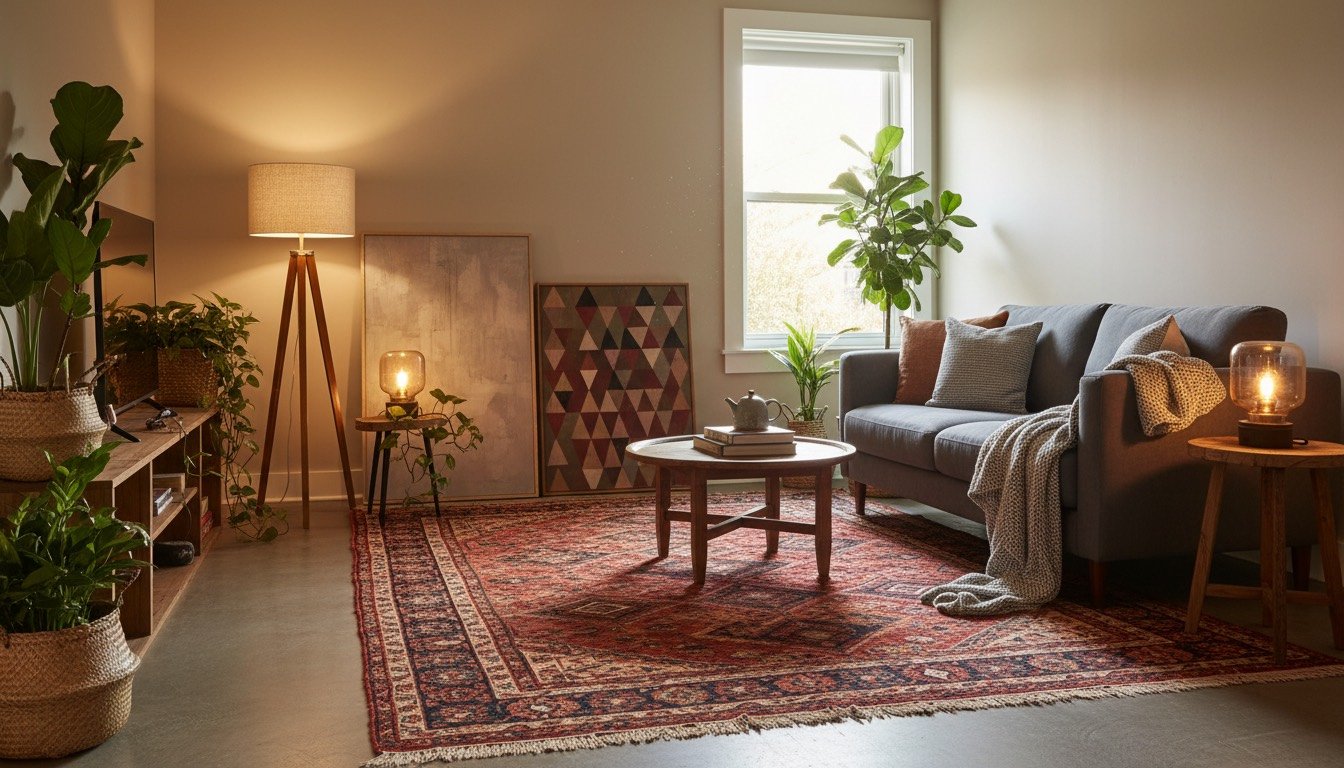
- •**Rugs** — the single biggest move. A large rug claims the floor, adds colour, muffles noise, and hides flooring you didn't pick. Buy big enough that your sofa's front feet sit on it; see our rug sizing guide. Budget £60–£180.
- •**Lighting, not just bulbs** — swap every bulb for warm white (2700K), then add lamps: plug-in wall lights and rechargeable stick-anywhere lamps have ended the grim overhead 'big light' era for tenants who can't run new wiring. Three lamps and warm bulbs typically costs £45–£90; our lighting layers guide covers where each layer should sit.
- •**Lean, don't hang** — oversized art and mirrors propped on the floor, mantelpiece or a console look properly styled and need zero holes. Where you must hang something, use adhesive strips rated for the item's weight, removed slowly with gentle heat from a hairdryer.
- •**Re-cover the landlord sofa** — a fitted-look throw plus five or six cushions in mixed sizes re-upholsters a tired three-piece suite for around £70–£130, and both travel with you at the end of the tenancy.
- •**Plants, in numbers** — nothing de-institutionalises a room like green things at different heights, and they survive a house move better than most furniture. One large floor plant (£25–£45) plus smaller pots does more than a feature wall. If you want the wider direction before spending, our review of UK home decor trends for 2026 covers what is actually sticking.
- •**Rearrange before you buy anything** — pulling furniture away from the walls or splitting a long room into two zones costs nothing and often fixes a cramped rental faster than any purchase; our guide to making a small room look bigger has the specific moves.
Peel-and-Stick Wallpaper and Vinyl Film: What Actually Comes Off Clean
Removable wallpaper and vinyl worktop or door films have matured a lot, but 'removable' still depends on the surface underneath. On sound, glossy or eggshell emulsion, most decent peel-and-stick products lift away cleanly. On matt or contract-grade emulsion, the flat, chalky finish landlords favour, the paper can pull paint off with it, leaving patches that need a full repaint. Test a hidden patch for 48 hours first. Budget £15–£30 per roll, or £8–£15 per metre for worktop and door vinyl.
Curtains are an easier win: most landlords are happy for you to swap them, provided you keep the originals stored and refit them before you leave — the poles and tracks are usually fair game too, since a better pole is easy to reverse.
Getting a Yes: How to Ask a Landlord for Decorating Changes
Simply asking changes more than most renters expect. A written request to repaint one wall in a specific, named colour — or the whole flat with an offer to return it to white before you leave — gets a yes far more often than tenants assume, because what landlords actually fear is neon feature walls and neglect, not taste. Name the exact colour and finish, offer to reinstate on exit, and keep the reply.
Photograph every room, including skirting boards and any existing marks, on move-in day and again before handing back the keys. If you get permission to repaint, use a paint colour that photographs and reinstates easily and keep the tin and colour code for touch-ups. Reversing changes properly is what protects a deposit — our guide to deposit deductions for cleaning explains what a landlord can and can't legally charge for. Damp and mould are a different category — they are the landlord's responsibility on fixed timescales, set out in our landlord repair deadlines guide.
Tools and Materials for Renter-Safe Decorating (UK Prices)
- •**Heavy-duty removable adhesive strips or hooks** — £6–£12 a pack; choose the weight rating for the actual item, not a guess.
- •**Reusable mounting putty** for lightweight prints — £3–£5 a tub, lasts months.
- •**Rechargeable stick-anywhere lamps** — £20–£45 each, no socket needed.
- •**Plug-in wall lights** with a visible flex rather than hardwired fittings — £18–£35, no electrician required.
- •**Small heat gun or hairdryer** for softening adhesive before removal — £15–£25 if you don't already own one.
- •**Basic stud finder**, useful if you get permission to hang something properly, since one fixing on a real stud beats six speculative holes; see how to find a stud without a stud finder if you'd rather not buy one.
Common Rental Decorating Mistakes That Cost Deposits
- •Ignoring the weight rating on adhesive strips — overloading one to hang a heavy mirror is the most common cause of pulled plaster and paint on moving-out day.
- •Painting without anything in writing — a verbal 'go on then' means nothing at a deposit dispute; get the agreement by email or text first.
- •Not keeping before-and-after photos, so it's your word against the inventory report when marks are queried.
- •Skipping the tenancy agreement's specific decorating clause — some explicitly ban adhesive products of any kind, overriding general advice like this.
- •Peeling adhesive strips off a cold wall — warmth from a hairdryer softens the glue and cuts the risk of paint lifting away with it.
When to Get It in Writing (or Call a Professional)
Some jobs sit outside 'renter-friendly' entirely. Any change to fixed wiring, such as a new pendant light or extra sockets, falls under Part P of the Building Regulations and must be done by a registered electrician, never as a DIY job. Fitted flooring, built-in shelving, or anything that changes a fixture rather than adds a layer on top of one needs written landlord consent regardless of how reversible it looks.
And when you finally move out, a proper end-of-tenancy clean, DIY with the right checklist or booked with a specialist, protects a four-figure deposit more than any amount of careful decorating. Our end-of-tenancy cleaning checklist covers exactly what inventory clerks check room by room.
Frequently asked questions
**Will Blu Tack or adhesive hooks damage rental walls?** On sound, modern emulsion, quality strips and putty rated for the item's weight usually come away cleanly if removed slowly and gently warmed first. The risk rises on cheap matt paint or anywhere already flaking, so test a discreet patch first.
**Can my landlord charge me for painting over a colour I added, even with permission?** If you had written permission and left the property in the agreed condition, no. Without permission, or with a botched paint job, a deduction for professional repainting is common and usually upheld at deposit disputes.
**Is peel-and-stick wallpaper actually removable, or is that a myth?** It genuinely is removable on sound glossy or eggshell emulsion, but it can lift paint off cheaper matt or contract-grade walls, which is common in rentals. Test a hidden A5-sized patch for 48 hours first.
**What's the single best-value change for a rented living room?** A large rug, consistently. It costs less than most single pieces of furniture, needs no permission, and does more to make a room feel finished than almost any other purchase — our guide to making a home feel more luxurious on a budget has more swaps in the same spirit.
**Do I need to tell my landlord about houseplants, lamps or rugs?** No. Anything not fixed to the property is entirely yours to add or remove without permission, provided it doesn't cause damage such as water marks from plant pots on wood flooring.
**How much should I budget to make a whole rented flat feel like home?** For a typical two-bedroom rental, £400–£700 spread across rugs, lamps, cushions, plants and leaning art covers most rooms without touching a wall or floor.
Found this useful?
There's plenty more — hundreds of guides and honestly-tested product reviews for every corner of your home.
Browse All Guides