Roofing & Exterior · 6 min read · 7 July 2026
Roofing Mistakes Homeowners Make on UK Homes and How to Avoid Them
Most UK roofs do not fail on their own. They get finished off by a pressure washer, a tub of mastic, or three winters of nobody looking up. Here is what actually goes wrong, ranked by cost.
By the Nims Casa editorial team — written from professional cleaning experience and checked against our editorial standards.
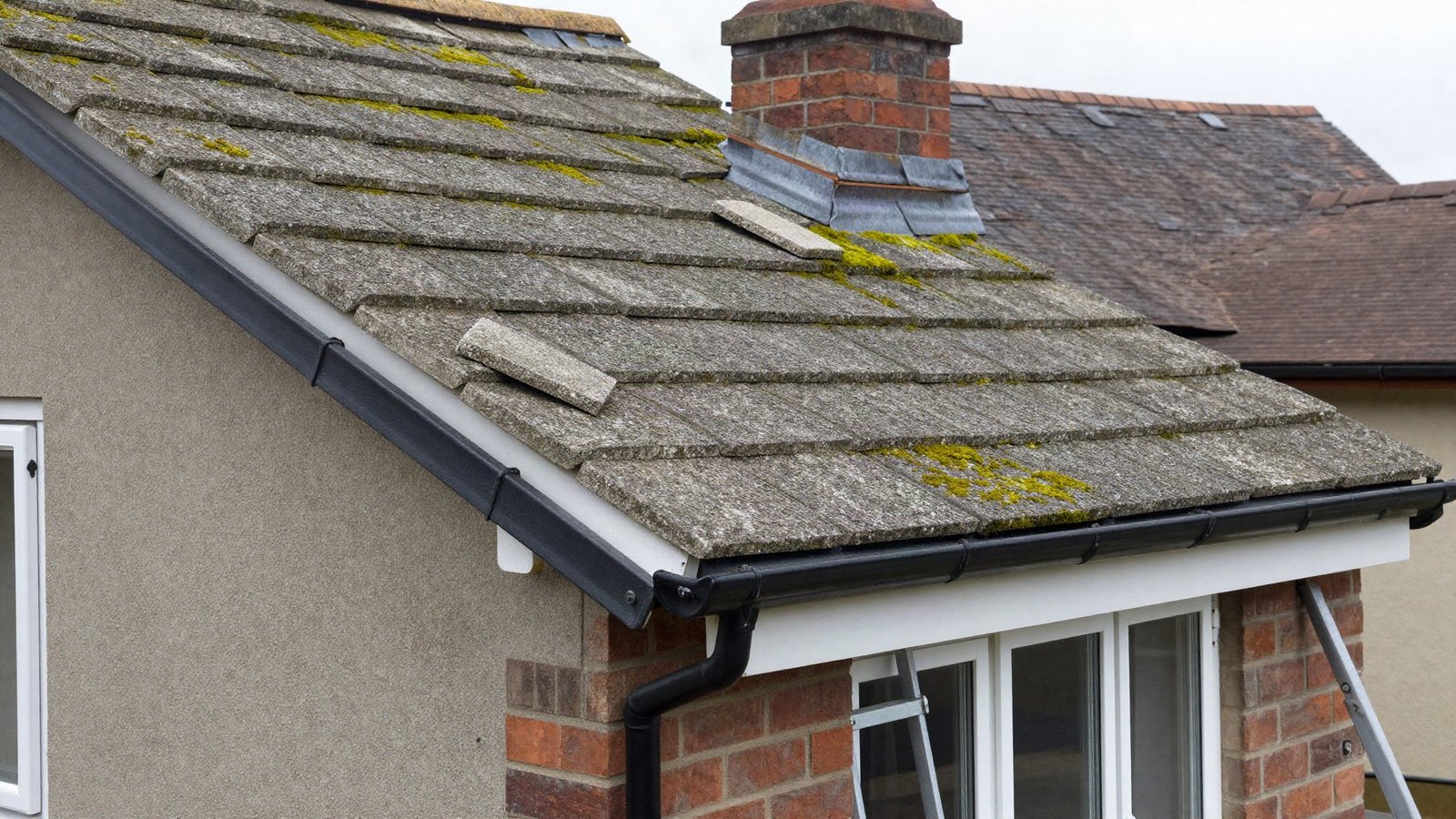
A concrete tile roof laid in 1975 will shrug off almost everything the British weather throws at it. What it will not survive is help: a jet wash on a dry Saturday, a spray coating sold on the doorstep, a bead of mastic over lead that needed dressing back down. Most expensive roofs we get called to have a receipt attached to the damage.
The other half is misdiagnosis. A damp patch gets treated as a leak, tiles get lifted at £180 a visit, and the stain returns in November because it was condensation all along. Work out which problem you actually have first.
Diagnose first: what your damp patch is telling you
UK roofs produce four kinds of internal damp and only one is a hole. Take a torch into the loft during heavy, windy rain, then watch the same elevation from the garden. One of these will fit.
- •Stain appears only during driven rain from one direction, then dries within a day: water past a slipped tile, a cracked verge or perished mortar. A small, findable defect.
- •Stain appears hours after the rain stops, or spreads on a dry day: water is tracking down a rafter or ponding on sagging underlay. The entry point is usually a metre or more up-slope.
- •Loft timbers feel clammy on cold still mornings and the underside of the membrane is beaded: condensation, not rain. Nothing outside needs touching.
- •Damp at the head of a wall or round an upstairs window rather than on the ceiling: an overflowing gutter or a split joint. Watch it from the garden during a downpour.
- •Damp beside the chimney breast on the wettest elevation: flashing, flaunching or perished stack pointing, the commonest leak in UK terraces and semis.
- •Ceiling under a flat roof or dormer, staining wider each winter: the felt is at the end of its life or the outlet is blocked. A covering replacement, not a patch.
The mistakes, ranked by what they cost you
Ranked by consequence, not frequency. The top three turn a repairable roof into a replacement, and if several apply at once you are past patching, so read the signs you need a new roof first.
- •1. Spray-on coatings and roof 'sealing', £2,500-£5,000. They seal a covering designed to breathe, trap moisture in the battens, and get flagged as a defect on RICS surveys. You still need the re-roof afterwards.
- •2. Pressure washing moss off tiles, £400-£800 to do the damage. A jet wash strips the sanded surface from concrete tiles and drives water under the laps, taking ten to fifteen years off the roof.
- •3. Blocking the eaves when topping loft insulation up to 270mm. Cut off the airflow at the wall plate and you get condensation, mould and rot in the rafter feet: £1,000-plus in timber repairs. Fit eaves trays and read up on ventilating the loft properly first.
- •4. Mastic and flashing tape over failed lead. It buys two winters and hides ongoing ingress. New lead to a chimney is £350-£700 done properly.
- •5. Repairing tiles and ignoring the stack. Half the 'mystery leaks' we return to are chimney flaunching or pointing, £400-£900 with access. Fix the slope only and you pay twice.
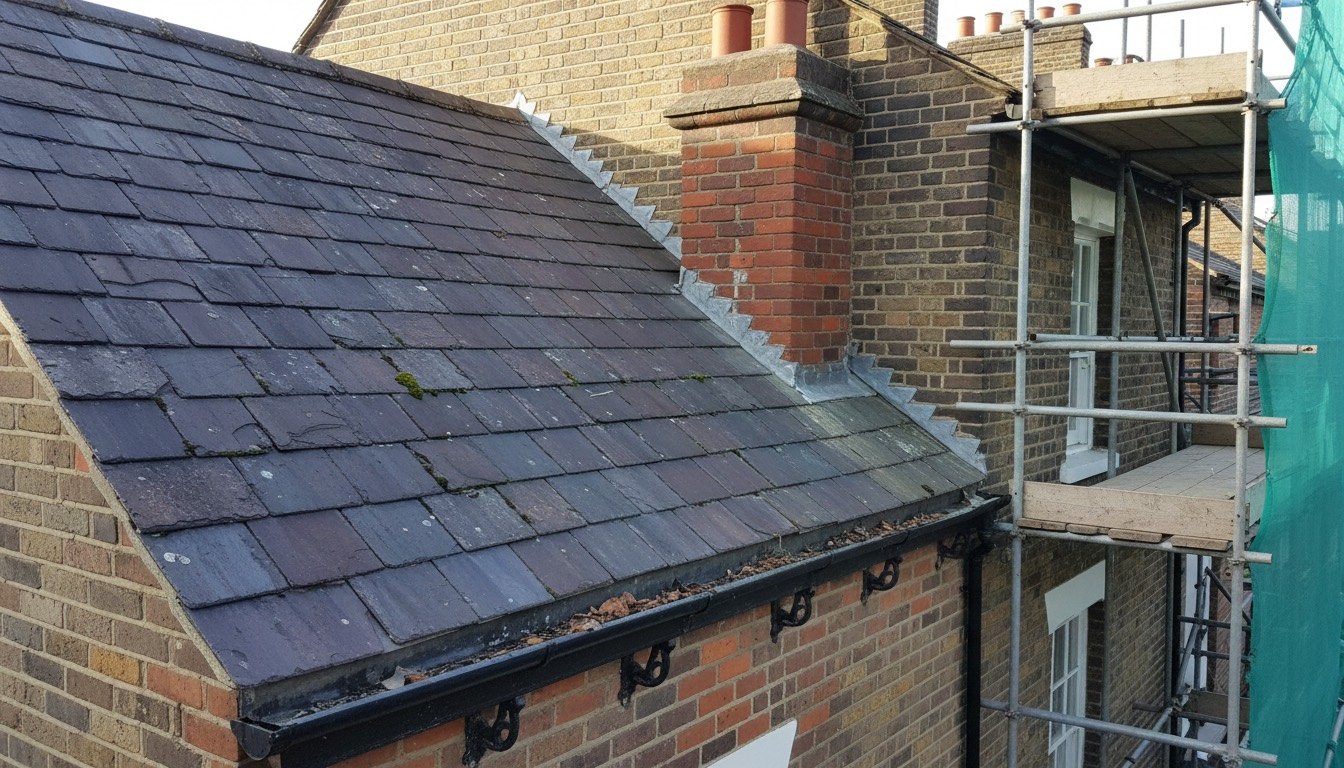
- •6. Never clearing the gutters. Two autumns of leaf litter rots fascia and rafter feet, £600-£1,500, against roughly £80-£150 a year for clearing them safely.
- •7. Re-bedding ridge tiles in mortar alone. BS 5534 has required mechanical fixing since 2014; mortar-only ridges lift in a gale. A dry ridge system is £40-£70 per metre fitted.
- •8. Letting a cold caller onto the roof. Someone who 'noticed a slipped tile from the road' finds £4,000 of work once up there, and no trace of them by spring.
Why sensible people keep making them
Roofs are invisible. Nobody inspects a surface they cannot see, so the first news most owners get is a ceiling stain or a stranger at the door, by which point fear is running and the fastest-sounding option wins.
Coatings and jet washing also look like they work: a cleaned roof photographs beautifully and the damage stays hidden for three or four winters. The jobs that genuinely add years are dull, cheap and produce no before-and-after photo at all.
The genuinely dangerous ones
Falls from height are the biggest cause of fatal injury in UK construction, and domestic roofs are worse than commercial ones because nobody has planned the access. Fragile roofs catch people out most: corrugated asbestos cement, common on garages built before 1999, will not take your weight, and nor will a plastic rooflight or a rotten flat roof deck. Never break, drill or jet wash asbestos cement; take intact sheets to a council hazardous waste site.
- •Walking on tiles or slates. Slate cracks underfoot and wet moss on a north-facing slope behaves like ice. Use a roof ladder with a ridge hook.
- •Ladder set-up: one out for every four up, feet on firm level ground, a metre projecting past the gutter, tied or footed, and never reach past your own belt buckle. Our ladder guide for homeowners covers the classes rated for it.
- •Anything above single storey wants a tower (£60-£90 a week) or scaffold (£600-£1,200 for one elevation of a semi), which usually costs less than the claim you would otherwise make.
What is worth doing yourself
The maintenance with the best return is the sort nobody sells you.
- •Clear gutters and downpipes in late autumn and early spring, then flush with a hose to check the falls.
- •Brush moss off gently with a stiff brush, downwards with the lap, on a dry day. Expect it back on shaded slopes within two or three years.
- •Photograph each elevation from the ground at full zoom every spring and compare with last year: slipped tiles and lifted ridges show up clearly.
- •Swap a single slipped tile on a garage or single-storey roof from a roof ladder: the tile is £2-£5, a roofer's minimum charge is £120-£180.
- •Check the loft with a torch on a wet, windy winter night. Ten minutes a year is the best inspection most houses get.
When to stop and call someone
Stop where the job needs access equipment, involves lead, mortar or the chimney stack, or where the underlay has gone. Sagging, torn bitumen felt is not repairable in place, and neither is nail fatigue, where slates slide off in ones and twos every gale. Renewing more than 25 per cent of a covering also counts as work to a thermal element under the Building Regulations in England and Wales, so it needs building control and usually an insulation upgrade.
Get three written quotes stating the scaffold, underlay and batten spec, the ridge system and who removes the waste, and judge them against typical roof repair costs rather than against each other, since three bad quotes agree perfectly well.
Finally, insurers pay for storm damage, not wear and tear. A roof with photographic evidence of annual maintenance gets claims paid; one with twelve years of leaf litter gets 'lack of maintenance' on the file. The rest of our Roofing and Exterior guides cover the individual jobs.
Found this useful?
There's plenty more — hundreds of guides and honestly-tested product reviews for every corner of your home.
Browse All Guides