Organisation & Storage · 6 min read · 20 May 2026
How to Ventilate an Attic: A UK Loft Guide (and Where DIY Must Stop)
A sweating loft is almost never a building fault. It is usually a ventilation path that has been blocked, sealed or insulated over. Here is how to open it back up safely.
By the Nims Casa editorial team — written from professional cleaning experience and checked against our editorial standards.
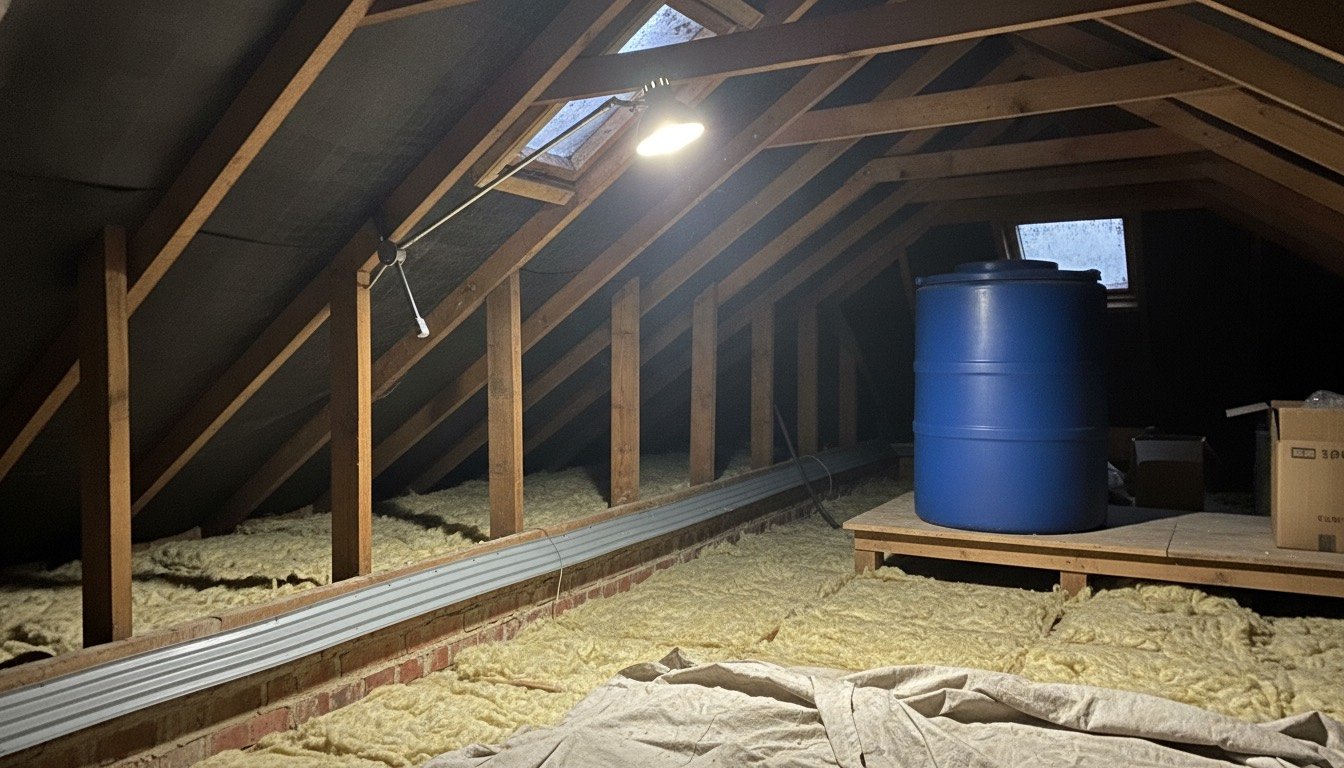
Nine times out of ten the call-out goes the same way. Insulation topped up to 300mm, and by February there is black mould on the rafters, damp patches on the landing ceiling and a smell like a forgotten tent. Torch along the eaves and there it is: mineral wool rammed into the corner where the wall plate meets the rafters, sealing off the only air path the roof ever had.
A cold loft works by staying cold and dry. Warm, moist air rises out of the house, hits a freezing roof and condenses. Ventilation carries that moisture out before it soaks into timber. This guide covers cold lofts in UK housing stock, gives the figures from BS 5250, and is honest about where DIY has to stop.
Safety first: what actually hurts people up there
Loft work injures more DIYers than roof work. Read this before you open the hatch.
- •Put weight on joists only. Plasterboard will not hold you — a leg through the landing ceiling is a £300 repair. Lay two scaffold boards and shuffle them along.
- •FFP3 mask, goggles, gloves, long sleeves — old mineral wool sheds fibres badly. Use a battery inspection lamp, not a trailing mains lead.
- •Assume asbestos in any pre-2000 house — old flue pipes, artex hatches, panels boxing in a chimney breast, some cold tanks. Do not cut or break anything suspect. A UKAS lab sample is £30 to £60.
- •If you find bats, stop. Roosts are protected under the Wildlife and Countryside Act 1981 whether bats are present or not. Ring the Bat Conservation Trust on 0345 1300 228. Same for nesting birds, March to August.
- •Ladder soffit work is fine on a bungalow; on a two-storey semi, hire a tower (£60 to £100 a week).
Work out what roof you have before buying anything
Two things decide what you fit. First, where the insulation sits: between and over the ceiling joists means a cold roof that must be ventilated. If it follows the rafter slope, that is a warm roof with different rules — read our attic conversion cost guide first.
Second, what is under the tiles. Black bitumen felt (type 1F) is vapour-tight and needs vents. A breathable membrane passes some moisture, but nearly every manufacturer still wants eaves ventilation, so do not assume you can skip it. The figures:
- •Pitch over 15°, insulation at ceiling level: a continuous 10mm airway along both eaves.
- •Pitch under 15°, or insulation following the rafters: 25mm continuous at the eaves plus 5mm at the ridge.
- •Pitch over 35°, or span over 10m: add 5mm continuous ventilation at the ridge, or at the top edge of a lean-to.
- •Always keep a clear 50mm air gap above the insulation at the eaves — the most commonly ignored figure in British lofts.
Tools, materials and realistic cost
Nothing exotic. Screwfix, Toolstation and the roofing merchants stock it all; Manthorpe, Timloc and Klober are the names to look for. A three-bed semi with reachable soffits is a weekend of work.
- •Eaves ventilation trays, one per rafter bay: £1.50 to £2.50 each
- •Circular 70mm soffit vents, pack of 10: £10 to £15, or continuous strip vent £6 to £10 per 2.4m
- •Over-fascia vent: £3 to £5 per metre, the neatest option where soffits are solid
- •Cordless drill with 68mm or 70mm holesaw; multi-tool or jigsaw for strip vents
- •Loft hatch draught seal kit plus 100mm insulation board: £20 to £35
- •Clearing eaves and fitting trays across a semi: 2 to 3 hours, £40 to £70
- •Soffit vents to both elevations: 3 to 5 hours, £25 to £50
- •Roofer fitting two tile vents: £180 to £350. Dry ridge on a 6m ridge: £450 to £900, plus £400 to £900 if scaffolding is needed
The steps, in order
Fitting vents before clearing the eaves is the classic wasted afternoon.
- •1. Survey in daylight with the lamp off. Daylight along the eaves is a good sign; damp felt, rusty nail points, black staining and soggy insulation are not.
- •2. Find the moisture source. A bathroom fan discharging into the void, a tumble dryer hose, an unlagged tank or an unsealed hatch will out-produce any vent you fit. If washing goes on airers below, read drying clothes indoors without damp.
- •3. Clear the eaves back until you can see daylight or the fascia. Do not just push the wool down; it creeps back.
- •4. Fit an eaves tray in every rafter bay, tucked under the felt and sitting on the wall plate. That holds the 50mm gap open permanently.
- •5. Reinstate insulation up to the tray, not past it. Keep it clear of downlighters, and never bury a cold tank — lag its sides and top instead.
- •6. Fit low-level vents: round soffit vents every 300 to 400mm along both eaves, or a continuous strip. Where soffits are solid or boxed, use an over-fascia vent instead.
- •7. Seal the hatch — compression draught strip, 100mm board glued to the back, a catch that pulls it down tight.
- •8. Add high-level ventilation only if the figures above call for it. That is where you hand over to a roofer.
- •9. Recheck in the first cold week. On a frosty morning the felt underside should be dry and the air neutral.
Troubleshooting: still damp a month later
Work through these before spending more.
- •Condensation at one gable only: air is not crossing the loft. You need vents on both eaves, not one side.
- •Wet patches under tiles or around the chimney: that is ingress, not condensation. Start with finding and fixing a roof leak.
- •Wet insulation but dry felt: look for a leaking overflow, a weeping tank valve or a cracked soil vent pipe.
- •Mould already on the rafters: treat it after ventilation is fixed, using our guide to getting rid of damp and mould. Treating first only delays regrowth.
- •Loft condensation plus streaming windows downstairs: the whole house is under-ventilated. Start with the signs of poor home ventilation.
Where DIY stops and a professional starts
Most articles fudge this. The line is not about confidence, it is about what happens when it goes wrong.
A competent DIYer can do all of this unaided: clearing the eaves, fitting eaves trays, relaying insulation, sealing the hatch, lagging tanks and pipes, fitting soffit vents at single-storey height, and reconnecting a short duct run to a wall terminal. None of it involves going on the roof or altering structure.
Call someone the moment work goes onto or through the tiles. Tile vents and dry ridge systems need slates lifted and relaid properly, and a badly bedded vent turns condensation into a leak. Over-fascia vents at two-storey height need real access. A duct terminating through the covering must be flashed by a roofer. Any warm-roof build-up is a Building Regulations matter — check when you need building regulations approval rather than guessing. Suspected asbestos goes to a licensed contractor, bats to an ecologist, and any new loft circuit to a registered electrician.
One last note: if the covering is near the end of its life, do not spend £700 on vents. Retiling includes new membrane and ventilation as standard.
Found this useful?
There's plenty more — hundreds of guides and honestly-tested product reviews for every corner of your home.
Browse All Guides