Plumbing · 6 min read · 2 April 2026
Washing Machine Won't Drain or Spin? Here's the Order to Check
A drum full of grey water at the end of a cycle is the most common appliance call-out there is, and most are cleared without buying a single part. Here's the order to work through it.
By the Nims Casa editorial team — written from professional cleaning experience and checked against our editorial standards.
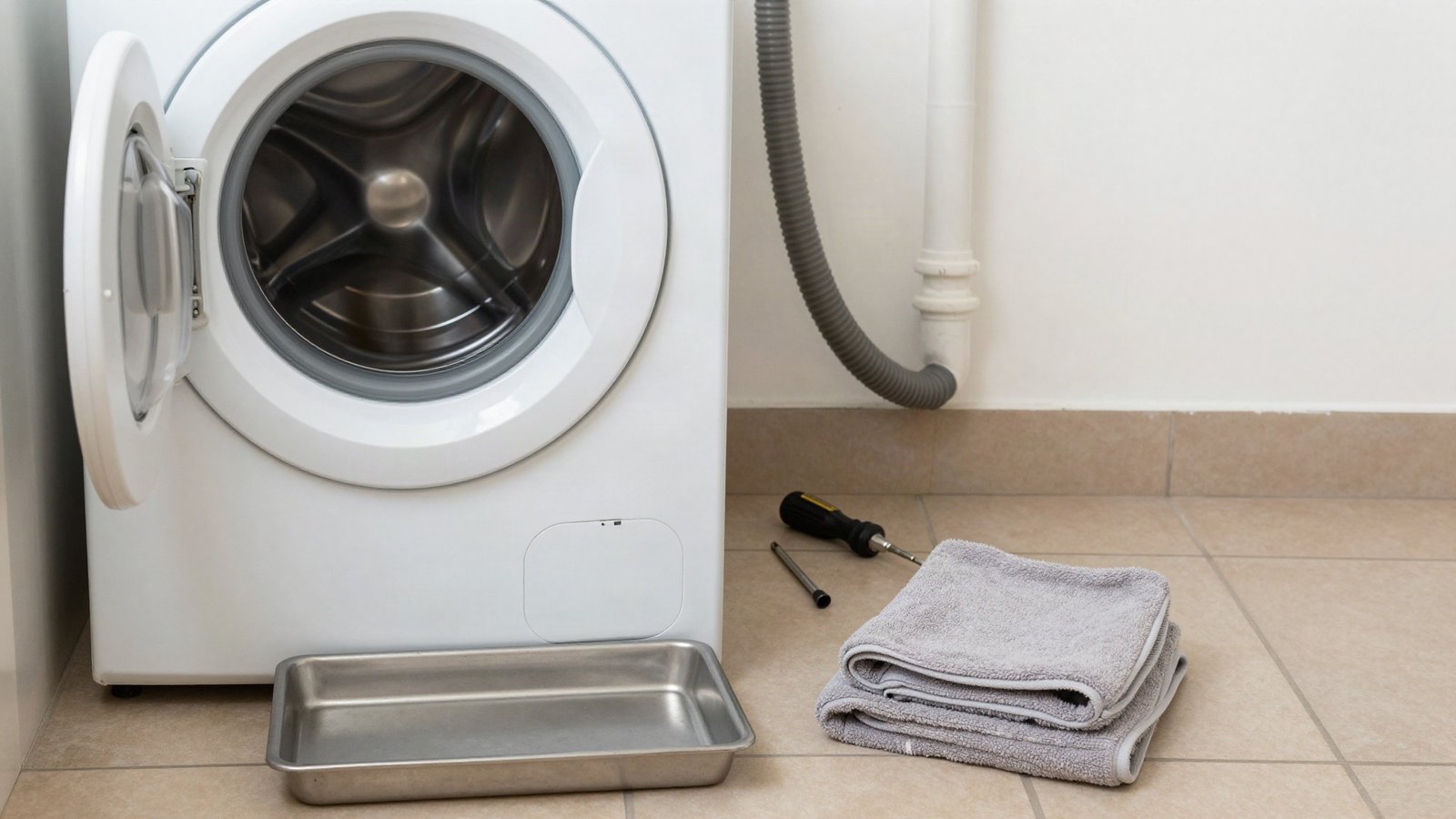
A drum full of cold grey water with the programme stalled on ten minutes is the most common appliance call-out there is, and a fair share are cleared in twenty minutes with a torch, a tray and a couple of towels. Nothing is broken. Something is in the way.
The order matters because each check rules out the next: start at the pump filter, work outwards towards the waste pipe, and you will either find the blockage or narrow the fault down to one component. Start by taking the back off and you get a wet floor and nothing learned.
Why It Won't Spin Either
A washing machine will not spin while there is water in the drum. A pressure sensor reads the level in the sump, and until it reads empty the board refuses to release the motor. That is deliberate: 25 litres spun to 1400rpm would come past the door seal and walk the machine across the floor. So "won't spin" is usually a drain fault in disguise.
The exception matters. If the drum drains properly and still will not spin, you are on a different path: an unbalanced load, a stretched drive belt, worn carbon brushes, or a failed door interlock.
- •Bosch and Siemens: E18 or F18, timed out trying to drain.
- •Hotpoint and Indesit: F05, drain pump or pressure system.
- •Samsung: 5E, or nd on older panels, a not-draining code.
- •LG: OE is a drain error, UE an unbalanced load, which is a spin problem.
- •No code, just a stall: almost always a blockage, not electronics.
Ten Minutes of Prep
Unplug the machine at the socket, not at the programme knob, then turn off the fill tap. If the cycle stopped part-way through a 60 degree wash the trapped water can still be 40 to 50 degrees, so give it half an hour.
You need a shallow oven tray that fits under the filter housing, two old towels, a washing-up bowl, a torch and a flat screwdriver. Expect 20 to 25 litres, so unscrew the filter half a turn at a time to control the flow.
The Check Order: Cheapest and Most Likely First
Work down the list and stop at whatever you find. Around 70 per cent are cured by the first two steps.
- •1. Empty it at the pump filter, behind the kick-plate flap at the bottom front. If water gushes freely, the pump side is fine and the blockage is downstream.
- •2. Inspect the filter and impeller. Coins, hair grips, a shredded bra underwire and a felt of lint are the usual haul; the impeller should turn freely with a finger.
- •3. Check the drain hose for kinks. Crushed against a skirting or trapped under the machine's own foot causes faults that come and go for weeks.
- •4. Check the standpipe or sink spigot. The hose should sit 600 to 900mm above the floor, not pushed so deep that it siphons. On a sink spigot, check the blanking cap was cut off.
- •5. Check the trap and waste run. A scum-packed trap drains slowly rather than not at all, so the cycle overruns instead of stopping. If the sink is slow too, treat it as a blocked kitchen sink.
- •6. Flush the pressure sensor tube. The thin clear pipe from sump to pressure switch silts up with detergent gel, and the machine then thinks water is still present.
- •7. Suspect the pump last. Filter, hose and waste clear, and the machine either hums for 20 seconds or stays silent: the drain pump has failed.
What Each Fix Actually Costs
Parts are cheap here and labour is not, so the economics are clear. Set these against the machine's realistic service life, especially if yours is past the eight-year mark covered in how long appliances last.
- •Clearing the filter, hose or trap yourself: an hour and a couple of towels.
- •Pattern drain pump £15 to £35 online; £40 to £70 genuine. Drive belt £8 to £15.
- •Independent engineer: £60 to £90 first hour; £110 to £160 all-in for a pump swap.
- •Fixed-price repair schemes: £110 to £180 including parts.
- •A decent new freestanding machine: £280 to £600 fitted, old one removed.
The DIY-or-Pro Line: Exactly Where to Stop
The boundary is less about skill than about what sits behind the panel: everything on the drain side is plumbing you can reach with the plug out, and everything past the control board is not.
With the machine unplugged, a competent DIYer can clean the pump filter, free a jammed impeller, replace or re-route the drain hose, strip and clean the standpipe trap, flush the pressure tube, level the feet, and on many models swap the drain pump itself, reached from the front or by tipping the machine onto a towel. None of that is notifiable work and none of it touches mains-side components.
Stop and call someone at these points. If the machine trips the RCD, do not keep resetting it: that is usually a heater element leaking to earth, and it belongs with the other electrical repairs you should never DIY. Burnt plastic, scorching at the terminal block or a marked control board means unplug and leave it. If diagnosis needs the top or back off with the machine running, that is engineer work. Water weeping from under the drum means the bearings have gone, rarely worth repairing on a sealed tub.
The plumbing boundary is just as firm. Cleaning an existing trap is a homeowner job; cutting a new waste connection into a soil stack falls under Building Regulations Part H, so weigh what a plumber charges against a botched job venting drain smells for years. If the machine is under two years old, check the warranty before unscrewing anything.
Stopping It Happening Again
Nearly every blocked-pump call-out is preventable in ten minutes a quarter, and the neglect that blocks a pump is the same neglect behind the sour smell six months later, which a proper maintenance wash routine handles too.
- •Clean the pump filter every three months and put it in the diary.
- •Run an empty 90 degree cottons wash with machine cleaner or 200g of soda crystals every two months, monthly in hard-water areas.
- •Check pockets, and use a mesh bag for bras and anything wired or beaded.
- •Leave the door and drawer ajar, and go easy on detergent: excess gel silts up the pressure tube.
Common Questions
Can I force a drain? Most machines have a drain-only or rinse-and-spin programme worth one try. If it fails, stop: a pump straining against a blockage overheats, turning a free fix into a £150 one.
It drains, then water comes back. That is siphoning, from a hose too low or pushed too far down the standpipe. Raise its highest point to 600mm above the floor and insert it only 100 to 150mm.
Is it worth repairing? If the quote tops 45 per cent of a like-for-like replacement and the machine is over eight years old, replace it. A pump on a three-year-old machine is always worth doing; the same pump on an eleven-year-old drum is money after bad.
Found this useful?
There's plenty more — hundreds of guides and honestly-tested product reviews for every corner of your home.
Browse All Guides