Garden & Outdoor · 6 min read · 2 May 2026
Why Is My Grass Turning Brown? A UK Diagnosis and Fix Guide
A brown lawn in July and a brown lawn in November are almost never the same problem, and the cure for one makes the other worse. Here is how to tell them apart before you spend a penny.
By the Nims Casa editorial team — written from professional cleaning experience and checked against our editorial standards.
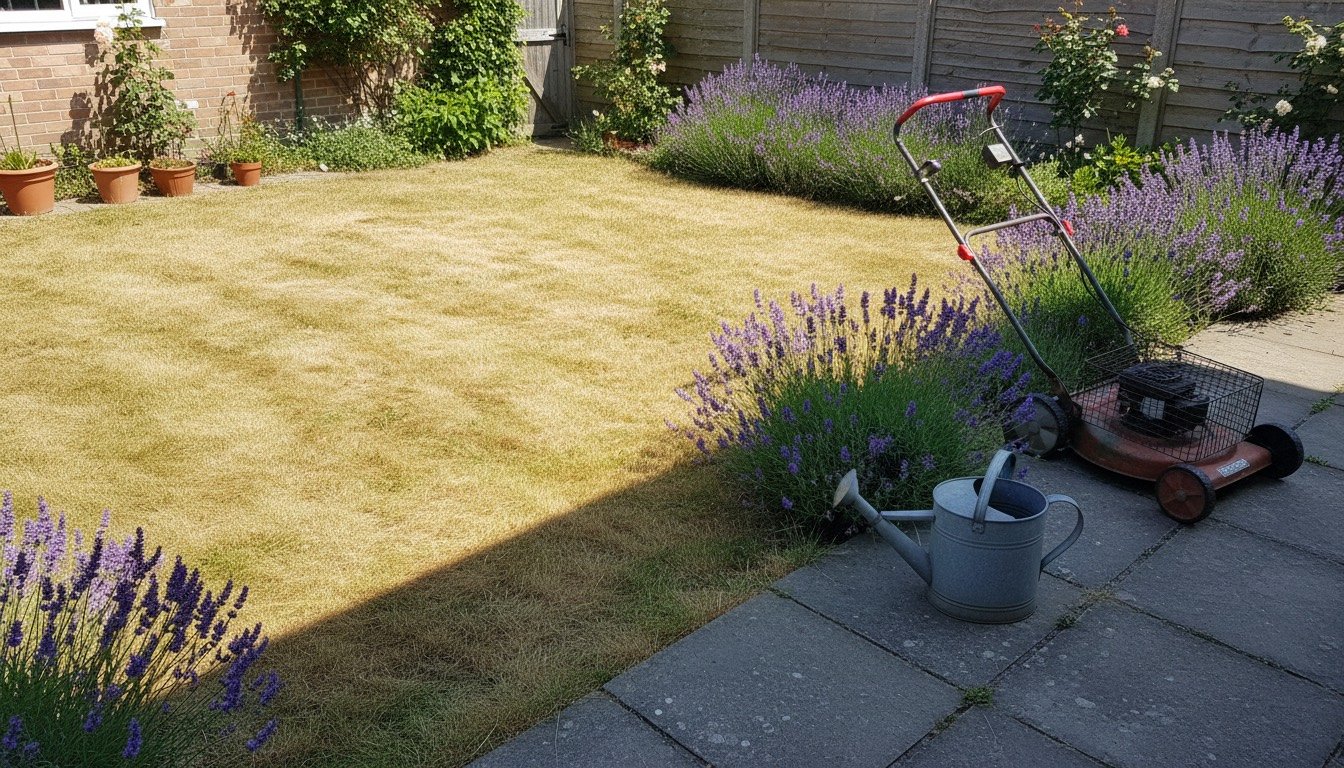
Before you buy anything, work out whether the grass is dormant, hungry, diseased or being eaten from below. Half the lawns we get called to have been fed, sprinkled or scarified into a worse state by someone treating the wrong cause. The product was fine; the diagnosis wasn't.
The reassuring part is that most browning on a British lawn is temporary. The ryegrass and fescue mixes used here shut down and go straw-coloured to protect the crown, then green up within two to three weeks of proper rain. The cases that genuinely need money spent announce themselves, and this guide is about telling the two apart.
Start With a 60-Second Diagnosis
Do these five checks in the garden before reading further. Between them they settle around 80% of cases.
- •Tug test: grab a fistful of brown grass and pull. If it lifts like a rug with no roots attached, you have chafer grubs or leatherjackets, not a watering problem.
- •Screwdriver test: push a long screwdriver into brown turf, then green. If it slides into green and stops dead in brown, that is compaction or bone-dry soil.
- •Leaf-tip test: hold one blade up close. Frayed, whitish, shredded tips mean a blunt mower blade, not disease.
- •Edge test: sharp straight lines are man-made (spreader passes, scalping, spills), neat circles are urine or fungal, soft fades are drought.
- •Water test: pour half a can slowly onto the brown area. If it beads, runs sideways and vanishes, the soil is water-repellent and sprinkling will never reach the roots.
Symptom to Cause: Reading the Pattern
Dormant and dead grass look identical from the kitchen window. The difference shows only at the base of the plant, where dormant grass keeps a pale green crown.
- •Uniform straw-yellow across the whole lawn, worst on sunny slopes and shallow soil: drought dormancy. Not dead.
- •Pinkish-red needles or fine threads on the tips, in patches 5-30cm wide in warm humid weather: red thread, which is a nitrogen shortage in disguise.
- •Circles 10-20cm across with a darker green halo: dog urine.
- •Irregular yellowing that lifts freely, with crows, foxes or badgers tearing at the turf overnight: grubs feeding on the roots.
- •Brown only on bumps, high points and mower-turning circles: scalping from a mower set too low.
- •Sharp-edged stripes or a burnt rectangle: fertiliser scorch, a dropped bag, or petrol spilled while filling the mower.
The Causes, Ordered by How Often We Find Them
Drought and localised dry patch cause roughly half the summer calls we take. UK topsoil over clay dries from the surface down, and once the top 50mm turns water-repellent a ten-minute sprinkle simply runs off. The cure is fewer, heavier soakings of about 25mm a week, and our guide to how often and how long to water grass shows how to measure it with a jam jar.
Second is underfeeding, which surfaces as red thread from June and rust in autumn. Both are opportunists on hungry grass and neither kills the roots; a nitrogen feed clears them in a fortnight without any fungicide. Timing matters more than brand, which is why a month-by-month lawn fertiliser schedule beats an expensive bag.
Third is mechanical: scalping, blunt blades and mowing in a heatwave. Cutting below 30mm in July strips the leaf that shades the soil and the surface cooks. Fourth are pests: chafer grubs and leatherjackets are destructive but a minority cause. If your tug test came back loose, go straight to dealing with grubs rather than buying feed.
Below those sit dog urine, compaction along the routes people walk, shade thinning under conifers, and the occasional true disease. Where browning is confined to discrete areas, our guide to brown patches and their causes narrows it faster.
Fixes, Lowest Risk First
The first group is cheap and reversible; the second can make a struggling lawn worse if you have misdiagnosed.
- •Raise the mower to 40-50mm and sharpen the blade: an £8 file and 20 minutes. It fixes more brown lawns than anything on a shelf.
- •Stop feeding and stop mowing dormant grass. It cannot use nitrogen, and cutting removes what shade it has left.
- •Water properly: 25mm once or twice a week, early morning, measured. At £2.50-£3.50 per 1,000 litres, soaking a 100m² lawn costs £6-£9.
- •For water-repellent soil, fork to 100mm depth at 150mm spacings, apply a wetting agent (£15-£20 per litre, treats 100-200m²) and water it in.
- •Feed at the label rate with a spreader, never by hand, at £15-£25 for 400m². Water it in within 24 hours or you scorch stripes into the lawn.
- •Higher risk from here. Overseed at 35g/m² with a ryegrass mix (£12-£20 per kg) once soil holds above 8°C, keeping it damp for three weeks.
- •Scarify and hollow-tine aerate, hire £50-£70 a day. On thin turf in the wrong month it strips the cover you have.
- •Nematodes for grubs, £25-£40 per 100m², only when soil is above 12°C and kept wet afterwards. Applied cold or dry, they fail.
- •Full returf at £12-£20/m² laid: a last resort, pointless until the cause is fixed.
The Renter-Safe Version: Reviving a Lawn Without Risking Your Deposit
If you rent, the aim changes: a lawn that reads as cared-for at check-out, using only actions you can undo. Photograph it with a timestamp today and dig out your check-in inventory. Drought browning is fair wear and tear, not damage, and no adjudicator will award a landlord the cost of returfing a lawn that browned off in a heatwave during a hosepipe ban.
Safe and reversible: mowing higher, sharpening the blade, hand-raking thatch, watering with a can, and patch-repairing bare spots with topsoil and seed. That last one leaves the garden better than you found it, and overseeding needs only a rake.
- •Ask in writing first: hiring a scarifier or aerator, or applying any weedkiller or weed-and-feed.
- •Never without written consent: lifting turf, laying membrane and gravel, or installing artificial grass. All three are alterations and regular sources of deposit disputes.
- •Under a hosepipe ban a watering can is still allowed and fines reach £1,000. Put the cans on newly seeded patches and let the rest go dormant.
- •Keep receipts for seed, feed and topsoil. Evidence of maintenance defeats speculative deductions better than argument does.
Where DIY Stops and You Call Someone
Three things are not lawn problems. A narrow dead strip in a straight line, especially over a service run, can mean a leaking gas service pipe: if there is any smell of gas, ring the National Gas Emergency Service on 0800 111 999 and do not dig. Browning with standing water 48 hours after rain is a drainage fault, and reseeding it is money burned. Soil contaminated with petrol, oil or strong herbicide needs the top 100-150mm excavated and replaced.
Otherwise, call a treatment firm when grub counts pass roughly ten per square metre, since professionals hold approvals for turf insecticides not sold to householders, or when a full season of correct mowing, watering and feeding has changed nothing. That usually means severe compaction or buried builder's rubble, and no amount of seed fixes either. Budget for professional lawn care costs rather than a bag of feed.
Found this useful?
There's plenty more — hundreds of guides and honestly-tested product reviews for every corner of your home.
Browse All Guides