Garden & Outdoor · 6 min read · 7 May 2026
How to Overseed a Lawn: The UK Autumn Method, Seed Rates and Real Costs
Overseeding is the cheapest way to thicken a tired British lawn, but only if you get the soil temperature, seed rate and first three weeks of watering right. Here is the method that works.
By the Nims Casa editorial team — written from professional cleaning experience and checked against our editorial standards.
Most thin lawns in this country are not diseased or starving. They are worn out by dogs, football, compaction and a couple of dry Julys, and the plants that died were never replaced. Scattering seed on top achieves very little. Getting seed into moist soil, at the right rate, in the right fortnight, transforms it.
Our climate is close to ideal for the job: warm, damp autumns are what cool-season grasses want. The catch is that the window is narrower than the packet suggests, and half the failures we see come down to the wrong month or a surface left to dry out on day nine.
The only two windows that work in the UK
Grass germinates on soil temperature, not air temperature. Dwarf perennial ryegrass needs about 8-10°C in the top 50mm; fescues and bents want 10-12°C. Push a soil thermometer 50mm in at 9am on three consecutive mornings and average it — a two-minute check that saves a whole bag of seed.
The prime window is mid-August to late September: soil still holds summer heat, autumn rain does the watering, and annual weeds have stopped competing. Second choice is mid-April to mid-May once the ground has genuinely warmed. Sow in March and the seed sits cold, wet and eaten. Regional variation runs about three weeks either side, which our guide to when to sow grass seed sets out.
Do not overseed within six weeks of a selective herbicide — most amateur labels state that interval, and ignoring it checks the seedlings badly. If the lawn is more weed than grass, tackle the weeds first and overseed next season.
Safety, permissions and the UK rules that genuinely apply
Low-risk job, but three real constraints are worth knowing before you open a bag.
- •Hosepipe bans. A Temporary Use Ban under the Water Industry Act restricts hosepipes and sprinklers, and newly sown lawns are not usually exempt — professionally laid turf sometimes is, seed rarely. Watering cans stay legal and penalties on summary conviction reach £1,000. Check your water company's notice; if a ban looks likely, delay sowing.
- •Buried services. Hollow-tine aerators and powered scarifiers reach 75-100mm and will find shallow garden lighting cable. Mark runs first. If you cut one, use a scheme-registered electrician (NICEIC, NAPIT, ELECSA) — in Wales outdoor electrical work remains notifiable under Part P of the Building Regulations, and in England a new circuit or consumer unit change is.
- •Renting. Most assured shorthold tenancies ask tenants to keep a garden in reasonable condition, not to improve it, and deposit schemes rarely allow full renovation costs as fair wear and tear. Ask the landlord before scarifying their lawn back to soil.
- •Machinery. Boots, goggles and ear defenders with a petrol scarifier, and a 30mA plug-in RCD on any mains machine outdoors.
Tools, materials and what they cost
Genuinely beginner level. Hire beats buying unless you look after more than about 200m².
- •Seed: ryegrass-dominant hardwearing mix for family lawns, fescue and bent for fine turf. Buy on BSPB Turfgrass Seed ratings, not the bag photo. £25-£35 for 5kg, £60-£90 for 20kg.
- •Scarifier: electric to buy £120-£220, or petrol day hire £45-£70.
- •Hollow-tine aerator: hire £60-£95 a day, or a hand tiner at £30 for a small lawn.
- •Top dressing: sandy loam £8-£12 per 25kg, or roughly £90-£130 for a bulk bag delivered.
- •Pre-seed fertiliser: high phosphate, low nitrogen (around 8-12-8), £15-£25 for 10kg.
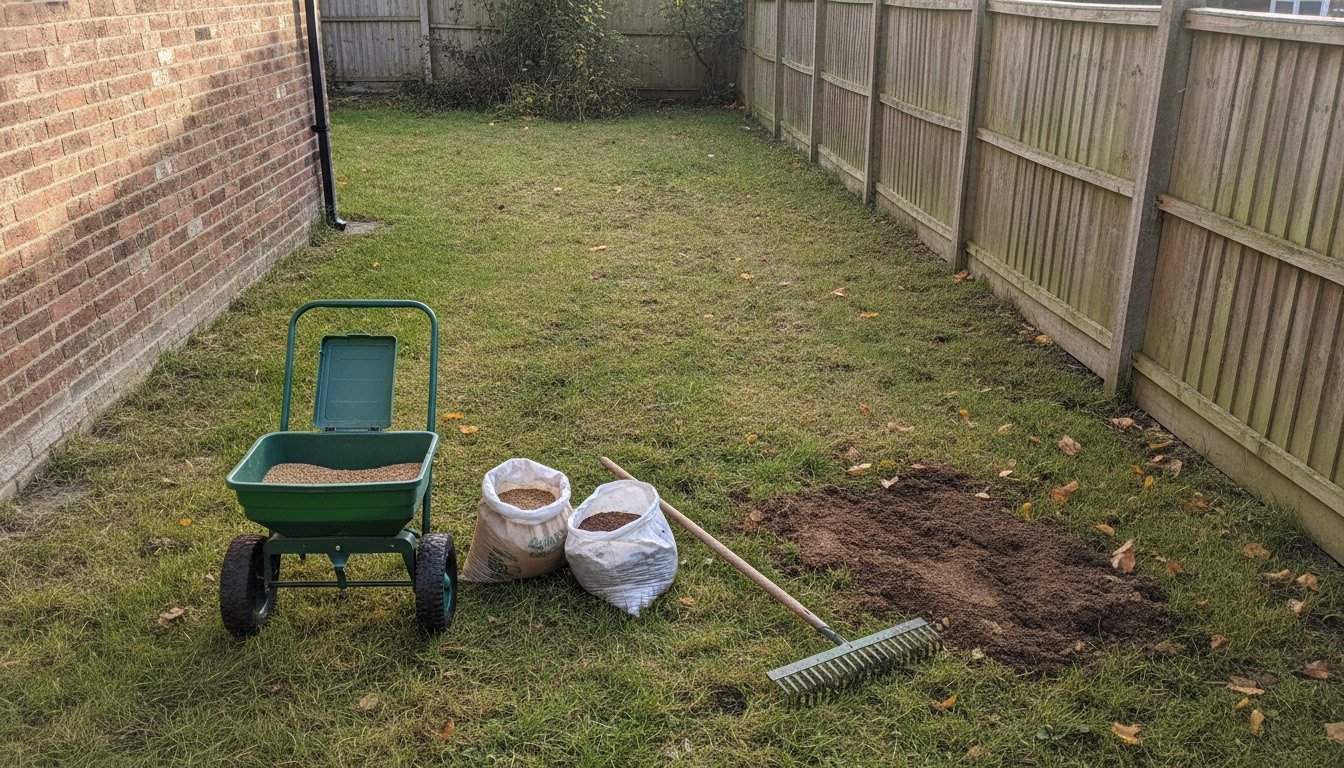
- •Spreader (£25-£60), spring-tine rake, stiff yard brush, fine-rose watering can.
- •Typical 100m² garden: £70-£140 in materials, plus £60-£120 in machinery hire.
Realistic time and the step-by-step method
Budget half a day for 100m² — three to four hours of work, most of it scarifying — plus three weeks of five-minute daily watering. Do not rush steps three and seven; the seed-to-soil contact you create there decides the outcome.
- •1. Deal with moss first. If moss covers more than a fifth of the lawn, apply ferrous sulphate and wait 10-14 days until it blackens. Seeding into living moss is money on the compost heap.
- •2. Mow low. Cut at your usual height, drop two settings, cut again to 15-20mm, and box off every clipping.
- •3. Scarify hard. Set the blades to nick the soil, not comb the grass, and work twice at 45 degrees. You want soil visible through the sward and several bags of thatch. It looks like vandalism. That is correct.
- •4. Aerate if compacted. Hollow-tine at about 100mm spacing, leave the cores to dry, then break them up with a stiff brush. Our guide on when to aerate a lawn explains how to tell compaction from thatch.
- •5. Apply pre-seed fertiliser at the label rate, usually 35g per square metre.
- •6. Sow at 25-35g per square metre — a quarter to a third of a new-lawn rate. Split the seed and spread in two passes at right angles; one pass in stripes always shows as stripes.
- •7. Top dress with 2-3kg of sandy loam per square metre and brush it in until the seed disappears. Seed left on the surface is bird food.
- •8. Water lightly and often. Keep the top 10-15mm damp with 5-10 minutes twice daily for two to three weeks rather than one long soak; our lawn watering guide shows how to measure that with a jam jar.
- •9. Stay off it for three weeks. Ryegrass shows in 5-10 days, fescues and bents in 14-21.
- •10. First cut at 50-60mm with a sharp blade, removing no more than a third. Resume your normal fertiliser schedule at about six weeks.
Troubleshooting the first six weeks
- •Germination in stripes: uneven spreading. Wait 21 days, then hand-sow the gaps at half rate.
- •Nothing after 21 days: soil too cold, or the surface dried out around days 5-10. Scratch the surface — swollen, mouldy seed is dead seed. Re-sow above 10°C.
- •Seedlings up then yellow and thin: too much shade, or a high-nitrogen feed applied too early.
- •Birds stripping the lawn: use bird-repellent-coated seed, or fleece for the first ten days.
- •Moss straight back: the real problem is drainage or shade. Fix it, or switch to a shade-tolerant fescue mix.
- •Straw-coloured rings or sunken circles: disease, not a seeding fault — check brown patches in your lawn before buying more seed.
When to stop and call a professional
Overseeding is not always the right answer. If more than about 40% of the lawn is bare, full renovation or new turf usually costs less per square metre than three failed seedings. If water sits for days after rain, you have a drainage problem and seed will simply rot — that needs a contractor with slit-drainage kit, not another bag.
Call someone in too if you suspect leatherjackets or chafer grubs (birds tearing at the turf, grass lifting like a carpet), or if the area exceeds roughly 500m². Expect £2.50-£5 per square metre for a scarify, aerate and overseed package, or £250-£450 for a standard back garden; our breakdown of professional lawn care costs shows where that goes.
One last thought before you pave the lot in frustration: more than five square metres of non-permeable hard surface in a front garden needs planning permission in England and Wales. A bag of seed and a damp fortnight is an easier conversation.
Found this useful?
There's plenty more — hundreds of guides and honestly-tested product reviews for every corner of your home.
Browse All Guides