Product Reviews · 6 min read · 20 June 2026
The Best Carpet Stain Removers UK (2026) — And the Ones That Ruin Carpets
We get called in after supermarket stain removers go wrong more often than after the original spill. Here are the ones that actually work — used correctly.
By the Nims Casa editorial team — written from professional cleaning experience and checked against our editorial standards.
Affiliate disclosure: if you buy through links in this article we may earn a small commission at no extra cost to you. Our recommendations come from professional cleaning experience and are never influenced by retailers or brands.
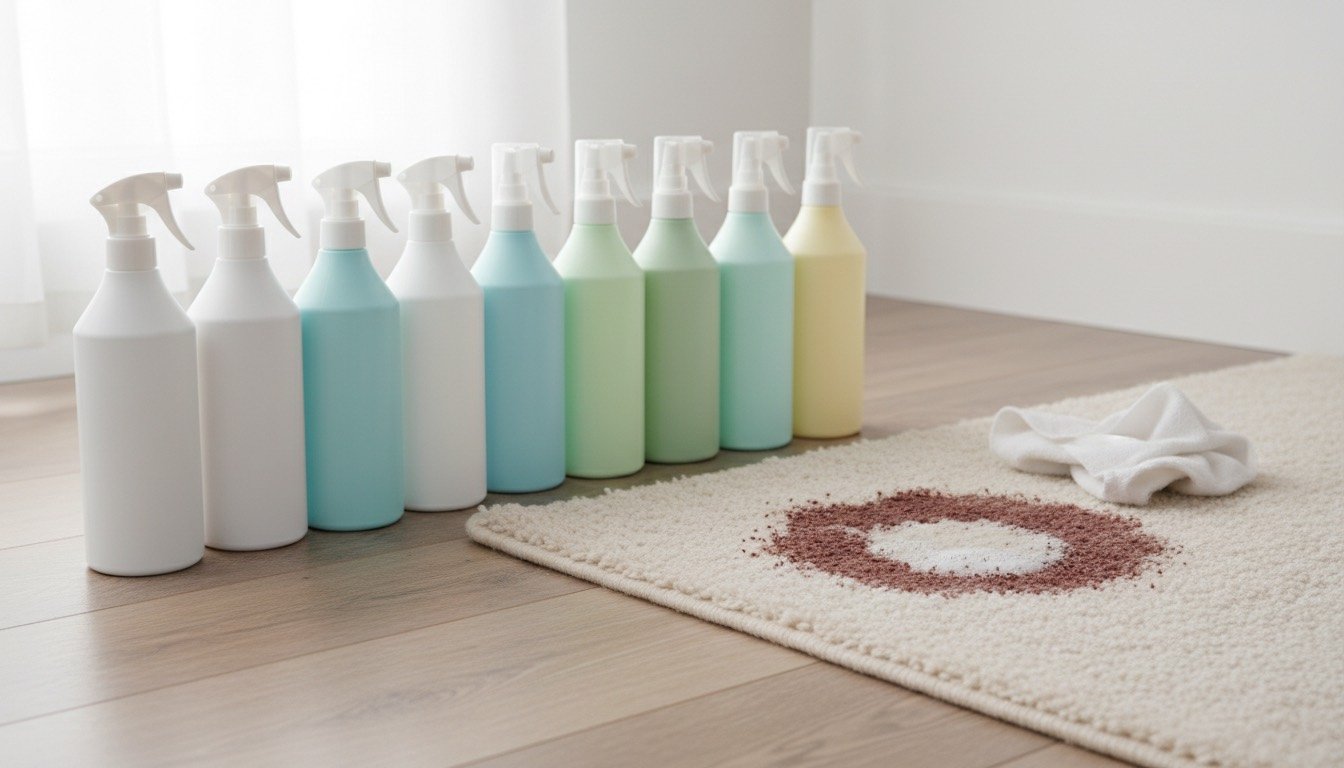
A good chunk of the emergency call-outs we get aren't actually about the original spill — they're about what the spray bottle from under the sink did to it afterwards. Optical brighteners bleach halos into the pile, oxygen-based foams set protein stains like blood and egg permanently, and enthusiastic scrubbing frays fibres until the mark looks worse than it started. None of that means shop-bought stain removers are a bad idea — a handful genuinely earn a place under the sink, used the right way on the right stain.
This guide covers what separates a decent stain remover from a wasted £6, the technique that stops a treatment causing more damage than the stain, the aftercare that stops a 'cleaned' patch resoiling within a fortnight, and the mistakes that turn a five-minute job into a call to a professional.
Carpet fibre, stain type and how long the mark has been sitting all change which product is the right call. A fresh cup of tea on a synthetic runner and three-day-old red wine on a wool stair carpet are not the same job, and treating them the same is how carpets end up needing a re-dye rather than a wipe-down.
Our top picks at a glance
Dr Beckmann Carpet Stain Remover (with brush head)
~£4The rare supermarket product professionals don't wince at. The integrated brush encourages gentle application, and it handles food, drink and mud stains well on synthetic carpets when rinsed properly afterwards.
Pros
- ✓ Cheap and widely available
- ✓ Effective on most everyday stains
- ✓ Controlled application via brush head
Cons
- ✗ Must be rinsed thoroughly
- ✗ Not for wool without testing
HG Extra Strong Stain Spray
~£8A step up in strength for set-in food and grease marks. Powerful enough that dosing discipline matters — but used sparingly it shifts stains the milder sprays won't.
Pros
- ✓ Strong performance on aged stains
- ✓ Works on upholstery too
- ✓ A little goes a long way
Cons
- ✗ Easy to over-apply
- ✗ Strong smell during use
Simple Solution Extreme Pet Stain & Odour Remover
~£10An enzyme (bio) formula that actually digests urine compounds rather than perfuming over them — the same chemistry professionals use, in a retail bottle. Needs dwell time; give it hours, not minutes.
Pros
- ✓ Enzymes remove odour at the source
- ✓ Safe around pets once dry
- ✓ Discourages re-marking
Cons
- ✗ Slow — needs long dwell time
- ✗ Deep urine contamination still needs professional treatment
Vanish Oxi Advance Carpet Spray
~£6Effective on tannin stains like tea and juice — but the oxygen chemistry that powers it can set protein stains (blood, milk, egg) and lighten some dyes. Know your stain before you reach for it.
Pros
- ✓ Good on tea, coffee and juice
- ✓ Widely available
Cons
- ✗ Can permanently set protein stains
- ✗ Risk of lightened patches on some carpets
How We Test Carpet Stain Removers
We test on real carpet with real stains, not manufacturer swatches — fresh spills and stains left to dry for a few hours, applied exactly as the label says, with no extra dosing or scrubbing to 'help it along'. What separates a decent product from a shelf-filler isn't just whether the stain lifts on day one; it's whether the patch is still clean a fortnight later, once the carpet's picked up dust and foot traffic again.
- •Lifting power on an actual stain, not a diluted lab version
- •How much product it takes to see a result — cheap doesn't always mean cheaper per treatment
- •Residue: does it rinse out fully, or does the patch resoil faster than the rest of the carpet
- •Colour and pile safety, tested on both synthetic and wool swatches
What Actually Matters When You're Buying One
Ignore the marketing and check three things: the chemistry, the stain category it's built for, and how it's applied. Oxygen ('oxy') formulas are strong tannin-stain fighters — tea, coffee, red wine and fruit juice — but that same bleaching action can set protein stains like blood, milk and egg. Enzyme (bio) formulas work the opposite way: they digest organic matter, the right choice for pet accidents, but need dwell time — blotting five minutes later wastes most of the bottle.
Format matters more than the price tag suggests. A spray with an integrated brush head encourages the gentle, controlled application fibres need; a foam is easy to over-apply and harder to rinse out fully. Expect roughly £3–£5 for a basic all-purpose spray, £6–£9 for a stronger stain-specific formula, and £8–£12 for a dedicated enzyme pet product.
Carpet fibre changes the calculation too. Synthetic piles — nylon, polypropylene and polyester — tolerate most shop-bought removers reasonably well when used as directed. Wool is different: natural fibres react badly to some surfactants, dyes can strip unevenly, and a WoolSafe-certified product is the only safe default. If a stain has already dried in, that's a job for a proper carpet cleaning machine rather than more product.
How to Use a Carpet Stain Remover Without Making It Worse
The product matters less than the technique. These rules apply whatever's in the bottle:
- •Blot first. Lift everything a dry white cloth or paper towel will remove before any product touches the carpet.
- •Test on a hidden patch — inside a cupboard or behind a door — and wait ten minutes before treating the visible stain.
- •Apply product to the cloth, not the carpet, for small marks. You control the dose that way, not the bottle.
- •Never scrub. Press down, lift straight up, repeat. Scrubbing frays fibres and spreads the stain outward.
- •Rinse with plain water and blot dry once the stain's gone — leftover residue attracts dirt for months.
- •On wool, use a WoolSafe-approved product only, or call a professional — a re-dye costs far more than the callout would have.
Aftercare: Stopping the Stain Coming Back
A stain that keeps 'coming back' after a successful clean is almost always a rinsing problem, not a stain problem. Sticky residue left in the pile attracts airborne dust and foot-traffic soil, so the patch darkens again within a couple of weeks while the surrounding carpet stays clean. Once the mark has lifted, go over the area with a cloth dampened in plain water, blot until no more product comes up, then let it dry fully before walking on it.
Regular vacuuming keeps grit from grinding into fibres between spills, and a carpet vacuumed weekly needs chemical intervention less often. For the habits that add years to a carpet's working life, see our guide to making carpet last longer.
Common Carpet Stain Remover Mistakes
- •Reaching for an oxygen-based spray on a protein stain — blood, milk, egg and dairy need an enzyme formula, or the stain sets in permanently.
- •Over-applying because a small amount 'doesn't seem to be working'. More product means more residue to rinse out, not necessarily more cleaning power.
- •Skipping the patch test on dyed or older carpet — fine on a two-year-old carpet doesn't mean fine on a faded one.
- •Trusting viral kitchen-cupboard mixes over a purpose-made product — bicarbonate of soda cements into the pile if over-applied, and washing-up liquid is hard to rinse out fully.
- •Treating a pet urine stain like an ordinary spill — it needs an enzyme treatment with hours of dwell time, not a five-minute spray-and-blot.
- •Pushing on with more product when a stain won't lift. Repeated treatment can damage pile that a proper carpet first aid fix could otherwise save.
Frequently asked questions
Can I use carpet stain remover on a wool carpet? Only if it's marked wool-safe, ideally carrying the WoolSafe logo. Wool reacts differently to surfactants and bleaching agents than synthetic fibres, and a product safe on nylon can strip or unevenly lighten a wool dye. When in doubt, patch-test first or call a professional.
Why did my stain come back after I cleaned it? Almost always residue. If product isn't rinsed out fully and blotted dry, it stays in the pile and attracts dirt, making the patch look dirty again within a week or two — even though the original stain is gone.
What's the difference between an oxygen cleaner and an enzyme cleaner? Oxygen ('oxy') formulas oxidise and bleach out tannin-based colour stains like tea, coffee and wine, but can permanently set protein stains. Enzyme (bio) formulas digest organic material — urine, blood, food residue — and need several hours of dwell time to work properly.
How long should I leave a stain remover on before blotting? Follow the bottle, but fresh tannin stains respond within minutes, while protein and pet stains treated with enzyme formulas need hours, sometimes overnight. Rushing an enzyme treatment is the biggest reason people think it 'hasn't worked'.
When should I stop DIY-ing it and call a professional? If a stain has been treated twice without lifting, if it's on wool, or if it covers a large area, further home treatment risks doing more damage than good. At that point, professional carpet cleaning costs are usually less than the cost of a wrong move.
Which Carpet Stain Remover Should You Buy?
For everyday spills on synthetic carpet — tea, mud, ketchup — the Best All-Rounder is the one to keep under the sink; cheap enough to use liberally, gentle enough not to need a second thought. Stains already dried in or sat overnight need the strength of the Best for Stubborn Marks pick, used sparingly and rinsed properly. Any pet accident calls for the Best for Pet Accidents enzyme formula and the patience to let it dwell for hours, not minutes. And anything labelled Use With Care should be saved for tannin stains only — tea, coffee, juice, wine — well away from blood, milk or egg.
Found this useful?
There's plenty more — hundreds of guides and honestly-tested product reviews for every corner of your home.
Browse All Guides