Carpets & Flooring · 6 min read · 22 June 2026
How to Make Carpet Last 20 Years: 9 Habits That Double Carpet Life
The same carpet lasts eight years in one home and twenty in another. The difference is nine cheap habits — none of which involve buying anything fancy.
By the Nims Casa editorial team — written from professional cleaning experience and checked against our editorial standards.
Carpet rarely 'wears out' from footsteps alone. It's ground away by grit that walks in on shoes and behaves like sandpaper underfoot, cooked into the pile by trapped soil, and permanently crushed by furniture that never moves. Two carpets fitted on the same day, in the same house, can age at wildly different rates depending on which of these three forces gets left unchecked.
None of the habits that add years to a carpet cost much money. This guide covers why carpet actually degrades, the daily habits that intercept the damage, the vacuuming technique that removes grit rather than fluffing the surface, what tools and an annual professional clean should cost, and the mistakes that quietly write years off a good carpet.
Get it right and a mid-range carpet at £25–£40 per square metre fitted can outlast its warranty. Get it wrong and the same carpet can look tired within five years.
Why Carpet Really Wears Out: Grit, Heat and Crush
Carpet fibre, whether wool, nylon or polypropylene, is more resilient than it looks. What actually destroys it are three mechanisms, usually working together. Grit tracked in on shoes has hard, angular edges; every footstep grinds it against fibre like sandpaper, and this abrasion — not simple foot traffic — thins pile fastest in hallways and lounges.
Trapped soil holds moisture and dulls colour from the inside, so carpet can look tired long before it's actually worn through. The third mechanism is crush: furniture legs that never move compress pile until it stops springing back, leaving permanent dents. Control grit, soil and crush, and the same carpet lasts twice as long.
Stop Grit at the Door: Doormats and the Shoes-Off Rule
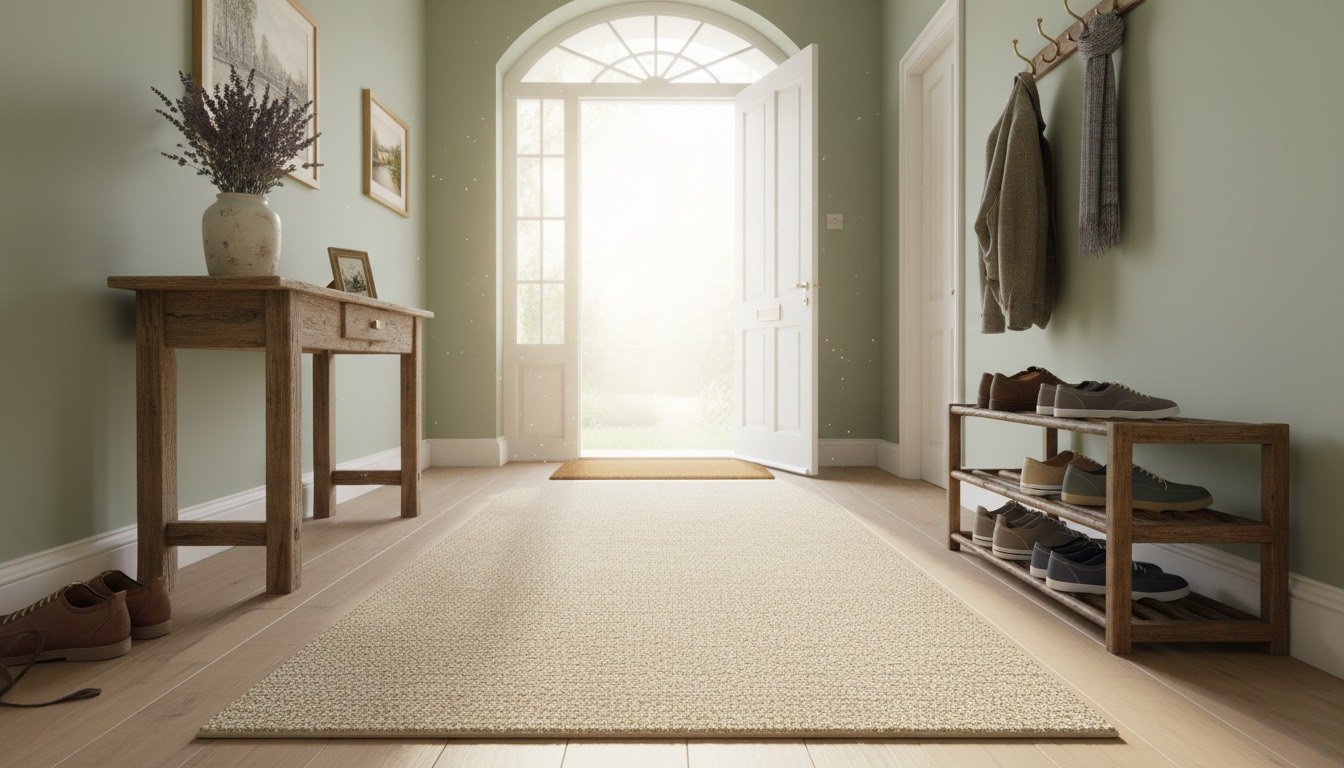
Most of the grit that damages carpet is stopped in the first three metres of hallway, if you let it.
- •Fit two doormats at every external door — a coarse outdoor mat to scrape boots (£15–£30) and an absorbent indoor mat (£10–£25) to catch what's left.
- •Adopt a shoes-off policy indoors. It's contentious with guests and highly effective for carpet — a shoe rack by the door removes the awkwardness.
- •Add a boot scraper outside in wet weather; damp grit sticks to soles and travels further into the house than dry grit.
- •Reposition or wash mats every few months — a mat saturated with grit stops trapping it and starts grinding it in instead.
Vacuuming Technique That Actually Protects the Pile
How you vacuum matters more than how often, though both count.
- •Vacuum traffic lanes twice a week, slowly. One slow pass lifts more grit than four fast ones — grit removal is the whole point.
- •Change direction each session. Vacuuming the same way every time combs pile flat; alternating lifts fibres from every angle and stops permanent traffic-lane shading.
- •Use the beater bar on cut-pile carpets to agitate embedded grit, but switch to suction-only on wool or looped carpets to avoid pulling fibres — see our carpet types guide for what you have.
- •Empty bags or bins before they're full and rinse or replace filters regularly (£10–£20 a year); a clogged vacuum loses grit-lifting suction long before it looks full.
Furniture, Rugs and Protecting High-Traffic Lanes
Furniture that never moves is a slow, guaranteed way to ruin carpet. Fit castor cups under sofa and cabinet legs (£5–£10 a pack) to spread the load, and shift heavy pieces a few centimetres twice a year before the crush point becomes permanent. Once a dent has set hard, it's a repair job rather than a habit fix — see our guide to fixing carpet dents, burns and snags.
Runners and rugs earn their keep in the busiest lanes — hallways, in front of sofas, at the top and bottom of stairs. A £20–£50 runner is a sacrificial layer that absorbs wear a full re-carpet would otherwise take, and it's far cheaper to replace. Stair carpet takes a disproportionate beating from feet scuffing the nosing, so it's worth reading our stair carpet guide if that's where wear shows fastest.
Spills, Sun and Other Everyday Threats
Spills are entirely time-sensitive. Blot — never rub — the moment something spills, and most marks lift with plain water or mild detergent. Left overnight, the same spill can set permanently; red wine, coffee and pet accidents are the classic offenders, and our guide to removing red wine stains covers the method that actually works.
Strong afternoon sun fades carpet unevenly, and wool and dyed carpets are particularly vulnerable — closing curtains in south-facing rooms during peak sun protects colour that can't be restored. Damp is the other quiet threat: carpet over a slightly damp subfloor traps moisture that smells musty and breaks down backing long before the pile wears out.
Tools, Products and What Professional Cleaning Should Cost
The full kit for protecting a carpet is genuinely cheap. Two doormats (£25–£55), a pack of castor cups (£5–£10), a decent vacuum (£80–£300), and an occasional spot-cleaning solution (£5–£8) cover the DIY side for well under £150 a year. If you would rather own the deep-clean kit than hire it, our carpet cleaner machine guide covers what the money buys.
The one job worth paying a professional for is hot water extraction cleaning, which lifts abrasive soil embedded below the reach of a domestic vacuum. Expect to pay within the range our carpet cleaning cost guide sets out, and book it as often as recommended rather than only once carpet already looks grubby, by which point the damage is done.
Common Mistakes That Shorten Carpet Life
A handful of habits do more damage than people realise.
- •Over-wetting during DIY cleaning — excess moisture soaks into underlay and backing, causing shrinkage, browning and odour a professional then has to fix.
- •Using the wrong product for the fibre. Bleach-based or high-pH cleaners can strip colour from wool within minutes, so always check before reaching for anything stronger than mild detergent.
- •Skipping the annual professional clean and relying on vacuuming alone — vacuums remove surface grit but can't touch soil bonded deep in the pile.
- •Vacuuming fast in straight lines just often enough to look tidy, rather than slowly enough to actually lift grit.
- •Ignoring furniture dents until they're permanent, instead of rotating pieces while pile can still spring back.
Frequently asked questions
**How often should carpets be professionally cleaned?** Most UK homes do well with an annual hot water extraction clean, or every six months with pets, young children, or light-coloured carpet in a high-traffic room. Waiting until carpet visibly looks dirty means grit has already been grinding at the pile for months.
**Does vacuuming too often damage carpet?** No — frequent, gentle vacuuming protects carpet rather than harming it. What damages pile is fast, careless technique or an aggressive beater bar on delicate wool or looped weaves, not frequency itself.
**What's the single biggest thing that shortens carpet life?** Walked-in grit, by a wide margin. It's abrasive, constant and invisible until pile is already thinning, which is why doormats and a shoes-off habit do more for longevity than almost anything else here. For the season when that matters most, our autumn mud, leaves and grit routine sets up the doormat-and-tray system properly.
**Is steam cleaning or shampooing better for extending carpet life?** They suit different situations rather than one being universally better — our steam cleaning vs carpet shampooing comparison breaks down which method suits which fibre and soiling type.
**Can a crushed carpet pile recover on its own?** Sometimes, if the crush is recent — ice cubes left to melt into the dent, followed by gentle brushing, can coax pile back up. Long-standing dents are usually permanent and need professional attention or a rug placed over them.
Found this useful?
There's plenty more — hundreds of guides and honestly-tested product reviews for every corner of your home.
Browse All Guides