Cleaning Guides · 6 min read · 2 June 2026
How to Remove Red Wine Stains from Carpet (What Actually Works)
Forget the salt and white wine myths. Here's the professional method for red wine on carpet — and the first five minutes matter most.
By the Nims Casa editorial team — written from professional cleaning experience and checked against our editorial standards.
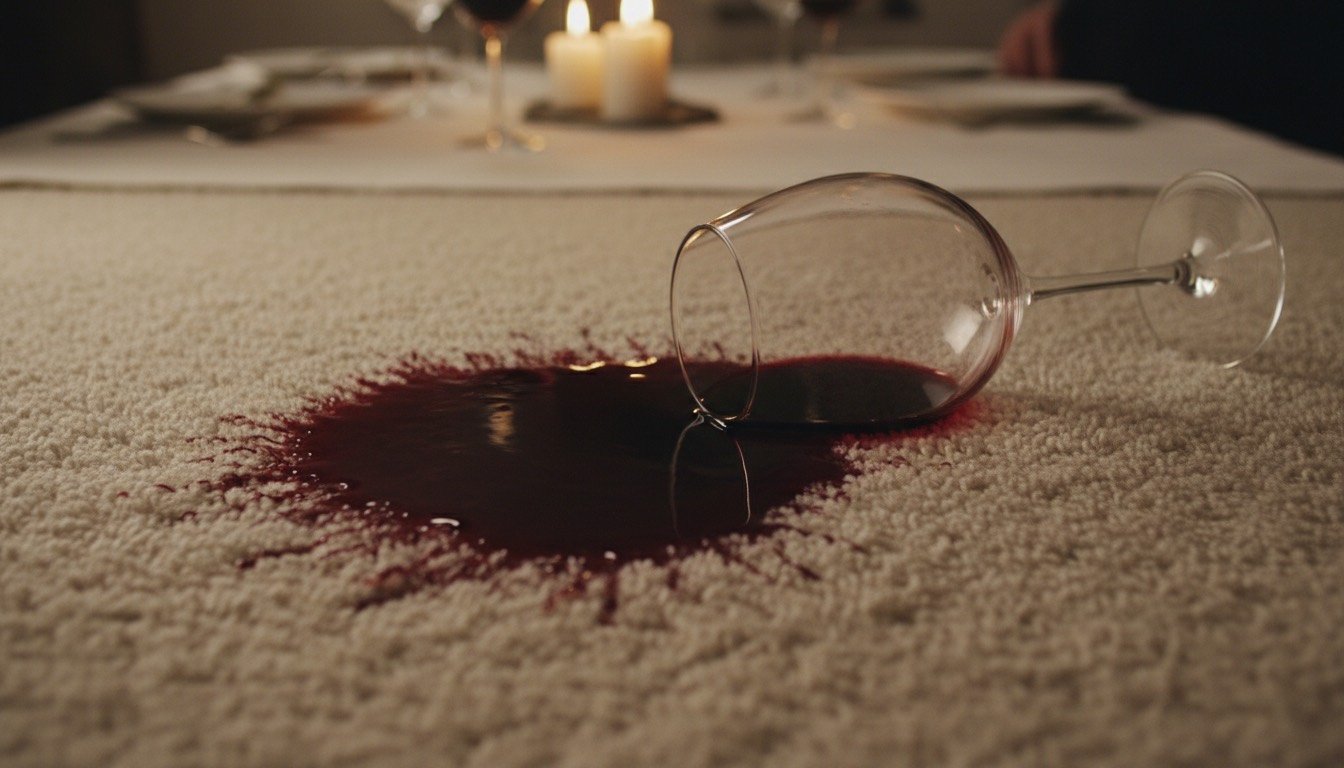
A glass of red goes over, someone shouts 'quick, get the salt!', and by the time the panic settles the stain has usually been made worse rather than better. As professional carpet cleaners, we've seen more red wine stains ruined by kitchen-cupboard folk remedies than by the wine itself. Red wine on carpet responds well to a fast, calm, correctly-ordered response, and badly to almost everything most people reach for first.
This guide covers the crucial first five minutes, the myths — salt, white wine, foam sprays — that quietly set a stain for good, a safe DIY method for synthetic carpet, how fibre type changes the rules, what's worth keeping under the sink, and when a stain stops being a DIY job.
The First Five Minutes: Why Speed Decides Everything
Fresh wine sits in the top third of the carpet pile. Left for twenty minutes it wicks down through the tufts to the backing and underlay, where no household product can fully reach it.
- •Blot immediately with white kitchen roll or a plain white towel — coloured towels can transfer dye back into the pile.
- •Never rub. Rubbing spreads the stain sideways and drives it deeper into the pile.
- •Work from the outer edge of the stain inward so you're not dragging wine across clean carpet.
- •Add a splash of cold water and keep blotting. Diluting the wine helps the towel lift it, and cold water won't set the tannins the way hot water can.
Three Myths That Set the Stain for Good
Salt does soak up some liquid, but it also chemically fixes tannin dyes into wool and nylon fibres, and the crystals abrade the pile underfoot. Ask any carpet cleaner and they'll tell you a 'salted' stain is often still visible months later.
Topping the stain with white wine is kitchen folklore with no chemistry behind it — it just adds more sugar and liquid for the pile to absorb. Many supermarket foam removers contain optical brighteners that bleach a pale halo around the mark, plus soap residues that attract dirt for months afterwards, swapping a wine stain for a dirt-shaped one.
The Safe DIY Method, Step by Step
Once the fresh wine is blotted up, move on to treating the mark. This suits nylon and polypropylene carpet — most UK carpets fitted since the 1990s — but stop after the first pass on wool (see below).
- •Mix one teaspoon of clear, fragrance-free washing-up liquid into 500ml of cold water.
- •Dampen a clean white cloth in the solution — don't pour it straight onto the carpet.
- •Blot the stain from the outside in, turning the cloth to a clean section each time it picks up colour.
- •Blot again with a cloth dampened in plain water to rinse out the detergent, then press a dry towel over the area to draw out moisture.
- •Repeat the whole cycle two or three times rather than soaking the area once — patience lifts more colour than concentration does.
- •Once dry, check the pile. If a faint shadow remains, stop; further DIY passes reduce what a professional can then achieve, and it's worth knowing roughly how often carpets need a proper professional clean rather than only ever spot-treating.
Wool, Nylon or Polypropylene? Why Fibre Type Changes the Rules
A good share of UK carpets are still pure wool or a wool-rich blend, and wool behaves differently under a stain. Its fibre scales open under alkaline products and can felt or discolour permanently, so anything beyond blotting and cold water needs a pH-balanced product for wool, ideally applied by a professional. Nylon and polypropylene, the two most common synthetic piles, are far more forgiving of the method above. If you're not sure what's underfoot, compare how the main carpet fibres behave before reaching for anything stronger than cold water.
Kit Worth Keeping Under the Sink
You don't need a cupboard full of specialist sprays — a handful of basics cover most red wine emergencies, and none of them need to be expensive.
- •White kitchen roll or plain white towels — effectively free, and the single most useful item in the whole process.
- •Clear, fragrance-free washing-up liquid, around £1–£2 a bottle — gentler than most branded carpet foams and won't leave a soap residue if rinsed properly.
- •A dedicated carpet and upholstery stain remover, roughly £5–£9 a bottle, for stains that have already dried or households where spills happen regularly.
- •A small handheld carpet cleaning machine, from around £90 for a basic spot cleaner up to £300-plus for a full-size unit, if stains are a recurring problem.
- •A microfibre cloth for a final buff once the area's dry, to restore the pile's texture.
Mistakes That Turn a Stain into a Bigger Repair Job
- •Reaching for a hot iron or hairdryer to speed drying — heat sets tannin stains permanently and can melt or glaze synthetic pile.
- •Scrubbing with a stiff brush, which fluffs and frays fibres so the patch looks worn even after the stain is gone.
- •Mixing products — bleach-based and ammonia-based sprays can react badly, and neither belongs anywhere near a wine stain.
- •Walking on a still-damp patch, which flattens the pile and can leave a faint mark that isn't actually a stain at all.
- •Leaving it and hoping — dried tannin stains oxidise and darken over time, so a mark left for a fortnight is harder to shift than one treated the same evening.
When to Call a Professional (and What It Costs)
If a shadow remains after two or three DIY passes, if the carpet is wool, or if the wine had already dried in, stop attempting further home treatment — each additional pass makes the fibres more porous and reduces what a professional can lift out. A single-stain spotting visit typically runs £25–£45, considerably less than a full room clean, and fresh-to-a-few-days-old wine stains have a genuinely high full-removal rate when treated with pH-controlled products and hot water extraction.
If a scrub or a dropped iron has left matting, a scorch mark, or pulled tufts alongside the stain, that's usually fixable without replacing the carpet — our guide to repairing carpet dents, burns and snags covers the small repairs most homeowners can do themselves.
Frequently asked questions
**Does red wine always leave a permanent stain?** No. Treated within the first few minutes with blotting and cold water, most spills on nylon or polypropylene carpet lift completely. Permanent stains are almost always ones left to dry, treated with salt or heat, or scrubbed rather than blotted.
**Can I use bicarbonate of soda instead of washing-up liquid?** It works well as a deodoriser once the stain is gone — sprinkle on, leave a few hours, then vacuum — but it doesn't lift wine pigment the way a mild detergent solution does, so treat the stain first.
**What if the wine has already dried in?** Dampen the area with cold water first to soften the tannins, then work through the washing-up liquid method, expecting to repeat it more times than on a fresh spill, and consider a professional spotting treatment if a shadow persists.
**Does milk really remove red wine stains, like some people claim?** It's another kitchen myth. Milk adds fat and protein to the pile, which can attract dirt and even develop a smell if not rinsed out thoroughly — plain cold water and a little detergent works better.
**Will home insurance pay for a professional clean or a new carpet?** UK contents insurance doesn't typically cover accidental stains from everyday spills — that's treated as wear and tear, so budget for a spotting visit rather than expecting a claim to cover it.
**Is a stain-resistant carpet worth it if this happens often?** A solution-dyed or stain-treated synthetic pile resists tannins far better than untreated wool, and pairs well with the everyday habits that make carpet last two decades — though no carpet is entirely stain-proof if a spill sits untreated.
Found this useful?
There's plenty more — hundreds of guides and honestly-tested product reviews for every corner of your home.
Browse All Guides