Cleaning Guides · 6 min read · 25 June 2026
How to Get Pet Urine Smell Out of Carpet (Why It Keeps Coming Back)
You've cleaned it five times and the smell returns every muggy afternoon. Here's what's actually happening under the carpet — and the fix that lasts.
By the Nims Casa editorial team — written from professional cleaning experience and checked against our editorial standards.
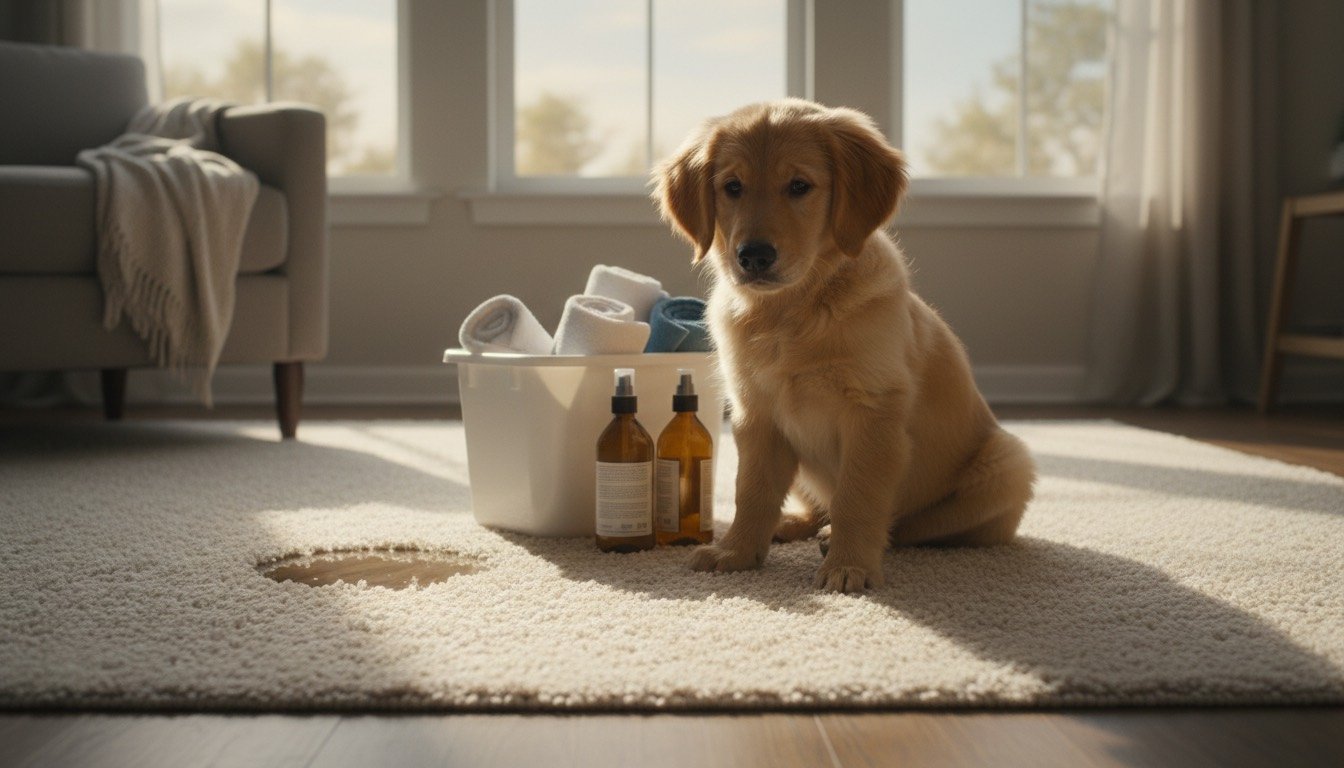
You've steam-cleaned it, shampooed it, even hired a machine from the supermarket — and the smell still creeps back every muggy afternoon. That's not your imagination. Pet urine soaks straight through the carpet pile into the underlay and subfloor beneath, then dries into urea salt crystals that sit there until humidity or heat causes them to reabsorb moisture and release the smell all over again. Cleaning the visible carpet fibre never reaches the source underneath.
This guide covers fresh accidents and old, established ones separately, because they need different treatment: the ten-minute protocol for a fresh mark, how to map contamination that's already dried into the backing, the tools worth buying, the mistakes that make the smell permanent, and when to call in a professional.
The one thing to understand before starting: heat sets urine protein into carpet fibres permanently, so the instinctive reach for a steam cleaner is usually the wrong move. Enzyme treatment, patience and treating the right layer are what actually work — not stronger fragrance or more scrubbing.
Fresh Pet Accidents: The Ten-Minute Protocol
Speed matters more than which product you grab first. Urine that's still wet lifts far more easily than urine that's had twenty minutes to travel down through the pile into the backing, so treat any accident as urgent the moment you spot it.
- •Blot immediately with thick pads of kitchen roll or an old towel, standing on them with your full weight for 30 seconds at a time. You're lifting the liquid, not scrubbing it deeper into the pad.
- •Rinse the patch lightly with cool water from a spray bottle, then blot again. Repeat the rinse-and-blot cycle two or three times to dilute what's left before treatment.
- •Apply a proper enzyme (bio) pet-urine treatment, widely sold for around £6–£12 a bottle. Douse it generously enough to reach as deep as the urine went — under-dosing is the single most common mistake.
- •Cover the treated patch with a damp towel and leave it completely undisturbed for 12–24 hours. Enzymes are living cultures that need time and moisture to break down uric acid crystals; they don't work in five minutes.
- •Blot dry and air the room. Skip perfumed carpet sprays at this stage — masking the smell tells you nothing about whether the enzyme worked, and pets often re-mark over a fragrance that still smells like urine to them.
Tools and Products Worth Keeping In the Cupboard
You don't need a professional kit for most accidents, but a few items turn guesswork into an actual plan.
- •A UV (blacklight) torch, roughly £8–£18 — dried urine fluoresces under UV light even when invisible in daylight, so you can map exactly where to treat.
- •Enzyme pet-stain spray or concentrate, £6–£12 a bottle. Check the label says 'enzymatic' or 'bio' — 'odour eliminating' alone is often just fragrance.
- •A stack of old towels or kitchen roll kept aside purely for accidents.
- •A wet-and-dry vacuum, £45–£90 to buy or around £25–£35 a day to hire, for extracting rinse water from a larger patch without oversaturating the pad.
- •A carpet rake or stiff grooming brush, £5–£10, to lift crushed pile back up once the area has dried.
Old, Dried or Repeat Accidents: Finding the Real Extent of the Problem
Established urine smells are almost always bigger underneath than they look on the surface — urine spreads outward through the backing like an iceberg, often thirty to fifty centimetres beyond the visible mark. Spraying just the stain you can see rarely fixes a smell that's been building for months.
Professional technicians map contamination with UV torches and moisture meters, then inject enzyme solution through the pile into the pad itself rather than treating the surface. For heavier or repeat contamination, the reliable fix is lifting the carpet in that section, replacing the affected underlay, and sealing the exposed subfloor with an odour-blocking primer before refitting — get a professional cleaning quote before assuming the whole room needs replacing.
If the carpet feels stiff or slightly crunchy underfoot in one patch, or a smell survives a full professional clean, that usually points to the subfloor itself holding contamination, not just the carpet layers above it.
Mistakes That Make Pet Urine Smell Permanent
A handful of common habits turn a fixable accident into a smell that never fully leaves.
- •Steam cleaning before treating the odour. Heat permanently sets urine proteins into the fibre — see our steam cleaning versus shampooing comparison for when each method is actually safe to use.
- •Reaching for ammonia-based cleaners. Ammonia is a breakdown product of urine, so it smells like more urine to a pet and often invites re-marking the same spot.
- •Using an 'oxy' or bleach-based booster alone. It lifts the yellow discolouration but does nothing to break down the uric acid crystals causing the smell.
- •Renting a hot-water extraction machine as the first move. Heat and pressure can spread contamination sideways into clean carpet before it's been neutralised.
- •Vacuuming a damp or recently treated patch, which drags loosened crystals and enzyme solution into the brush roll and spreads them to the next room.
When to Call In a Professional
DIY enzyme treatment handles most single accidents and even repeat marks from a young or elderly pet. Call a professional when the smell returns after two full treatment cycles, covers more than roughly a square metre, or you can't locate it even with a UV torch.
Expect £50–£90 on top of a standard clean for dedicated pet-odour or injection-extraction treatment, rising to £300–£600 if underlay replacement and subfloor sealing are needed. Ask any quote whether they use enzyme treatment specifically — a shampoo-only clean won't remove the odour source, however good the reviews. For routine upkeep beyond accidents, see how often carpets should be professionally cleaned.
Stopping It Happening Again
Keep a dedicated enzyme spray under the sink so accidents get treated within minutes, not hours — the difference in outcome is significant. Have a vet check any pet who suddenly starts having accidents indoors, since it's often a urinary infection or age-related issue rather than a behavioural one.
In a multi-pet household or with a new puppy, consider a washable or waterproof underlay under future carpet. Our guide to flooring that copes best with pets compares which surfaces actually survive claws and accidents, and nine habits that make carpet last two decades covers protecting it beyond pet accidents too.
Frequently asked questions
**Why does the smell only appear on humid or warm days?** Urine dries into urea salt crystals that are stable while dry. Rising humidity or heat causes them to reabsorb moisture and release ammonia and other compounds again — the carpet hasn't got dirtier, the crystals have simply reactivated.
**Will a normal carpet shampoo get rid of the smell?** No. General-purpose shampoos lift visible staining and grime but don't contain the enzymes needed to break down uric acid crystals, so the odour source stays behind even once the carpet looks and smells fine while damp.
**How do I find an old stain I can't see?** A UV torch used in a darkened room makes dried urine fluoresce yellow-green, even on carpet that looks clean in daylight. Run it low across the floor and mark any glowing patches with tape before treating.
**Can I use baking soda instead of an enzyme cleaner?** Baking soda absorbs some surface moisture and mild odour but doesn't break down uric acid crystals, so it's a short-term freshener at best. Use it after enzyme treatment, not as a substitute for it.
**Do I need to replace the carpet if the smell won't go?** Rarely — the carpet fibre is usually fine, it's the underlay and sometimes the subfloor holding the contamination. Replacing the affected underlay section and sealing the subfloor is almost always cheaper and just as effective.
**How long does enzyme treatment take to work?** Give it a full 12–24 hours undisturbed for a fresh accident, and several days for injected treatment on an old stain — enzymes need sustained moisture and time to digest the crystals rather than just mask them.
Found this useful?
There's plenty more — hundreds of guides and honestly-tested product reviews for every corner of your home.
Browse All Guides