Carpets & Flooring · 6 min read · 9 June 2026
Carpet First Aid: Fixing Dents, Burns, Snags & Small Stains Yourself
Furniture dents, a dropped hair straightener, a loop pulled by the cat — small carpet wounds with genuinely fixable outcomes. The first-aid kit.
By the Nims Casa editorial team — written from professional cleaning experience and checked against our editorial standards.
The sofa left four crater-sized dents in the lounge carpet. The straighteners scorched a mark by the mirror. The cat, mid-zoomies, pulled a loop clean out of the hallway runner. None of that is fatal — small carpet damage is one of the most fixable jobs in a UK home, and most fixes cost under a tenner in supplies rather than a call-out fee.
This guide covers the three most common wounds — furniture dents, snags and pulled loops, and burns or permanent stains — step by step, with the tools each needs and roughly what they cost in 2026, plus the mistakes that turn a small, invisible fix into an obvious one and when a professional quote beats DIY.
The technique shifts slightly depending on whether you're dealing with wool or a synthetic pile, flagged below where it matters. None of it needs a trade skill, just patience and the right order of operations.
Furniture Dents: The Ice Cube Method, Step by Step
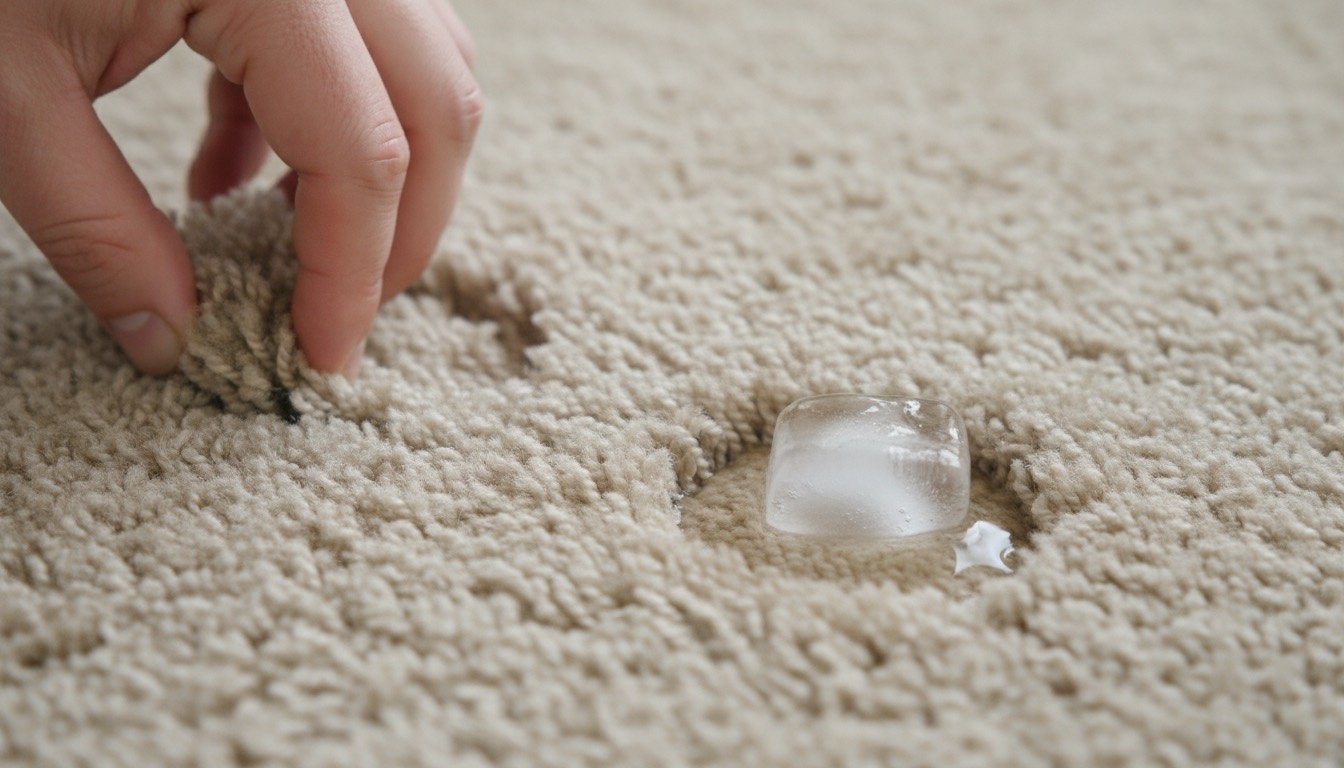
Those craters where a sofa or bed frame stood for years look permanent, but the pile is crushed, not broken or cut. Rehydrating the fibres lets them swell back upright.
- •Vacuum the dented area first, so grit isn't ground deeper into the pile.
- •Place one ice cube in a shallow dent, or two or three in a larger one, and let it melt slowly over two to four hours — better than soaking with a wet cloth, which can leave a tide mark.
- •Once just damp, tease the flattened pile upright with a table fork or the blunt edge of a spoon, working the way the pile naturally leans.
- •For wool carpet, hover a cool iron just above a barely damp cloth laid over the dent — never touching — and let the steam finish the lift.
- •Leave to dry fully, then give it a light vacuum to fluff the pile and blend it into the surrounding carpet.
- •Stubborn or years-old dents, such as marks under a piano, may need two or three rounds, and very old crush marks sometimes never lift fully.
Snags and Pulled Loops: Why You Should Never Just Pull
A pulled loop from a cat's claw, a vacuum's rotating brush bar or a stiletto heel looks alarming, but the rule is simple: never pull it. Tug a loop-pile carpet and you'll unzip an entire run, the same way pulling a jumper thread ladders the whole sleeve.
- •Work out which pile you have first — loop pile (uncut loops, common on stair runners) or cut pile (individual tufts) — since the fix differs slightly.
- •On loop pile, trim the pulled loop level with sharp, fine-bladed scissors, then dab a little clear latex or carpet adhesive (£4-£8 a tube) onto the cut base to stop it fraying.
- •For a more invisible repair, thread the loop back down through the backing with a bodkin or yarn needle and secure the tail underneath with a dot of adhesive rather than trimming it away.
- •If a whole cut-pile tuft has lifted out in one piece, reinsert it, glue the base with carpet adhesive and press it level with the surrounding pile.
- •Prevent repeat damage by keeping pets' claws trimmed and switching off any rotating brush bar on loop-pile carpet or a stair runner, where snags happen most.
Burns and Permanent Stains: Patching a Carpet Invisibly
Small burns from hair tools, cigarettes or fireplace embers, and permanent marks such as bleach or dye that stain removers won't shift, share one fix: patching. Try the least destructive option first — a scorch that's only singed the tips sometimes disappears with a careful trim and a fingertip fluff.
- •For through-pile damage, mark a neat square around the wound and cut it out with a sharp craft knife and a straight edge, through the backing only, not the underlay.
- •Source a matching offcut — leftover fitting scraps are ideal, or a piece cut from inside a wardrobe where the join won't be seen.
- •Match the pile direction between offcut and carpet — the step that makes or breaks an invisible repair. Run a hand across both to feel which way the fibres lean.
- •Cut the patch slightly larger than the hole, then trim it down gradually until it sits in like a jigsaw piece.
- •Fix it with double-sided carpet seaming tape (£5-£9 a roll) or carpet adhesive, pressing firmly from the centre outward.
- •Weight the patch overnight with a stack of books while the adhesive cures, then vacuum lightly to blend the join.
Tools and Materials You'll Need — and What They Cost
None of this requires trade tools. A basic kit, bought once, covers dents, snags and patches for years of small repairs.
- •Sharp carpet or embroidery scissors: £6-£14 — blunt kitchen scissors tear rather than cut a clean edge.
- •Craft or utility knife with spare blades: £4-£8. A dull blade drags the pile and widens the hole.
- •Carpet adhesive or double-sided seaming tape: £4-£9.
- •Bodkin or large-eyed yarn needle: £2-£4, for threading loops back through.
- •A straight edge or metal ruler, for clean patch cuts: £3-£6.
- •Ice cubes, a table fork, a cool iron and a clean cloth — usually already in the house.
- •A matching offcut: free if you kept fitting scraps, otherwise ask the original fitter.
Common Mistakes That Turn a Small Fix Into a Big One
Most carpet repairs go wrong not because the technique is hard, but because a shortcut gets taken somewhere along the way.
- •Cutting a dent or stain flat with scissors before trying the ice cube trick, leaving a bald patch more obvious than the original mark.
- •Pulling a snagged loop rather than trimming or re-threading it, which can unravel a whole row of pile.
- •Ignoring pile direction when fitting a patch — even a perfectly cut piece looks wrong if the fibres lean the wrong way.
- •Using too much adhesive, so it seeps up through the pile and leaves a hard, shiny ring.
- •Rubbing rather than blotting a fresh spill, which is how a stain that could have lifted ends up permanent.
- •Running an aggressive brush bar over loop pile day to day; a switchable-bar model causes far fewer snags.
When to Call a Professional Instead
DIY patching earns its keep on small, low-visibility damage. It stops making sense once the wound is bigger than a few centimetres, sits in the middle of a highly visible floor, or involves damage — bleach trails, sun fading, or carpet moth grazing — spread across a wider area rather than one spot.
Professional re-tufting, patching and spot-dyeing exist for these cases and typically cost far less than assumed — usually a fraction of replacing a room's carpet. Always get a quote before living with visible damage or ripping out carpet that's otherwise sound. Keeping up good habits afterwards, as in our guide to making carpet last twenty years, cuts how often you'll need either.
Frequently asked questions
**Will the ice cube trick work on synthetic carpet as well as wool?** Yes — nylon and polypropylene piles spring back even more readily than wool. Wool benefits most from the extra steam step, but plain ice and a fork work on any pile.
**Can I use ordinary superglue instead of proper carpet adhesive?** Best avoided. It sets rock-hard and brittle, can discolour lighter fibres, and doesn't flex with foot traffic, so the patch edge is more likely to lift later.
**How long does a well-done patch repair actually last?** Done properly — matched pile direction, snug fit, weighted while curing — a patch should last as long as the surrounding carpet. Colour is the main giveaway over time, since carpet fades with light.
**Is carpet damage like this covered by home insurance?** Rarely for wear-and-tear such as dents or ordinary snags, but a specific accidental event — a dropped iron, a spilt bottle of bleach — may fall under accidental damage cover if the policy includes it.
**Where do I get a matching offcut if I didn't keep any spare carpet?** Check inside wardrobes or under fitted furniture first. Failing that, the original fitter may still hold the batch, or a local flooring shop can match colour and pile closely enough.
Found this useful?
There's plenty more — hundreds of guides and honestly-tested product reviews for every corner of your home.
Browse All Guides