Product Reviews · 6 min read · 23 June 2026
The Best Drain Snake for Home Use (2026): Diagnose First, Then Buy
Most people buy the wrong auger because they never work out where the blockage actually sits. Diagnose the pipe first and the right tool costs less than one plumber's callout.
By the Nims Casa editorial team — written from professional cleaning experience and checked against our editorial standards.
Affiliate disclosure: if you buy through links in this article we may earn a small commission at no extra cost to you. Our recommendations come from professional cleaning experience and are never influenced by retailers or brands.
A £25 drum auger clears roughly two thirds of household blockages. The rest defeat it — not because the tool is bad, but because the cable is 6mm and the blockage sits 12 metres away in a 110mm clay pipe under the patio. Buying by star rating is how people end up with three augers in the shed and a plumber on the drive anyway.
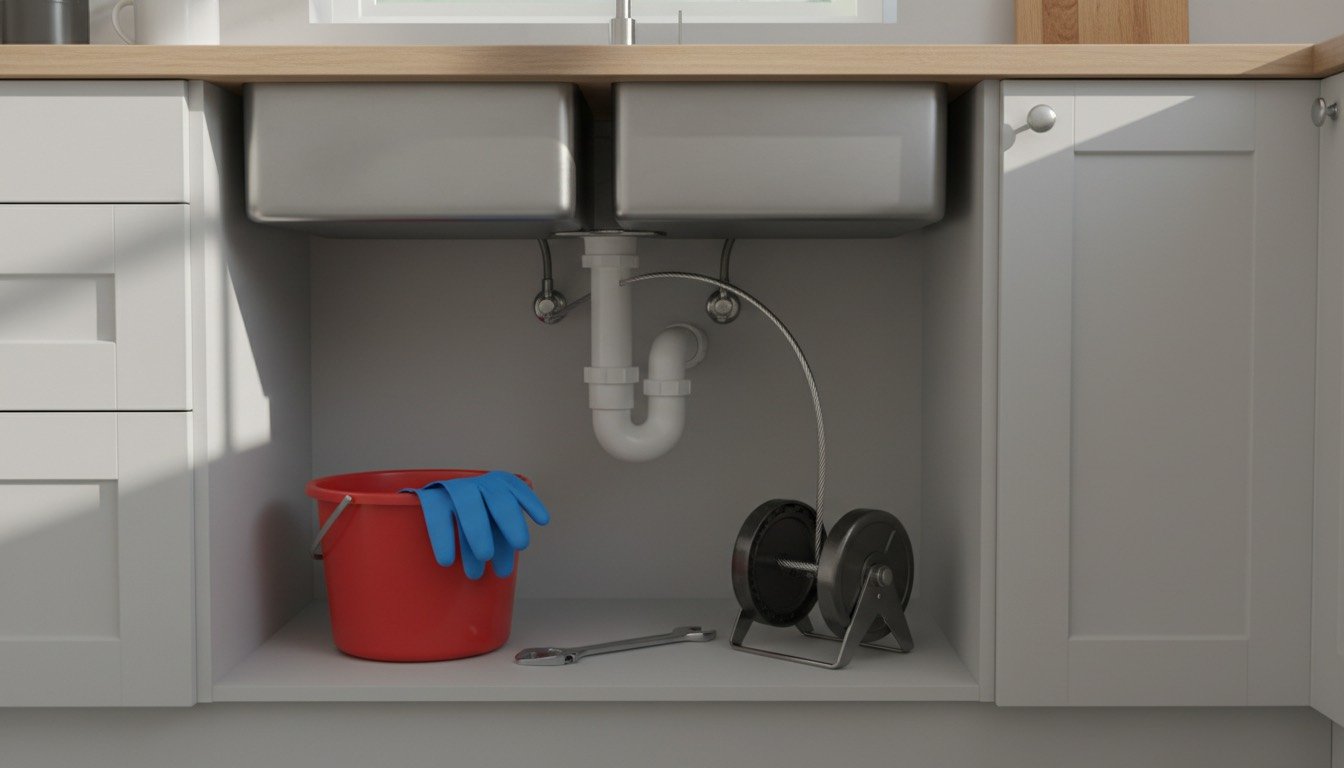
So this guide diagnoses first. Five minutes with a bucket and a torch tells you which pipe you are fighting, and that sets the cable diameter, the length and the head — which narrows forty near-identical listings down to one obvious purchase.
Our top picks at a glance
Rothenberger Rospi H+E Plus 8mm x 7.5m Drain Cleaner
~£110–£140A hand-cranked auger with a hex shank so you can run it off a drill at low speed, and the 8mm solid-core cable is stiff enough to push through a 40mm kitchen branch without folding. The enclosed drum keeps the mess contained, which matters more than it sounds when you are kneeling in a sink cupboard.
Pros
- ✓ 8mm cable turns tight 40mm bends without kinking
- ✓ Enclosed drum contains the water and debris
- ✓ Drill-drivable via the hex shank for stubborn fat
Cons
- ✗ Expensive for a one-off blockage
- ✗ 7.5m is not enough for underground runs
Draper Expert 7.5m Drum-Type Drain Auger
~£20–£30The sensible first purchase for a household that gets one blockage a year. The wound cable is less durable than solid-core and the thumbscrew needs regular tightening, but for basin, bath and short kitchen runs it does the job for the price of two takeaways.
Pros
- ✓ Cheap enough to justify for a single blockage
- ✓ Light and easy to feed one-handed
- ✓ Widely stocked, so replacements are simple
Cons
- ✗ Wound cable can unravel if reversed under load
- ✗ Thumbscrew slips once the drum gets greasy
RIDGID K-3 Toilet Auger
~£55–£80A closet auger with a vinyl guard that rides against the pan so the cable never touches the glaze, plus a bulb head sized to the trapway rather than to a waste pipe. If your recurring problem is the loo rather than the sink, nothing else is the right shape.
Pros
- ✓ Guard protects the pan glaze completely
- ✓ Correct head geometry for a 110mm trapway
- ✓ Retrieves objects instead of driving them onward
Cons
- ✗ Useless for anything other than a toilet
- ✗ Only around 900mm of working reach
Bailey Universal Lockfast Drain Rod Set (10 x 3/4in rods)
~£40–£60Once the blockage is below ground in 100mm clay or plastic, no auger has the stiffness to reach it and rods are the tool trade uses. The Lockfast couplings will not unscrew mid-run the way cheap screw-thread rods do, which is how people lose a rod head in a drain.
Pros
- ✓ Locking couplings resist unscrewing in the pipe
- ✓ Reaches roughly 9m from a chamber
- ✓ Plunger and corkscrew heads included
Cons
- ✗ No use whatsoever inside the house
- ✗ Bulky to store and heavy when wet
Step One: Work Out Which Blockage You Actually Have
Run the taps in every affected room and listen. Where the water backs up, and how many fixtures share the problem, tells you almost everything. UK waste pipework is standardised enough that the symptom maps to a pipe size reliably: 32mm from a basin, 40mm from a sink, bath or shower, 110mm for the soil stack and everything underground.
- •One fixture, slow for weeks: the blockage is in that trap or the first 600mm of waste pipe. A 6mm cable, or simply unscrewing the trap over a bucket, reaches it.
- •One fixture, sudden and total: something solid has gone down. Hook and retrieve it rather than driving it onward — bulb or corkscrew head, never a cutter.
- •Two fixtures on the same wall backing up together (basin and bath, sink and washing machine standpipe): the blockage is in the shared 40mm branch, usually within 3m. This is 8mm cable territory, 5–8m of it.
- •Everything downstairs slow, the loo level rising when the washing machine empties, basin gurgling: the problem is the 110mm soil stack or below ground. A sink auger will not touch it.
- •Standing water in the outside gully or above the channel in the manhole: the blockage is downstream of that chamber. Rods, not a snake.
- •Neighbouring properties affected too: stop. That is a shared lateral drain, and since the 2011 private sewer transfer it is your water company's problem and their cost.
Matching the Tool to the Diagnosis
Cable diameter is the number that matters: it sets how far the snake travels before it kinks. A 6mm cable will not turn the tight bend behind a basin trap under load. An 8mm cable handles 40mm branch runs and most internal stacks. Anything underground needs rods or a 10mm powered machine.
If the diagnosis points at one fixture, you may not need to buy anything — our walkthrough on unblocking a kitchen sink clears most cases with a trap, a bucket and twenty minutes. Buy the auger once you have ruled the trap out, or when this is the third blockage this year.
- •Basin or bath trap only: 6mm × 3m hand auger, £8–£15
- •Kitchen or shared 40mm branch: 8mm × 7.5m drum or drill-driven auger, £20–£140
- •Toilet pan and the first bend: 11mm closet auger with a plastic guard, £55–£80
- •Gully, chamber or underground run: 3/4in polypropylene rod set, £40–£60
- •Recurring fat blockages in a long kitchen run: powered machine, 10mm cable, £190–£280
How We Judge Them
Full disclosure: this is not a lab review. The assessments below come from working use on UK waste systems — 32mm and 40mm plastic branches, plastic and cast-iron stacks, 100mm clay underground runs — plus the failure patterns we see when these tools come back broken.
We weight four things: whether the cable survives being reversed under load, which is where cheap augers shear; whether the drum grips the cable once there is real resistance; whether you can feed it one-handed while kneeling in a cupboard; and whether you can flush and dry it afterwards. Most augers are binned for rust, not breakage.
What to Look For Before You Pay
Ignore advertised length and look at usable length: a 10m auger with 1.5m coiled in the drum gives 8.5m of reach, and the last metre is where the cable is weakest. Check too whether the cable is wound — a hollow spring, flexible but prone to unravelling — or solid-core, which costs more and lasts three times longer.
Interchangeable heads are worth paying for only if you will use them. A bulb head and a corkscrew head cover nearly all domestic work; cutting heads are for root ingress, and roots in a UK drain usually mean a broken pipe that wants a camera survey rather than a blade. Our drain snake versus hydro jetting comparison explains why jetting beats an auger on grease and loses badly on a collapsed pipe.
- •Cable: 8mm solid-core for general use; 6mm only for basins
- •Drum: metal chuck or thumbscrew that locks the cable, not a friction clip
- •Drive: hex shank if you intend to run it off an 18V drill at low speed
- •Guard: a plastic sleeve on any toilet auger, or you will chip the pan glaze
- •Storage: a drum you can flush and leave open to dry
Common Buying Mistakes
The expensive mistake is buying long. People assume 15m beats 7.5m, then find that a 15m cable in a 40mm pipe concertinas and jams behind the units. Extra length only helps if the bore is wide enough for the cable to keep pushing rather than folding back on itself.
The second is reaching for chemicals first. Caustic products soften some blockages but sit in the pipe when they fail, and you then have to open a trap full of drain cleaner — the risk is set out in our piece on whether chemical drain cleaners are safe for pipes. Snake first, chemicals rarely, never both on the same day.
- •Buying 15m of 6mm cable because it looked better value than 7.5m of 8mm
- •Using a cutting head in a plastic waste pipe — it scores the bore and the next blockage comes sooner
- •Running a drill-driven auger in reverse to free it, which unwinds the cable permanently
- •Snaking a toilet without a guard and cracking the glaze — a £180 pan for a £40 job
- •Not flushing and drying the cable, so it rusts solid in the drum before next time
When the Snake Is the Wrong Tool
If you rod from the chamber and hit a solid stop at the same distance every time, or the water clears then refills within an hour, the pipe is displaced, collapsed or root-bound. No auger fixes that, and repeated rodding can open a joint further — the tells are in our guide to the signs of a blocked main sewer line, and the fix starts with a CCTV survey.
Stop and call a drainage engineer if sewage is backing up into a bath or shower tray, if more than one property is affected, or if the chamber is full to the cover. Expect £80–£150 for a straightforward clearance in normal hours, £150–£280 out of hours, and £180–£400 to jet a fat-blocked kitchen run; our drain cleaning cost breakdown covers what should appear on that invoice. Afterwards, ten minutes a month on preventing blocked drains keeps the auger in the shed where it belongs.
Found this useful?
There's plenty more — hundreds of guides and honestly-tested product reviews for every corner of your home.
Browse All Guides