Plumbing · 6 min read · 28 June 2026
How to Prevent Clogged Drains: The Weekly Routine That Actually Works
Most blockages are eighteen months in the making, not one unlucky teabag. Here is the four-minutes-a-week routine that keeps UK waste pipes clear, plus a version that will not cost a tenant their deposit.
By the Nims Casa editorial team — written from professional cleaning experience and checked against our editorial standards.
Almost every emergency drain call-out is the end of a slow story. Fat film, soap scum and hair build a ring inside a 40mm waste pipe over a year or more, narrowing it to the bore of a pencil, and then one teabag finishes the job at nine on a Sunday night. The teabag gets the blame; eighteen months of neglect caused it.
This is the routine used to keep managed properties clear: what to fit, what to pour, what never to pour, and the twice-yearly job everyone skips. It suits a 1930s semi on clay drains and a new-build flat on a plastic stack alike, and there is a reversible version at the end for renters.
Safety first
Prevention is low-risk work; the shortcuts people reach for are not. Caustic soda spits back out of a standing plughole, and if it fails to clear the blockage the next person to open that trap gets a lapful of hot caustic — see our verdict on chemical drain cleaners.
- •No boiling kettle water into a plastic waste. uPVC softens around 60-70°C and repeated flushes loosen solvent-welded joints.
- •Never mix a caustic unblocker with bleach or an acid descaler. Chlorine gas in a small bathroom is genuinely dangerous.
- •Never rod a shared drain blind — you can push the blockage into a neighbour's connection and inherit the bill.
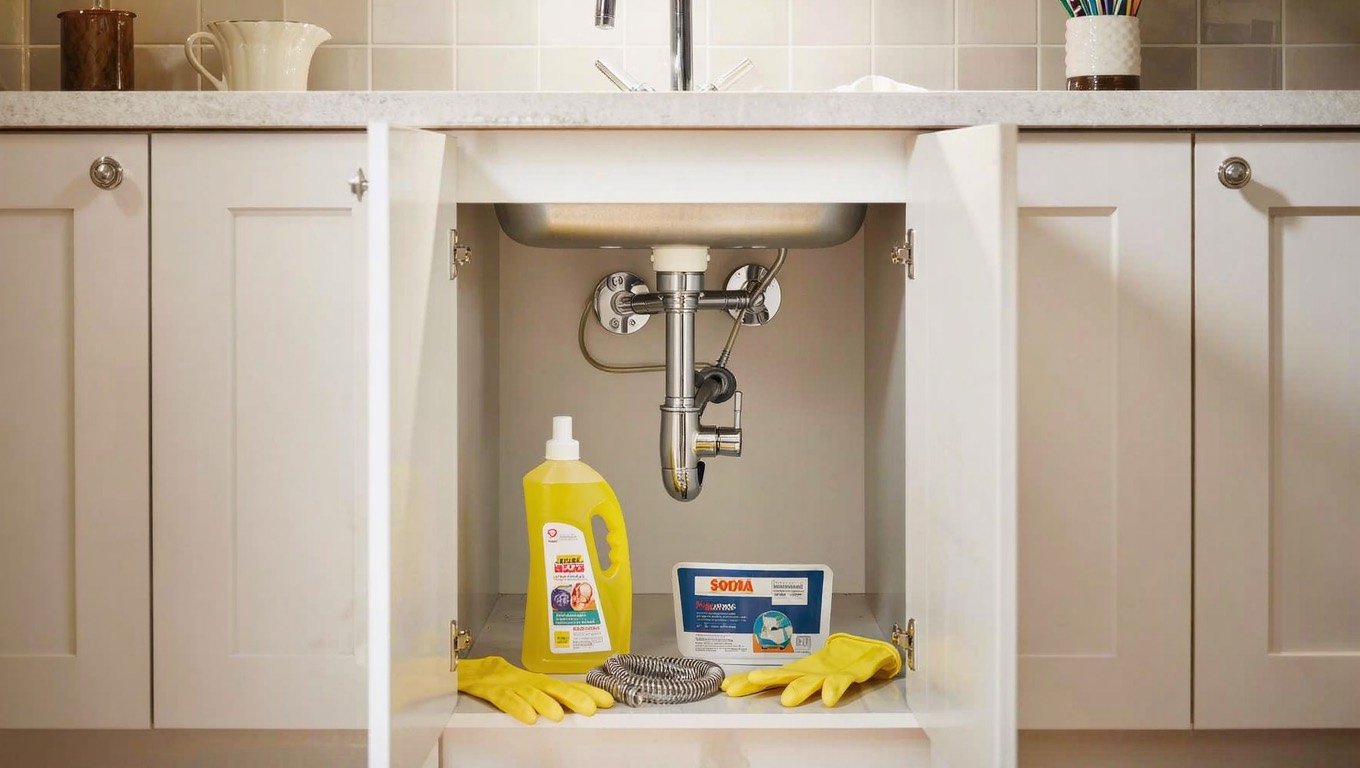
- •Nitrile gloves and eye protection for trap work: a bottle trap empties onto your face if you lie under a basin.
Tools and materials: under £40
Consumables and two cheap fittings, not drain rods. Skill level is genuinely beginner: if you can undo a plastic nut by hand, you can do everything here.
- •Stainless mesh strainers to suit your plugholes — 40mm kitchen, 32mm basin. £3-6 each at B&Q or Screwfix.
- •A silicone hair catcher for every shower and bath, £4-8.
- •Bio-enzyme drain maintainer, £6-10, lasting two to three months.
- •Water pump pliers and a cup plunger, £12-18 the pair.
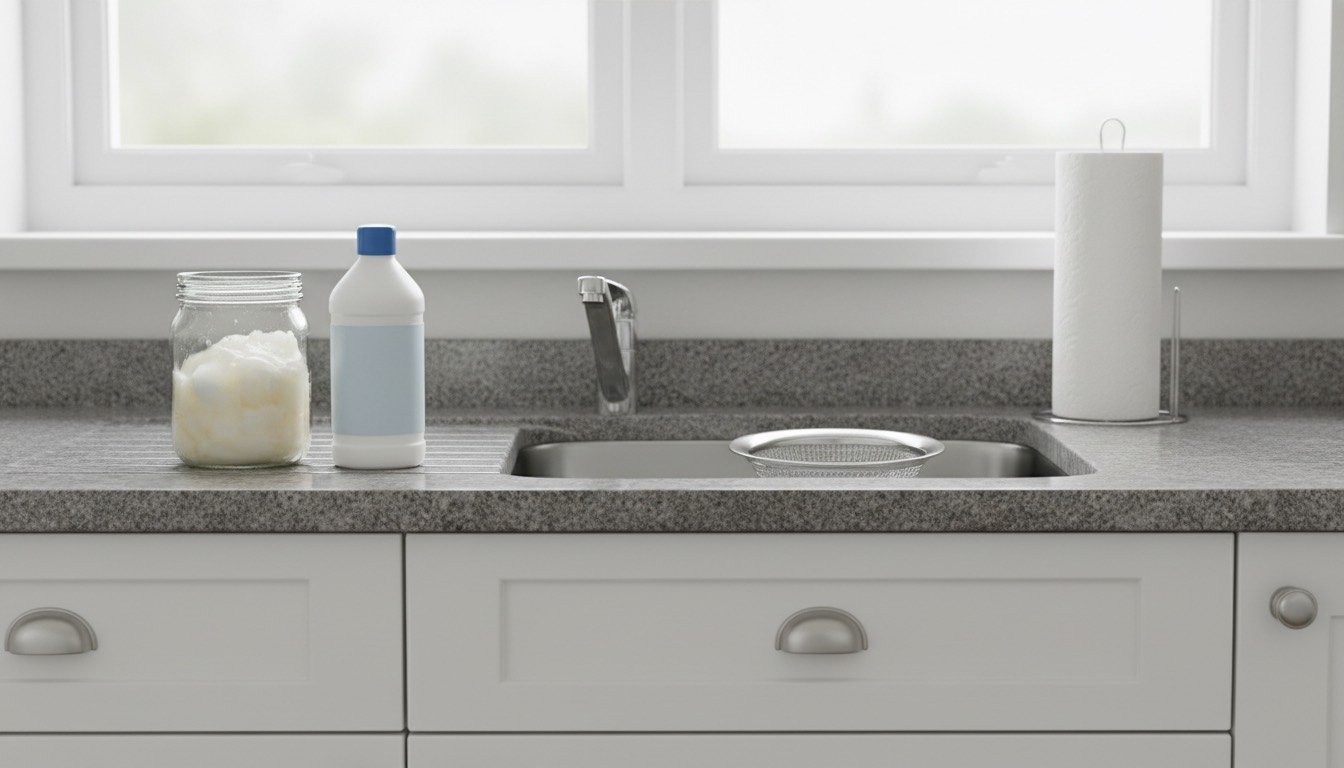
- •A bucket, kitchen paper, an old bottle brush, and a lidded jam jar by the hob for cooled fat.
Realistic time and cost
The whole regime costs less than one call-out: expect £80-180 to have a blocked kitchen waste cleared, more in London and out of hours. Our drain cleaning cost guide breaks it down by job.
- •Weekly: 2-3 minutes — empty the strainers, run the hot flush below.
- •Monthly: 10-15 minutes — enzyme dose overnight, wipe the shower waste, 60°C maintenance wash.
- •Twice yearly: 30-40 minutes — strip and scrub every trap.
- •Each October: 20 minutes — clear the gully, check the inspection chamber.
- •First year £25-40; roughly £20-30 a year after.
The step-by-step routine
- •1. Fit a strainer to every plughole today. Hair, rice, coffee grounds and tea leaves cause most domestic blockages and a £4 mesh disc stops all four.
- •2. Change what goes down the kitchen sink. Fat is liquid at 180°C and solid at the 8-12°C UK mains runs at in winter, so it sets within a metre of your trap. Wipe pans first.
- •3. Do a weekly volume flush. Fill the bowl to the overflow with hot tap water and washing-up liquid, then pull the plug — far more scouring velocity than a running tap.
- •4. Dose bio-enzyme monthly, last thing at night. The bacteria digest the fat and soap film flushing leaves behind, but need six to eight hours with no water running.
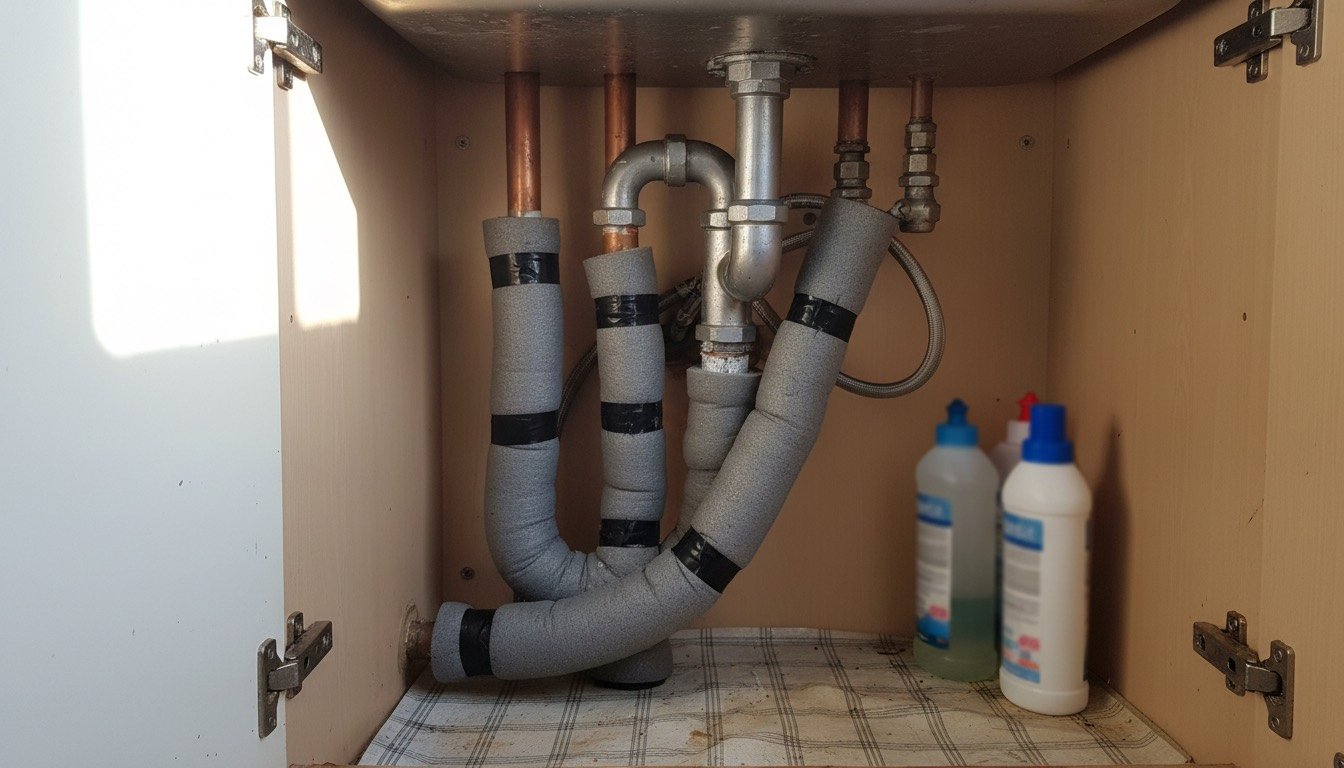
- •5. Strip the traps twice a year. Bucket underneath, undo the P-trap nuts or bottle-trap collar by hand, scrub inside, refit finger-tight plus a quarter turn, check for weeps.
- •6. Intercept hair before it enters. Brush long hair before showering, not after, and wipe the shower throat weekly. In hard water it binds with soap scum into a grey plug, which is why hair clogs are so stubborn.
- •7. Maintain the appliances sharing the waste. Clean the washing machine and dishwasher filters monthly and run an empty 60°C wash; both discharge into your kitchen branch pipe.
- •8. Clear the outside gully every autumn. Lift the grid, scoop out leaves, moss and grit, flush with a hose. A silted gully backs up long before the main drain does.
- •9. Lift the inspection chamber cover once a year on a dry day. You want clear water moving through the channel; standing water or a tide mark means trouble further down.
The renter-safe version
Everything above except steps 5 and 9 is completely reversible: strainers, hair catchers, hot flushes and enzyme dosing need no tools, no fixings and no alteration, so none of it can be challenged at check-out. Skip caustic unblockers, which mark enamel baths and old ceramic permanently and are therefore deductible, and skip trap work in a flat above another dwelling — a joint you tightened becomes your liability if it stains the ceiling below.
Under section 11 of the Landlord and Tenant Act 1985 the landlord must keep sinks, baths, basins and drains in working order; a tenant is liable only where misuse caused it, such as wipes or poured fat. So report a slow drain in writing the day you notice it, and photograph the plughole and under-sink area at move-in. If the problem is smell rather than flow, it is usually a dry trap — check why a drain smells first.
Troubleshooting
If drains keep slowing despite the weekly flush, the symptom tells you where the fault sits.
- •One fixture slow, the rest fine: the trap or first metre of branch pipe. Strip it, then plunge with the overflow held shut — the sequence in our guide to unblocking a sink.
- •Slow again within weeks of clearing: the run has a sag or badly cut joint holding debris. Prevention will not fix geometry.
- •Gurgling elsewhere when you empty the sink: an air problem, usually a blocked soil vent or failed air admittance valve.
- •Blocks every winter, flows all summer: fat in an external run. Dose fortnightly from October and lag exposed pipework.
- •Water rising in the WC, or two fixtures slow at once: stop. That is downstream of your traps.
When to call a professional
The honest DIY boundary is your own trap and the branch it feeds. Beyond that you are guessing, and rodding a clay drain you cannot see is how a partial blockage becomes a collapsed pipe and a £1,500 excavation. Call someone if more than one fixture backs up at once, if there is sewage in the gully, if you can smell drains outdoors, or if the same run blocks three times in a year — that last usually means roots or a crack, and wants a CCTV survey at £120-250 rather than another clearance. The early warnings are in our guide to a blocked main sewer line.
Before you pay anybody: since October 2011 most lateral and shared drains beyond your boundary have belonged to the regional water companies, who will usually clear them free. Ring them first. Plenty of households have paid a private firm £200 for a job the water board would have done for nothing.
Found this useful?
There's plenty more — hundreds of guides and honestly-tested product reviews for every corner of your home.
Browse All Guides