Product Reviews · 6 min read · 19 April 2026
The Best Exterior Paint for Wood Siding (2026): UK Picks for Cladding, Weatherboard and Old Timber
Most exterior paint failures on timber cladding are not the paint's fault — they are moisture arriving from behind the board. Here is what to buy for new cladding, and what old weatherboarding actually needs.
By the Nims Casa editorial team — written from professional cleaning experience and checked against our editorial standards.
Affiliate disclosure: if you buy through links in this article we may earn a small commission at no extra cost to you. Our recommendations come from professional cleaning experience and are never influenced by retailers or brands.
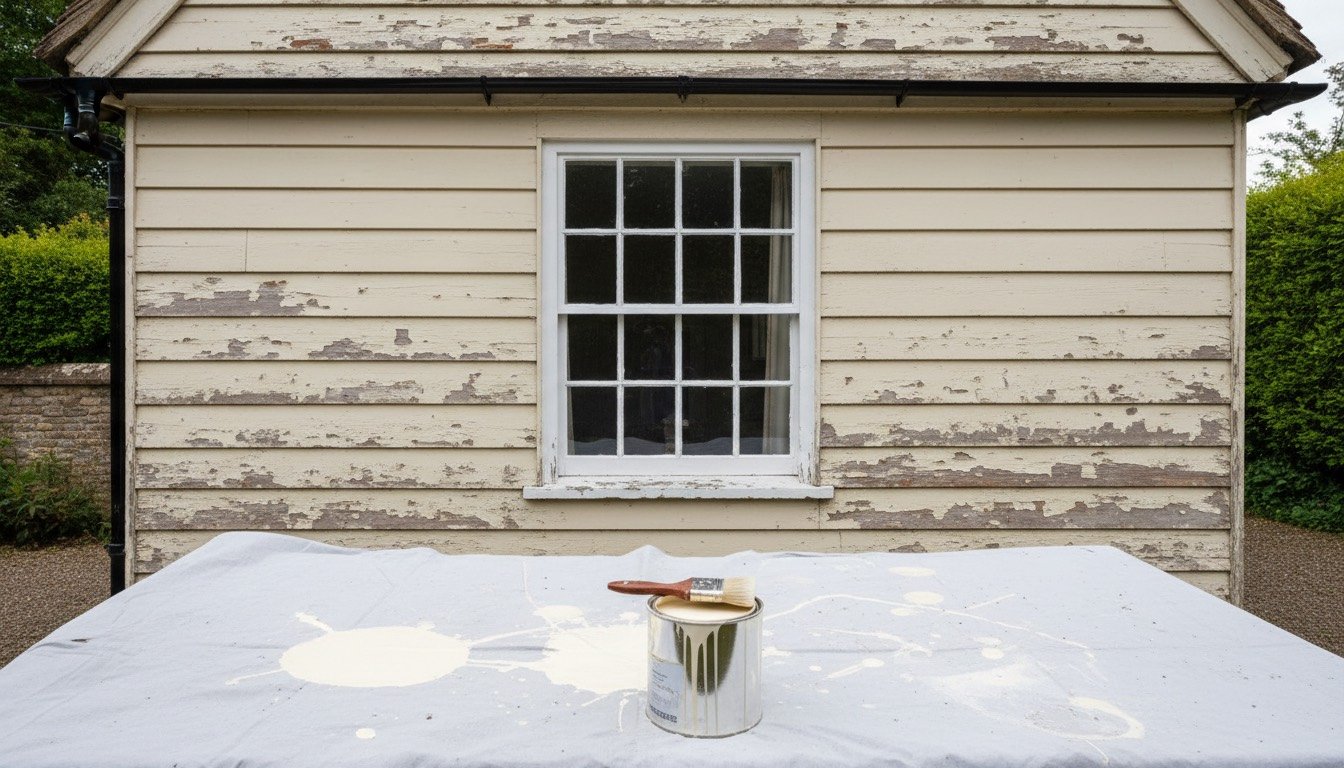
Most of the peeling cladding we get called to look at was painted with a perfectly good product. The paint failed because water got behind the boards, had nowhere to go, and pushed the film off the face. That is a moisture problem wearing a paint problem's clothes, and no tin on any shelf in Britain fixes it.
So the question splits in two. If your cladding is modern — sawn larch, redwood or thermally modified softwood on treated battens with a breather membrane behind — you can buy on colour, coverage and recoat interval. If it is original weatherboarding on a pre-1919 house, nailed straight to studwork with nothing but felt behind it, your choice narrows to finishes that let the timber breathe.
Our top picks at a glance
Bedec Barn Paint
~£55–£75 per 5LA water-based flexible satin developed for agricultural cladding, and the most consistently reliable finish we use on sawn and previously painted timber. It sticks to awkward substrates other paints refuse, including old bituminous coatings, once properly prepared.
Pros
- ✓ Self-priming on most bare timber, so a two-coat system genuinely works
- ✓ Recoatable in 4–6 hours, which makes a one-weekend job realistic
- ✓ Handles rough sawn boards without the film cracking at knots
Cons
- ✗ Colour range is functional rather than fashionable
- ✗ Bare sawn timber often needs three coats, not two, which erodes the price advantage
Osmo Country Colour
~£55–£70 per 2.5LAn oil-based opaque satin that penetrates rather than sitting purely on the surface, so it wears thin instead of flaking. Maintenance is a wash and a single refresh coat, which is why it works out cheaper over fifteen years than its shelf price suggests.
Pros
- ✓ Does not crack or peel in normal use, so no stripping at recoat time
- ✓ Excellent on end grain and cut edges
- ✓ Strong pigment load gives good cover on second coat
Cons
- ✗ Slow drying — allow 10–12 hours between coats, so weather windows matter
- ✗ White spirit clean-up and a noticeable solvent smell during application
Holkham Linseed Paint
~£40–£55 per litreA traditional linseed oil paint made in Norfolk, and the correct answer for original boarding and old joinery on solid-walled houses. It is exceptionally permeable and fails by chalking gently rather than sheeting off, which is what old timber needs.
Pros
- ✓ Very high vapour permeability, so moisture from behind the board escapes
- ✓ Goes an enormous distance — coats are applied thin, roughly 15–20 m² per litre
- ✓ Historically appropriate palette and sheen for period properties
Cons
- ✗ 24–48 hours between coats and a real learning curve on application thickness
- ✗ Oily rags are a spontaneous combustion risk and must be soaked in water before disposal
Sadolin Superdec Opaque Wood Protection
~£45–£60 per 2.5LA water-based opaque satin that behaves more like a high-quality joinery finish than a cladding paint. On doors, frames, bargeboards and fascias it holds a crisp cut line and resists the black spotting that plagues north-facing timber.
Pros
- ✓ Self-priming and flexible, with good adhesion over sound existing coatings
- ✓ Fast drying and low odour, so it suits occupied houses
- ✓ Very good mould and algae resistance on shaded elevations
Cons
- ✗ Expensive per square metre across large areas of sawn cladding
- ✗ Needs careful thin coats — it will run on mouldings if overloaded
Who this guide is for
This is for people repainting softwood cladding, feather-edge weatherboard, shiplap on gables and dormers, and the boarded elevations common across Kent, Sussex, Essex and the South West. It also covers painted joinery on the same walls — sashes, casements, bargeboards and fascias — because in practice you do them in the same fortnight.
It is not for bare larch or cedar you intend to leave silvering, and it is not for decking — horizontal timber takes standing water and needs a penetrating product, not a film, which is a different job entirely and covered in our guide to staining a deck.
How we judged these paints — and what we did not do
We have not run a controlled laboratory exposure trial, and we will not pretend otherwise. These picks come from applying these products on UK jobs, returning to those elevations years later, and seeing what the failures looked like. That is trade evidence, not science.
What we judge on: how the film behaves after five British winters rather than five weeks; whether it fails gracefully by chalking or catastrophically by sheeting off; how it copes with sawn rather than planed timber; and whether the next repaint means a wash and two coats or a full strip. A paint that looks flawless for three years and then needs stripping back to bare wood is more expensive than its price per litre suggests.
Why old timber behaves differently
Original weatherboarding was designed around a linseed oil paint that was permeable, thin and reapplied often. Bolt a modern high-build acrylic onto it and you change how the wall dries. The back faces of century-old boards have never been coated, moisture enters through end grain and nail holes, and a tight film on the face is the only thing in its way.
The rest of an old house compounds it. Solid walls carry damp inward and outward instead of venting through a cavity. Victorian cast-iron rainwater goods rot at the joints and soak a metre of boarding every time it rains, which is why gutter maintenance is genuinely part of a paint job. And anything painted in this country before 1992 may contain lead.
- •Test moisture first. A £20 pin meter should read under 18 per cent in the boards; over 20 per cent, wait.
- •Assume lead in pre-1992 coatings. Never dry-sand or use a hot air gun above about 450°C — it vaporises lead. Use a chemical stripper or an infra-red plate at 200–250°C, wet-scrape, and bag the debris.
- •Coat end grain and the back of any replacement board before you fix it — the highest-value ten minutes on the job.
- •Resinous knots need shellac knotting solution or an aluminium wood primer, or they bleed through pale colours within a summer.
- •Avoid very dark colours on south and west elevations. Surface temperatures hit 60–70°C, wide boards move, and joints open.
The picks, and where each one belongs
Bedec Barn Paint is the one we reach for most on modern and restored cladding — forgiving on rough sawn timber and recoatable the same day. Osmo Country Colour suits anyone who wants an oil finish that ages by wearing thin rather than lifting. Holkham Linseed Paint is what we specify on original pre-1919 boarding and old sash joinery, where permeability beats convenience. Sadolin Superdec earns its place on doors, frames and bargeboards that need a hard satin holding a crisp edge.
The mainstream tins — Dulux Weathershield and Ronseal's exterior wood ranges — are not bad paint, and on sound modern cladding they perform fine. Our reservation is specific: they build a tough, relatively closed film that punishes moisture arriving from behind, which is exactly the situation on old boards.
Timing, prep and what it actually costs
The workable UK window is roughly April to late September. Apply above 8°C and rising, below 85 per cent relative humidity, and stop by mid-afternoon in September — if the surface drops below dew point overnight you get surfactant leaching, which looks like brown tear streaks by morning. Two dry days either side is the honest requirement.
Budget on coverage, not tin price. Planed cladding takes 10–12 m² per litre; sawn boards drink it at 6–8 m². A semi with painted gables and dormers is 25–40 m² — 12–18 litres over two coats, or £150–£320 in materials. Full-height boarding on a cottage runs £2,500–£5,000 professionally once access towers are involved, and our exterior painting cost guide breaks that down. Prep is 70 per cent of the labour: if the existing coating is lifting, deal with that first using the method in our guide to removing peeling exterior paint.
What to look for on the tin
Marketing language on exterior wood paint is unusually slippery. These are the properties that actually predict how it will behave on a British elevation.
- •Microporous or moisture vapour permeable — stated explicitly, not implied by the word 'breathable' in a strapline.
- •Flexibility or elongation claims. Timber moves 2–3 mm across a 150 mm board seasonally; a brittle film splits at the joints.
- •Self-priming on bare timber, or a named compatible primer. Mixing systems from different makers is where adhesion failures start.
- •A biocide or fungicide for algae, which matters on north elevations and anywhere under trees.
- •Minimum application temperature and overcoat time — a paint needing 16 hours between coats effectively costs you a weekend.
- •Whether it will go over existing coatings or demands bare wood. This one line changes the job's cost more than any other on the label.
Common buying mistakes
Almost every expensive repaint we are called in to rescue traces back to one of these.
- •Buying masonry paint because the colour was right. It has no flexibility for timber movement and will craze within two winters.
- •Painting new green cladding straight from the merchant. Let it acclimatise on site for two to three weeks first.
- •Sealing every gap with silicone. Weatherboarding needs to drain and vent at the bottom edge; sealing it traps water inside the wall.
- •Choosing a solid opaque where a semi-transparent would age better — worth reading our comparison of solid versus semi-transparent stain before committing.
- •Judging colour from a 100 mm brushout. On a 5 m² gable it reads completely differently — sample a full board.
- •Ignoring the joinery. If you are also weighing up whether original windows are worth saving, read restoring versus replacing historic windows before spending money painting frames that are beyond repair.
Found this useful?
There's plenty more — hundreds of guides and honestly-tested product reviews for every corner of your home.
Browse All Guides