Product Reviews · 6 min read · 10 June 2026
The Best Grass Seed for Shade UK (2026): What Actually Grows Under Trees
Grass is a sun plant, so every shade mix is a compromise. Here are the UK blends that cope under trees and north-facing walls, and when the fix is a tree surgeon rather than seed.
By the Nims Casa editorial team — written from professional cleaning experience and checked against our editorial standards.
Affiliate disclosure: if you buy through links in this article we may earn a small commission at no extra cost to you. Our recommendations come from professional cleaning experience and are never influenced by retailers or brands.
Every shade mix on a British garden centre shelf is a compromise: species that tolerate low light rather than enjoy it. No seed sold in the UK will grow a lawn in genuine gloom. The working threshold is three to four hours of direct sun, or good moving dappled light from mid-morning to mid-afternoon. Below that, the honest answer is a shade border, bark or a path.
Above that threshold, the right blend is the difference between thin mossy turf that fails every August and something you can walk on. The mixes below keep reappearing in professional overseeding work, chosen for what is in the bag rather than what is printed on the front of it.
Our top picks at a glance
Johnsons Lawn Seed Shady Place
~£12-16 (425g, approx 17 m²)A fescue-led blend with a modest shade-tolerant ryegrass component, widely stocked in UK garden centres and reliably fresh because it turns over quickly. It establishes evenly in dappled shade and holds density into a second summer better than supermarket mixes.
Pros
- ✓ High fine fescue content with a clear species breakdown on the pack
- ✓ Easy to buy fresh; strong germination in our autumn sowings
Cons
- ✗ Struggles in genuinely dry shade under beech or conifer
- ✗ Small boxes work out expensive per kilo for larger areas
Rolawn Shade Tolerant Lawn Seed
~£22-30 (1kg, approx 25-30 m²)Named cultivars rather than generic species, from a turf grower that supplies the trade, and it shows in the evenness of the sward. The best choice when you want the shaded area to match a decent existing lawn rather than look like a patch.
Pros
- ✓ Cultivar-level labelling and consistently high germination figures
- ✓ Fine leaf that blends visually with quality UK turf
Cons
- ✗ Noticeably pricier per square metre
- ✗ Mostly mail order; less convenient than a garden centre run
The Grass People Shade Master
~£15-20 per kg (bulk bags to 10kg)Sold by weight in sensible bulk sizes, which makes it the practical option for anything over about 40 m² of shaded lawn. The mix leans heavily on strong creeping red and chewings fescue, with rough-stalked meadow grass for damper ground.
Pros
- ✓ Sensible price per kilo at bulk sizes with a stated sowing rate
- ✓ Good performance on damp, north-facing plots
Cons
- ✗ Rough-stalked meadow grass sulks badly in drought years
- ✗ Delivery lead times can miss a narrow autumn sowing window
Gro-Sure Shady Lawn Seed
~£9-13 (small box, approx 15-25 m²)Coated seed in a shaker box, aimed at small bare patches beside sheds and under washing lines rather than whole lawns. It is genuinely convenient and germinates quickly, but the coating means you are paying for weight that is not seed.
Pros
- ✓ Cheap, available everywhere, and fast to apply on small patches
- ✓ Coating helps retain moisture on exposed bare soil
Cons
- ✗ Poor value per kilo of actual seed
- ✗ Higher ryegrass proportion thins under a dense canopy
Who this is for
UK shade problems come in four flavours and they are not equally fixable. Work out which you have before spending anything, because a wrong diagnosis wastes a whole sowing window.
- •Dappled shade under a birch, rowan or apple: the easiest win. A fescue-led mix establishes here with normal preparation.
- •North-facing shade behind a house or wall: cold, damp and slow. Grass survives, but greens up two to three weeks later in spring than the sunny half of the garden.
- •Dry shade under beech, sycamore or leylandii: the hardest case. Root competition for water and nutrients matters as much as light, and seed alone rarely fixes it.
- •Compacted ground beside a shed, bin store or side return: a soil problem masquerading as a light problem. Check drainage first.
How we judge a shade mix
We are not a laboratory and will not pretend otherwise. These assessments come from trade use on real overseeding jobs, from the species and cultivar declarations printed on the seed label, and from published UK cultivar trial data for shade tolerance. Where a claim cannot be verified from the label, we say so.
Four things separate a good shade mix from a bad one: the fescue percentage, whether the ryegrass is a modern shade-tolerant cultivar or cheap amenity filler, the presence of rough-stalked meadow grass for damp shade, and the seed lot's germination and purity figures. The rest of the packaging is marketing.
What to look for on the back of the box
Turn the box over. UK seed law requires a species breakdown, a germination percentage and a lot number, and that panel tells you more than the whole front of the pack. A genuine shade mix is 60 to 100 per cent fine fescue: strong creeping red, chewings and hard fescue, all of which run on far less light than ryegrass. Rough-stalked meadow grass (Poa trivialis) at 5 to 15 per cent suits damp shade, though it hates drought.
- •Germination of 80 per cent or better and a lot date within 12 months; old fescue seed loses vigour fast.
- •Purity of 97 per cent or higher, weed seed under 0.3 per cent.
- •Perennial ryegrass above about 30 per cent is a warning: it wants sun and thins out by the second summer.
- •Bird-repellent coatings add bulk and cost; netting or a light topdressing works better for less.
- •Sowing rates: 35 to 50 g/m² for bare soil, 25 to 35 g/m² when overseeding an existing lawn. At £12 to £22 per kilo for a decent shade blend, a 30 m² patch costs roughly £15 to £30 in seed.
Timing, sowing and the first six weeks
Soil temperature matters more than the calendar. Fescues need soil above about 8°C to germinate reliably: mid-April to late May in most of Britain, or the better window of late August to early October. Autumn wins in shade — warm soil, reliable rain, and annual weeds have stopped competing. Our guide to when to sow grass seed in the UK covers regional differences.
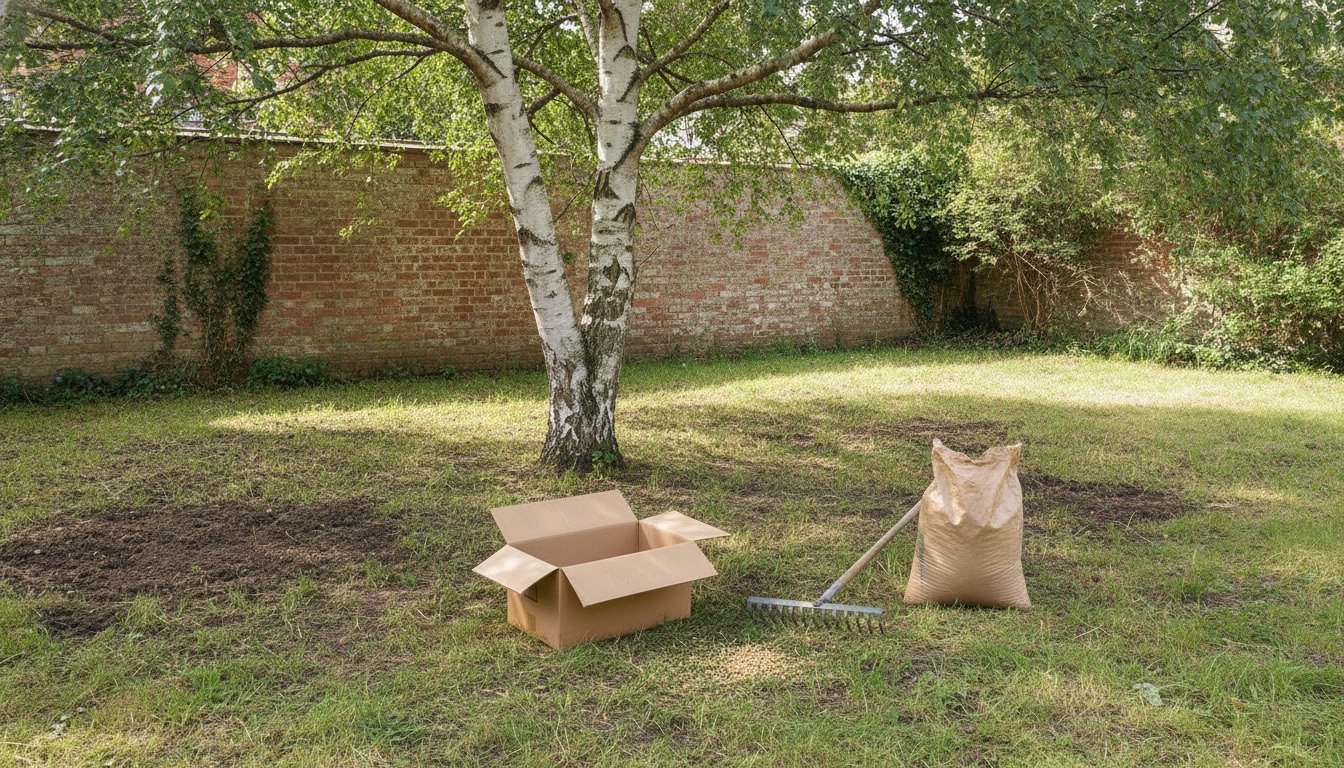
Rake to a fine tilth, scatter half the seed in one direction and half at right angles, then firm with the back of a rake — not a roller. Keep the top 20 mm damp for three weeks; in dappled shade that means a light watering every other day rather than a soaking. Then leave it alone. The commonest failure we see is a first cut taken too early and too short.
Once established, mow shade turf at 40 to 50 mm, not the 25 mm you would use in sun. Taller leaf means more light captured. Feed at roughly half the nitrogen rate of a sunny lawn and lean on autumn potassium instead — our lawn feeding schedule explains the split. If the turf still goes thin and straw-coloured in July, the cause is more likely root competition than seed choice, and our guide to grass turning brown will narrow it down.
Where DIY stops and a professional starts
Most shade lawn work is squarely DIY: a competent homeowner can do everything on the first list with hand tools and a weekend. The rest is where UK law, insurance and basic physics say stop. The line matters, because the real fix for a shady lawn is usually not more seed — it is more light, and more light means touching a tree.
- •DIY, comfortably: soil preparation, scarifying out moss and thatch, hand or hollow-tine aeration, sowing and overseeding, topdressing with a sandy loam, adjusting mowing height, and pruning shrubs and small branches you can reach with both feet on the ground.
- •DIY, with care: hiring a petrol scarifier or aerator (wear boots and eye protection, and check the garden for cables first), and installing a shallow soakaway or gravel channel by hand.
- •Professional only: any chainsaw work, any cutting from a ladder or at height, and crown lifting, thinning or reduction of a mature tree. Use an arborist with NPTC/City and Guilds certification, £5m public liability cover and ideally Arboricultural Association approved status. Expect £350 to £900 to crown-thin a suburban tree; our professional lawn care cost guide gives wider context.
- •Before any pruning: check with your council whether the tree has a Tree Preservation Order or sits in a conservation area. The check is free and usually takes days. Unauthorised work on a protected tree is a criminal offence, and fines routinely run into thousands of pounds.
- •Professional only: excavation for land drains near buried services, and structural work on retaining walls or boundary structures.
- •Stop entirely if the tree is dead, leaning, shows large fungal brackets at the base, or overhangs a neighbour's property or a public footpath. That is a survey job, not a Saturday job.
Common buying mistakes
Four mistakes account for most failed shade lawns, and none are about brand choice.
- •Buying a 'hardwearing' family mix and hoping. Those are ryegrass-dominant by design and thin out under a canopy within two seasons.
- •Sowing in July because that is when the patch looks worst. Fescue seedlings in dry shade have no chance against established tree roots.
- •Treating the moss, not the cause. Iron sulphate blackens moss in 48 hours, but it returns by autumn unless light, drainage or compaction changes.
- •Persisting for years in shade that will never carry turf. Under dense conifer or a north-facing side return, shade planting, gravel or artificial grass is the cheaper honest answer.
Found this useful?
There's plenty more — hundreds of guides and honestly-tested product reviews for every corner of your home.
Browse All Guides