Garden & Outdoor · 6 min read · 4 May 2026
When to Aerate a Lawn in the UK (And How to Tell If Yours Needs It)
Aeration fixes compacted soil and very little else. Here are the two months that work in the British climate, the five-minute test that says whether compaction is really your problem, and what the job costs.
By the Nims Casa editorial team — written from professional cleaning experience and checked against our editorial standards.
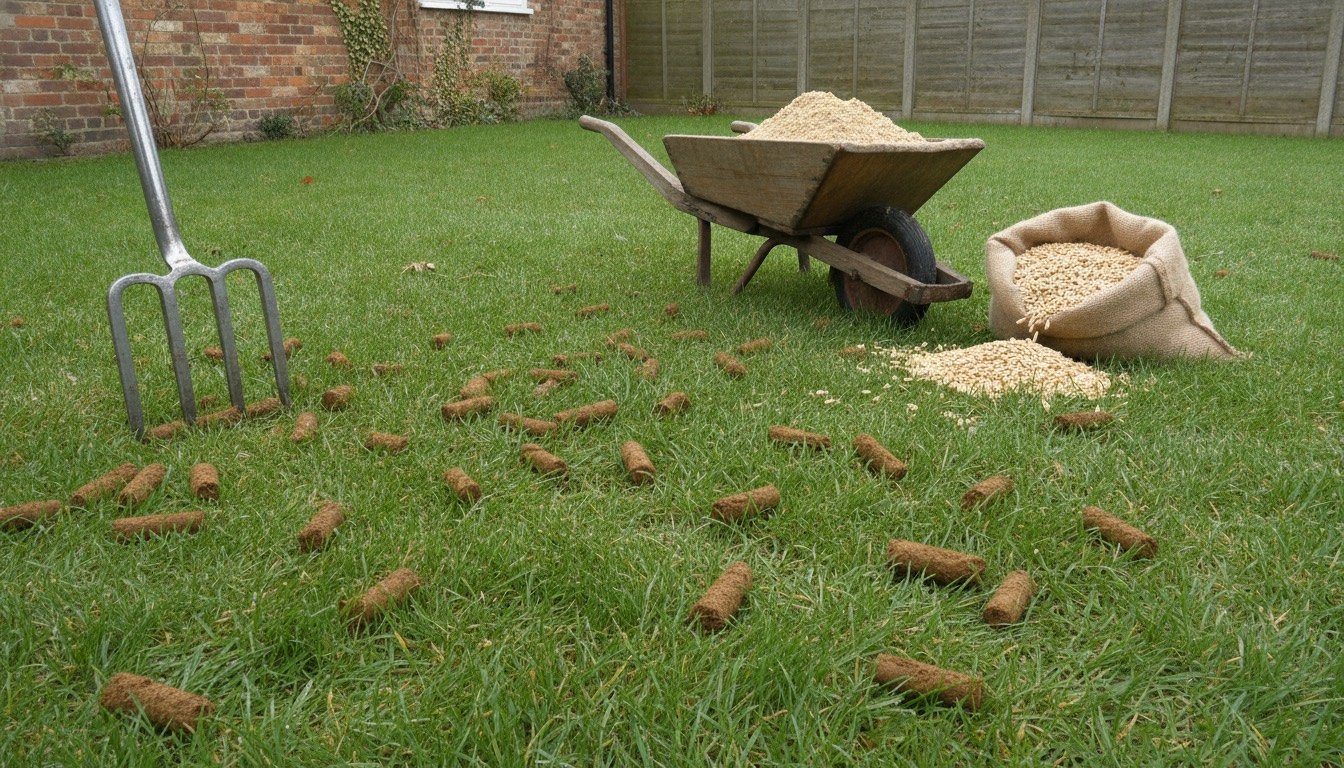
A lawn that sheds rainwater instead of taking it in, bakes hard as a footpath by June and thins along the route to the shed is telling you about the soil underneath, not the grass on top. Hollow-tine aeration is the correct fix for that fault, and honestly for very little else.
Get the timing wrong and you burn a Saturday plus £70 of hire charges on holes that seal up within a fortnight. Below: the two windows that work in this climate, a diagnostic so you are not treating the wrong fault, and the method costed for a 100 m² back garden.
The Right Window: When to Aerate a Lawn in Britain
Our grasses are cool-season — ryegrass, fescues, a little bent — so they push roots when soil sits between about 8°C and 16°C with reliable moisture. Clay or heavy foot traffic wants aerating yearly; free-draining loam every two to three years.
- •Best: early September to mid-October. Soil is still 12-16°C, autumn rain has arrived, and the grass has six to eight weeks of root growth left. It is also the only window where aerating, topdressing and overseeding work in one session.
- •Acceptable: mid-April to late May, once soil has held above 8°C for a fortnight and you have had two or three cuts. Recovery is slower and you open the surface just as weed seed germinates.
- •Avoid: June to August. Holes dry out within days and a drought-stressed lawn has nothing spare for repair.
- •Never: frozen or saturated ground. In wet clay the tines glaze the sides of every hole, and your own weight compacts the profile worse than before you started.
Diagnose First: Compaction, Thatch, Drainage or Something Else
Four different faults produce almost identical symptoms — thin grass, standing water, moss, poor colour — and only one is cured by aeration. Run these a day after decent rain, when soil is moist but not sodden.
- •Screwdriver test: push a 150 mm flat-blade screwdriver in using hand pressure only. Sinks to the handle, soil is fine. Stops dead at 40-60 mm, that is compaction and hollow-tining is the right call.
- •Wedge test: cut a spade-width wedge 100 mm deep and read the profile side-on. A spongy fibrous brown layer thicker than 10 mm between green growth and soil is thatch, which needs scarifying, not tines.
- •Puddle test: widen one screwdriver hole with a trowel and fill it. Gone within four hours is normal. Still standing after twelve means a drainage problem that 100 mm tines cannot solve.
- •Moss along a fence line or under a tree: aeration helps only where ground is both damp and compacted. In dry shade the answer is a shade-tolerant mix and a higher cut.
- •Dying patches over soft, liftable turf: check for chafer grubs and leatherjackets first — why grass turns brown separates those from drought and dog urine.
Safety First, Then Tools and Materials
Powered aerators are heavy machines with rotating steel tines, and most injuries happen during loading rather than on the lawn. Skill level is low, effort level is high.
- •Mark buried services with canes: armoured cable to a shed, garden lighting (often only 100 mm down), irrigation pipe, shallow runs over an old soakaway. Tines reach 75-100 mm.
- •A petrol machine weighs 90-130 kg. Two people and the hire firm's ramps, never a straight lift.
- •Ear defenders rated SNR 25+, safety boots, gloves, eye protection. Cores fly.
- •No powered machine on a bank steeper than 1 in 4, and keep children and pets indoors while it runs.
- •Kit: hired hollow-tine aerator or a hollow-tine hand fork, rotary mower, drag mat or spring-tine rake, stiff yard broom, barrow, spade.
- •Materials: 70/30 sand-loam topdressing at 3-4 kg per m², ryegrass and fescue seed at 25-35 g per m², autumn feed low in nitrogen and higher in potash.
Realistic Time and Cost for a 100 m² Lawn
- •Petrol aerator hire: £55-£95 for the day plus VAT and a refundable deposit. Half-days rarely pay once collection time is counted.
- •Hollow-tine hand fork: £28-£45 to buy — sensible under 40 m².
- •Topdressing: £7-£10 per 25 kg bag, or £75-£120 for a bulk bag delivered. This lawn wants roughly 350 kg for a light dressing.
- •Grass seed: £9-£15 per kg, £30-£45 to overseed throughout.
- •Your time: 60-90 minutes of machine passes plus an hour clearing cores and brushing dressing in. By hand, four to five hours.
- •Having it done: £100-£220, more with topdressing — set against the wider figures in our guide to professional lawn care costs.
Step by Step: Hollow-Tine Aerating a Lawn
- •1. Confirm compaction with the screwdriver test. If it sinks easily, stop and spend the money on feed and seed instead.
- •2. Mow two days before, down to about 25 mm, and box off the clippings so tines reach soil.
- •3. Check moisture. Aerate 24-48 hours after rain — bone-dry clay refuses tines, sodden clay smears. After a dry spell, water heavily two days ahead.
- •4. Mark hazards, then walk the lawn to lift stones and windfall.
- •5. Set tine depth to 75-100 mm and work in straight overlapping lines, aiming for a core every 100-150 mm.
- •6. Make a second pass at 90 degrees to the first. On bad clay a third diagonal pass is worth the fuel.
- •7. Leave cores to dry 24 hours, then break them up with a drag mat or the back of a rake. Collect them only if heavy clay refuses to crumble.
- •8. Spread topdressing at 3-4 kg per m² and brush it into the holes until grass tips show through. Unfilled holes close within a fortnight and the job is wasted.
- •9. Overseed at 25-35 g per m² if thinning, apply autumn feed, water in.
- •10. Keep traffic off two to three weeks and do not cut until growth reaches 50 mm. Slotting this into your lawn care calendar avoids repeating passes.
Troubleshooting
- •Tines bouncing or refusing to penetrate: soil is too dry. Water heavily, return in 48 hours. Forcing it bends tines and costs your deposit.
- •Cores emerging as smooth grey cylinders that will not crumble: clay is too wet and you are glazing the holes. Abandon and wait for a drier week.
- •Lawn bruised and yellow for a fortnight: normal. Still poor at week four means no topdressing went in.
- •Water pooling a month later: the fault sits below tine depth, so it is subsoil or run-off, not surface compaction.
- •Weeds colonising the holes: you opened the surface and did not seed it. See getting rid of lawn weeds.
When to Stop and Call a Professional
Hire and do it yourself for a straightforward rectangle up to roughly 300 m² with decent access. Past that, the day rate stops making sense against the physical work.
Call someone in if water sits half a day in the puddle test, if the lawn is on made ground where a builder rolled the subsoil, or if a spring or high water table is involved. Those need verti-draining to 250-400 mm, or land drains — not a hire-shop job. And if the grass has declined for two seasons with no clear diagnosis, a soil test beats three more autumns of guessing.
Found this useful?
There's plenty more — hundreds of guides and honestly-tested product reviews for every corner of your home.
Browse All Guides