Garden & Outdoor · 6 min read · 2 May 2026
Artificial Grass Care: Keeping Fake Lawns Fresh (Especially With Dogs)
'Maintenance-free' was always a stretch — artificial lawns need a fraction of a real lawn's work, but the fraction matters, especially with a dog in the house.
By the Nims Casa editorial team — written from professional cleaning experience and checked against our editorial standards.
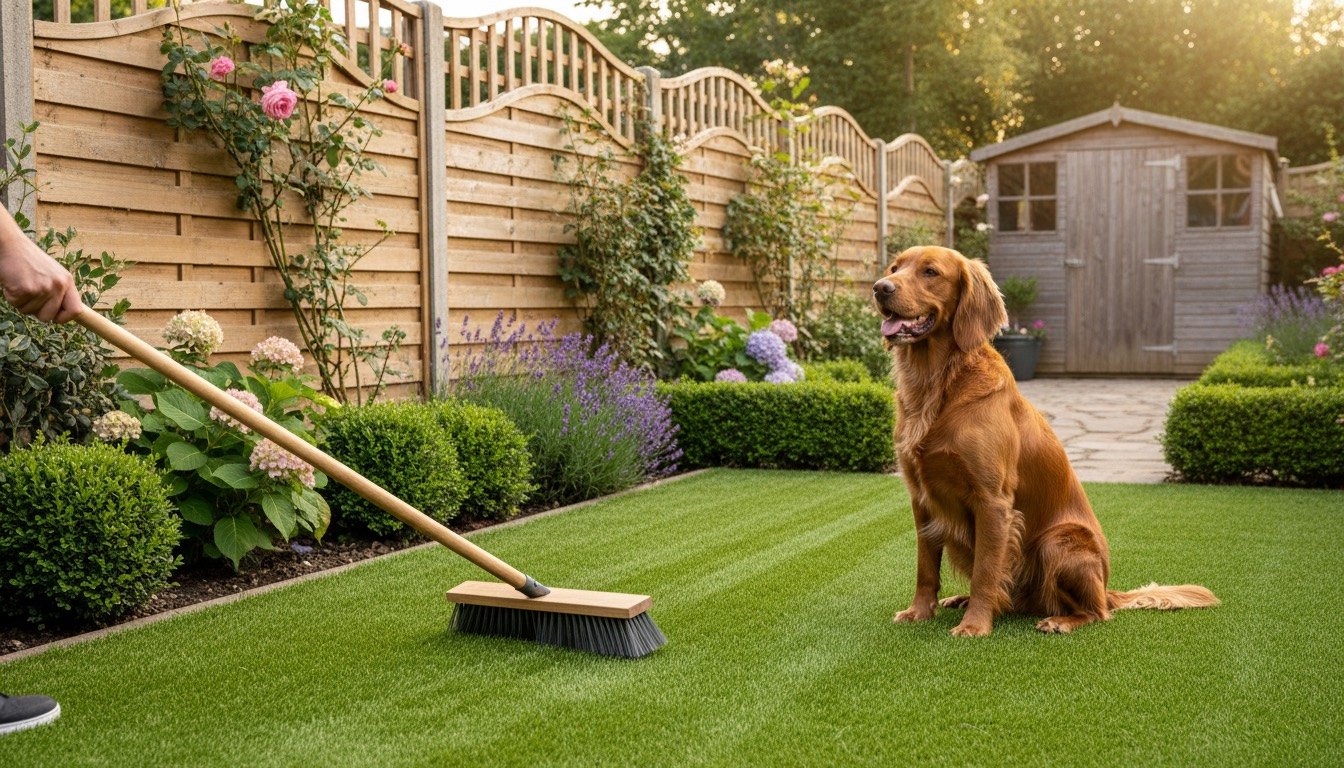
Artificial grass sales pitches lean hard on the phrase "maintenance-free", and five years later we're often shown flattened, mossy, faintly whiffy lawns whose owners feel cheated. The truth is kinder: a good synthetic lawn needs perhaps a tenth of the effort a real one demands, but that tenth is genuine work — and if there's a dog in the house, skipping it is exactly what turns a decent lawn into a summer smell nobody can trace.
This guide sets out the honest maintenance routine for artificial grass in a UK garden: the monthly brushing and rinsing that keeps the pile standing upright, how to stop moss and weeds colonising a lawn sold as weed-free, and a proper system for dog urine and odour that doesn't rely on bleach or air freshener. We also cover infill, the handful of things that void most warranties, and why what's underneath the turf matters as much as the turf itself.
None of it is difficult, and it takes about twenty minutes a month for an average garden — but skip it for a couple of seasons and the fibres flatten for good, the backing starts to hold smells, and a lawn that should see out fifteen years looks tired by year five.
Brushing and Grooming: Keeping the Pile Standing Upright
Flattened fibres are what make an otherwise good lawn look artificial, and traffic lanes — the path from patio to shed, the spot where the football lands — flatten fastest. Regular brushing is the single most effective thing you can do, and it costs nothing but time. For a deeper seasonal clean, see our full guide to cleaning artificial grass.
- •Brush against the pile direction monthly, using a stiff-bristled broom (never wire or metal-tined, which tears the blades) or a purpose-made power brush, sold from around £60–£120.
- •Give doorways, gates and anywhere furniture sits extra passes — these spots flatten first and recover slowest.
- •Rinse the whole lawn monthly in dry spells; dust, pollen and grime build a dulling film that makes green fibres look grey.
- •After heavy rain, avoid repeatedly walking the same path until the lawn has drained — waterlogged pile compresses more easily.
Preventing and Removing Moss, Algae and Weeds
Moss and algae need three things: shade, damp, and organic matter sitting in the pile — leaves, blown-in clippings, tree debris. Clear it with a plastic-tined rake or garden vacuum promptly rather than letting it break down in place, because decomposing matter is exactly the seedbed moss and algae need.
- •Treat moss or algae with a proprietary artificial-grass-safe treatment (roughly £10–£18, covering 50–80m²) — never a standard lawn moss killer. Most contain iron sulphate, which leaves permanent rust-brown staining on synthetic fibres and nearby paving.
- •Weeds mostly arrive through the drainage holes from below or seed into dirty infill on top, not through the backing itself, so keeping infill clean is a better long-term defence than any spray.
- •Cut back overhanging branches where you can — reducing shade removes one of the two conditions moss needs most, alongside damp.
Dog Owners: Urine, Odour and Solid Waste
Urine drains straight through the backing, but the salts in it bind to the latex and fibres, and warm days announce exactly where your dog favours — the classic August problem in gardens that smelled fine all winter. Rinse toilet zones weekly through spring and summer, and apply an artificial-grass-specific enzyme cleaner monthly — the same chemistry used in indoor pet urine treatments, which digests the odour compounds rather than masking them. Expect to pay £12–£20 for a ready-to-use spray or £25–£35 for a concentrate.
Avoid bleach, strong disinfectant and fabric-conditioner-based odour sprays: they suppress smell for a day or two, degrade the latex backing with repeated use, and — because dogs often re-mark over unfamiliar chemical scents — can make marking worse. Pick up solids as on any lawn, then rinse the spot. Training a dog to use one gravel or bark corner instead of turf removes most of the problem and spares the rest of the lawn.
Infill: What It Does and When to Top It Up
Sand or rubber crumb infill isn't cosmetic — it weighs the backing down, keeps fibres upright between brushings, and cushions seams under foot traffic. It works loose gradually, and a lawn that's lost its infill looks thin and feels spongy underfoot. Check levels once a year, usually in spring: if backing is visible in high-traffic areas, sweep infill back level with a stiff broom and top up where it's genuinely depleted. A 25kg bag of kiln-dried silica sand infill costs around £12–£18 and covers roughly 5–8m² depending on pile height.
What Actually Ruins Artificial Lawns
Most premature failures come down to a handful of avoidable mistakes rather than a fault with the product itself.
- •BBQ embers, sparklers and cigarette ends melt the pile instantly and permanently — keep anything hot off the lawn, on paving or a heatproof mat instead.
- •South-facing mirrors, glass balustrades and some reflective windows can focus enough sunlight to scorch a melt line into the turf, so check sightlines before settling on a furniture layout.
- •Standard lawn moss killer and most iron-based weedkillers leave rust-brown staining that doesn't wash out — always check a product is labelled safe for artificial grass first.
- •Jet washing at close range drives infill out and can lift seams; if you use a pressure washer at all, keep it on a wide fan setting, at least 30cm away, as an occasional deep clean rather than routine maintenance.
- •Dragging furniture or a trampoline across the lawn rather than lifting it tears the backing at the seams — a professional seam repair typically runs £80–£150, against several thousand pounds to relay an entire lawn.
Installation Details That Determine How Much Work You'll Have Later
A lot of the maintenance headaches people blame on the turf itself trace back to how it was laid. Proper installation — a compacted sub-base, a permeable membrane to stop weeds growing up from below, and a slight fall so water drains away rather than pooling — is what keeps odour, moss and sogginess under control long after the novelty wears off. If you're planning a new lawn, read up on garden drainage first, and, if the area borders a patio, the rules around paving over a garden, since permeable surface requirements can apply to artificial grass too. A properly built base clears a downpour within minutes; if yours holds puddles for hours, the base — not the turf — is the problem, and it's a job for a specialist installer, not a DIY fix.
Frequently asked questions
**How long does artificial grass actually last?** A decent mid-range product, properly installed and brushed monthly, should last 12–15 years before the pile visibly thins or fades. Budget products (roughly under £15/m² installed) often show wear by year 7–8, while premium UV-stabilised turf can run past 15 years.
**Can I use a jet wash on artificial grass?** Occasionally, and carefully. Keep the nozzle on a wide fan spread, work from at least 30cm away, and treat it as an annual deep clean, not routine maintenance — close-range washing drives infill out and can lift the seams between rolls.
**Does artificial grass get too hot to walk on in summer?** Yes, noticeably more than real grass, particularly rubber-crumb-infilled products in full sun. If pets or children go barefoot, choose a lighter-coloured, sand-infilled product and shade part of the area during the hottest part of the day.
**Will artificial grass always smell of dog urine no matter what I do?** No — persistent smell almost always means infrequent rinsing or a poorly draining base trapping urine against the backing. Weekly rinsing of toilet areas plus a monthly enzyme treatment resolves it in the vast majority of gardens.
**Is artificial grass genuinely less work than a real lawn?** Yes, considerably — no mowing, feeding or watering, and no monthly lawn care calendar to keep up with. It still needs monthly brushing, occasional rinsing and prompt debris removal, but that's a fraction of what a real lawn asks for.
Found this useful?
There's plenty more — hundreds of guides and honestly-tested product reviews for every corner of your home.
Browse All Guides