Product Reviews · 6 min read · 14 August 2026
The Best Patio Cleaner (2026): Gels, Concentrates and Sprays Compared
Green film, black spot lichen or plain winter grime? The right chemistry clears each — the wrong one etches your slabs. Four products that earn shed space, plus a deposit-safe route for renters.
By the Nims Casa editorial team — written from professional cleaning experience and checked against our editorial standards.
Affiliate disclosure: if you buy through links in this article we may earn a small commission at no extra cost to you. Our recommendations come from professional cleaning experience and are never influenced by retailers or brands.
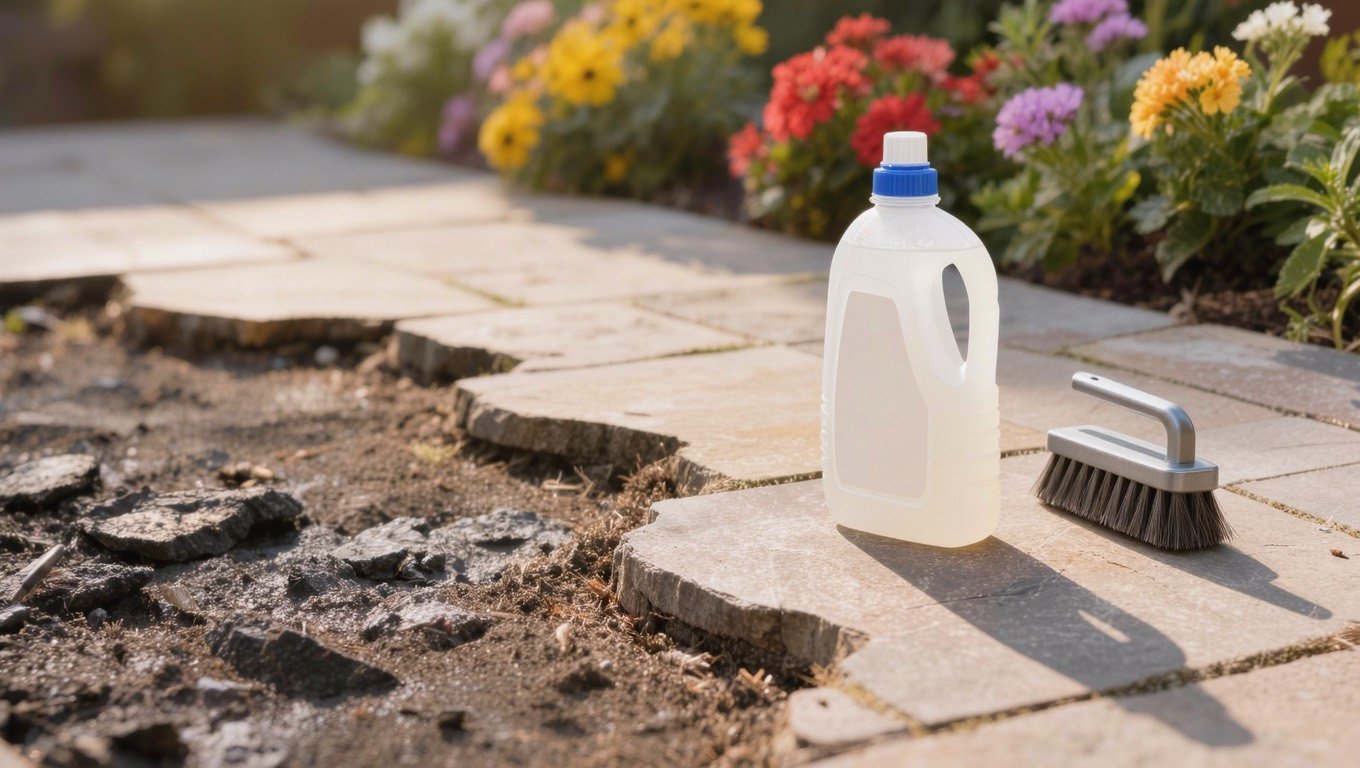
A British patio spends roughly half the year damp and a good chunk of it in shade, which is why green algae films the slabs by February and black spot lichen creeps across sandstone that looked immaculate when it was laid. The right chemical does most of the work while you drink tea; the wrong one etches the surface, strips the pointing or bleaches a stripe across the lawn.
We have used every product below on paying jobs across sandstone, concrete and porcelain, in enough shaded north-facing gardens to know which label claims survive a Manchester November. Here is what each chemistry actually does, which bottle to buy for your surface, and the cautions the marketing quietly buries.
Our top picks at a glance
Pro-Kleen Simply Spray & Walk Away (5L)
~£15A benzalkonium chloride concentrate that dilutes up to 1:5 and treats around 150 m² for the price of a takeaway. Spray it on a dry day and the green blackens, dies and weathers away over one to two weeks with no scrubbing or rinsing.
Pros
- ✓ Outstanding cost per square metre once diluted
- ✓ Safe on every common UK surface, including porcelain and block paving
Cons
- ✗ Results take one to two weeks, longer in cold weather
- ✗ Will not remove black spot lichen
Wet & Forget Rapid Application (2L)
~£26The gentlest product here: a no-rinse, non-caustic BAC formula you hose on and genuinely forget, as wind and rain strip the dead growth over the following weeks. The residual effect is the best we have seen, keeping shaded slabs clean for up to a year.
Pros
- ✓ Longest-lasting residual protection of any product tested
- ✓ Ideal for delicate, sealed or reconstituted surfaces a landlord would worry about
Cons
- ✗ Visible results take weeks, not hours
- ✗ Noticeably more expensive per square metre than Pro-Kleen
Azpects EASY Black Spot Remover (5L)
~£25An acid-based treatment that dissolves the holdfasts black spot lichen sinks into natural stone — the only chemistry that truly removes it rather than bleaching it. Apply, agitate with a stiff brush after 15–30 minutes, then rinse thoroughly.
Pros
- ✓ Genuinely removes established black spot from sandstone and granite
- ✓ Visible results the same afternoon
Cons
- ✗ Must never be used on limestone, cast concrete or near unprotected pointing
- ✗ Needs careful rinsing and plant protection; gloves and eye protection essential
Patio Magic! Concentrate (2.5L)
~£10The widely stocked BAC concentrate you will find in B&Q, Wickes and most garden centres, covering roughly 75 m² diluted. It does the same slow, gentle job as the pricier names on green algae and mould, just with less residual staying power.
Pros
- ✓ Cheap and available on the high street the same day
- ✓ No rinsing or scrubbing on light green growth
Cons
- ✗ Shaded, damp corners usually need a repeat treatment within the season
- ✗ Smaller coverage per pack than 5L rivals
Who These Products Are For
Chemical patio cleaners are for growth — algae, lichen, moss and mould — not for general dirt. If your slabs are simply grubby with soil, moss tracked off the lawn and last summer's barbecue fat, hot water, washing-up liquid and a stiff broom will shift most of it for pennies; our full patio cleaning guide walks through that job before you spend anything on chemicals. One other check: white powdery bloom on new slabs is not algae at all but salt migration, and it needs a different fix entirely.
They are also the answer where a pressure washer is the wrong tool. Repeated blasting opens the surface of concrete and cast slabs so they regreen faster, and it fires the jointing sand out of block paving. If you want machine help for the first clean, choose carefully from our tested pressure washers and let chemistry handle the maintenance. Wooden decking is a different job again — see our guide to cleaning decking without furring the boards.
How We Judge Patio Cleaners
We price every product per treated square metre, never per bottle. A £10 concentrate that dilutes 1:5 and covers 150 m² is a completely different proposition from a £6 trigger spray that manages one bench and a doormat. Beyond cost, we score how much scrubbing is genuinely required, how fast visible results arrive, whether the product is safe on all common UK surfaces or only some, what the runoff does to lawns, borders and ponds, and how long the patio stays clean afterwards. A cleaner that needs reapplying every eight weeks is not cheap at any price, and where makers claim 'no scrubbing' we tested that on slabs untouched for three years.
The Four Picks — and the Chemistry Behind Them
Almost everything on the shelf is one of three chemistries. Benzalkonium chloride (BAC) products — our Pro-Kleen, Wet & Forget and Patio Magic! picks — are slow-acting biocides: you spray, walk away, and the green dies over days then weathers off over weeks. They are the gentlest option, safe on virtually every surface including porcelain and sealed stone, and they leave a residue that delays regrowth for months. What they will not do, whatever the listing photos imply, is remove black spot lichen.
Sodium hypochlorite gels are thickened bleach. They cling to the surface, whiten black spot on concrete and porcelain within an hour and are satisfying to use, but the runoff kills plants outright, they can leave pale patches on coloured concrete, and mixing them with any acid product releases chlorine gas — never have both on the go in one afternoon.
True black spot removers, like our Azpects pick, are acid-based. They dissolve the lichen's root-like holdfasts that grip natural stone, which nothing else touches. The trade-off is hard limits: acid fizzes and etches limestone and cast concrete slabs on contact and will eat cement pointing if left to pool. If you want an eco route, sodium percarbonate (oxygen bleach) mixed in hot water plus a stiff broom is slower but kind to borders and ponds — it is what we use on jobs beside fish ponds.
Match the Cleaner to Your Surface
More patios are ruined by the wrong chemical than by neglect. Check what your slabs actually are before you buy — if you are unsure, the supplier's invoice or our guide to laying a paver patio will help you identify them.
- •Indian sandstone and granite: BAC for green growth; acid black spot remover is safe and the only real fix for lichen.
- •Limestone (and anything that fizzes with vinegar): BAC or hypochlorite only — acid products will permanently etch it.
- •Concrete and reconstituted slabs: BAC or hypochlorite gel; avoid acids, which dissolve the cement content and dull the face.
- •Porcelain: almost anything works, but you rarely need more than BAC — growth sits on the surface rather than rooting in.
- •Block paving: BAC only, applied with a sprayer; aggressive rinsing or gels flush out the jointing sand.
The Renter-Safe Version
If you rent, the patio is your landlord's fixture, and deposit deductions for etched slabs, bleached pointing or a scorched lawn edge are entirely plausible. The reversible route: photograph the patio before you start, stick to a BAC spray-and-leave product (it kills growth without altering the stone in any way), and keep acids and hypochlorite gels off the shopping list unless the landlord agrees in writing. Skip the pressure washer on block paving for the same reason — re-sanding blown joints is a chargeable job.
The good news is the safe option is also the cheap one: a £10–£15 concentrate, a £12 pump sprayer and a dry afternoon will bring a green patio back within a fortnight, and hot soapy water with a stiff broom remains risk-free on every surface. The same cautious logic applies to anything else outside that is not yours — our garden furniture care guide covers the rest.
What to Look for Before You Buy
Ignore the front label and read the back. These are the details that decide whether a product suits your patio:
- •Coverage per litre once diluted — divide price by square metres to compare fairly.
- •Listed surface exclusions, especially limestone, coloured concrete and resin-bound stone.
- •Contact time and whether rinsing is required — no-rinse products need a dry 4–6 hours after application.
- •Sprayer compatibility: concentrates assume you own a £10–£15 pump sprayer; factor it in.
- •A 'safe for pets once dry' statement if animals use the garden.
- •Residual protection claims — the better BAC products genuinely hold growth off for 6–12 months.
Common Buying Mistakes
The same errors come up in every garden we visit, and most of them cost more than the product did:
- •Buying trigger sprays for a whole patio — fine for 5 m², ruinously expensive per square metre beyond that.
- •Using an acid black spot remover on limestone or cast concrete because the bottle says 'stone'.
- •Expecting a green mould killer to shift black spot lichen — different organism, different chemistry.
- •Spraying with rain forecast: BAC products need at least four dry hours or you are watering the drain, not treating the patio.
- •Letting runoff reach borders, lawns or ponds — hypochlorite in particular kills fish and plants at tiny concentrations.
- •Mixing products or applying one straight after another; bleach plus acid releases chlorine gas at ground level, right where you are kneeling.
Found this useful?
There's plenty more — hundreds of guides and honestly-tested product reviews for every corner of your home.
Browse All Guides