Garden & Outdoor · 5 min read · 26 May 2026
How to Clean & Revive Wooden Decking (Without Furring the Boards)
Green, slippery, gone grey? Decking revives beautifully — but the pressure washer set wrong turns smooth boards into a splinter farm. The safe revival routine.
By the Nims Casa editorial team — written from professional cleaning experience and checked against our editorial standards.
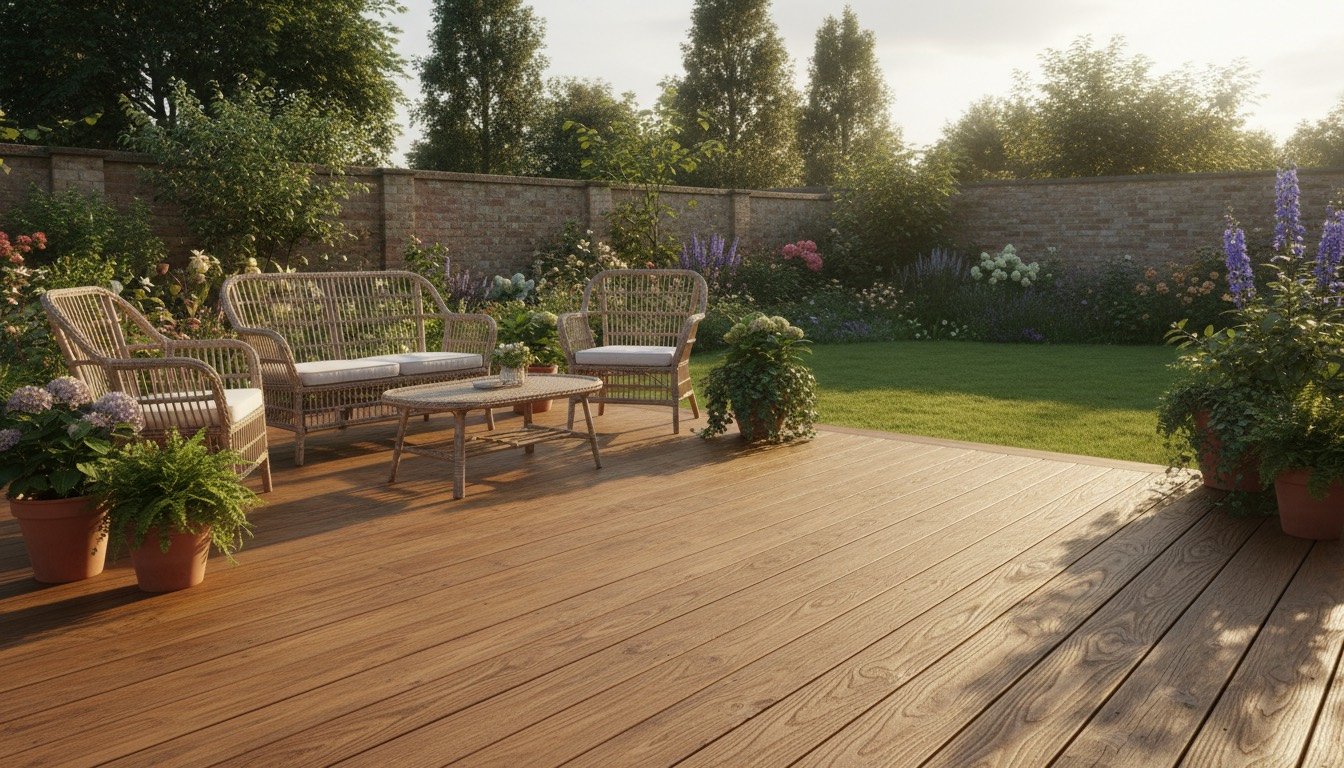
Timber decking has a hard life in a British garden: shade, six months of drizzle, fallen leaves and the algae bloom that turns smooth boards into a skating rink by February — the same growth that streaks render and external walls in damp, shaded corners. The good news is that decking gone entirely grey and slick usually isn't rotten; it's dirty, UV-bleached and coated in a biofilm that a weekend of proper cleaning removes completely.
The mistake that causes real damage is reaching for a pressure washer on full power. Blast softwood at close range and the jet doesn't just remove grime — it strips the soft spring-growth fibres between the harder grain lines, leaving a furred, splintery surface that traps dirt worse than before. Once boards are furred like that, sanding is often the only fix.
This guide covers the tools worth buying, the safe step-by-step clean, reviving faded grey boards, the mistakes that shorten a deck's life, and when to call a professional. For bigger jobs, see our guides to repairing deck boards and building a new deck.
Tools and materials for cleaning timber decking
Budget roughly £40–£70 for a full kit from scratch, though a hose, a stiff broom and a decking cleaner cover the actual clean on their own.
- •Stiff synthetic-bristle scrubbing brush or broom (never wire) — £8–£15
- •Timber decking cleaner concentrate, or oxygen bleach crystals — £10–£18, covers 25–40m²
- •Gap tool or old putty knife, for clearing debris between boards — £4–£7
- •Watering can with a fine rose, or a low-pressure sprayer — £10–£20
- •Pressure washer with a wide fan nozzle, if needed — hire from £25–£40 a day
- •Deck brightener/restorer, oxalic-acid based, for grey boards — £12–£20 a litre
- •Exterior decking oil, not paint or solid stain — £20–£35 for 2.5 litres, covers 20–25m² across two coats
Step-by-step: how to clean decking without damaging it
- •Clear the deck of furniture and pots, then sweep off loose leaves and grit with a stiff broom, working along the grain.
- •Clean out the gaps between boards with a gap tool. Trapped leaf mulch holds moisture against the edges and is a leading cause of rot.
- •Mix your cleaner to the strength on the packet and apply it evenly with a watering can rather than pouring it straight on.
- •Let it dwell 15–20 minutes without drying out — on a hot day, work in shade or dampen the boards first.
- •Scrub along the grain with a stiff synthetic brush. A wire brush tears soft timber and leaves rust-staining filings.
- •Rinse with a hose, or a pressure washer on a wide fan nozzle, lowest pressure, 40cm+ away, always moving along the grain.
- •Let the deck dry completely — a full dry day in summer, longer otherwise — before oiling or brightening.
- •While it's clean and visible, check for movement, soft spots or popped fixings, so early rot doesn't get sealed under a fresh coat.
Reviving grey, sun-bleached decking back to colour
Sun-greyed decking isn't dead timber, it's UV-bleached at the surface; the wood underneath is usually sound. Once clean and dry, an oxalic-acid deck brightener reverses much of the grey chemically in 15–20 minutes. Rinse it off and let the deck dry for at least two full dry days — oiling over damp timber traps moisture and causes early coating failure.
Apply decking oil in two thin coats, brushed along the grain, rather than one thick coat, which stays tacky instead of curing. Oil wears gracefully and a fresh coat blends straight over the old one, while a failed paint film peels and must be stripped back to bare wood. Re-oil every one to two years, sooner on a south-facing deck, and it stays permanently about a weekend from looking new.
Common mistakes that damage decking
- •Pressure-washing on full power close to the boards — the single biggest cause of furred decking that needs sanding or replacing.
- •Scrubbing across the grain instead of along it, which opens the fibres and roughens the surface permanently.
- •Using a wire brush or metal scourer, which tears soft grain and leaves rust-staining fragments.
- •Oiling timber that isn't fully dry, so moisture gets sealed in and the coating bubbles or moulds within a season.
- •Skipping the gap-clearing step, letting leaf mulch rot the board edges from underneath, invisibly, for years.
- •Leaving pots and garden furniture in the same spot all year, starving patches of light and air so algae regrows right after a clean.
When to call a professional for deck repairs
Most decking upkeep is a DIY weekend, but if several boards feel spongy, spring back underfoot or show dark staining that won't lift with cleaning, the timber is likely rotten and needs proper repair, not another wash. Loose or corroded joists, a frame that visibly moves, or decking sitting directly on soil are jobs for a competent joiner.
It's also worth a professional quote if algae and grime cover the whole garden, not just the deck — a company that can quote for the full patio and decking area together often costs less than two separate call-outs. Expect UK deck cleaning at roughly £15–£25 per square metre, and board replacement at around £60–£120 per board fitted.
Frequently asked questions
**How often should I clean my decking?** Once a year, in spring, is the minimum — clean before the first warm weekend rather than after algae has already regrown. Shaded decks often need a second, lighter clean later in the year. Our deck maintenance checklist sets out a fuller seasonal schedule.
**Can I use a pressure washer on decking?** Yes, carefully: wide fan nozzle, lowest effective pressure, 40cm away, constantly moving along the grain. If in doubt, scrub by hand and use the washer only for a low-pressure final rinse.
**What's the difference between decking oil, stain and paint?** Oil penetrates and feeds the timber, wears gracefully and re-coats easily. Stain sits nearer the surface for stronger colour but needs careful reapplication. Paint forms a solid film that looks neat when new but must be fully stripped once it starts to fail.
**How do I tell if decking is rotten rather than just dirty?** Dirty decking is uniformly grey or green and feels solid underfoot everywhere. Rotten decking shows localised dark, soft patches or a spongy give when pressed. Clean it first — that removes the guesswork.
**Does composite decking need the same cleaning method?** No. Composite boards don't need brightening or oiling and tolerate firmer cleaning, though they can still scorch under a badly handled pressure washer. See our guide to cleaning timber and composite decking for the split by material.
**How do I stop storms undoing this work?** Loose furniture and planters are the main risk to an open deck, both to themselves and the boards they scrape. Our guide to protecting garden furniture in summer storms covers what to move, tie down or bring in.
Found this useful?
There's plenty more — hundreds of guides and honestly-tested product reviews for every corner of your home.
Browse All Guides