DIY & Maintenance · 6 min read · 17 June 2026
How to Remove Efflorescence from Brick, Render and Cellar Walls
That white bloom on your brickwork is salt, not mould and not paint failure. Here is how to identify which deposit you have, take it off without staining the masonry, and stop it returning.
By the Nims Casa editorial team — written from professional cleaning experience and checked against our editorial standards.
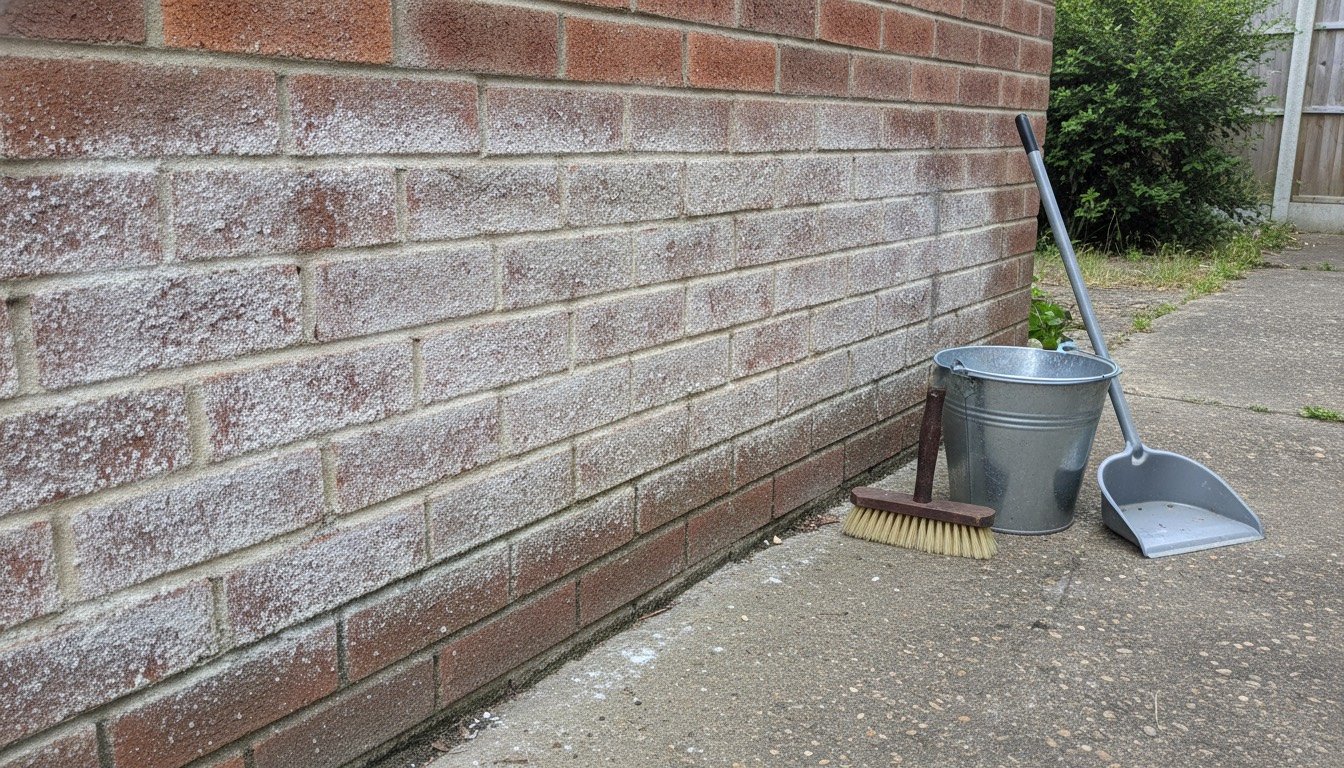
White, powdery bloom on a garage wall, a cellar chimney breast or a new block-paved drive is salt. Water has moved through the brick, mortar or concrete, dissolved the salts already inside it, then evaporated at the surface and left them on top. Hose it off and it returns within weeks, because the hose never touched the reason it arrived.
The order of work matters more than the products: identify the deposit, remove it dry, only then consider anything wet. Most failed attempts we are called to fix went wrong at the first move — someone washed the wall, drove the salts back in, and watched a bigger patch bloom on the next dry spell.
Step 1: diagnose the deposit before you touch it
Five deposits look alike from three metres away and four need completely different treatment. Drip water on it, scratch it with a fingernail, and press a dry tissue to the patch.
- •True efflorescence (soluble salts): fluffy, proud of the surface, brushes off dry as powder and dissolves under a drip of water. Common on brickwork under 18 months old, cellar walls and new block paving.
- •Lime bloom (calcium carbonate): hard and chalky, sometimes glassy runs down render. Will not brush off or dissolve in water, and genuinely needs an acid-based remover.
- •Hygroscopic salts (nitrates, chlorides): the patch feels faintly damp indoors, has a tide mark and darkens in muggy weather — the pattern behind most cases of a persistently damp cellar wall.
- •Mortar smear: an even grey film following joints and brick faces uniformly. Efflorescence is patchy and ignores the joints.
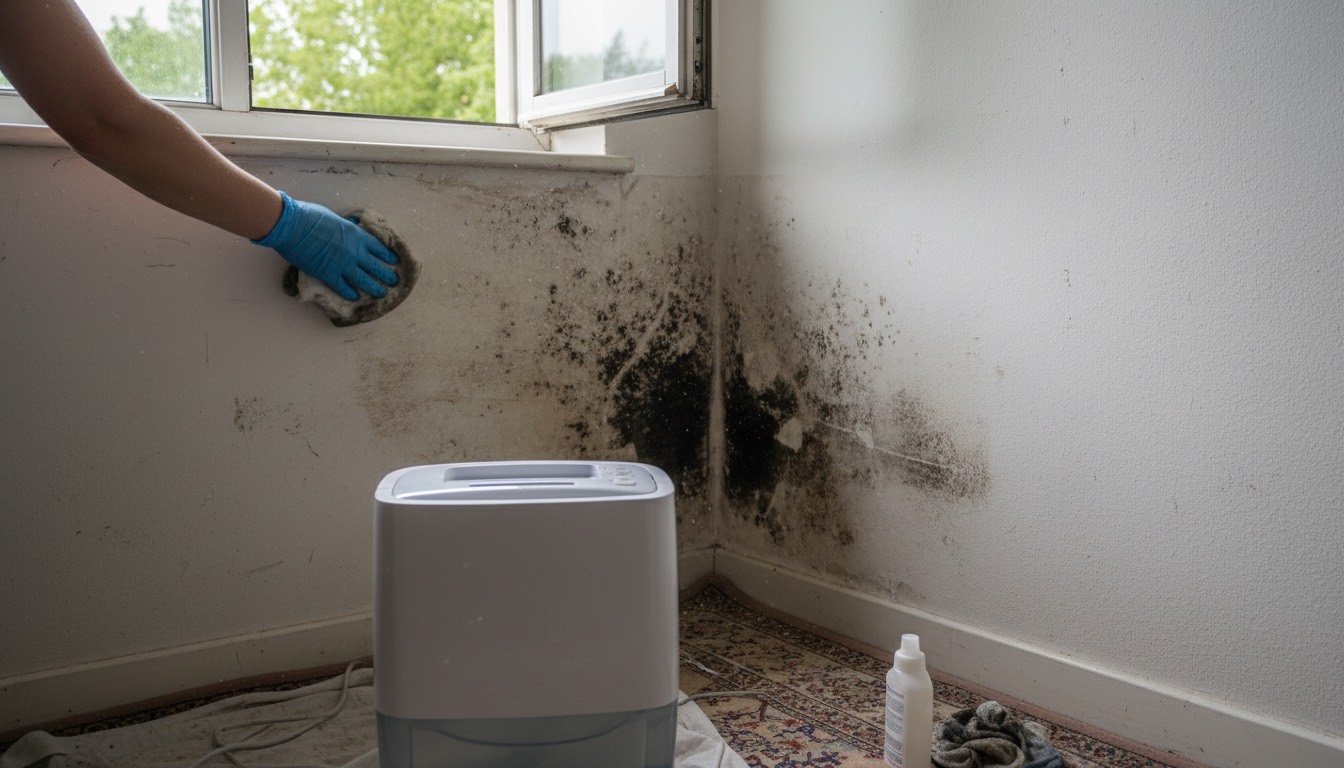
- •Mould: grey, green or black, in colonies on paint and dust, with an earthy smell. Our notes on identifying mould in a cellar cover the difference.
Step 2: read the timing, because it names the cause
Pencil round the edge of the patch and photograph it with the date. On new or newly repointed masonry, a single bloom in the first 12 to 18 months is construction water drying out and stops on its own. A patch that reappears every October and fades by May is seasonal ingress — blocked gutters, a bridged damp-proof course, or ground levels raised above the DPC.
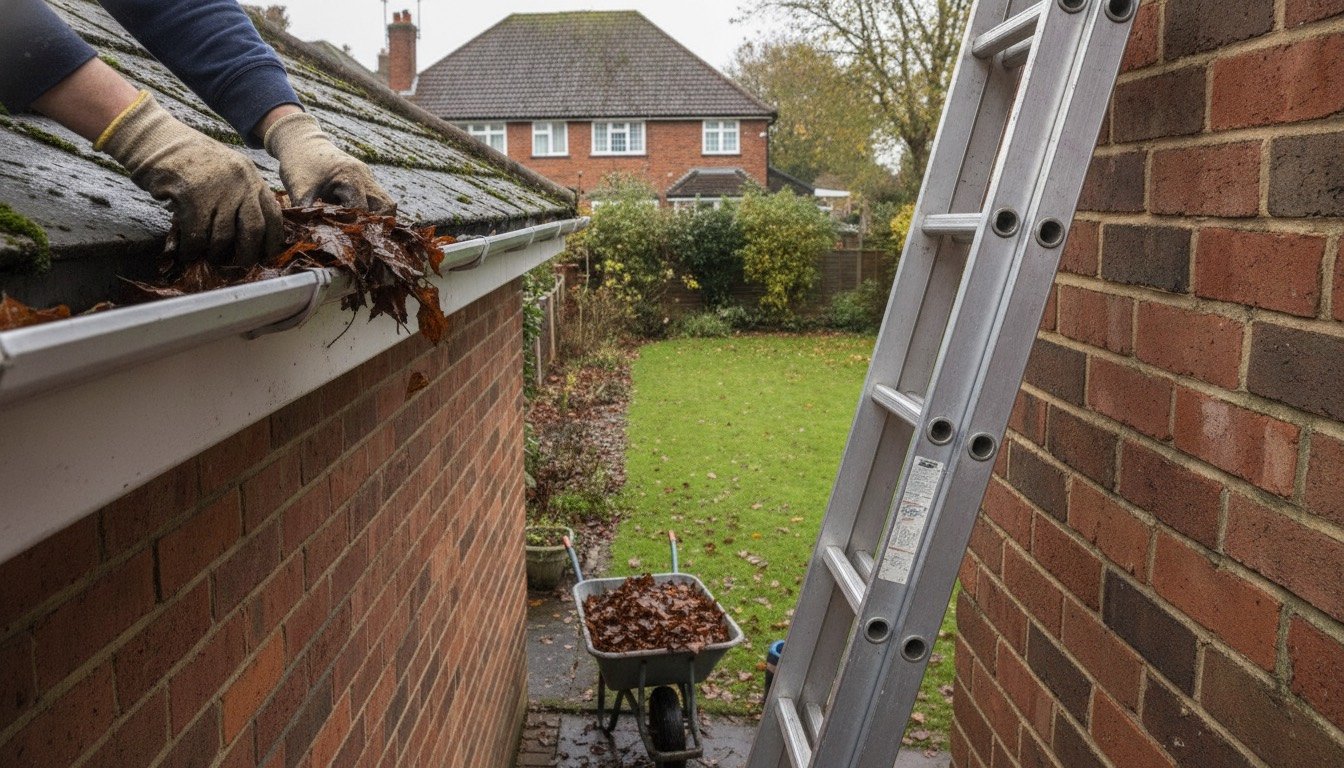
A patch back within days, in any weather, means water is arriving continuously: a leaking pipe, a defective gulley or ground water pushing through a below-ground wall. Check the rainwater goods first, because gutter and downpipe maintenance is the cheapest damp fix there is.
Safety first
Dry removal is low risk; the acid stage is not. Brick acid is dilute hydrochloric; patio cleaners are usually sulfamic acid, gentler but still corrosive.
- •Splash goggles, long rubber gauntlets and a face shield. Acid runs down your forearm the moment you work above shoulder height.
- •Always add acid to water, never water to acid, and mix outdoors.
- •Never combine acid with bleach or hypochlorite mould killers. The reaction releases chlorine gas, which pools in a cellar rather than clearing.
- •Wear a P3 mask for dry brushing — old mortar dust carries respirable crystalline silica.
- •On painted pre-1980 walls assume lead in the coating: no dry-sanding, no heat guns. Read lead paint safety in older homes first.
- •Mask UPVC, aluminium and glass, and cover planting. Acid runoff etches glass and kills shrubs.
- •Never acid-wash lime mortar, limestone, marble or coloured concrete, and check whether a listed elevation needs consent first. The difference between lime mortar and Portland cement matters — acid dissolves the binder straight out of a lime-bedded wall.
Tools, materials, time and cost
Skill level: straightforward dry, competent DIY for acid on external brick, off-limits on decorative stone. Dry brushing runs at 4-6 m² an hour including vacuuming, so a 10 m² garage wall is a comfortable morning and a full cellar is two days with drying time between passes.
Materials for 10-15 m² come to £30-60 if you own PPE. A specialist charges £250-450 a day and a damp survey £150-350, often refunded against works. If ground water is the cause, budget properly — cellar waterproofing costs dwarf anything you spend on brushes.
- •Stiff nylon or tampico brush, £5-9. Not a wire brush on soft brick: it leaves iron filings that rust-stain within a fortnight.
- •Vacuum with a HEPA filter or fine dust bag, from £40, or £25 a day to hire.
- •Dust sheets and low-tack tape, £8-15; PPE, £20-35 from a standing start.
- •Efflorescence remover or sulfamic patio cleaner, £15-28 for 5 litres.
- •Brick acid, £10-18 for 5 litres, only if lime bloom is confirmed.
- •Optional: breathable silane/siloxane repellent, £30-60 for 5 litres covering 20-25 m², and dehumidifier hire at £12-20 a day.
The removal method, step by step
- •1. Let the wall dry: 48 hours without rain outside, or 2-3 days of dehumidifier indoors. Damp masonry just redistributes salt.
- •2. Sheet up the ground, planting, frames and paintwork, then dry-brush the whole area top to bottom in short strokes. Wet nothing.
- •3. Vacuum as you go, nozzle just below the brush, so powder is captured rather than settling two courses down.
- •4. Repeat both after 24 hours. A second bloom nearly always appears as the surface dries, and this is the pass people skip.
- •5. Stop here if the wall is clean. Most genuine efflorescence needs nothing more.
- •6. If hard residue remains, test a remover on a 200 mm square out of sight and wait 48 hours for colour change or mortar softening.
- •7. If it passes, pre-wet the masonry so acid cannot soak in, apply diluted per the label, hold the dwell time (usually 3-5 minutes) and agitate lightly.
- •8. Rinse hard bottom-up, then top-down. Under-rinsing causes the pale ghosting people blame on the product.
- •9. Fix the water: clear gutters, drop ground levels 150 mm below the DPC, repoint failed joints, re-bed the downpipe shoe.
- •10. Seal or repaint only after one full wet season stays clear. Trapping salts behind a coating means stripping blown paint next spring.
Troubleshooting: what the result tells you
- •Bloom back within a fortnight: an active water source. Stop cleaning and investigate plumbing, drainage and ground levels.
- •Brown, yellow or green staining after acid: vanadium or manganese salts leaching out of buff and multi bricks. Acid fixes them permanently — use an alkaline vanadium remover instead.
- •Pale washed-out patches: acid burn from poor pre-wetting or rinsing. It fades over 12-18 months but never fully recovers.
- •Rust spots: a wire brush was used. Only oxalic-acid rust remover on a test patch will help.
- •Salt through fresh plaster or paint: the substrate was never dry. Strip back and wait for stable moisture readings.
- •Powder on the cellar floor as well as the walls: hydrostatic pressure from below, so a tanking job rather than a cleaning one.
When to stop and call a professional
Call a qualified damp surveyor or PCA-registered contractor if the affected band runs above roughly one metre from floor level indoors, if plaster is blown behind the salt, if brickwork is cracked, or if the elevation is listed. Rented homes carry a further layer: under the Homes (Fitness for Human Habitation) Act 2018 persistent damp is the landlord’s duty to investigate, and tenants should report it in writing rather than buying chemicals themselves.
There is also a point where the maths turns. Brush the same wall three times in a year and you are maintaining a symptom. Put that £60 of chemicals towards a proper investigation instead.
Found this useful?
There's plenty more — hundreds of guides and honestly-tested product reviews for every corner of your home.
Browse All Guides