Garden & Outdoor · 6 min read · 2 June 2026
Garden Furniture Care: Wood, Rattan & Metal Through a British Year
British weather runs a year-round durability test on garden furniture, and most of it fails at the cushions. Care by material, plus the winter decision tree.
By the Nims Casa editorial team — written from professional cleaning experience and checked against our editorial standards.
Garden furniture is bought in May optimism and usually let down by November. UV bleaches it, rain swells or rusts it, and the cushions quietly grow mould in a shed nobody's opened since September. None of this is inevitable — teak, rattan and metal are all durable when they're cared for on their own terms, but a routine built for one material actively damages another.
This guide covers care by material — teak, softwood, synthetic rattan and metal — plus the part that actually fails first: cushions, covers and the storage decisions that decide whether next spring starts with a wipe-down or a shopping trip.
None of it needs specialist kit: a soft brush, soapy water, an afternoon twice a year and, for wood kept oiled, around £15–£25 a year in teak oil will keep a set sound for a decade or more — well past the two or three seasons neglected furniture tends to survive.
Teak and hardwood: cleaning, oiling and the silvering debate
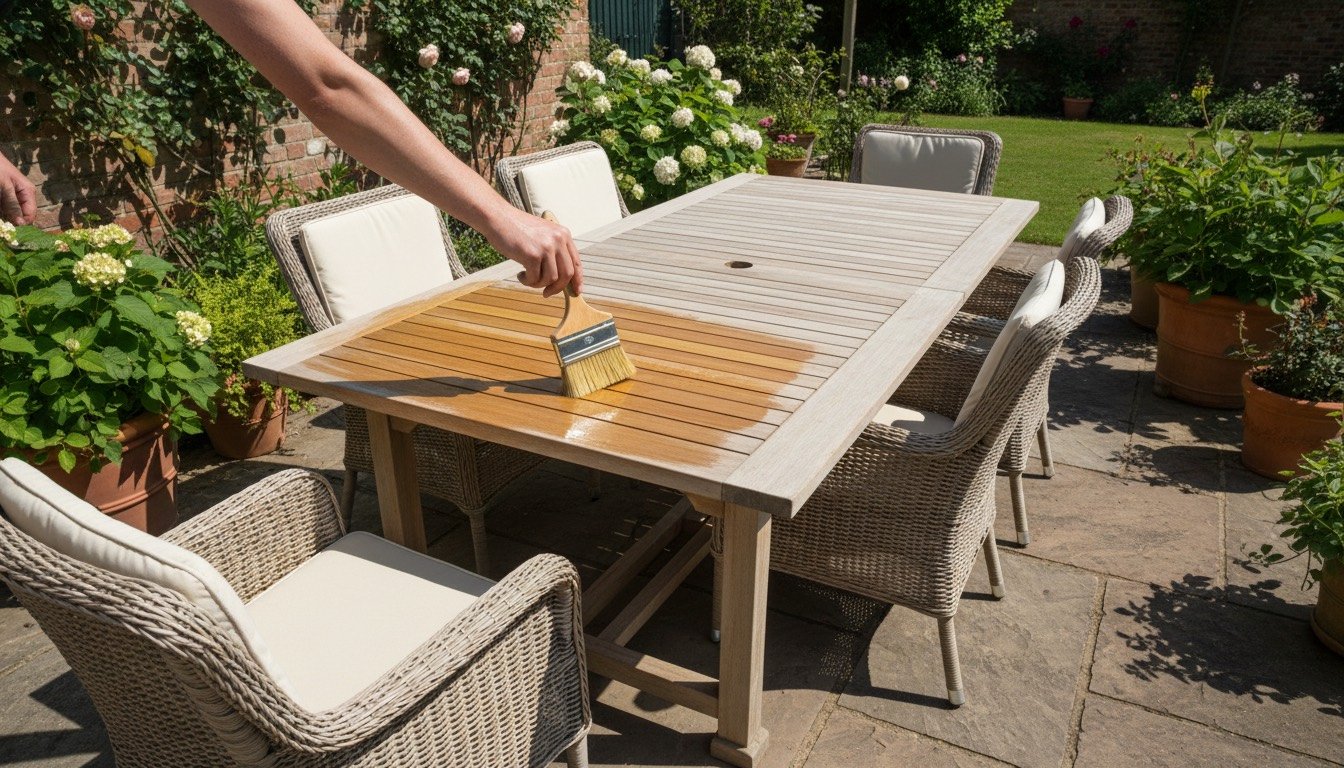
A well-kept hardwood table will outlast a house move. Wash it at least once a year — soapy water, a soft brush, working with the grain — and lift black mildew spotting with diluted white vinegar or a hardwood cleaner (£8–£12 a bottle). After that, it's a choice of philosophy, not a right answer.
- •Oiled: teak oil applied once or twice a season keeps the warm honey colour. It costs roughly £12–£20 a litre and covers a table and six chairs.
- •Left natural: unoiled teak silvers within a year — purely cosmetic, since the wood is exactly as structurally sound as the oiled version.
- •Never varnish or lacquer garden hardwood. A hard finish traps moisture underneath and cracks within two seasons, leaving a mess that's harder to strip than bare wood was to maintain.
- •Already flaking? Sand back to bare timber and apply two fresh coats — patching new oil over old flaking finish just peels again.
Softwood, synthetic rattan and metal: what each one actually needs
Cheaper materials aren't lower maintenance — they're differently maintained, and each has one job that matters more than the rest.
- •Softwood (budget pine sets): needs stain or preservative topped up every year or two, since bare patches rot from the joints outward. Check the feet especially — end grain on a wet patio is where softwood dies first. A tin of preservative is around £15–£20 and covers several seasons.
- •Synthetic rattan: soapy water and a soft brush through the weave, rinsed and dried, is the whole routine. UV, not rain, is what kills cheap rattan — budget resin turns brittle and flakes within a couple of summers in full sun, so shade or cover a set that may have cost £400–£800.
- •Metal: powder-coated aluminium just needs an occasional wash. Steel and wrought-iron need vigilance at welds and feet, where rust starts; treat spots early with a wire brush, rust-converter primer (£6–£10) and a matching topcoat before corrosion lifts the coating.
Cushions: the part that actually fails first
Furniture usually outlives its cushions five to one, and the cause is almost always storage, not use. Cushions put away slightly damp in a sealed box or bin bag come back speckled black and smelling of a school changing room — the same conditions that cause mould inside a wardrobe do the same job to cushion foam, only faster.
The rules: covers off and machine-washed at season's end (most zip off; cool wash, air dry, never tumble), foam completely dry before storage, and storage that actually breathes — a slatted bench box or vented bag, never sealed plastic in a damp shed.
- •Mildew speckling on covers usually lifts with an oxygen-bleach soak (around £5 for a tub that lasts several seasons) followed by a normal wash.
- •Established black mould inside foam is close to unbeatable. Replacement covers, in standard sizes from specialist sellers, are far cheaper than replacement cushions.
- •A cushion left out overnight in September dew does more harm than a whole summer of daytime use — bring cushions in whenever rain is forecast, not just at season's end.
Choosing covers that protect furniture rather than rot it
A £15 cover from the cheapest rack can do more harm than none at all — a non-breathable tarpaulin traps moisture underneath, so the set sits in its own condensation. Spend closer to £25–£45 on a genuinely breathable, fitted, waterproof cover, one that lets vapour out while keeping rain off, and it earns that back many times over through the summer storms that cause most seasonal damage.
- •Fit matters more than price: a cover cut for the exact set sheds rain and doesn't flap like a generic sheet.
- •Secure it. An unstrapped cover in UK wind becomes a sail — use integrated straps or bungee cords, not just a drawstring.
- •Lift feet onto pot feet or timber battens (a few pounds each) so legs aren't standing in a puddle — this alone prevents most foot rot.
- •Check covers after any storm; a torn corner left for a fortnight pools water exactly where the tear is.
Winter storage: what to bring in, what can stay out
Rattan and softwood benefit most from coming indoors — a shed, garage or garden room adds years to a set that would otherwise sit in freezing, wet air for five months. Check the space itself is dry first, using the same checks you'd run before insulating a shed; a damp shed ruins stored furniture as thoroughly as leaving it outside. If space is tight, plan garage storage around furniture-sized gaps rather than an October afterthought.
Quality teak and powder-coated aluminium can be left out all year under a good cover with no real cost to lifespan — genuine outdoor durability is much of what the higher price bought.
Common garden furniture mistakes that shorten its life
- •Pressure-washing rattan or softwood up close: it strips the finish and drives water into joints. Use a soft brush, or a wide low-pressure fan held well back — the same rule that applies when cleaning a patio without damaging what's underneath.
- •Oiling teak without washing it first, sealing dust and mildew spores into the new finish.
- •Stacking damp chairs together, trapping moisture where it can't evaporate.
- •Ignoring a small rust spot on a steel frame — it never gets smaller on its own.
- •Standing furniture on decking without checking the boards, worth folding into a wider deck maintenance routine; buying covers or preservative at full price in June rather than in the end-of-season sales.
Frequently asked questions
**How often should I oil teak garden furniture?** Once or twice a year for most UK gardens — spring, and again in early autumn after a hot, dry summer, which fades oil faster than a mild one. More often than that adds cost, not protection.
**Is it worth buying a cover, or just storing everything?** If you have dry storage space, storing rattan and softwood is always better — no cover fully stops damp reaching a frame over a whole winter outdoors. Covers are the fallback for furniture staying out, such as teak or aluminium.
**Can I pressure-wash garden furniture?** Sparingly. A wide fan setting held well back suits solid wood and metal, but it strips synthetic rattan and drives water into joints if held too close. Soapy water and a soft brush is the safer default.
**Why has my rattan gone brittle and started flaking?** Almost always UV, not age. Budget resin isn't fully UV-stabilised, so a few summers of direct sun make it brittle. Better-quality rattan resists this far longer, and shading or covering any set through the hottest months slows the damage.
**Is it too late to save cushions with black mould on them?** If it's only on the removable cover, an oxygen-bleach soak and a normal wash usually lifts it. Mould inside the foam is hard to remove fully — replacement covers are usually the sensible fix, unless the foam has degraded too.
**Does powder-coated aluminium need any maintenance?** Very little — an occasional soapy wash is normally the whole routine. The exception is any chip that exposes bare metal, which should be touched up promptly with an aluminium-safe paint pen before corrosion starts underneath.
Found this useful?
There's plenty more — hundreds of guides and honestly-tested product reviews for every corner of your home.
Browse All Guides