Product Reviews · 6 min read · 22 April 2026
The Best Shop Vac UK (2026): Wet & Dry Vacuums That Survive Real Work
Twenty litres of floodwater, a hearth full of cold ash, plaster dust that would destroy a household hoover — this is the machine that handles it. Here is what to buy, and the dust rule most UK buyers miss.
By the Nims Casa editorial team — written from professional cleaning experience and checked against our editorial standards.
Affiliate disclosure: if you buy through links in this article we may earn a small commission at no extra cost to you. Our recommendations come from professional cleaning experience and are never influenced by retailers or brands.
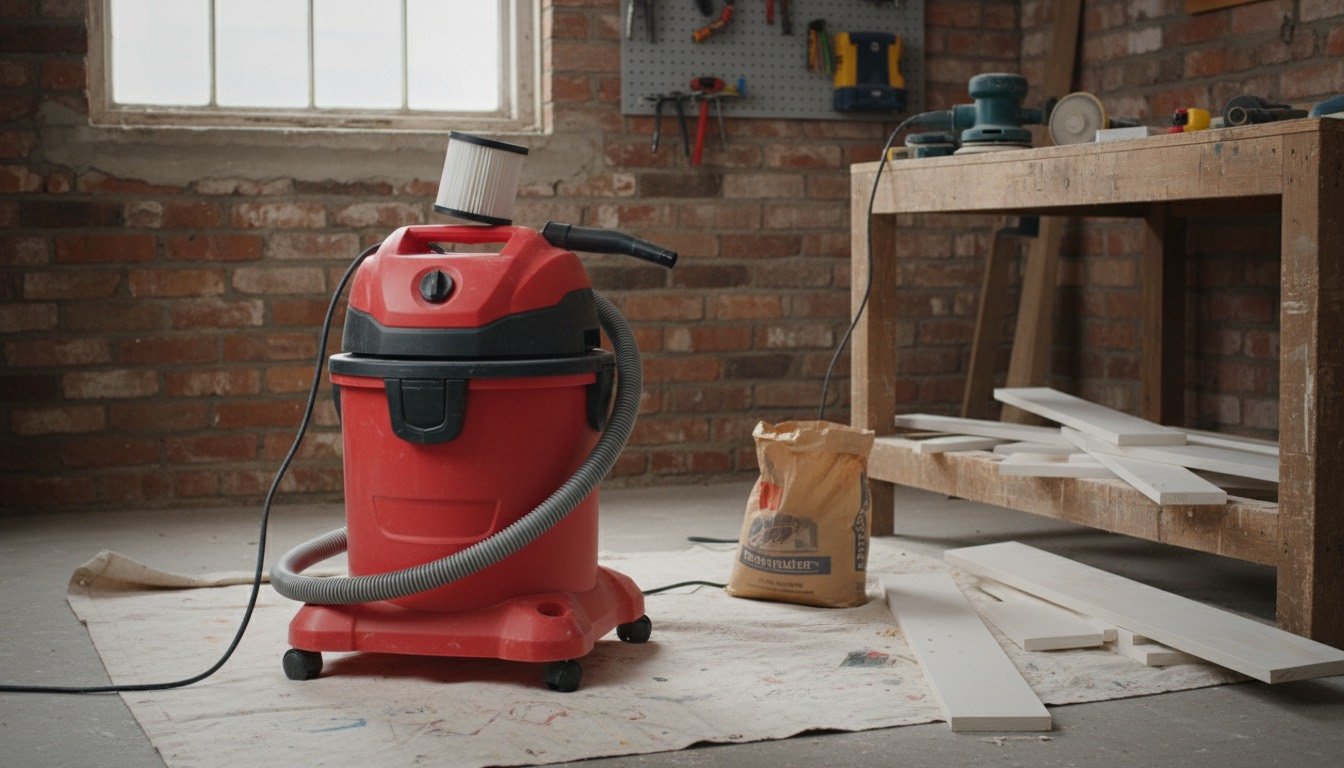
Ask a UK plasterer, joiner or end-of-tenancy cleaner which tool they would replace first if it vanished overnight, and a decent wet and dry vacuum comes surprisingly high up the list. It does the jobs a household machine simply cannot survive: pulling 20 litres of water out of a flooded utility room, clearing a hearth full of cold ash, swallowing plaster dust that would choke a bagless cyclone inside ten minutes.
The trouble is that "shop vac" is an American label sitting on a British shelf of wildly different machines. At one end there is a £50 Titan drum from Screwfix; at the other, a £600 M-class dust extractor that is a legal requirement on certain jobs rather than a luxury. The gap between them matters more than the price tags suggest.
Our top picks at a glance
Kärcher WD 6 P S V-30/6/22/T
~£150-180A 30-litre stainless drum with a genuinely effective filter shake-down system and a power take-off socket that starts the vac when your sander does. It is the machine we would hand to nine out of ten UK homeowners doing their own renovation work.
Pros
- ✓ Semi-automatic filter cleaning keeps airflow up during plaster dust work
- ✓ Power take-off socket and 35mm hose handle sanders and mitre saws well
- ✓ Stainless tank and drain plug make wet pickup and emptying painless
Cons
- ✗ L class only, so not compliant for paid silica or hardwood dust work
- ✗ Bulky footprint for a small under-stairs cupboard
Titan TTB775VAC 1400W 20L Wet & Dry Vacuum
~£50-70The default Screwfix drum vac, and honestly good value for occasional garage, car and flood-mop duty. Buy it knowing you will replace the hose before the motor and that fine dust is not its strength.
Pros
- ✓ Very cheap, widely stocked, and spares are easy to find
- ✓ Copes well with water, grit, leaves and car interiors
- ✓ Blower port included at the price
Cons
- ✗ Foam and cartridge filtration struggles badly with plaster dust
- ✗ Short cable and lightweight castors that skate on smooth floors
Numatic Charles CVC370-2
~£150-190The wet-and-dry sibling of the Henry, built around the same near-indestructible motor and serviced by every janitorial supplier in the country. Not the fastest on fine dust, but the machine most likely to still be working in 2036.
Pros
- ✓ Outstanding reliability and cheap, universally available spares
- ✓ 15-litre wet capacity with a simple, quick tank changeover
- ✓ 10m cable and lightweight body make it easy to move around a house
Cons
- ✗ No power take-off socket or automatic filter cleaning
- ✗ Smaller capacity than similarly priced drum vacs
Festool CTL MIDI I Cleantec Dust Extractor
~£550-650An M-class extractor with variable suction, antistatic hose and Systainer compatibility, which is what you buy when dust control stops being a preference and becomes a duty. Expensive, quiet, and the only one here we would put on a paid job cutting or sanding silica-bearing material.
Pros
- ✓ M-class certified filtration with flow monitoring alarm
- ✓ Superb hose and tool connection quality across brands of sander
- ✓ Genuinely quiet at around 62 dB, which matters in an occupied house
Cons
- ✗ Three to four times the price of a capable domestic machine
- ✗ Only 15 litres, so wet pickup and rubble clearance are limited
Who actually needs one
A wet and dry vacuum earns its shelf space if you renovate, own a garage or workshop, run a wood burner, or live somewhere that floods. If your worst job is crumbs and pet hair, buy a better domestic machine instead — our vacuum cleaners guide covers those, and a drum vac disappoints on carpet with no beater bar and no fine dust filtration as standard.
- •Renovators and serious DIYers: chasing walls, lifting floors, sanding, and clearing up after each trade.
- •Wood burner and open fire owners: cold ash only, and only with a metal ash canister or dedicated ash filter fitted.
- •Anyone with a cellar, garage or utility that has ever taken water — see our basement flood cleanup checklist for the wider job.
- •Landlords and property managers handling turnovers, where one machine takes builders' dust, grit and the odd overflow in a single visit.
How we judge them
We are not a laboratory and do not pretend to be. This comes from long-term hands-on use across renovation and cleaning work, supported by manufacturer specifications and UK spare-part pricing checked in April 2026. Where we have not run a machine ourselves for months, we say so rather than dressing a spec sheet up as a test.
- •Airflow in litres per second, not just suction in kPa — airflow moves debris along a hose, sealed suction only lifts it.
- •Filter behaviour under real plaster and MDF dust: how fast it blinds, and how easily it cleans or shakes down.
- •Wet performance: how much water it lifts before the float cuts out, and whether draining means tipping 25kg of dirty water into a gully.
- •Serviceability and real running cost: whether filters and brushes are still stocked three years on, with fleece bags at £2 to £4 and cartridges at £15 to £35.
Dust class: the bit UK buyers get wrong
Vacuums used for hazardous dust are classified under BS EN 60335-2-69 as L, M or H. L class is fine for general grit and soft wood shavings. M class, which captures at least 99.9 per cent of fine particles, is the practical minimum for plaster, MDF, hardwood, concrete and anything containing silica. H class is a different animal again, for carcinogenic and asbestos-bearing dust.
This is where UK regulation genuinely bites. If you are working for payment, COSHH obliges you to control exposure, and the HSE workplace exposure limit for respirable crystalline silica is 0.1 mg/m³ over eight hours — a figure you will breach in minutes cutting blocks dry with an L-class vac on the saw. Employ a tradesperson and that duty is theirs, so it is fair to ask what class their extractor is before they chase your walls.
Two honest clarifications. Part P does not apply here — plugging in a vacuum is not notifiable electrical work — but any vac used outdoors should be on RCD protection, and site work usually means a 110V transformer version. And if you suspect asbestos in artex, old floor tiles or a pre-2000 textured ceiling, no shop vac is the answer: under the Control of Asbestos Regulations 2012 most of that work is licensed. Stop and get a survey.
Our picks for 2026
Four machines cover almost every UK household and small trade: the Kärcher for most people, the Titan as the honest budget answer, the Numatic for durability, and the Festool for when dust class stops being optional.
If you already know you mainly want water pickup rather than fine dust control, our dedicated wet and dry vacuum comparison goes deeper on tank drainage and float switch design.
What to look for on the spec sheet
Marketing leans hard on wattage, which tells you almost nothing about performance. These are the numbers and features that change how the machine behaves in your hands.
- •Hose bore: 32mm suits dust, 38mm is far better for water, rubble and offcuts. Narrow hoses block constantly.
- •Tank capacity and a drain plug: 20 to 30 litres suits most homes, and a plug turns emptying 25kg of dirty water from a soaking into a two-minute job.
- •Power take-off socket: lets a sander or saw start the vac automatically, and is close to essential if you are sanding plasterboard without flooding the house with dust.
- •Automatic or semi-automatic filter cleaning: worth roughly £80 of the price difference on any machine you will use for plaster.
- •Cable length: 4m is meagre, 7 to 8m saves constant re-plugging. Check for a 110V variant if you work on commercial sites.
Common buying mistakes
Most disappointment with these machines traces back to five or six repeat errors, and all of them are avoidable.
- •Buying on kPa alone. High sealed suction with poor airflow gives you a machine that grips the floor and moves nothing.
- •Running fine dust without a fleece bag. It halves filter life, and a blinded cartridge filter costs more than a year of bags.
- •Vacuuming warm ash. Embers survive far longer than people think and will melt a plastic drum.
- •Ignoring dust class because it is "only the spare room". Silica does not care whose house it is.
- •Storing it badly. Hoses crack when kinked and coiled tight — hang them in a loop, which our workshop organisation guide covers alongside the rest of the wall-storage question.
Keeping it alive, and when to stop
Maintenance takes about ten minutes a month. Empty the drum after wet use and leave the lid off overnight or it will smell within a week. Tap the cartridge filter out rather than washing it unless the manual says otherwise, because a damp filter blinds instantly. Replace fleece bags at two-thirds full, and check the float valve seat for grit — a stuck float is the commonest cause of a motor drawing water.
Know the escalation point. If a leak has been running long enough to soak joists or plasterboard, or if the water has come back up through a drain, you are past DIY and into a job for a restoration firm with dehumidifiers and moisture meters — our dehumidifier guide explains why domestic units cannot dry a structure. Likewise, if the dust came off a pre-2000 ceiling or textured coating, put the hose down and book a sample test. Neither a £50 drum nor a £600 extractor is worth a lung.
Found this useful?
There's plenty more — hundreds of guides and honestly-tested product reviews for every corner of your home.
Browse All Guides