Product Reviews · 6 min read · 24 April 2026
The Best Wet & Dry Vacuum UK (2026): Machines That Actually Shift Standing Water
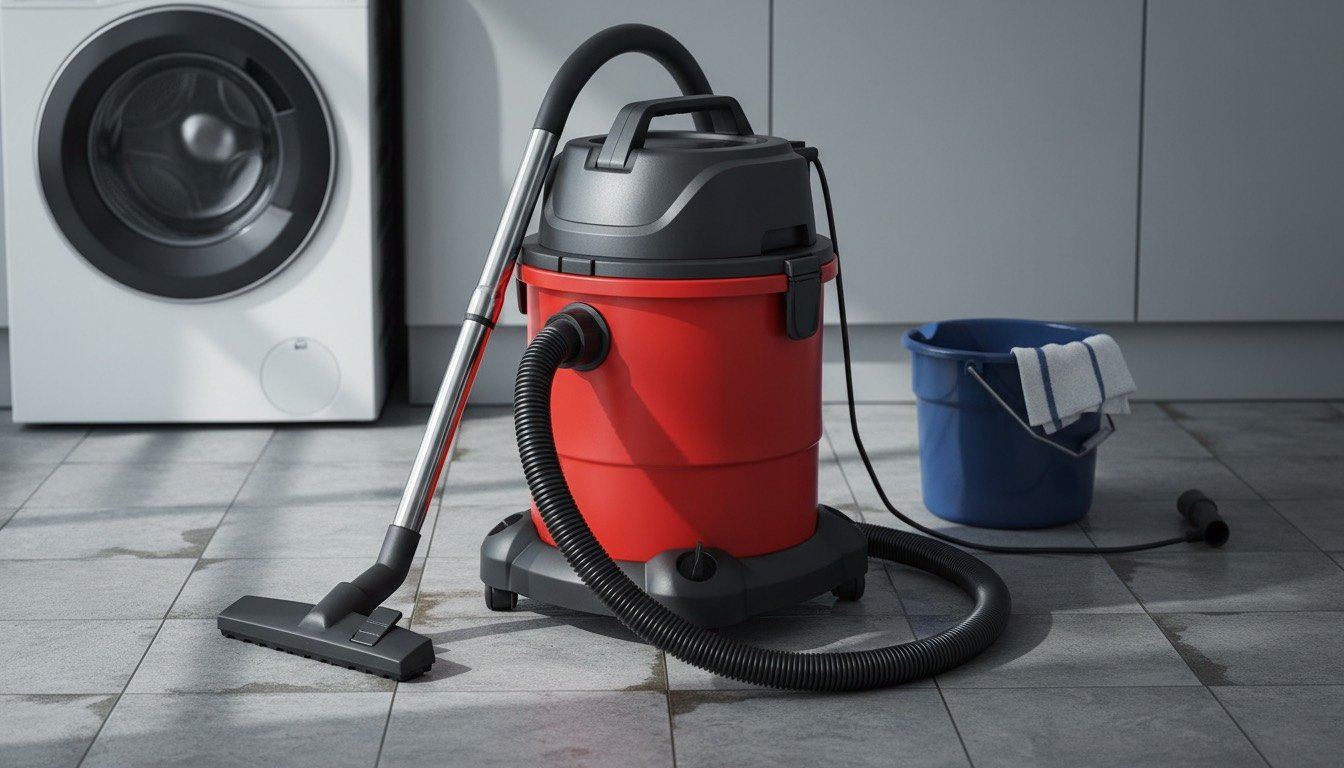
Most wet and dry vacuums are sold on drum size and headline wattage. Neither tells you how fast the machine clears 20mm of water off a kitchen floor at 11pm. These are the ones that do.
By the Nims Casa editorial team — written from professional cleaning experience and checked against our editorial standards.
Affiliate disclosure: if you buy through links in this article we may earn a small commission at no extra cost to you. Our recommendations come from professional cleaning experience and are never influenced by retailers or brands.
The first hour after a washing machine hose lets go decides what the whole thing costs you. Water lifted off the floor in that hour is a mopping job. Water that sits overnight soaks into chipboard flooring, wicks up plasterboard behind the skirting and becomes a claim with drying equipment parked in your hallway for a fortnight.
That is the honest case for owning one of these machines: it is not a cleaning tool, it is an insurance excess you never have to pay. Below is what we would buy, and what the professional alternative costs, so you can judge whether a quote you have been handed is fair.
Our top picks at a glance
Kärcher WD 5 P V-25/5/22 Wet & Dry Vacuum
~£140-170The machine we reach for on domestic leak jobs: 25-litre drum, a genuinely good rubber floor tool in the box and a filter cassette you can pull without tools, so nobody forgets and drowns it. The integrated power take-off socket is a bonus for sanding work rather than the reason to buy.
Pros
- ✓ Filter removal takes seconds and is hard to get wrong
- ✓ Drain bung and 35mm hose clear a kitchen floor quickly
Cons
- ✗ Loud at close quarters, around 73dB
- ✗ Cable is on the short side at 4m
Vacmaster VQ1220SFDC 20L Wet & Dry Vacuum
~£60-85A stainless 20-litre drum, float shut-off and a blower port for well under a hundred pounds, sold through the usual trade counters. It is not fast and the accessories are basic, but it lifts water reliably and that is the whole job.
Pros
- ✓ Float cut-off and blow function at a genuinely low price
- ✓ Simple enough that there is little to go wrong
Cons
- ✗ Narrow 32mm hose slows wet pick-up
- ✗ Supplied floor tool is a brush head; budget £20 for a squeegee
Numatic WVD 570-2 Twin Motor Wet Vacuum
~£350-430A twin-motor commercial wet extractor with a 45-litre drum, drain hose and a proper wide squeegee — this is what cleaning contractors put in the van for flood work. Overkill for a one-off spill, correct if your cellar takes water most winters.
Pros
- ✓ Clears standing water several times faster than a domestic unit
- ✓ Drain hose means no lifting a full drum
Cons
- ✗ Heavy and bulky to store
- ✗ Wet-focused, so it is a mediocre workshop dust vacuum
Makita DVC157LZ 18Vx2 LXT Wet & Dry Vacuum (body only)
~£290-350The answer to the awkward truth that you often need to extract water in a room where you have just isolated the electrics. Fifteen litres, L-class dry filtration and around 20 minutes of hard running on a pair of 5.0Ah batteries. Judged on trade use rather than a bench test.
Pros
- ✓ Works with the power off, which is exactly when you need it
- ✓ Doubles as a genuinely good site vacuum for dust
Cons
- ✗ Body only, so batteries and charger add £150 or more
- ✗ Small drum means frequent emptying on a real flood
Who actually needs one
Plenty of UK households never use the wet function. If your washing machine sits on a tiled ground floor with a drain nearby and you have no cellar, a mop is enough. The machine earns its keep in these situations.
- •Cellars, basements and garages below ground level that take water in heavy rain, especially older properties with no tanking.
- •Utility rooms and upstairs kitchens where an appliance failure lands on timber rather than a slab.
- •Anyone whose stopcock hunt has ever taken more than five minutes — if you have needed our guide to finding a water leak in your house, you want one in the cupboard.
- •Home workshops and garages: plaster dust, spilled coolant, wet leaves under the door.
- •Flood-risk postcodes, where the basement flood cleanup checklist is a live document rather than a curiosity.
What water extraction really costs in the UK
This is the number nobody publishes, so here it is from the trade side. A restoration firm attending a single flooded room typically charges £250 to £450 for extraction alone, and £900 to £2,500 for a whole ground floor with drying equipment left in for five to ten days. Labour is usually 55 to 70 per cent of the total; the rest is equipment hire, and the equipment is where padding hides.
Hiring costs £25 to £40 a day or £60 to £90 a week, plus a deposit and often a cleaning charge if you return it wet — two hire weekends and you have spent what a decent machine costs outright. Buying, a usable wet and dry vacuum starts around £60, the sweet spot is £120 to £190, and twin-motor extractors run £300 to £450. Running one costs roughly 38p an hour.
- •Reasonable on a quote: an hourly or day rate for labour, a named daily rate per dehumidifier and per air mover, and a stated drying target with moisture readings to prove it.
- •Reasonable: a call-out or minimum charge of £90 to £150 out of hours. Emergency trades price nights properly and should.
- •Suspect: a single lump sum with no split between labour and equipment. Ask for the breakdown; a straight firm will give it.
- •Suspect: drying equipment billed for 14 days with no readings to justify it. Three to seven days is normal for a single room.
- •Suspect: a full extraction charge on a job where you have already lifted the standing water yourself.
How we judge them
This is expert research and hands-on trade use rather than a laboratory test, and we would rather say so than imply a rig we do not own. Assessments come from machines used on end-of-tenancy and post-leak work, plus supplier specifications checked against UK retail pricing in April 2026.
The measurements that matter for wet work are not the ones on the box. Airwatts and mbar are dry-pickup figures. What decides how fast a machine clears a floor is hose bore, squeegee width and whether the float shut-off trips early and leaves half the drum unused.
- •Timed clearance of roughly 20mm of water across four square metres of tile and of laminate.
- •Usable drum volume before the float cuts out, measured rather than taken from the label.
- •How much you must dismantle to swap from dry to wet, and whether the filter can be left in by mistake.
Our picks for 2026
The four below cover the realistic price bands. If your interest is mainly dust and workshop debris, our separate shop vac buying guide covers dust-class ratings and extraction ports in more detail.
One point applies to all of them: no wet vacuum dries anything. It lifts free water. Bound moisture in plaster, screed and timber comes out only with airflow and dehumidification, which is why the machine and a decent dehumidifier are a pair, not alternatives.
What to look for on the spec sheet
Ignore drum litres as a headline. A 30-litre drum holds about 18 to 20 litres of water before the float trips, and 20 litres weighs 20kg.
- •Hose bore: 35mm or 38mm clears water far faster than 32mm and blocks less on debris-laden flood water.
- •Float shut-off: non-negotiable. Without one you pull water into the motor and write the machine off.
- •Drain bung on anything 20 litres and above. Tipping is how backs get hurt and how dirty water ends up on a clean floor.
- •A rubber squeegee floor tool, not a brush head. It halves clearance time and costs £15 to £30 bought separately.
- •Blower port for drying under kickboards once the standing water is gone.
- •Cable length: 4m is common and never enough. 8m saves an extension lead in a flooded room.
Common buying mistakes
- •Leaving the pleated paper filter in for wet pick-up. It clogs solid within a minute and is the most common way people ruin a new machine.
- •Paying for dust class M when the job is water. Class ratings govern fine dust capture and add £100 or more for nothing.
- •Assuming a pump-out model will push water up to a first-floor sink. Most lift one to two metres and no more.
- •Using it on sewage or drain backflow. That is Category 3 water and needs a firm with the right disposal route, not your utility cupboard.
- •Storing it damp. Leave the drum open and filter out for 24 hours, or you get the mould problem covered in our guide to damp and mould.
- •Buying the biggest machine on the shelf. A 60-litre drum you cannot carry down cellar steps is worse than a 20-litre one you can.
Where DIY stops
The electrical rule first, because it is the one that kills people: never plug into a socket in a room with standing water, never stand in water to reach a switch, and isolate the circuit at the consumer unit first. Run the vacuum from a dry room through an RCD-protected socket. If water has reached a socket outlet or a light fitting below a wet floor, stop and call an electrician.
Beyond that, call a restoration firm when water has travelled under laminate or engineered board, entered a ceiling void, affected more than one room, or come from drainage rather than clean supply. Photograph everything before you extract a drop — insurers want evidence of depth, and you are about to remove it. If the cause was ingress rather than a burst pipe, extraction only treats the symptom; waterproofing the basement is the actual repair.
Found this useful?
There's plenty more — hundreds of guides and honestly-tested product reviews for every corner of your home.
Browse All Guides