Heating & Cooling · 6 min read · 14 August 2026
Air Conditioner vs Fan vs Evaporative Cooler: What Works in a UK Summer
The £60 'air cooler' promising aircon on the cheap mostly doesn't work in humid British air. Here's what each option genuinely delivers, what it costs to run, and which one earns its plug socket.
By the Nims Casa editorial team — written from professional cleaning experience and checked against our editorial standards.
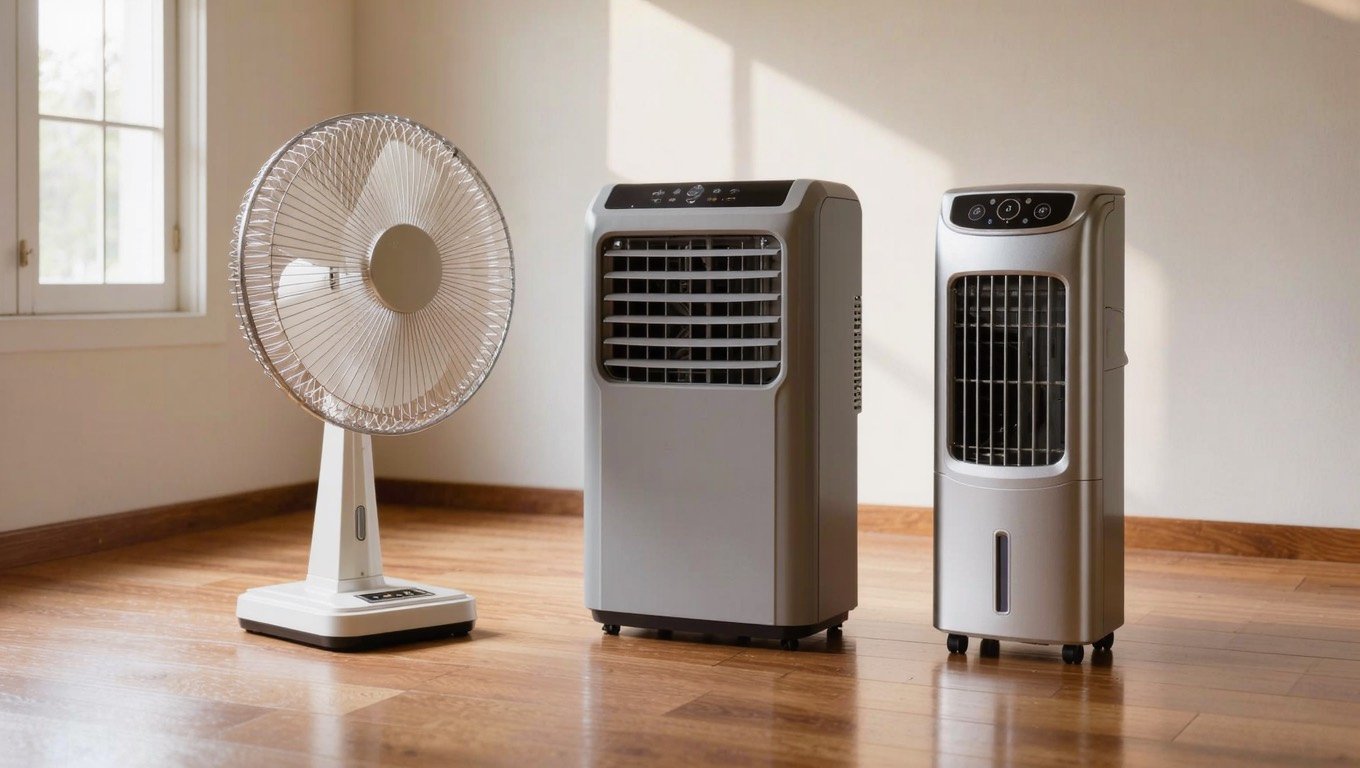
Every July the same thing happens: a week above 30°C, fans sell out everywhere, and thousands of people spend £60 on an 'air cooler' that never quite seems to do anything. Having fitted and serviced all three types of kit in British homes, we can save you the experiment: one moves air, one evaporates water, and only one actually refrigerates a room.
The right choice depends on your house, your budget and — above all — British humidity, which quietly wrecks the maths on the cheapest option.
The three options side by side
Running costs assume roughly 27p per kWh, the ballpark of the 2026 price cap.
- •Pedestal or tower fan: £25-£60, 45-60W, about 1.2-1.6p per hour. Makes you feel 2-4°C cooler; does nothing to the room temperature. Noise 40-55 dB.
- •Evaporative cooler (a 'swamp cooler', usually sold as an 'air cooler'): £50-£150, 60-80W, about 2p per hour plus water. Cools a little in dry weather, barely at all in muggy air, and raises room humidity as it runs. Noise 45-55 dB.
- •Portable air conditioner: £300-£700, 900-1,100W, 24-30p per hour. Genuinely refrigerates: expect a 5-8°C drop in a sealed bedroom, plus useful dehumidification. Noise 55-65 dB, with the compressor in the room.
- •Fixed split air conditioning: £1,200-£2,500 per room installed. Around 700W for the same cooling thanks to far better efficiency, so roughly 19p per hour. Indoor unit: a whisper-quiet 25-35 dB, compressor outside.
Performance: why humidity decides it
A fan lowers nothing. It strips away the warm, humid layer of air against your skin so sweat evaporates faster — worth two to four degrees of perceived cooling, which is also why pointing a ceiling fan the right way in summer matters more than people expect.
An evaporative cooler is a fan blowing through a wet pad. Evaporating water absorbs heat, so the outlet air is cooler — but only by the gap between the air temperature and its wet-bulb temperature. In Seville at 35°C and 25% humidity that gap is enormous. A muggy British 28°C typically comes with 60-70% humidity, shrinking the drop to perhaps 2-4°C — while every hour of running pumps more water vapour into the room. Humid air slows the evaporation of your own sweat, so the machine steadily cancels its own benefit; in a closed UK bedroom you can end up feeling stickier than with a plain fan. If your rooms already sit above the ideal indoor humidity level of 40-60%, it is working against you.
Air conditioning is the only option that removes heat from the room rather than rearranging it. A 9,000 BTU (2.6 kW) portable unit will pull a typical 14 m² double bedroom from 29°C into the low twenties in under an hour, dehumidifying as it goes. An undersized unit runs flat out and disappoints, so do the sums in our guide to sizing an air conditioner before buying.
Running costs and the 10-year bill
Assume 300 hours of cooling a year — six weeks of daily evening and overnight use. Over a decade the gap is stark:
- •Fan: £35 purchase plus around £4 a year in electricity — roughly £75 over 10 years.
- •Evaporative cooler: £90 purchase, £6 a year in electricity, £10-15 a year in pads — roughly £250 over 10 years, for the weakest cooling of the four.
- •Portable air conditioner: £450 purchase plus £75-90 a year to run — roughly £1,300 over 10 years, budgeting one replacement unit.
- •Split system: £1,800 installed, £55 a year to run, £70-100 per service — about £3,200 over 10 years. Most modern splits are reversible heat pumps that also heat cheaply in winter, which changes the value equation.
Installation — and the rules nobody mentions
A fan or an evaporative cooler plugs in and goes. A portable air conditioner needs its exhaust hose vented outside, or it pumps the heat it extracts straight back into the room. Through a sash window that is easy; through a uPVC casement you want a £15-25 zip-up window seal kit, not a towel wedged in the gap.
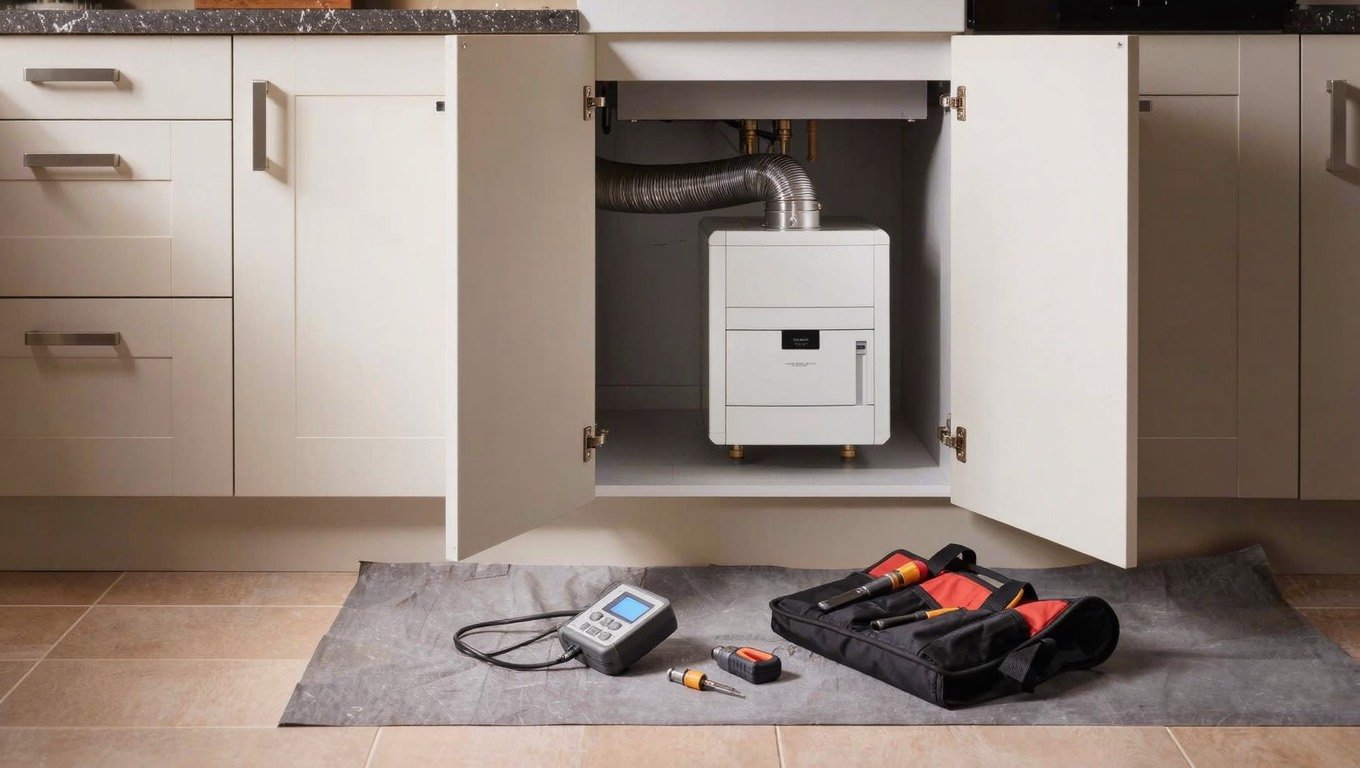
A split system is not a DIY job, legally as well as practically. The refrigerant circuit must be installed by an F-gas certified engineer — handling fluorinated refrigerants without certification is an offence, and wholesalers will not supply a charged system to an uncertified buyer. Unlike heat pumps, air-conditioning units have no permitted development rights in England, so strictly speaking the outdoor condenser needs planning permission — a genuine risk in conservation areas and on flats. Leaseholders need the freeholder's written consent, tenants the landlord's, and a new dedicated circuit falls under Part P: registered electrician or notify building control.
Maintenance and noise
A fan needs its blades dusted, and that is it. An evaporative cooler needs its tank emptied and dried between uses — water standing in a warm plastic tank grows biofilm quickly, hence the musty smell of neglected units — and its pads replacing every season or two. A portable unit needs its intake filter rinsed fortnightly and its condensate drained; our guide to cleaning an air conditioner covers the routine. A split wants a professional service every year or two.
Noise decides bedrooms. A decent fan on low is a steady 40 dB hum most people sleep through. A portable air conditioner's compressor cycles on and off at 55-65 dB — conversation volume a metre from your pillow — and it is the cycling, not the level, that wakes light sleepers. A split's indoor unit at 25-35 dB is quieter than most fridges.
Who each one suits
- •Fan: most people, most UK summers. Two or three hot weeks a year do not justify a compressor. Pair it with closed daytime curtains and windows opened after 9pm.
- •Evaporative cooler: almost nobody in Britain — it earns its keep only in genuinely dry heat. If tempted, buy the fan and put the saving towards one of the best dehumidifiers; drier air makes every fan work better.
- •Portable air conditioner: loft bedrooms, home offices under a hot roof, anyone whose sleep collapses in a heatwave, and renters who cannot fix anything to the building.
- •Split system: owner-occupiers who work from home, houses that overheat every summer, and anyone who would also value efficient heating from the same unit in winter.
The verdict
For the handful of genuinely hot weeks Britain gets, a £40 fan delivers most of the comfort for a fraction of the cost, and it should be the default. If heat is ruining your sleep, a portable air conditioner is the honest next step — noisy and thirsty, but the only plug-in machine that truly cools a room. If you own your home and overheat every summer, a split is better value than its price tag suggests once the winter heating mode is counted.
And the evaporative cooler? In UK humidity it loses every column except purchase price: less cooling than an air conditioner, more moisture than a fan, more upkeep than either. Air conditioner vs evaporative cooler is not a close contest here — the British climate settles it before you reach the till.
Found this useful?
There's plenty more — hundreds of guides and honestly-tested product reviews for every corner of your home.
Browse All Guides