Heating & Cooling · 6 min read · 14 August 2026
How to Balance Radiators: Fix Cold Rooms Without a Plumber
Hallway roasting while the back bedroom stays lukewarm? Balancing your radiators takes an afternoon, a spanner and a £10 thermometer — here is the method heating engineers actually use.
By the Nims Casa editorial team — written from professional cleaning experience and checked against our editorial standards.
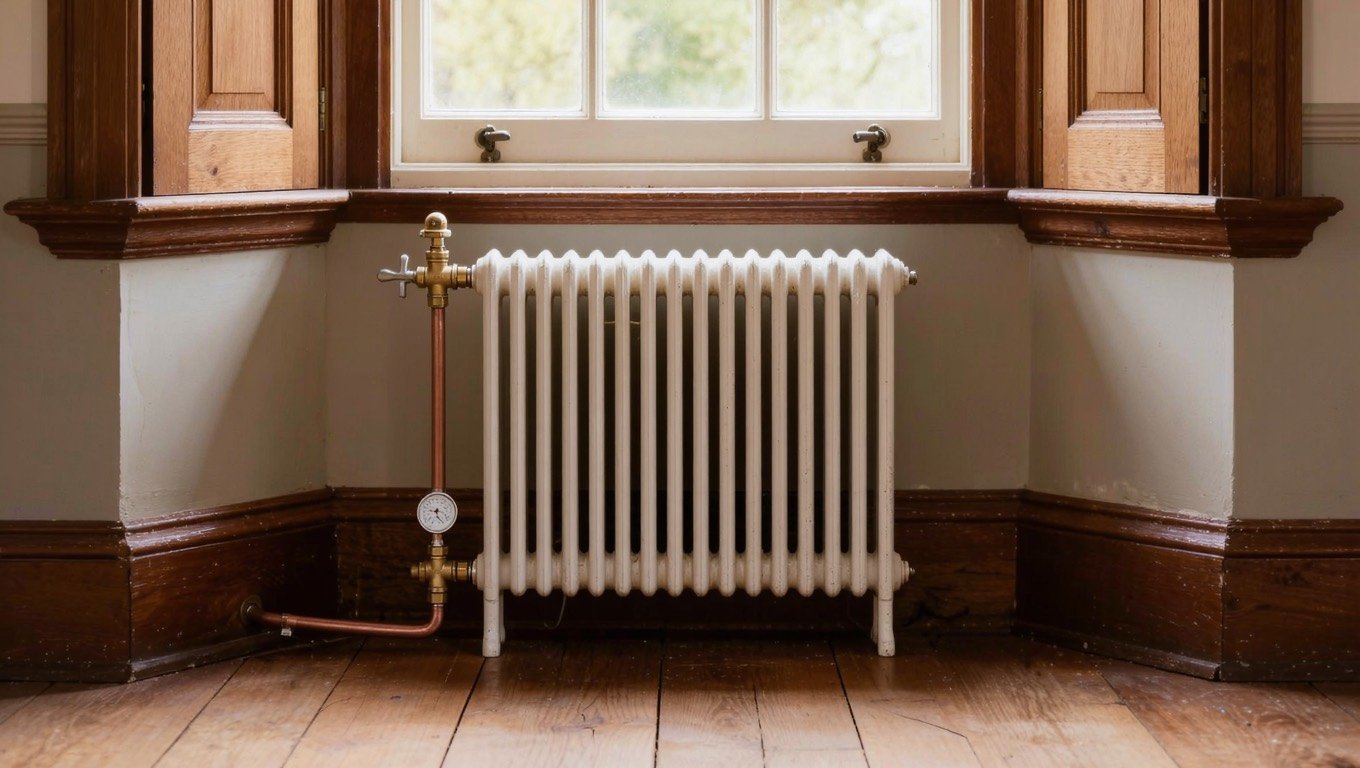
If the radiator by the boiler is scalding while the back bedroom never gets past lukewarm, your heating system almost certainly is not broken — it is unbalanced. Water takes the path of least resistance, so the radiators nearest the boiler grab more than their share of hot water and the distant ones survive on the leftovers. Balancing means throttling the greedy radiators at the lockshield valve so every room gets an even feed. It is one of the last jobs in a sensible winter heating system checklist, after bleeding and cleaning.
It is a genuinely free fix — no parts, no call-out fee — and one of the few heating jobs where patience matters more than skill. Do it in autumn, before the system is working hard. First, though, bleed every radiator and check the boiler pressure, because trapped air will make a mockery of your temperature readings.
Safety first
This is a water-side job, so it is firmly DIY territory — but a few cautions apply. Pipework and valve bodies run at 60–70°C while you are working; hold valves with a cloth. Never force a valve that will not turn: lockshields untouched for twenty years can shear their spindle or start weeping at the gland packing. Keep a towel and a small tub under every valve you touch.
- •On a combi or sealed system, check pressure sits between 1 and 1.5 bar cold before and after the job
- •Nip a weeping gland nut clockwise an eighth of a turn — no more, or you will seize the spindle
- •Anything on the gas side of the boiler is Gas Safe engineer work, full stop
Tools and materials
You need remarkably little, and everything on this list stays useful for years of heating maintenance.
- •Adjustable spanner or a dedicated lockshield key (about £4 from Screwfix or Toolstation)
- •Two clip-on digital pipe thermometers (£15–£25 a pair) or an infrared thermometer (£15–£20 from Amazon or Machine Mart)
- •Radiator bleed key, towel and a small tub for drips
- •Notepad — you will be counting quarter turns on up to a dozen valves, and you will not remember them
- •PTFE tape or gland packing string, just in case an old valve weeps
Realistic time and cost
Allow two to three hours for a typical three-bed house with eight to ten radiators, plus cooling time beforehand. Rushing is the classic mistake: each adjustment takes ten minutes or more to show in the pipe temperatures, so treat it as an afternoon with a cup of tea. Total outlay is £20–£30 in tools you keep. Balancing also lets you drop the boiler flow temperature, which on a condensing boiler typically trims 5–8% off gas use — £60–£100 a year on an average bill. Our boiler flow temperature guide explains how to set that dial once the system is balanced.
The method, step by step
The principle: the radiator closest to the boiler gets throttled hardest, and each one further along the circuit gets progressively more flow, until the furthest radiator is fully open. You confirm each setting by measuring the temperature drop between the flow pipe (in) and return pipe (out) of each radiator — aim for roughly a 12°C drop across every one.
- •1. Turn the heating off and let it cool completely — at least two hours, longer for cast iron.
- •2. Open every valve fully: thermostatic valves (TRVs) to maximum, and lockshields (the capped valve at the other end) fully anticlockwise. Count and note the turns as you open each one.
- •3. Turn the heating on and walk the house noting the order the radiators warm up. That order is your circuit sequence — a helper upstairs speeds this up enormously.
- •4. Set the boiler flow temperature to 60–65°C. A condensing boiler only hits its efficiency figures with a cooler return, which balancing makes possible.
- •5. Go to the first radiator that heated. Close its lockshield fully clockwise, then open it a quarter turn.
- •6. Clip thermometers to its flow and return pipes. Wait ten minutes, then read both. If the drop is much more than 12°C, open the lockshield another quarter turn; much less, close it slightly. Adjust in quarter turns only.
- •7. Work along the sequence in order. Expect something like half a turn open near the boiler, one to two turns mid-circuit, and the final radiator fully open.
- •8. Once done, re-check the first two or three radiators — every adjustment shifts flow elsewhere, so a second pass is normal, not failure.
Balancing an older house: solid walls, one-pipe loops and cast iron
Pre-war houses play by different rules. A solid-brick room with single-glazed sash windows loses heat two to three times faster than an insulated cavity-wall room, so a perfectly balanced system can still leave it cold — the radiator is simply undersized for the load. Balance first, but if the north-facing bedroom still lags, the honest answer is a bigger radiator plus draught-proofing around those sashes, not endlessly fiddling with valves.
Check your pipework layout too. Many Victorian and Edwardian systems began life as one-pipe loops: a single large pipe runs round the house and each radiator tees off it, returning cooler water into the same pipe. On these, lockshield balancing achieves very little — the last radiators on the loop get cooler water no matter what you do, which is why they were traditionally oversized. Cast iron columns bring their own quirk: they hold so much water that temperatures take 30–45 minutes to stabilise, so trust no early reading. And seized imperial valves on runs under suspended timber floors are common — do not force them; that is drain-down work.
Troubleshooting: when it is not a balance problem
Balancing fixes one specific symptom: radiators near the boiler running hot while distant ones run cool. Other patterns point elsewhere, and the most common — cold at the bottom, warm at the top — is sludge. Magnetite from decades of corrosion settles along the bottom of the panel, and no valve adjustment moves it; that needs a chemical cleaner and magnetic filter, or a power flush at £300–£600. While diagnosing, it is also worth clearing the dust from inside the fins, which quietly costs 10% of a radiator's output.
- •Cold at the top only: trapped air — bleed it, then recheck boiler pressure
- •Cold at the bottom or middle: sludge — flush and filter, not balancing
- •One radiator stone cold, rest fine: stuck TRV pin — remove the head and free the pin with pliers, gently
- •Whole house heats slowly but evenly: flow temperature or an ageing pump, not balance
- •Readings never stabilise: pump speed set too high, common after a boiler swap
When to call a professional
Call a heating engineer for seized valves that need the system drained, a suspected one-pipe conversion, a failing pump, or a power flush — and get quotes, because flush prices vary wildly for identical work. If your boiler is over fifteen years old and the system needs serious remedial work, weigh that spend against what a boiler replacement actually costs before committing. Once balanced, lock in the gains: run through a winter heating system checklist in October, and set the controls properly rather than nudging the dial — programming the thermostat well is where a balanced system quietly earns its keep.
Found this useful?
There's plenty more — hundreds of guides and honestly-tested product reviews for every corner of your home.
Browse All Guides