Heating & Cooling · 6 min read · 14 August 2026
Chimney Sweep Cost and Log Burner Prep: The 2026 Rules Explained
Book your sweep in August and you'll pay £60-£90 with a choice of slots; leave it until October and you'll queue for weeks. The 2026 rules, real costs and the renter-safe way to prep a log burner.
By the Nims Casa editorial team — written from professional cleaning experience and checked against our editorial standards.
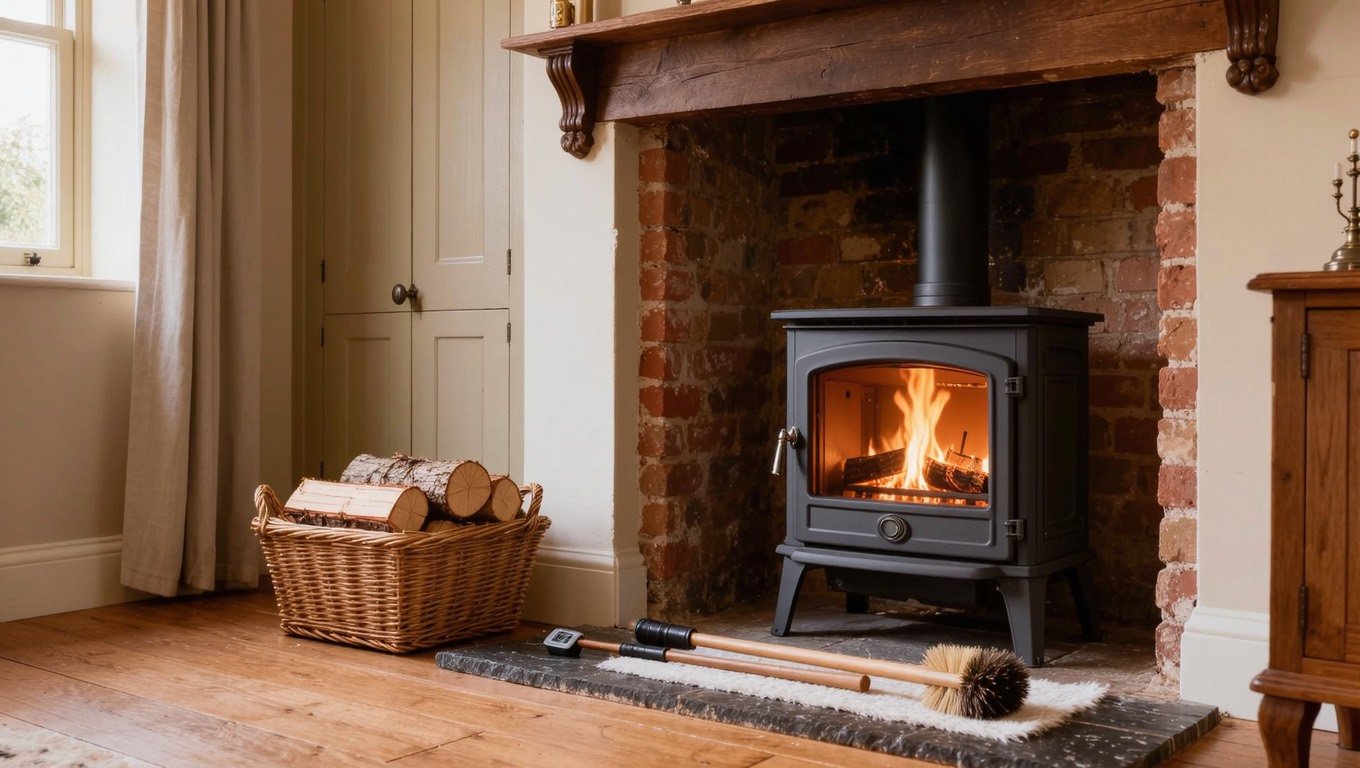
Every September, registered chimney sweeps' diaries slam shut. By mid-October the good ones are quoting four to six week waits, and the panic-bookers end up with whoever answers the phone. Book in August and you get the standard £60-£90 rate, a choice of morning slots, and a certificate in hand before the first cold snap.
The paperwork matters more than it used to: Ready to Burn fuel standards, smoke control enforcement, Ecodesign rules and alarm law have all tightened, and insurers now ask for a sweeping certificate before paying out on a chimney fire. Here is what a sweep costs in 2026 and what you can safely do yourself — including if you rent.
What a Chimney Sweep Actually Does
A sweep mechanically removes soot and creosote from the flue before it can ignite. Creosote builds in stages: powdery soot brushes out easily, crusty deposits need stiffer heads, and stage-three glaze — tar from burning wet wood on a slumbering stove — needs specialist chemical or rotary treatment at extra cost.
A modern sweep is not the sooty ordeal people remember. Expect dust sheets, a sealed-off fireplace, power sweeping with flexible rods and a HEPA-filtered vacuum, a smoke draw test, and a visual check of the pot and cowl. The job takes 45 minutes to an hour, and a registered sweep (HETAS, Guild of Master Chimney Sweeps, NACS or Sweep Safe) issues an industry-standard certificate. Keep it — that paper is what your insurer and letting agent will ask for.
How Often to Sweep, by Fuel
Frequency depends on what you burn, not how new the stove is. The trade guidance has been stable for years:
- •Wood (log burner or open fire): quarterly when in regular use, and at least once a year even for occasional burners
- •Bituminous house coal: twice a year
- •Smokeless fuel: at least once a year
- •Gas fire on a conventional brick flue: once a year, alongside its Gas Safe service
- •Oil appliances on a chimney flue: once a year
Chimney Sweep Cost in 2026
A standard sweep of a straight flue costs £60-£90 across most of the UK, rising to £80-£120 in London and the South East. That price should include sheeting up, the sweep itself, a smoke test and the certificate — treat anyone quoting £40 cash with no paperwork as a red flag.
Extras are where the bill grows. A CCTV flue inspection runs £60-£120 and is worth it on a house you have just bought. Bird nest removal is £150-£250 because it can take hours of rodding, and a supply-and-fit bird guard or anti-downdraught cowl adds £80-£180. The so-called stove MOT — an annual service covering rope seals, firebricks, baffle plate, glass and hinges — costs £80-£150 on its own, but most sweeps offer it bundled with the sweep for £120-£180 total. It pairs sensibly with the jobs on our winter heating system checklist — and since soot is mildly acidic and eats mortar joints through damp weather, late summer sweeping beats waiting for October.
The 2026 Rules: Ready to Burn, Smoke Control and Alarms
Wood sold in volumes under two cubic metres must be certified Ready to Burn, meaning under 20% moisture. Bulk loads are exempt, so stack a cheap tipped load for a year and check it with a £15 moisture meter before it goes near the stove. Burning wet wood is what creates the glaze that turns a £70 sweep into a £250 specialist job.
Most UK towns and cities sit inside smoke control areas. There, an open fire may only burn authorised smokeless fuel, and wood is legal only in a DEFRA-exempt appliance; councils can issue penalties of up to £300 for visible chimney smoke. Any new stove sold since January 2022 must meet Ecodesign standards — look for the clearSkies label. Older stoves remain legal to use, but a replacement must comply.
Alarm law has teeth too. Rented homes in England must have a carbon monoxide alarm in every room with a fixed combustion appliance; Scotland requires them in all homes. Owner-occupiers are not forced to fit one, but a £20 alarm is not optional in any home we would sign off — our guide to preventing carbon monoxide poisoning covers placement, and it belongs on your annual home fire safety checklist round. The insurance angle is blunt: after a chimney fire, the loss adjuster's first question is when the flue was last swept. No certificate, and claims are routinely reduced or refused.
DIY Rod Kits vs a Certified Sweep
A £25-£50 drill-powered rod kit has a legitimate place: a mid-season freshen-up of a straight, lined flue you already know is sound, on a stove burning dry wood daily. It is no substitute for the annual professional visit, because a rod kit cannot issue a certificate, spot a cracked liner or hidden nest, shift glazed creosote, or smoke-test the draw.
It can also go expensively wrong. Sweeps regularly retrieve brush heads unscrewed mid-flue, and an over-driven rotary head can tear a flexible steel liner that costs £900-£1,800 to replace. Our rule: professional sweep once a year minimum, rod in between only if you burn daily through winter, and chemical cleaning logs count as a top-up, never as a sweep.
The Renter-Safe Version: Prep Without Risking the Deposit
Check the tenancy agreement first. Landlords must keep the appliance and flue safe, but many agreements make in-tenancy sweeping the tenant's job if you use the fire — and a smoke-stained chimney breast at checkout is a deposit deduction waiting to happen. Everything below is fully reversible:
- •Book and pay for the sweep yourself (£60-£90) and keep the certificate with your inventory photos — it is deposit protection as much as fire protection
- •Use a free-standing spark guard and a hearth rug rather than fixing anything to the surround
- •Place a sealed-battery CO alarm on a shelf 1-3 m from the stove — no drilling, and it leaves with you
- •Burn only Ready to Burn fuel and check bulk logs with your own moisture meter
- •Report cracked firebricks, missing rope seals or a wobbly cowl to the landlord in writing — repairs to the appliance and flue are their job, not yours
- •Never fit, move or modify a stove, register plate or liner in a rented home, and if an alarm starts chirping mid-season, check our guide to smoke detector beeping before assuming the worst
FAQs
The questions we get asked every autumn, answered straight:
- •Is sweeping legally required? Not directly for owner-occupiers, but insurance policies, tenancy agreements and smoke control enforcement all lean on it — in practice it is unavoidable if you burn
- •How long does it take? 45 minutes to an hour for a standard flue; add an hour or more for nests or glaze
- •What is a stove MOT? An annual service of seals, bricks, baffle and glass, £80-£150, usually bundled with the sweep
- •Can I burn wood in a smoke control area? Only in a DEFRA-exempt appliance; on an open fire, only authorised smokeless fuel
- •When is the best time to book? May to August — you will pay the standard rate and skip the six-week autumn queue
Found this useful?
There's plenty more — hundreds of guides and honestly-tested product reviews for every corner of your home.
Browse All Guides