DIY & Maintenance · 5 min read · 21 April 2026
Circuit Breaker Keeps Tripping? 6 Causes (and When to Worry)
A trip switch that keeps flicking off is a warning, not a quirk. Here are the six usual suspects in UK homes — and the red flags that mean stop resetting and call an electrician.
By the Nims Casa editorial team — written from professional cleaning experience and checked against our editorial standards.
A breaker that trips once in a blue moon is doing its job. One that trips every time the kettle boils, or flicks off at 3am for no obvious reason, is telling you something specific — and after fifteen-plus years working in other people's homes, we can tell you it's rarely random. If your circuit breaker keeps tripping, there are six usual suspects, and you can narrow down most of them yourself without ever taking a screwdriver to anything.
One safety line before we start, and we mean it: in the UK, resetting switches and unplugging appliances is as far as DIY goes. Anything behind the consumer unit's front cover — or any new wiring, sockets or circuits — falls under Part P of the Building Regulations and the BS 7671 wiring regulations, and needs a registered electrician (look for NICEIC or NAPIT registration). This guide helps you diagnose. It does not qualify you to fix.
First, work out which switch is actually tripping
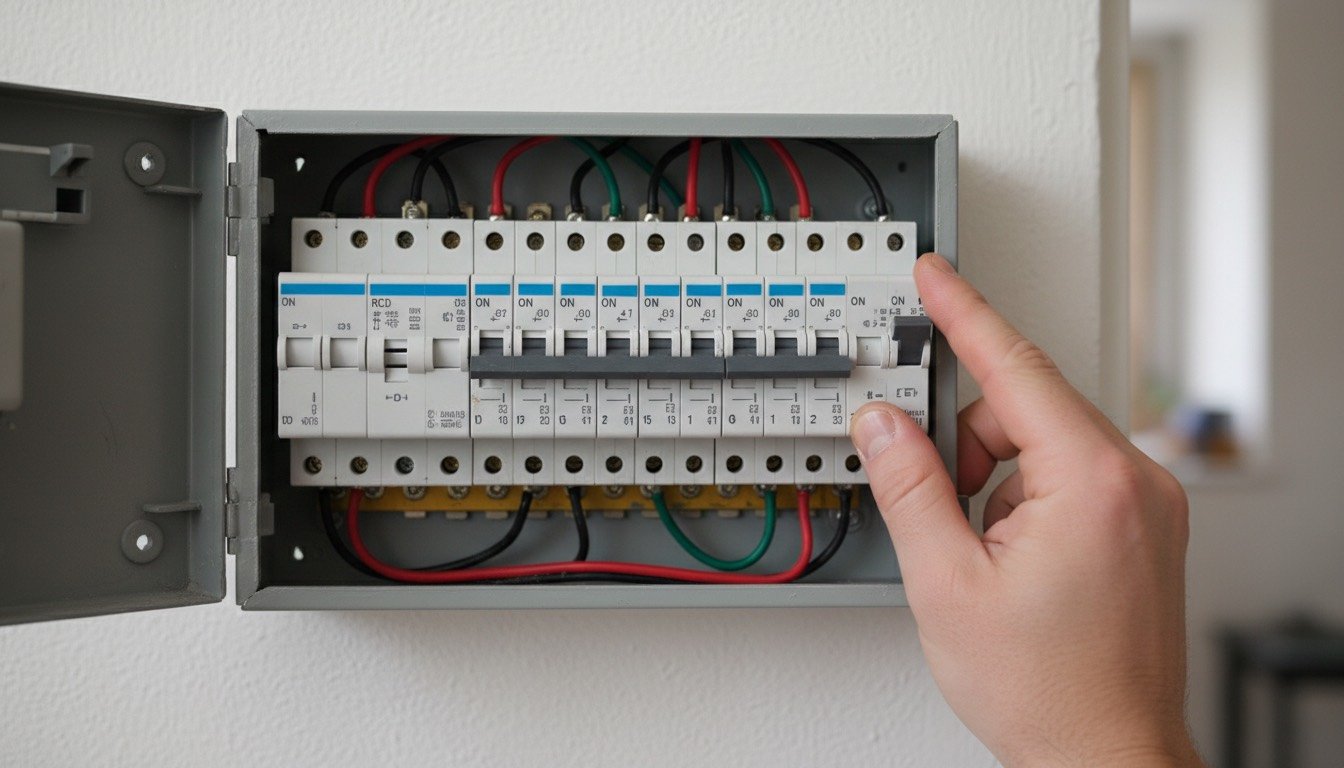
Open the consumer unit (the fuse box) and look at what's dropped. A modern UK board has three types of switch, and which one trips tells you half the story. MCBs (miniature circuit breakers) protect a single circuit — usually 6A for lighting, 32A for a socket ring — and trip on overload or a dead short. The RCD (residual current device) is the wider switch covering a bank of circuits; it trips when it detects as little as 30 milliamps leaking to earth, which usually means a faulty appliance or moisture. RCBOs do both jobs for one circuit each.
So: an MCB dropping points to overload or a short on that circuit. The RCD dropping points to earth leakage — an appliance or damp problem. Take a photo of the board with everything on, so you always know what 'normal' looks like, and label the circuits if the previous owner never bothered.
Cause 1: an overloaded circuit
The most common cause we see, especially in kitchens. A standard UK ring final circuit is rated at 32A — roughly 7,300W at 230V. That sounds generous until you add it up: a kettle pulls 3kW (13A) on its own, a washing machine heating its water draws around 2.2kW, a tumble dryer 2.5kW, and a plug-in fan heater another 2kW. Run three of those together on one ring and you're at the limit; the MCB does exactly what it's designed to do.
The giveaway is a pattern: the breaker trips when a particular combination runs — kettle plus dryer, or the moment the washing machine hits its heating phase. Four-way extension leads make it worse because the lead itself is rated at 13A total, whatever's plugged into it. Spread heavy appliances across different circuits, run them in sequence rather than together, and never daisy-chain extension leads. If you're genuinely maxing out a circuit every day — common in older two-bed houses with a single kitchen ring — an electrician can add a dedicated circuit for around £150–£300.
Cause 2: a faulty appliance — do the unplug-everything test
If the RCD is what keeps dropping, a faulty appliance is the first suspect, and anything with a heating element is top of the list: washing machines, dishwashers, kettles, ovens and immersion heaters. The element's insulation breaks down over years of heating cycles and hard-water scale, and current starts leaking to earth. Limescale genuinely accelerates this, which is one more reason regular washing machine maintenance pays for itself in most of the UK's hard-water areas.
Here's the test we use, and it finds the culprit nine times out of ten:
- •Unplug or switch off every appliance on the affected circuits — including the fridge, freezer and anything hidden behind furniture.
- •Reset the breaker. If it holds, the wiring is probably fine and an appliance is your problem.
- •Plug items back in one at a time, giving each a few minutes — and actually run appliances like the washing machine through a hot cycle, since faults often only show under load.
- •When the breaker trips, you've found it. Unplug that appliance and confirm the circuit now holds with everything else running.
- •If the breaker trips instantly with everything unplugged, stop. That's a wiring fault — call an electrician, don't keep resetting.
Cause 3: moisture, damp and outdoor electrics
Water is the classic reason a breaker trips 'randomly' — because it isn't random, it's rain. Outdoor sockets, garden lighting, pond pumps and shed feeds are the usual offenders: a perished seal on an external socket lets damp in, and the RCD drops every time there's a wet spell. If your tripping correlates with weather, start outside. Replacement IP66-rated outdoor socket covers cost £10–£20, though fitting a new socket itself is an electrician's job.
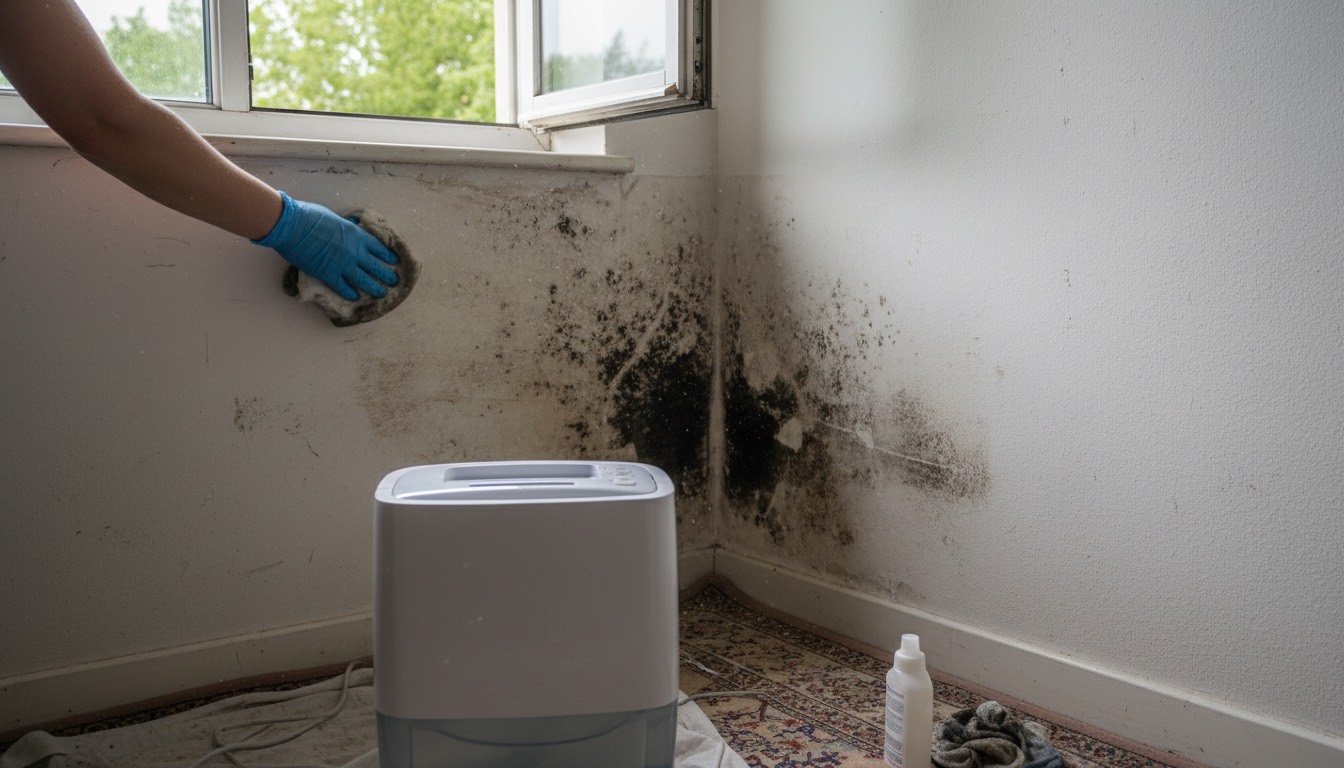
Indoors, condensation-heavy bathrooms and leaks tracking onto ceiling fittings do the same thing. If a bathroom or kitchen circuit trips and you've also noticed black spotting on walls or that musty smell, deal with the damp problem as well as the electrics — one is feeding the other, and drying the fitting without fixing the moisture source just books a repeat performance.
Cause 4: damaged or ageing wiring
Cables get drilled and nailed through more often than you'd believe — we've seen it twice from picture-hanging alone. Rodents chew cable insulation in lofts and under floors, and forty-year-old connections work loose and arc. The tell-tale signs: a breaker that trips instantly on reset with nothing plugged in, tripping when you use one particular switch or socket, warm socket faceplates, or intermittent flickering on a lighting circuit.
This is firmly not DIY territory. If you suspect wiring, book an EICR (Electrical Installation Condition Report) — expect £150–£250 for an average three-bed house. It's recommended every ten years for owner-occupiers, and landlords in England are legally required to have one at least every five years.
Causes 5 and 6: a tired consumer unit and nuisance tripping
Cause 5 is the hardware itself. Breakers are mechanical devices and they wear out — an old MCB can weaken and start tripping below its rated load. If your board still has rewireable fuses or dates from before 2008, it likely has little or no RCD protection at all, which is a bigger safety issue than the inconvenience. A modern replacement consumer unit typically runs £500–£900 fitted, and it's genuinely worth it.
Cause 6 is subtler: cumulative earth leakage, or 'nuisance tripping'. Every modern electronic device — routers, TVs, laptop chargers, induction hobs — leaks a milliamp or two to earth by design. Stack enough of them on one RCD and the background leakage sits at 20mA, so the tiny extra surge when the kettle switches on tips it over its 30mA threshold. Nothing is 'faulty', but the board is overloaded in a different sense. The fix is an electrician splitting circuits across individual RCBOs, which also stops one fault blacking out half the house.
When to worry — and stop resetting
A breaker is a safety device, not an inconvenience to be overridden. Repeatedly resetting a tripping breaker without finding the cause is how house fires start — UK fire services attend around 14,000 accidental dwelling fires of electrical origin every year. Call a registered electrician the same day if you notice any of these:
- •The breaker trips instantly every time you reset it, with appliances unplugged.
- •Any burning or fishy smell near sockets, switches or the consumer unit — that fishy odour is overheating plastic.
- •Scorch marks or brown discolouration on sockets or the board itself.
- •Buzzing, crackling or warmth from the consumer unit.
- •A tingling sensation from any appliance, tap or radiator.
- •You still have a rewireable fuse box, cloth-covered cables or no RCD protection.
Live with it sensibly in the meantime
While you're waiting for an electrician, keep the affected circuit lightly loaded and know what's on it. If the RCD covers your fridge-freezer, check it after every trip — food safety limits are shorter than people think, and our power cut checklist covers exactly how long the fridge and freezer stay safe. And if your mains-powered smoke alarms sit on a tripped lighting circuit, they'll be running on backup batteries and may start chirping; our guide to decoding smoke alarm beeps explains what each pattern means. A tripping breaker is your electrical system being honest with you. Listen to it, narrow it down with the tests above, and hand the actual repair to someone qualified — electricity is the one area of home maintenance where we always draw that line.
Found this useful?
There's plenty more — hundreds of guides and honestly-tested product reviews for every corner of your home.
Browse All Guides