Heating & Cooling · 6 min read · 12 May 2026
Signs of Poor Home Ventilation: Spotting It Before the Mould Arrives
Black spotting in a bedroom corner is the last symptom, not the first. The diagnostic sequence surveyors use, the causes ranked by likelihood, and what a tenant can do without risking the deposit.
By the Nims Casa editorial team — written from professional cleaning experience and checked against our editorial standards.
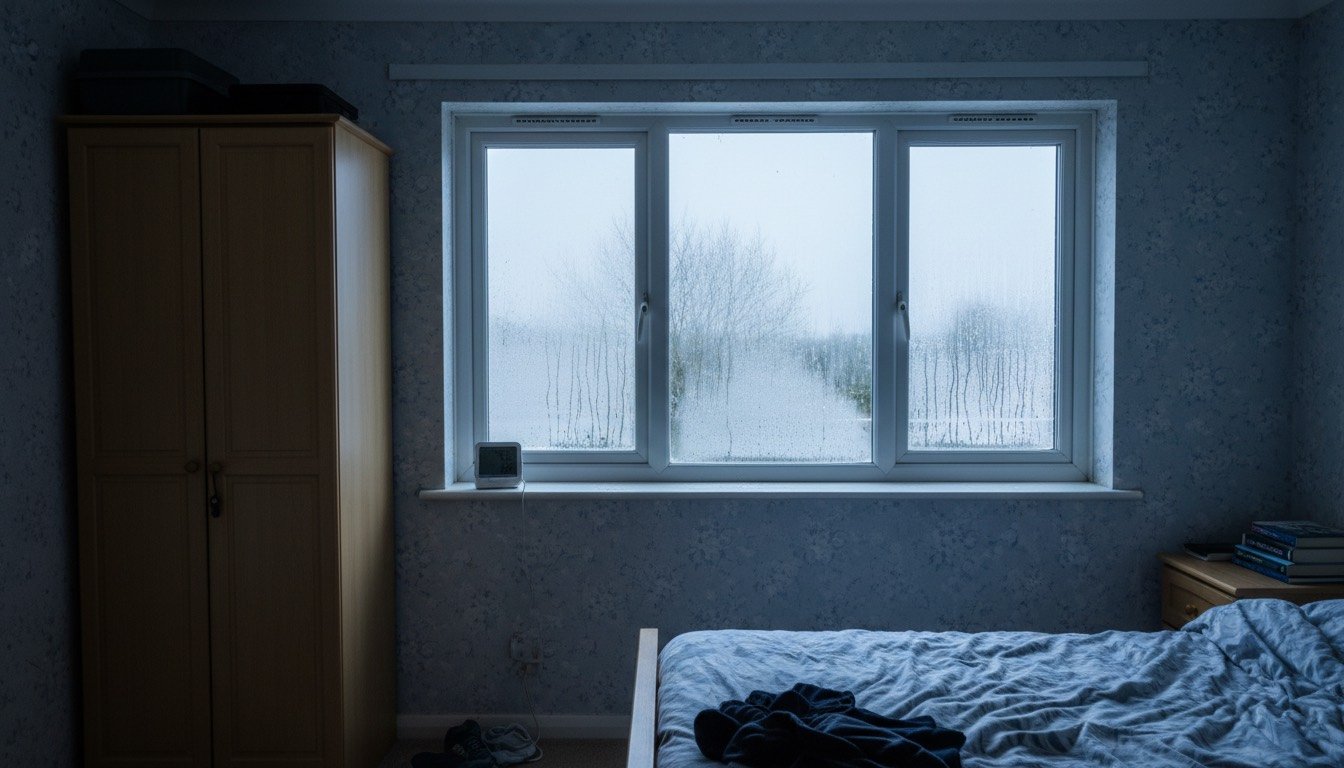
Black spotting in a bedroom corner is the final symptom, not the first. Months earlier the house was telling you: windows streaming at seven in the morning, a wardrobe smelling faintly of cellar, a mirror that takes twenty minutes to clear. Same arithmetic each time — more water vapour produced indoors than removed. The early-autumn version of that arithmetic is covered in preventing September condensation.
What follows is the survey sequence: prove it with numbers, find which of six causes is behind it, then fix in order of risk rather than price. If the damp is a defined patch rather than diffuse spotting, start with a full damp and mould workup instead. A renter-safe version follows, since most advice involves cutting holes in someone else's wall.
The 60-Second Diagnosis
Do these before buying anything. Two need a digital hygrometer, £8-£15 from any DIY shed.
- •Hygrometer: leave one in the worst bedroom for 48 hours. Sustained readings above 65% relative humidity at 18-20°C mean mould will germinate on cold surfaces within weeks.
- •Tissue test: hold a sheet of toilet paper against the bathroom extractor grille while it runs. If it doesn't hold itself up, the fan is moving almost nothing — our extractor fan and trickle vent check sets out what that test can and cannot prove.
- •The 7am window check: condensation inside double glazing is normal in a bathroom, borderline in a kitchen, a warning in a bedroom. Water pooling on the frame daily is a fail.
- •Trickle vent audit: count how many are open. In seven homes out of ten every one is shut, and half the occupants didn't know they opened.
- •Cold-corner check: the back of your hand on the external wall behind a wardrobe — noticeably colder means moisture lands there first.
Symptom to Cause: Reading the Evidence
Water condenses in predictable places, which makes ventilation faults easy to read. If every window mists up on laundry days but behaves the rest of the week, the problem is moisture load rather than a fault, and the answer lies in how you are drying clothes indoors.
- •Mould only on the ceiling above the shower — extract fan under-performing, or no overrun timer.
- •Mould behind furniture on one external wall — cold bridging plus no air movement. The room is fine; the 30mm gap isn't.
- •Streaming bedroom windows, dry elsewhere — two adults exhale roughly a litre of water overnight into a closed room.
- •Musty smell at floor level in a pre-1930s ground floor — airbricks blocked, rendered over or buried by a raised patio.
- •Water dripping off the loft felt — insulation stuffed into the eaves, closing the ventilation path.
Causes, Ranked by How Often We Find Them
Householders reliably jump to the expensive explanation and skip the dull ones that account for most of what we attend.
- •1. Extract fans that don't extract — roughly half of cases. Part F expects 15 litres per second from a bathroom fan and 30-60 l/s in a kitchen; a tired 100mm axial fan on four metres of duct manages a fraction.
- •2. Vents closed, blocked or never fitted: trickle vents shut, airbricks painted over, fireplaces sealed flat. Draught-proofing with nothing given back.
- •3. Moisture beyond what the house was designed for — two loads dried indoors weekly, an unvented tumble dryer, lidless pans.
- •4. Heating pattern. Two hours a day never lifts wall surfaces above dew point, so moisture always has somewhere cold to land.
- •5. Duct faults you can't see: flexible ducting sagging in a loft and collecting condensate, a seized cowl, or a fan discharging into the loft void.
- •6. Fabric defects wearing a ventilation disguise — failed pointing, a bridged cavity, a leaking gutter. Diffuse spotting is condensation; a tide mark worsening after rain is not.
Fixes, Ordered From Lowest Risk to Highest
Work down in order: nobody should be quoting for a whole-house system before the free measures have had a fortnight and the hygrometer has been read again. Our whole-house ventilation guide sets out where each system earns its keep, and the dehumidifier picks explain compressor versus desiccant.
- •Free: open every trickle vent for the winter, pull furniture 50mm off external walls, keep the bathroom door shut while the fan runs and 15 minutes after, and check internal doors still have their 10mm undercut so air can transfer.
- •£40-£120: a window vac clears a bay in 90 seconds; anti-condensation paint buys a degree or two of surface temperature but never replaces airflow.
- •£130-£280: a 10-12 litre dehumidifier. Compressor models cost less to run in a heated house; desiccant keeps working below 15°C.
- •£150-£350 fitted: swap the bathroom or kitchen fan for a humidity-sensing unit on rigid duct. Bathroom-zone electrics, so an electrician does it.
- •£400-£800 fitted: a loft-mounted positive input ventilation unit — the most reliable single fix on a three-bed semi with condensation in several rooms. MVHR, at £2,500 up, only repays in an airtight new build.
The Renter-Safe Version: Nothing Drilled, Nothing Deducted
Almost everything above involves cutting, wiring or ducting, none of which a tenancy allows. The reversible version still gets most of the result, and the principle behind our rental-friendly decor approach applies: buy the fix, don't fit it. A tenant showing 72% humidity at 16°C with the vents open is describing a building fault; one with no readings gets described as having a lifestyle problem. If the landlord still does not act, the legal repair deadlines for damp and mould set out the timescales you can hold them to.
- •Buy rather than fix: hygrometer, dehumidifier, window vac, and an airer used in one room with the door shut. It all leaves with you.
- •Open what already exists — trickle vents, airbricks, a five-minute purge with the kitchen window wide after cooking. Opening a vent is not an alteration.
- •Move furniture, not fabric: wardrobes 50mm off external walls, nothing sealed in plastic against a north wall.
- •Never block or paint over an airbrick to stop a draught. That one action turns a ventilation complaint into a deposit dispute you'll lose.
- •Report in writing: dated photographs plus humidity and temperature readings logged over a fortnight, emailed so there is a timestamp. Landlords carry a repairing duty for damp arising from a defect.
- •Ask before anti-condensation paint or a stick-on vent cover. Most agents agree in writing, and that email is worth more than the paint.
Where DIY Has to Stop
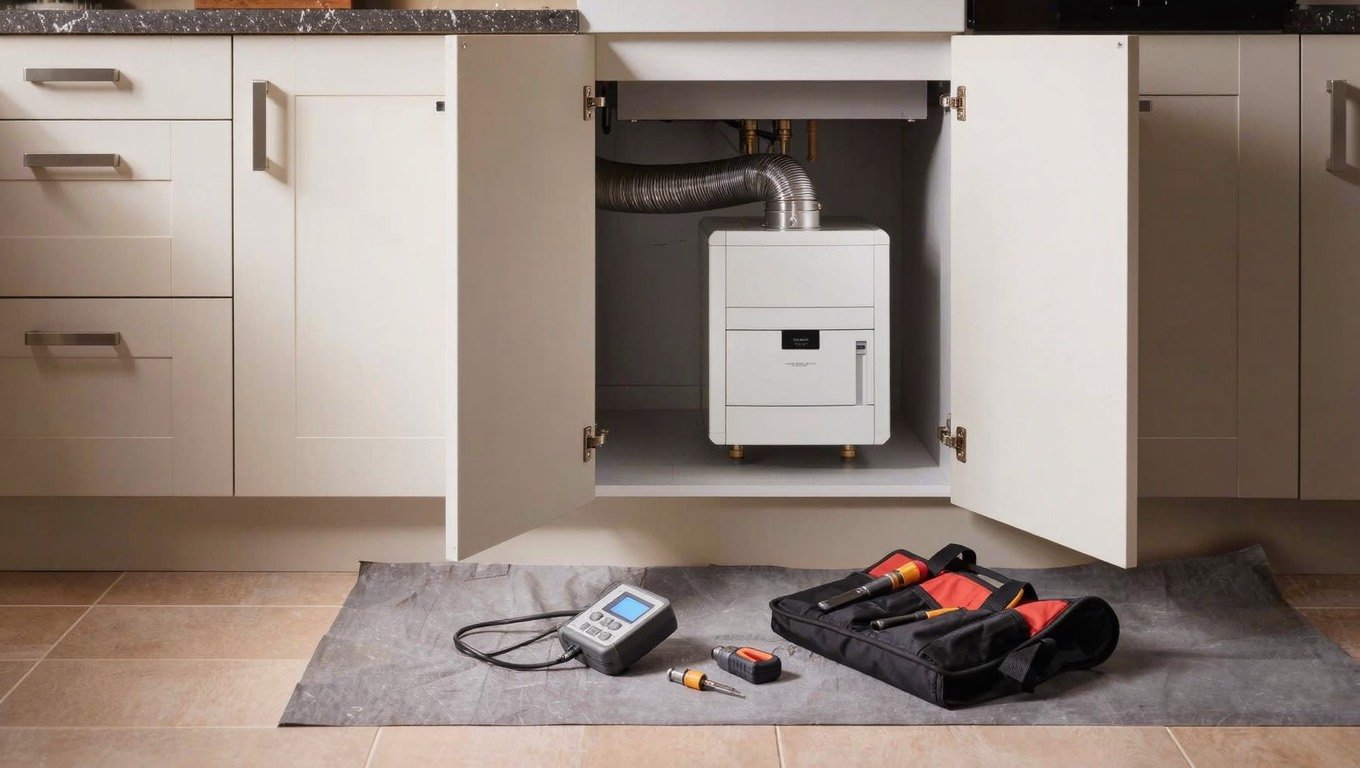
Some symptoms carry a much shorter fuse. If a fuel-burning appliance is behaving oddly — a yellow lazy flame instead of crisp blue, sooting around a gas fire, heavy condensation near the boiler — open the windows and call a Gas Safe registered engineer. Under-ventilated rooms let combustion products spill back indoors, and an EN 50291 carbon monoxide alarm is a £20 item.
Radon deserves separate mention: tightening a house up removes dilution that was quietly protecting you. In Cornwall, Devon, Derbyshire and other affected areas, test with a UKHSA-approved three-month detector; the radon mitigation cost guide covers remediation.
- •Any suspected flue, boiler or gas fire ventilation problem — Gas Safe engineer, same day.
- •Fitting or rewiring an extractor in a bathroom — notifiable under Part P in England and Wales.
- •Mould over about a square metre, or returning weeks after a proper clean — book an independent damp survey.
- •Damp that tracks with rainfall rather than cooking and showering — that is water getting in, and ventilation won't fix it.
Found this useful?
There's plenty more — hundreds of guides and honestly-tested product reviews for every corner of your home.
Browse All Guides