DIY & Maintenance · 5 min read · 14 August 2026
Condensation on Windows in September: Why It Starts and How to Stop It This Year
The first cold nights of September turn bedroom windows into puddles. Here's the physics behind it, the habits that fix it for free, and honest UK prices for the kit that does the rest.
By the Nims Casa editorial team — written from professional cleaning experience and checked against our editorial standards.
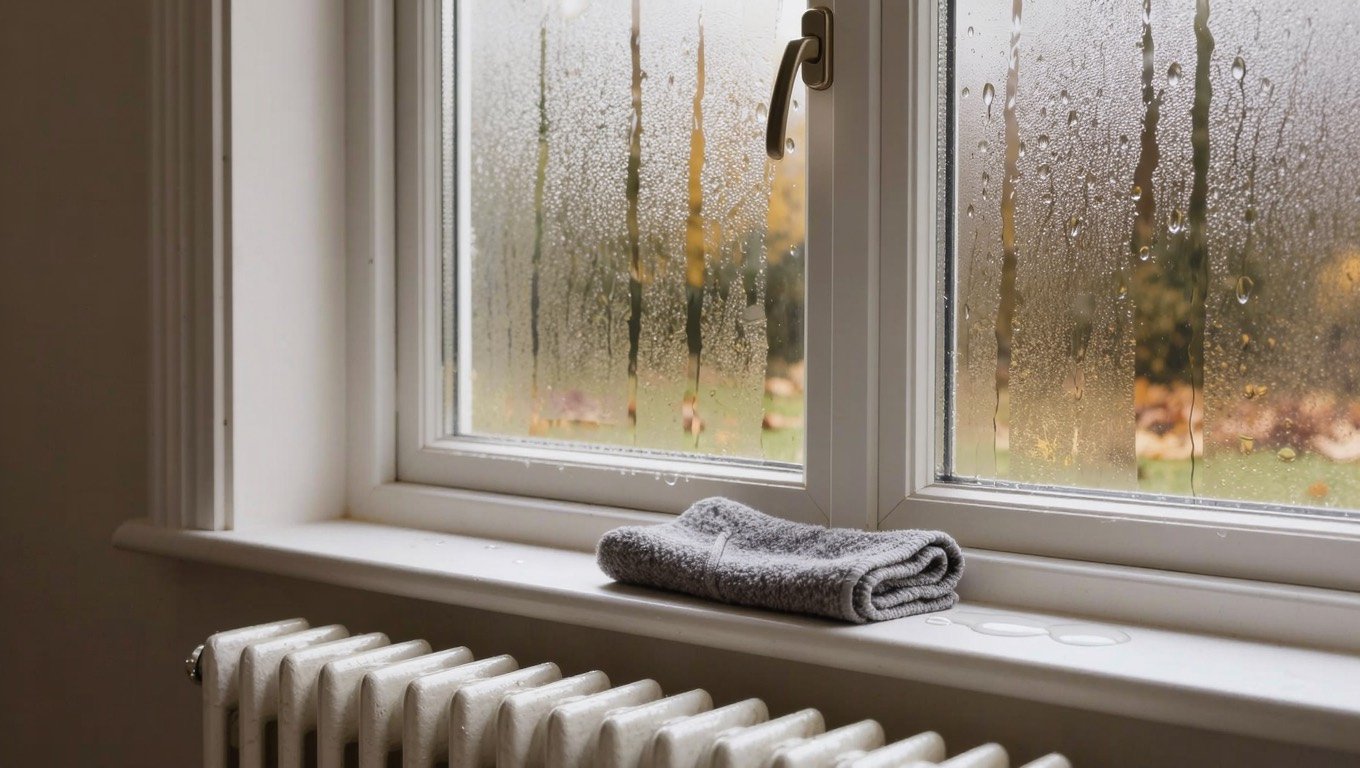
The first run of clear, cool nights arrives mid-September, and the pattern is always the same: bedroom windows streaming by 7am, a puddle on the sill, a musty smell inside a fortnight. Nothing has broken — the outside temperature has simply dropped faster than your habits have changed.
After years fitting ventilation kit in ordinary UK homes, I can tell you condensation is the cheapest damp problem you will ever fix — and the most profitable one for a bad tradesman to misdiagnose. Here is what is happening, what stopping it costs, and which quotes should make you walk away.
Dew point, in plain English
Warm air carries a lot of water vapour; cold air carries very little. The dew point is the temperature at which a batch of air becomes saturated and has to give its water back. A living room at 20°C and 60% relative humidity has a dew point of roughly 12°C: any surface colder than that gets wet. By late September, the inner face of a double-glazed pane at 6am is comfortably below 12°C. That is the whole mechanism.
September is the trigger month because three things line up. Night temperatures dip under 10°C for the first time since spring, so glass gets cold. The heating is not on yet, so nothing warms it back up. And indoor moisture is still at summer levels — you are cooking, showering and drying washing exactly as in July, except now the windows are shut.
Your home's moisture budget
A typical family of four puts 10 to 14 litres of water vapour into its own air every day — more than a full bucket — and all of it has to go somewhere: out through a vent, into a dehumidifier tank, or onto your coldest surfaces.
Drying washing indoors is the one to attack first. If the airer lives in the spare room from October to April, our guide to drying clothes indoors without causing damp is worth ten minutes — fixing that one habit halves most people's problem.
- •Breathing: around 1.5 litres per night for a couple in a closed bedroom — why bedroom windows suffer worst
- •Cooking: 2–3 litres a day, most of it from unlidded pans and rolling boils
- •Showers and baths: roughly half a litre each, more with the door left open
- •Drying washing indoors: 2–5 litres per load, released into whichever room the airer stands in
- •Unvented tumble dryers, dishwashers opened mid-cycle, pets and houseplants add more again
Three kinds of window condensation — only one is harmless
Condensation on the outside face, sitting there like dew on a car and clearing by mid-morning, is a good sign: your glazing is keeping heat in, so the outer pane runs cold. Do nothing.
Condensation on the inside face is the September problem — a moisture and ventilation imbalance, and everything in this guide is aimed at it. A permanent fog between the two panes that you cannot wipe from either side means the sealed unit has failed; ventilation will not fix it. The glass unit needs replacing — though, as we will get to, the window itself almost never does.
The habits that cost nothing
Before spending a penny, run these for two weeks. In most homes they cut morning condensation by well over half.
One caution: by all means fix a draughty window, but sealing up a leaky old house without adding deliberate ventilation is precisely how serious condensation problems begin. Draughts are accidental ventilation; remove them and you must replace them with intentional ventilation.
- •Lids on pans, and the cooker hood on from the start of cooking until 15 minutes after
- •Shower with the extractor running and the door shut, then crack the window for ten minutes
- •Open every trickle vent and leave it open — background air exchange, not a draught you will feel
- •Purge-ventilate bedrooms each morning: five to ten minutes with the window wide open beats hours of a small gap
- •Pull wardrobes and beds 50mm off external walls, especially north-facing ones
- •Wipe wet glass each morning rather than letting it evaporate back into the room — a window vac makes it a 90-second job
- •Once the heating season starts, low steady background heat keeps surfaces above dew point better than short evening blasts
What the fixes cost — and what a fair quote looks like
Retrofitting trickle vents to existing uPVC or timber windows costs £8–£15 per vent in materials; a window fitter will charge £50–£80 per window, so the job is almost entirely labour. A humidistat-controlled extractor fan runs £40–£90 for the unit and £150–£280 installed by an electrician — roughly two-thirds labour, which is fair given the wiring involved. For whole-house problems, a positive input ventilation (PIV) unit in the loft costs £250–£400 for the hardware and £550–£850 installed, and it is the most effective retrofit for a persistently damp house. A misted sealed unit costs £60–£150 for the replacement glass and £100–£200 per window fitted; the classic overcharge is quoting £400–£700 for a complete new window when only the glass has failed. If your frames are sound, refuse it.
Two red flags end any quote conversation for me. First, anyone diagnosing 'rising damp' from streaming windows and reaching for a £1,500-plus chemical injection course — streaming glass points firmly at condensation. Second, a surveyor who never takes a humidity reading and never asks where you dry your washing has not surveyed anything. A fair quote itemises materials and labour and names the moisture source each measure addresses.
When a dehumidifier is the right call
A 10–12 litre compressor dehumidifier costs £120–£180 and draws around 200 watts — near 5p an hour at current capped rates, or 30–40p a day through the worst weeks. It is the right tool when you must dry washing indoors, live in a flat with no trickle vents, or when one cold bedroom refuses to behave despite good habits. Our tested picks are in the best dehumidifiers UK guide; hold rooms at 50–60% humidity and no lower, or you are paying to over-dry the air.
A dehumidifier will not cure water getting in: tide marks, a damp patch that grows when it rains, or crumbling plaster point to penetrating damp, and drying the air merely masks it. Our guide to getting rid of damp and mould shows how to tell the problems apart; if black mould is already established on frames, treat it first, then prevent its return with everything above.
Quick answers
The questions I am asked every September, answered straight.
- •Will it stop once the heating goes on? Partly, but the moisture is still there and October mornings are colder; unchanged habits mean it usually worsens
- •Do crystal moisture traps work? They collect perhaps 100ml a week against the 10-plus litres your household produces daily. Harmless, but close to useless
- •Is condensation my landlord's problem? Persistent damp and mould squarely is — report it in writing and they must investigate rather than blame 'lifestyle'
- •Will new windows cure it? Usually the opposite: airtight new windows remove accidental ventilation and worsen room-side condensation unless trickle vents come fitted. Room-side insulation has the same catch — see what window insulation does to condensation
- •When do I call a professional? If mould returns despite good ventilation and humidity under 60%, something structural is wrong — pay for an independent survey, not a free one from a firm selling the cure
Found this useful?
There's plenty more — hundreds of guides and honestly-tested product reviews for every corner of your home.
Browse All Guides