Energy & Insulation · 5 min read · 3 July 2026
Eco Friendly Insulation Options: What Actually Works in UK Homes
Sheep's wool, wood fibre, hemp, cork or recycled mineral wool? The right answer depends less on the label and more on which heat-loss problem your house actually has.
By the Nims Casa editorial team — written from professional cleaning experience and checked against our editorial standards.
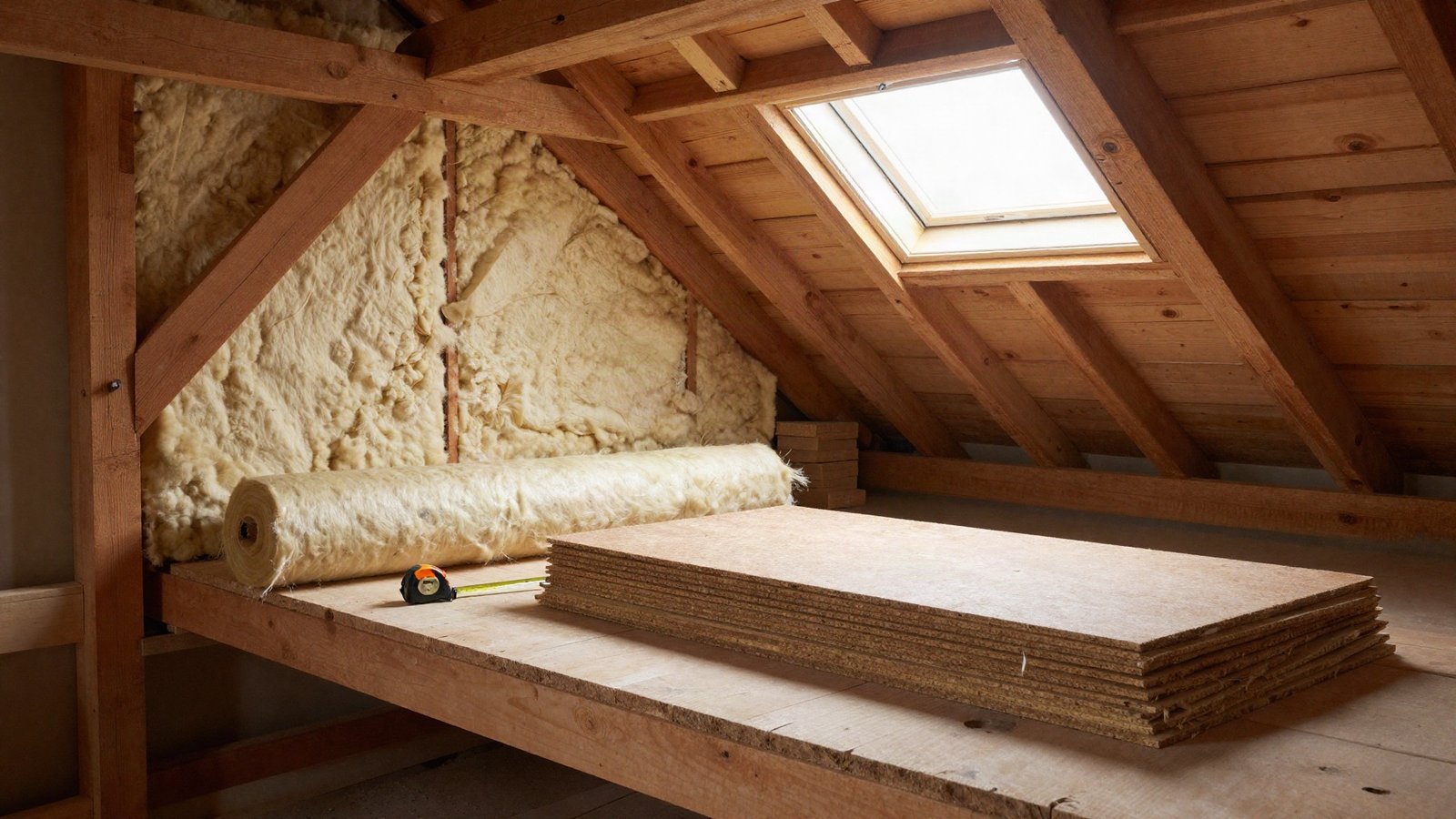
Standing in a builders' merchant comparing a £7 roll of mineral wool against a sheep's wool batt at £24 per square metre, the obvious question is what the extra £17 buys you. Sometimes a great deal. Sometimes nothing at all. It depends almost entirely on the wall, roof or floor you are insulating, and on how that part of your house deals with moisture.
We fit insulation in 1890s terraces, 1970s semis and timber-frame extensions, and a material that performs beautifully in one is a liability in another. So before anyone compares lambda values, work out which heat-loss problem you actually have. Get that step wrong and the greenest board on the market will happily trap damp behind it for a decade.
What "eco" actually means on an insulation spec
Green marketing on insulation is thick on the ground, so ignore the packaging and judge products on five measurable things. Only one of them is thermal performance.
- •Thermal conductivity (lambda, W/mK) — lower is better. Sheep's wool and hemp sit around 0.039, cellulose 0.035–0.040, wood fibre 0.038–0.046, recycled glass mineral wool 0.032–0.044, rigid PIR foam 0.022. Natural fibres need roughly 50–70% more thickness than PIR for the same U-value, which is the real trade-off.
- •Embodied carbon — the emissions locked into making it. Wood fibre, cork and hemp store more carbon than their manufacture releases; PIR and XPS are the worst offenders by a wide margin.
- •Vapour openness (Sd value) — whether water vapour can pass through and dry out the other side. This is the single most important number for a pre-1919 solid-wall house.
- •Binders and treatments — check for formaldehyde-free binders (Knauf's ECOSE and similar plant-based systems), borate rather than solvent fire retardants, and low-VOC declarations if anyone in the house is asthmatic.
- •End of life — sheep's wool, hemp and cellulose can be composted or recycled; foil-faced foam boards go to landfill and stay there.
Diagnose the problem before you choose a material
Run these five checks in order. They take an afternoon and they will eliminate three-quarters of the options for you, which is far more useful than another comparison table.
- •1. Find where the heat is actually going. On a cold morning (5°C or below outside), a £40 phone thermal camera shows cold bridges in seconds. Then measure your existing loft insulation with a ruler — anything under 150mm is the cheapest fix in the house and should be done before you think about walls.
- •2. Establish whether the building is breathable. Solid brick or stone, lime mortar, lime plaster, no damp-proof course? Vapour-open materials only, no exceptions. Post-1930s cavity walls with a DPC and cement render will tolerate either family.
- •3. Check the space is dry and ventilated first. Black spotting in room corners, streaming windows in the morning, musty smells — that is a ventilation and moisture problem, and insulating over it will make it noticeably worse.
- •4. Measure the thickness you can afford to lose. Internal wall insulation eats 60–120mm off each wall. Check radiator pipe positions, skirting depth, window reveals, socket back-boxes and whether the door still swings.
- •5. Decide cold roof or warm roof. Insulating at joist level (cold roof) is cheap and DIY-able. Insulating at rafter level to make a usable room is a different, regulated job with condensation risk attached.
How vapour-open insulation works
Warm indoor air holds a lot of moisture. Push it towards a cold surface and at some point it reaches dew point and condenses. In a sealed build-up — foam board glued to a solid brick wall, say — that condensation forms on the hidden cold face of the board, where nothing dries it and nobody sees it until the plaster blows or mould appears at the skirting.
Natural fibre insulation is hygroscopic: sheep's wool and wood fibre can absorb around 20% of their own weight in moisture and release it again as conditions change, without losing meaningful thermal performance. The wall stays able to dry in both directions. That buffering is also why these materials pair so well with lime plaster, and why they are the standard answer in period property retrofit. If you are already fighting moisture, sort that out first — our guide to damp and mould in UK homes covers the sequence.
There is a second benefit that gets overlooked. Dense wood fibre (140–180 kg/m³) gives a decrement delay of 8–10 hours against 2–3 hours for lightweight mineral wool, so a south-facing loft conversion peaks in the evening rather than at 3pm. In a UK summer that is the difference between a usable bedroom and one nobody sleeps in.
The materials and where each belongs
Match the material to the location rather than choosing a favourite and forcing it everywhere.
- •Sheep's wool batts (Thermafleece, Black Mountain) — lofts between and over joists, timber stud walls, suspended timber floors. No itch, no mask needed, forgiving of slightly irregular joist spacing. Buy moth-treated. Around £16–28/m² at 100mm.
- •Rigid wood fibre board (Steico, Gutex, Pavatex) — internal solid-wall insulation finished in lime plaster, and over-rafter roof insulation. The strongest summer performance of any option here. Around £25–45/m² at 60–100mm.
- •Blown cellulose (recycled newsprint, borate-treated) — installer-only, pumped into timber frames, awkward voids and irregular lofts where batts leave gaps. £25–40/m² installed.
- •Hemp fibre batts — behaves much like sheep's wool at slightly lower cost, naturally resistant to insects. Good in stud partitions and lofts.
- •Expanded cork board — rot-proof, carbon-negative, the only natural option happy externally and left exposed. Expensive at £45–70/m², so usually reserved for plinths and problem details.
- •High-recycled-content mineral wool (Knauf Earthwool, Rockwool) — not carbon-storing, but 80%+ recycled glass or stone, formaldehyde-free binders, A1 fire rating and a quarter of the price. The honest choice for a straightforward loft top-up on a budget.
What it costs in the UK
Materials are only half the picture, and natural fibres carry their premium in the material rather than the labour. Three worked examples from recent jobs, and cross-check anything you are quoted against our full insulation cost breakdown.
Installation of energy-saving materials currently carries 0% VAT across the UK until 31 March 2027, after which it reverts to 5% — worth factoring into timing on a big job. Be realistic about payback too: a loft top-up pays for itself in two to four years, while internal wall insulation is typically a fifteen to twenty-five year proposition and is bought for comfort as much as savings. If you want the cheap wins first, start with draught-proofing, which returns more per pound than any insulation.
- •Loft top-up to 300mm across 40m² (typical three-bed semi): £280–380 in recycled mineral wool as DIY, or £950–1,400 in sheep's wool. Add £400–700 if someone else lays it.
- •One 12m² gable wall internally in 100mm wood fibre with lime plaster finish: £1,900–3,200 fitted, including battens, reveals and making good.
- •25m² suspended timber ground floor, 100mm sheep's wool between joists from a cellar: £550–750 in materials plus two days' labour at £400–600.
DIY or get someone in
Loft insulation at joist level is genuinely DIY. Lay the second layer at right angles to the first, keep a 50mm ventilation gap at the eaves so the soffit vents still breathe, never cover downlights without fire hoods, and if you want boards up there fit 270mm loft legs rather than crushing the wool flat — compressed insulation loses most of its value. The same skills cover attic insulation and outbuildings.
Bring in a professional for blown cellulose (it needs the rig), for any internal or external wall insulation, and for converting a cold roof to a warm roof. On wall work, ask specifically for a condensation risk analysis before anyone orders material — a competent retrofit installer will produce one without being prompted, and if they look blank at the question, that is your answer. Grant-funded work under the Great British Insulation Scheme must be delivered to PAS 2035 by a TrustMark-registered installer, though be aware those schemes almost always fund mineral wool rather than natural fibre.
Questions we get asked most
Is spray foam banned? No, but several lenders now require a specialist survey before lending on a house with it, and open-cell foam sprayed directly to roofing felt has caused enough rafter rot that removal quotes of £2,000–4,000 are common. Avoid it in a cold loft.
Will natural insulation rot or attract mice? Not if it can dry — keep the build-up vapour-open on both faces and it will outlast the plaster. Rodents nest in any insulation equally; seal the entry points instead. Browse the rest of the energy and insulation guides for the specific detail on each element.
Do I need Building Control? A loft top-up, no. Renovating more than 25% of a thermal element, converting a cold roof to a warm roof, or any wall insulation, yes — and it needs to hit the Approved Document L U-values, currently 0.15 W/m²K for a new roof and 0.18 W/m²K for renovated walls.
Found this useful?
There's plenty more — hundreds of guides and honestly-tested product reviews for every corner of your home.
Browse All Guides