Energy & Insulation · 5 min read · 9 July 2026
How Much Does Insulation Cost? 2026 UK Price Guide
Insulation quotes in the UK swing from £600 to £22,000 for what sounds like the same job. Here are the real per-square-metre rates, and why a Victorian terrace costs several times what a 1990s semi does.
By the Nims Casa editorial team — written from professional cleaning experience and checked against our editorial standards.
Two houses on the same street can get insulation quotes that differ tenfold, and both be honest. A 1985 estate house has a cavity you fill through a drill and a nozzle in half a day. The 1890s terrace beside it has 225mm of solid brick, lath ceilings that crumble if you look at them, and floorboards that will not go back down flat. The insulation costs the same. Everything around it does not.
Below are the rates on real UK quotes in 2026, supplied and fitted, with the zero VAT rate on qualifying energy-saving materials applied. Britain works in U-values (W/m²K, lower is better), not the R-values on American sites.
Typical UK Price Ranges in 2026
Whole-job figures for an average three-bed semi, contractor-installed. The wide bands are honest: the spread is the building, not the salesman.
- •Loft insulation to 270mm mineral wool: £550-£1,200 for roughly 50m²
- •Cavity wall insulation, blown bead or fibre: £900-£1,900
- •Suspended timber floor: £1,400-£2,800 from a cellar below, £2,600-£5,000 with boards lifted
- •Internal wall insulation on solid walls: £8,000-£16,000 whole house
- •External wall insulation with render: £13,000-£24,000 including scaffolding
- •Whole-house draught-proofing by a specialist: £400-£900
- •Secondary glazing to a sash window: £280-£650 per opening
Unit Costs: The Numbers That Travel
Totals are useless for comparison because no two houses have the same surface area. Ask every contractor for a rate per square metre and the square metres measured.
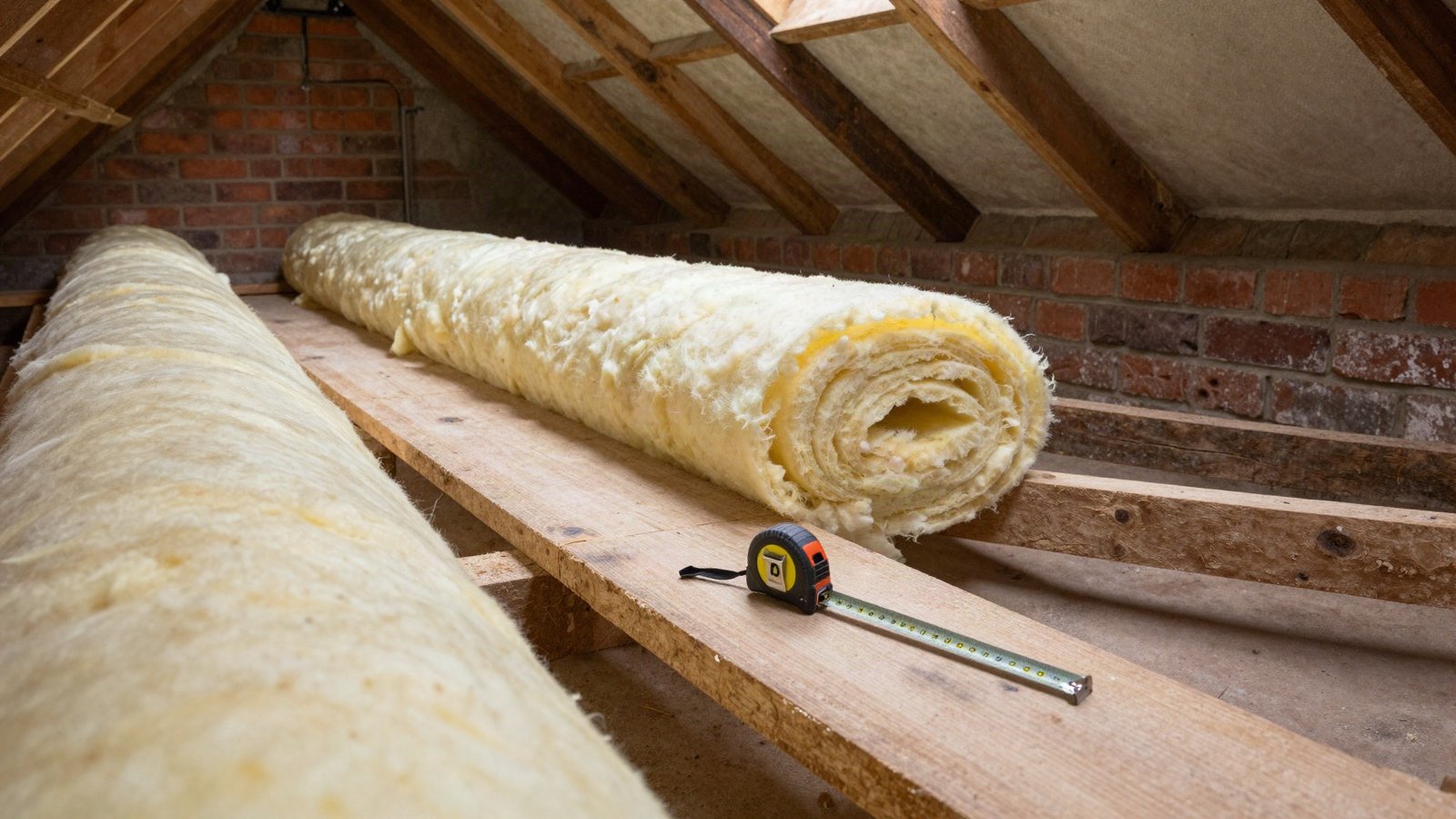
Loft rolls sit at £25-£40/m² fitted, or £8-£12/m² if you buy the material and lay it yourself — one of the few jobs where DIY obviously wins, and our guide to insulating a loft covers the joist-depth problem. Cavity fill runs £15-£30/m² of wall. Internal wall insulation in PIR board with a plasterboard finish is £90-£140/m²; the breathable wood fibre systems old houses need are £130-£210/m². External wall insulation is £110-£180/m² before scaffolding, underfloor between joists £30-£60/m².
Labour Versus Materials
The split tells you where to push. On a loft, materials are most of the cost, so buying the rolls yourself saves real money. On cavity fill it inverts: the bead might be £250 and you are paying for a rig, two operatives, a borescope survey and a 25-year guarantee. Internal wall insulation hides the most labour — the boards might be £22/m², but stripping the old finish, moving sockets and radiators, packing out reveals, plastering and decorating are the rest.
- •Loft roll: roughly 60% materials, 40% labour
- •Cavity fill: roughly 25% materials, 75% labour and plant
- •Internal wall insulation: roughly 25% materials, 75% labour and making-good
- •External wall insulation: roughly 35% materials, 45% labour, 20% access
The Old-House Premium: Solid Walls, Lath and Sashes
Anything built before roughly 1920 was designed to breathe. Solid brick, lime plaster and suspended timber floors get wet and dry out again on a seasonal cycle. Seal a breathing wall behind foil-faced PIR and cheap adhesive and you get interstitial condensation — moisture condensing inside the build-up where nobody can see it — then rotting joist ends and black mould in the corners. That is why breathable wood fibre and lime skim systems cost £40-£70/m² more, and why they are the right answer rather than an upsell. If the walls already show tide marks, fix that first: our guide to damp and mould in UK homes covers the diagnosis.
Then come the surcharges nobody mentions on the phone. Lath and plaster ceilings usually come down before a loft or room-in-roof job: £18-£30/m² plus £280-£400 for a skip. Victorian floorboards split on lifting, so budget 10-15% replacement in reclaimed board at £30-£55/m². Pre-1970s wiring often runs loose across loft joists in rubber or VIR sheathing that fails when disturbed, and burying cable in 270mm of wool derates it — a good installer clips it above the insulation or calls a sparky, £180-£320 on the day. Air bricks must stay clear, and Victorian drainage under the floor void means the crew may find a cracked salt-glazed pipe they cannot touch.
Sash windows are their own line. Replacement is rarely sensible in a conservation area and often barred on a listed building, where wall insulation needs consent first. Brush-pile draught-proofing to an existing sash is £180-£350 per window and typically halves infiltration through that opening — better value per pound than almost anything else in the house, as our draught-proofing guide sets out.
What Moves the Price
Spray foam deserves its own warning. Open-cell foam sprayed under roof slates is still sold hard, and several UK lenders will refuse a mortgage or demand a specialist report on a house that has it; removal runs £3,000-£6,000. Read the spray foam comparison before anyone books a survey.
- •Loft access: a 600mm crawl space adds 30-50% to labour over a walk-in loft
- •Old insulation that must be lifted, bagged and tipped: £150-£400
- •Asbestos in pre-2000 homes, artex or old boiler cupboard board: £60-£120 per sample test
- •Scaffolding for external wall insulation on a semi: £800-£1,600
- •Ventilation upgrades demanded alongside the work: £120-£450 per room
- •Listed status or a conservation area, forcing breathable materials and consent fees
- •Region: London and the South East run 20-35% above Yorkshire and the North East
Three Worked Examples
Note what none of them include: nobody insulated a chimney breast and nobody touched a party wall. Those are the two places a Victorian terrace loses heat that no measure above recovers.
- •1936 semi, unfilled cavity, Nottingham. Cavity fill 62m² at £22 = £1,364. Loft top-up 100mm to 300mm, 48m² at £28 = £1,344. Draught-proofing £420. Total £3,128, saving £340-£420 a year. Payback under eight years.
- •1890s mid-terrace, solid 225mm brick, Bristol. Wood fibre internal insulation to two rooms and hall, 31m² at £165 = £5,115. Lath ceiling strip and reboard £1,150. Skip £360. Redecoration £900. Six sashes draught-proofed at £245 = £1,470. Total £8,995, saving about £480 a year.
- •1905 terrace with a cellar, Glasgow. Mineral wool between joists from below, 41m² at £42 = £1,722. Clearing four blocked air bricks £140. New cellar hatch £180. Total £2,042, saving about £150 a year but ending the cold-feet complaint that started it.
Sanity-Checking a Quote, and How We Priced This
Get three quotes and discard any from someone who did not put their head in the loft or lift a board. Ask each for the square metres measured, the rate per square metre, the U-value the finished build-up achieves, and a written ventilation strategy. For grant-funded work the installer must be TrustMark registered and working to PAS 2035 — check the register yourself rather than trusting a logo on a van.
A quote 30% below the others is usually a job with no making-good in it. One 40% above should come with a written reason, and if the surveyor cannot name it, walk. Still deciding what to do first? See what a home energy audit costs and the signs your house is under-insulated.
Methodology: figures come from quotes and job sheets across England, Scotland and Wales over the past twelve months, weighted towards pre-1945 stock and cross-checked against day rates of £190-£280 for insulation crews and £200-£260 for plasterers. If the zero VAT rating lapses, add 5%. Grant eligibility changes often, so treat any advertised free installation as a starting point for questions rather than a price.
Found this useful?
There's plenty more — hundreds of guides and honestly-tested product reviews for every corner of your home.
Browse All Guides