Energy & Insulation · 6 min read · 14 August 2026
Cheap Ways to Improve Heating: Radiator Reflectors, TRVs and Tweaks That Pay Back
Seven heating tweaks under £250, ranked by honest payback: the free boiler setting worth £60 a year, when reflector panels actually work, and what a fair TRV fitting quote looks like.
By the Nims Casa editorial team — written from professional cleaning experience and checked against our editorial standards.
Most heating advice you'll read this autumn costs four figures — a new boiler, cavity wall insulation, a heat pump. This is the other list: fixes under £250, most under £30, that a heating engineer would do to their own house before touching anything expensive. Each one comes with honest numbers, because half the products sold as 'energy saving' barely return the price of their packaging.
Do it in September, while engineers are quiet and charging normal rates; by late October the same visit costs more and takes three weeks to book. Everything below is ranked roughly by payback — free fixes first.
Free this weekend: the boiler setting worth £60 a year
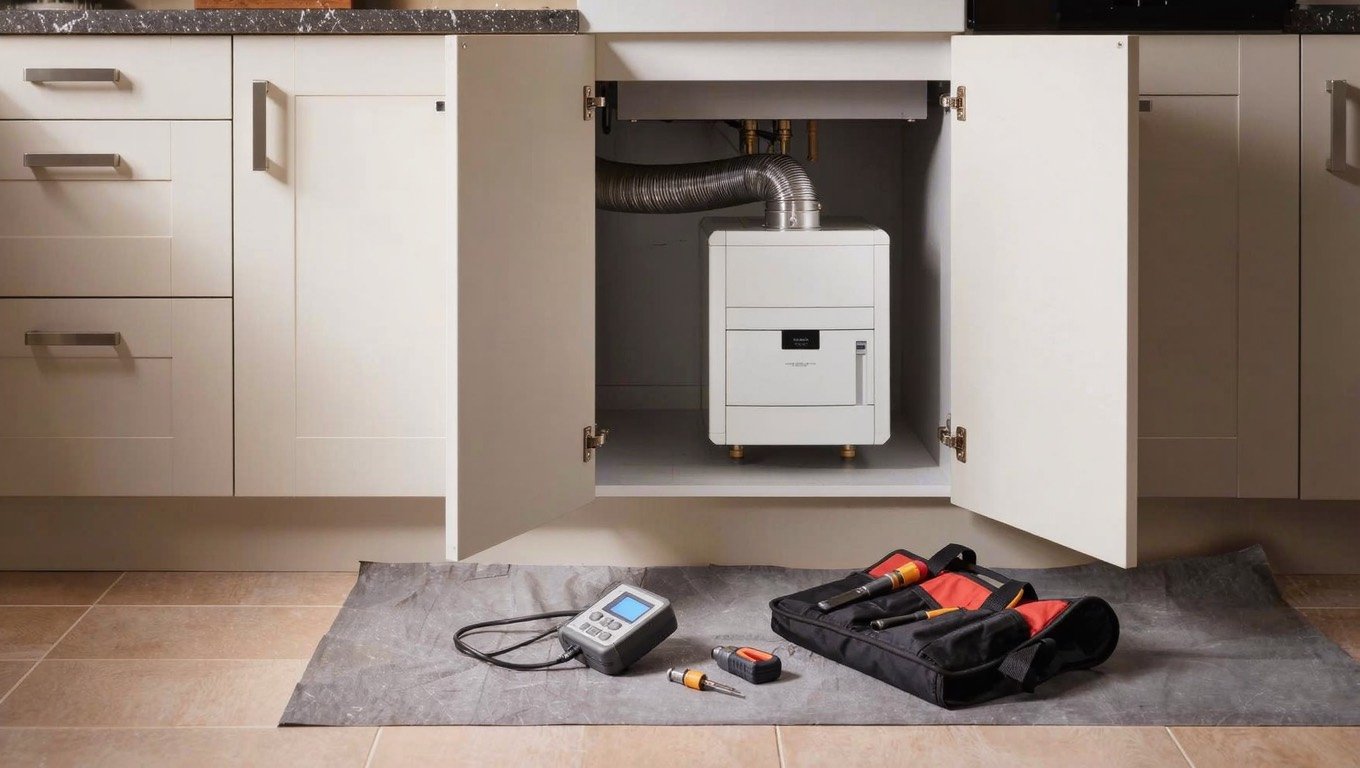
If you have a combi boiler, the flow temperature — how hot the water leaves for the radiators — is probably still at the factory 70–80°C. Condensing boilers only reach their advertised efficiency when the water returning to them is below about 55°C, so at factory settings you paid for a condensing boiler and are running it like a 1990s one. Drop the flow temperature to 60°C using the radiator dial or menu on the boiler itself: ten minutes, no tools, and typically 6–9% off gas use — £60–100 a year on a typical bill. Radiators run warm rather than roasting and take slightly longer, but the room ends up at the same temperature. We explain how to find and set this dial safely in our boiler flow temperature guide.
One caveat: if you have a hot water cylinder, leave its thermostat at 60°C — that's a legionella safety floor, not an efficiency setting. Flow tweaks are for the heating circuit only.
While you're at the boiler, bleed every radiator — cold at the top means trapped air, and the only tool is a £1.50 key — then vacuum the dust out of the fins, which is where the heat actually transfers. Twenty minutes each, both free, and worth 1–3% apiece in a neglected system.
Reflector panels: £20 well spent — behind the right walls
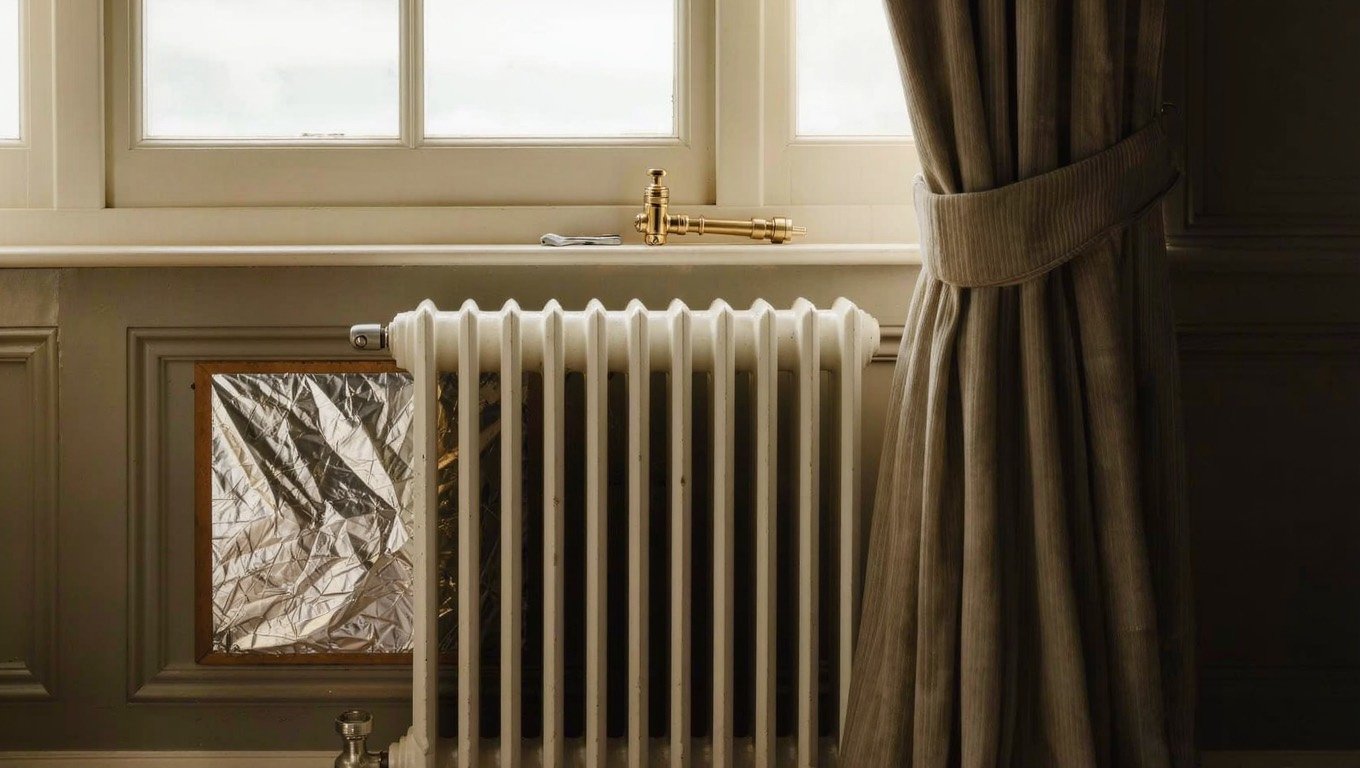
Reflector panels are the most oversold item here, so here is the honest version: they bounce radiant heat back into the room instead of letting it soak into the wall behind. That only matters when that wall is external and uninsulated — typically solid brick in pre-1930s houses. On an insulated cavity wall the loss is already small; on an internal wall the 'lost' heat simply warms the next room.
A pack of proper foil-faced panels covering three or four radiators costs £15–22 at Screwfix or B&Q and hangs on hooks without removing the radiator — 15 minutes each. On a solid external wall, expect £10–20 back per radiator per year — a one-winter payback. On any other wall, expect close to nothing. And skip kitchen foil taped to cardboard: it crinkles, oxidises and does very little within a year.
TRVs: £22 a head, and what a fair fitting quote looks like
Thermostatic radiator valves let each room ask for its own temperature — bedrooms at 2 (roughly 16–17°C), living room at 3–4, spare room at 1 or the frost setting. The saving comes entirely from turning down rooms you don't use; fitted and left on 5, they save nothing. Used properly in a three-bed house, £40–70 a year is realistic.
If your radiators already have TRV bodies with removable heads, a replacement head (Drayton TRV4 or similar, £18–25) screws on in five minutes with no draining — pure DIY. If a plumber must replace the valve body, a fair quote is £50–80 for the first valve including the drain-down, then £25–40 for each additional valve in the same visit — the drain-down is the expensive part, so the per-valve price should fall sharply after the first. A whole-house set of seven or eight fitted for £250–350 including parts is reasonable. Be suspicious of any quote that bundles a 'mandatory' £400-plus power flush into a TRV job: flushes are sometimes genuinely needed, but that is a separate diagnosis, not a condition of fitting valves.
Balancing: the free fix that makes everything else work
If upstairs bakes while the lounge never warms, the system is out of balance: water is taking the easy route through the nearest radiators and starving the far ones. The usual response is running the whole system hotter — which costs money — when the real fix is closing the lockshield valve (the capped one) slightly on the hottest radiators to push flow onward. Done properly with a pair of clip-on pipe thermometers (£12–15), you are aiming for a drop of about 12°C across each radiator.
Budget a two-to-three-hour Saturday morning; it costs nothing. Balancing also lowers the return temperature to the boiler — exactly what a condensing boiler wants — and is what lets the 60°C flow setting from earlier heat the whole house evenly. A plumber will do it for £80–120 if your lockshield caps are seized, which on a 30-year-old system they may well be.
Curtains and pelmets: the after-dark insulation
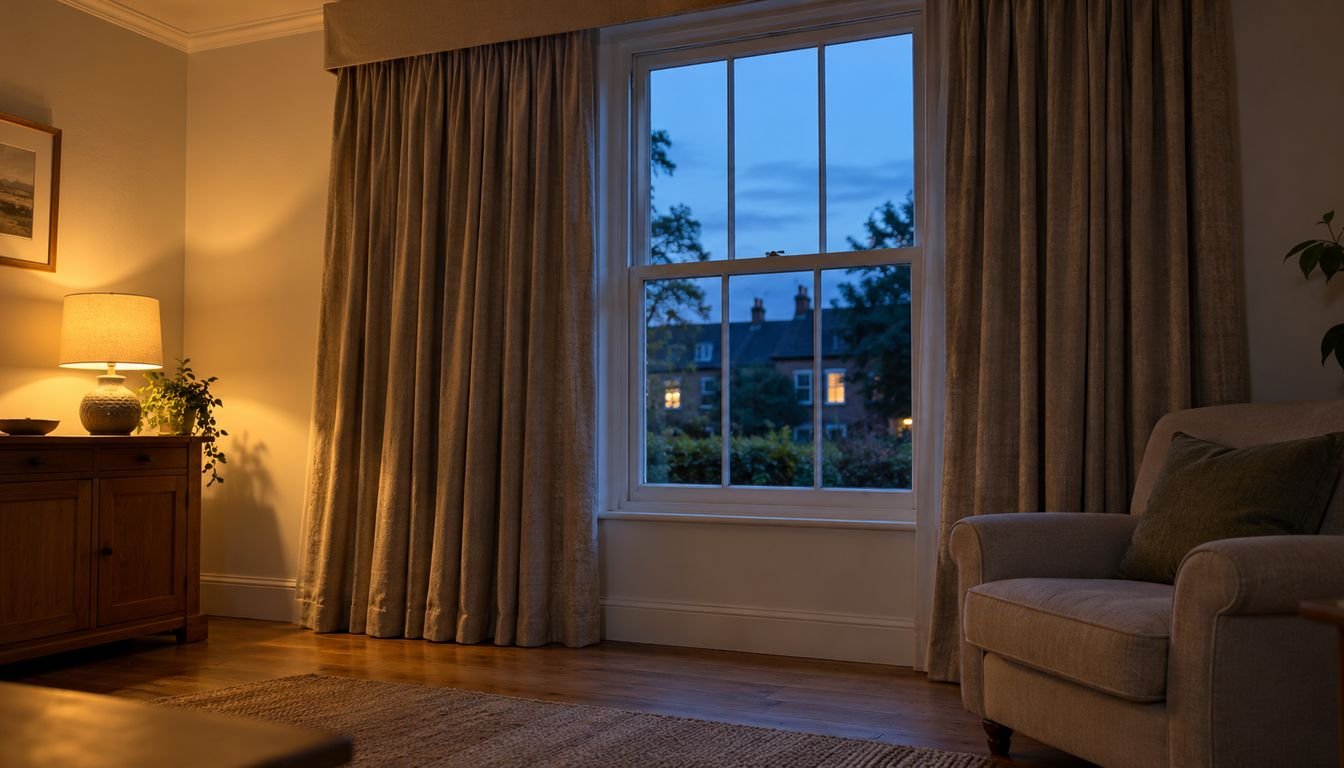
Glass loses heat far faster than any wall, and most of it goes after dark. Closing lined curtains at dusk cuts heat loss through a window by roughly 15%; thermal linings push that further. Retro-fit linings cost £15–25 a window; new lined curtains run £30–100. A pelmet — a boxed board over the track, £15–20 in MDF — stops the convection loop where warm air dives behind the curtain, chills against the glass and spills back out at floor level.
One rule: never let curtains drape over a radiator beneath the window — they tunnel heat straight behind the glass and out. Curtains stop at the sill, radiator in front.
The ranking: cost vs annual saving
Every house differs, but for a typical three-bed semi on mains gas, this is the order I'd do them in:
Draught-proofing sits mid-table only because it costs more up front; per pound spent it rivals anything here, and our room-by-room draught-proofing guide covers doors, floors, letterboxes and unused chimneys.
- •1. Boiler flow temperature to 60°C — £0, 10 minutes, saves £60–100 a year
- •2. Balance the radiators — £0–15, 3 hours, saves £30–60 a year and evens the house out
- •3. Bleed radiators and clean the fins — under £5, 40 minutes, £15–40 a year in a neglected system
- •4. Draught-proof doors, floors and the letterbox — £50–120 DIY over a weekend, £45–60 a year
- •5. TRV heads on existing valve bodies — £70–100 for four, £40–70 a year if you actually use them
- •6. Reflector panels — £20 a pack, £10–20 per radiator per year, solid external walls only
- •7. Thermal curtain linings and pelmets — £60–150, £20–40 a year plus real comfort
Short on time? The one-hour version
If you genuinely have one hour before the first cold snap: turn the flow temperature down, bleed the worst radiator, and start closing the curtains at dusk. That captures most of the value at zero cost. The rest can wait for a weekend — work through it with the winter heating system checklist before December, when every heating engineer in the country stops answering the phone.
The bigger-ticket jobs — loft top-ups, cavity walls, cylinder jackets — get the same honest maths in our home energy efficiency checklist. Cheap tweaks first, though: they're the only ones that pay back within the winter they're fitted. And with October's price cap rise falling almost entirely on gas, the gas-side fixes above matter most this year.
Found this useful?
There's plenty more — hundreds of guides and honestly-tested product reviews for every corner of your home.
Browse All Guides