Electrical · 6 min read · 27 April 2026
GFCI vs AFCI Outlet: The UK Equivalents (RCD vs AFDD) Compared
Neither device is sold in Britain under those names. Here is what the American terms translate to in a UK consumer unit, and how to work out which fault you are actually chasing.
By the Nims Casa editorial team — written from professional cleaning experience and checked against our editorial standards.
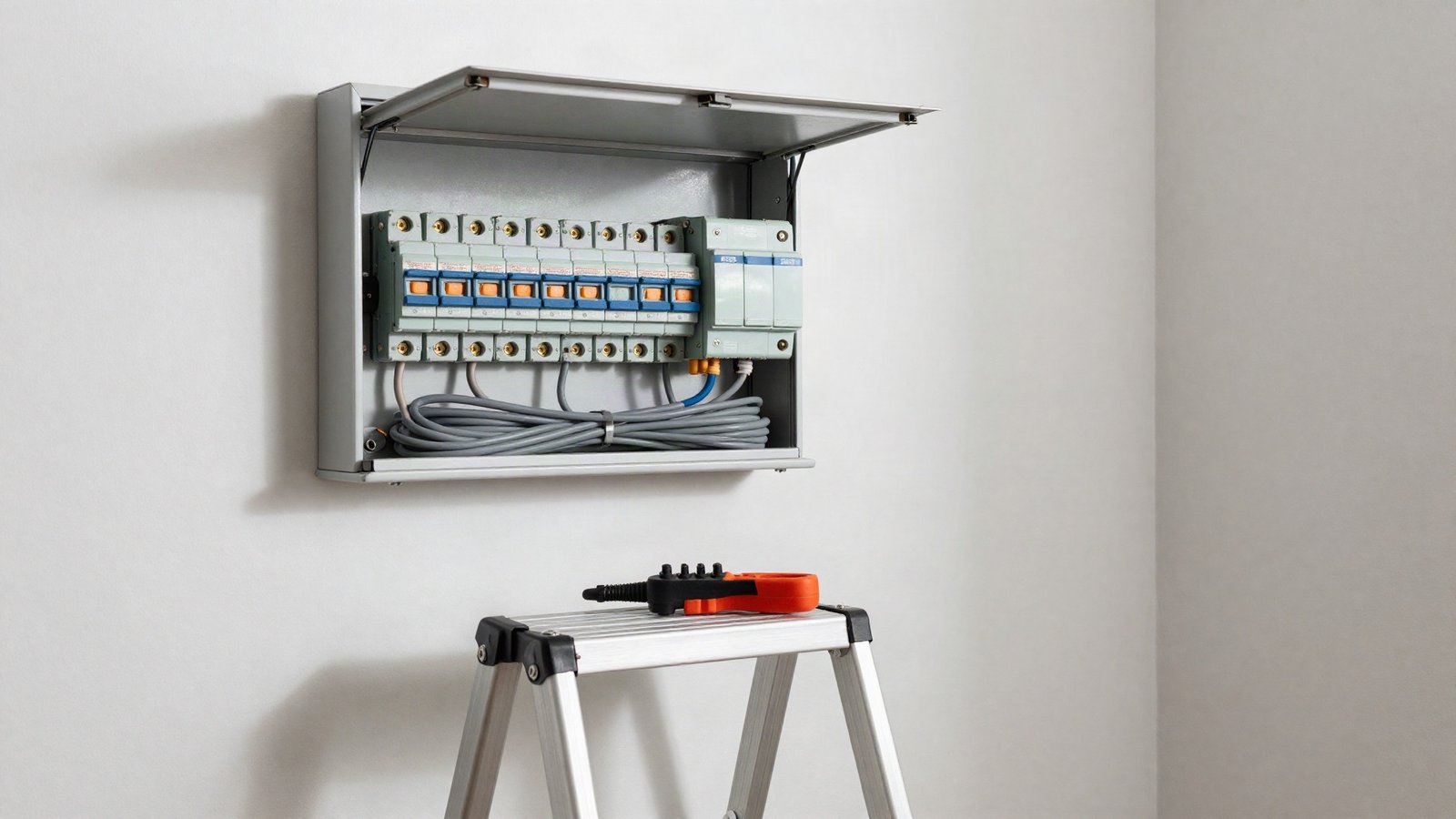
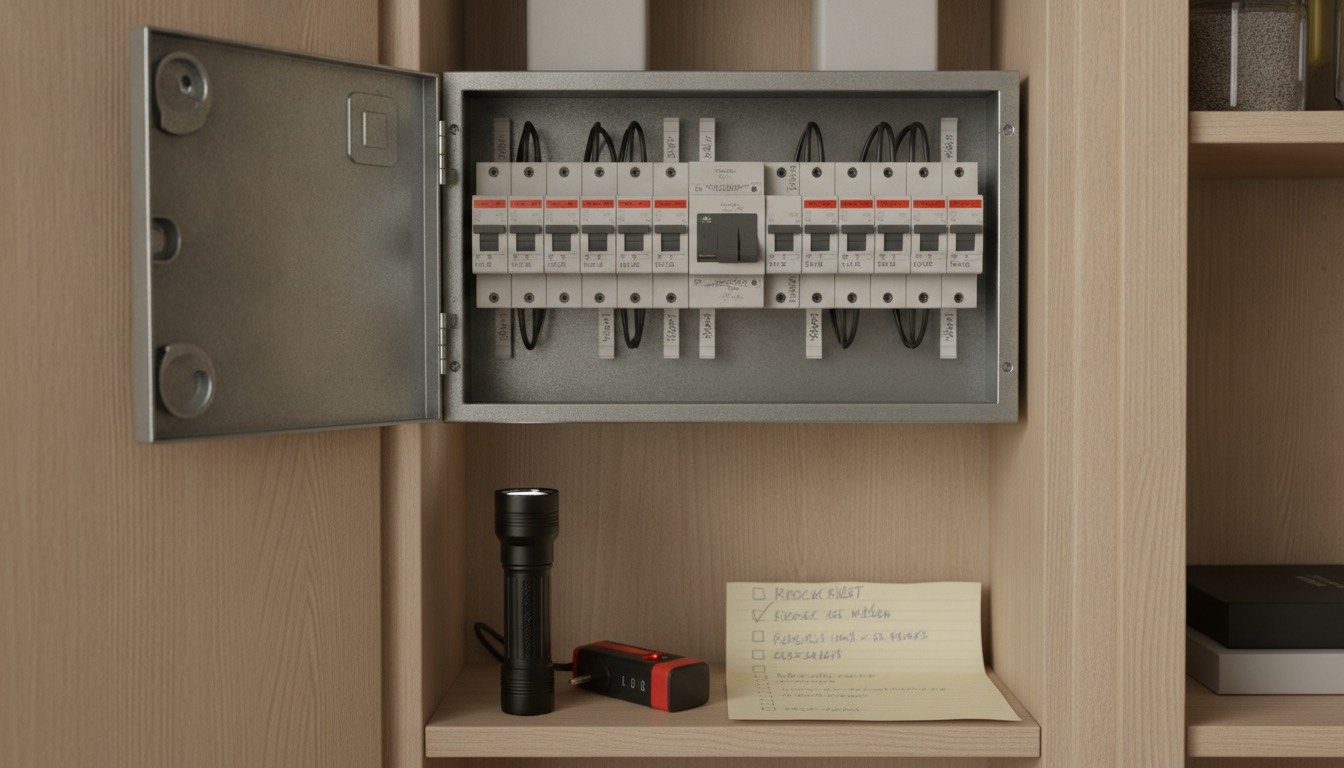
Ask about GFCI vs AFCI outlets and you get American answers to a British problem. Neither exists here under those names, and in most UK homes neither function lives inside a socket. The GFCI's job is done by an RCD or RCBO; the AFCI's by an AFDD. Both sit on the DIN rail in your consumer unit, not behind a kitchen faceplate.
That changes who can fit them, what they cost and how you diagnose a fault — and it means the most common request we get, "can I just swap the socket for a safety one?", has the wrong answer attached.
Start here: which fault do you actually have?
Fitting an AFDD to cure an earth leakage fault is money burnt, and RCBOs do nothing about a loose terminal quietly cooking behind a socket. Work down this list first.
- •1. Identify what operated. A test button and "30 mA" on the front means an RCD or RCBO — earth leakage. A plain MCB marked B16 or B32 with no test button means overcurrent. A wider module marked AFDD or BS EN 62606 means an arc signature.
- •2. Note the blast radius. On a split-load board one 30 mA RCD covers half the installation, so upstairs lights and downstairs sockets die together; an RCBO kills one circuit only.
- •3. Match the trip to a trigger. Rain, a garden tool, a shower pull-cord or the end of a wash cycle points hard at earth leakage. Several heaters plus an oven points at overload, which neither device fixes.
- •4. Half-split the circuit. Unplug everything, reset, then reintroduce appliances one at a time with 10 minutes between each. Immersion heaters, fridge-freezers and older tumble dryers are the usual culprits.
- •5. Use your nose and eyes. Browned faceplates, a hot-plastic smell, a socket warm with nothing plugged in or a crackle when the kettle runs are arcing symptoms — AFDD territory, and a reason to stop using the circuit now.
- •6. If it trips instantly with nothing plugged in, that is a fixed wiring fault needing insulation resistance testing, not a new device — see why a circuit breaker keeps tripping.
RCD vs AFDD, side by side
Two specialists, not rivals — a good modern installation carries both.
- •What it senses: an RCD or RCBO compares current out against current back and trips at 30 mA of leakage, within 40 ms at 150 mA; an AFDD listens for the high-frequency signature of an arc and reacts to a sustained pattern in a fraction of a second.
- •The danger it stops: RCDs stop electrocution and earth faults; AFDDs stop fires from loose terminals, nail-pierced cable and damaged flexes.
- •Where required: RCD protection on essentially all domestic socket and cable circuits under BS 7671; AFDDs on socket circuits up to 32 A in higher-risk residential buildings, HMOs and care homes, recommended elsewhere.
- •Weak spot: an RCD sees neither a live-to-neutral shock nor a series arc; an AFDD gives no shock protection unless it is a combined unit.
Performance: what each one genuinely catches
The killer case for AFDDs is the series arc. A screw left half a turn loose in a socket terminal draws no extra current and leaks nothing to earth, so the MCB and RCD both see a healthy circuit while the terminal runs at 200 to 300 degrees behind the faceplate. Only an AFDD looks for that.
RCDs fail differently. Their realistic weakness is not missing faults but tripping too readily: every appliance leaks a milliamp or two, so once a dozen share one 30 mA RCD, standing leakage alone can reach 15-20 mA and a damp morning tips it over. The fix is per-circuit RCBOs, never a higher trip rating.
One UK-specific point: Type AC RCDs no longer suit most circuits, because LED drivers, induction hobs and EV chargers produce DC components that can blind them. Type A is the working minimum. If your board predates 2015, check what is fitted — the signs a consumer unit is past its life are visible at a glance.
Installation, Part P and where DIY stops
This is the sharpest break from the American picture. A US homeowner can buy a GFCI receptacle and change it out. In England and Wales, working on a consumer unit or adding a circuit is notifiable under Part P of the Building Regulations: a registered competent person self-certifies it, or you notify building control and pay for inspection. Scotland and Northern Ireland land in the same place under their own rules.
So neither an AFDD nor an RCBO retrofit is a DIY purchase — the board must be dead, the arrangement must suit the existing unit, and the work needs certification. What you can do yourself is buy an RCD extension lead for garden tools (£12-£25) and check sockets with a plug-in socket tester. The rest sits on the list of electrical jobs you should never attempt yourself.
Ten-year cost, honestly compared
Assume a three-bedroom semi with eight to ten circuits, at 2026 rates of £55-£85 an hour outside London and a third more inside.
- •Devices alone: RCBO £18-£45, Type A RCBO £28-£55, AFDD or AFDD/RCBO £85-£160 per module.
- •All-RCBO consumer unit supplied and fitted: £650-£1,050, plus £120-£220 if earthing and bonding need upgrading too.
- •Adding AFDD/RCBO modules to five circuits at the same visit: £425-£800 in devices plus £90-£150 labour, if the board has the width.
- •Replacements: one or two failed RCBOs at £90-£150 each fitted. Treat 10-15 years as the service life of any DIN-rail device.
- •Nuisance-trip call-outs: £70-£130, and budget one per decade if AFDDs feed brushed-motor vacuums or cheap dimmers.
- •Ten-year total: £800-£1,300 for RCBOs alone, £1,300-£2,200 with AFDDs — weigh that against what an electrician charges to rewire after a fire.
Testing and maintenance
Press the test button on every RCD, RCBO and AFDD quarterly, as the label on your consumer unit asks. It should trip instantly; if it hesitates or feels sticky, it is failing. Reset clock timers afterwards. That is the only maintenance either device needs.
Beyond that, an EICR every ten years for an owner-occupied home and every five for a rented one is where missing or wrong-type RCD protection gets coded C2 or C3. Our homeowner electrical inspection checklist covers the gaps between inspections.
Who each suits, and the verdict
If you can only fund one, choose RCD protection — per-circuit RCBOs, Type A minimum. It is legally expected, it covers the fault type UK homes actually experience, and splitting circuits ends the misery of one leak taking out half the house. An old split-load board, an outdoor socket or an EV charger puts you at the front of that queue.
AFDDs suit a narrower set: flats and HMOs where they are mandated, homes with older fixed wiring you cannot easily inspect, and any installation where scorched terminals have already turned up. Target socket circuits rather than the whole board.
The verdict: in Britain this is not a choice between two sockets, it is a consumer unit conversation. Fit RCBOs on every circuit first, add AFDDs where the building justifies it, and finish the diagnosis above before agreeing to either.
Found this useful?
There's plenty more — hundreds of guides and honestly-tested product reviews for every corner of your home.
Browse All Guides