Electrical · 6 min read · 27 July 2026
How to Identify Electrical Wire Colours in a UK Home (Old Cable and New)
Colour tells you what the installer intended, not what the conductor is doing. In a British house with three generations of wiring in it, that difference is the whole job.
By the Nims Casa editorial team — written from professional cleaning experience and checked against our editorial standards.
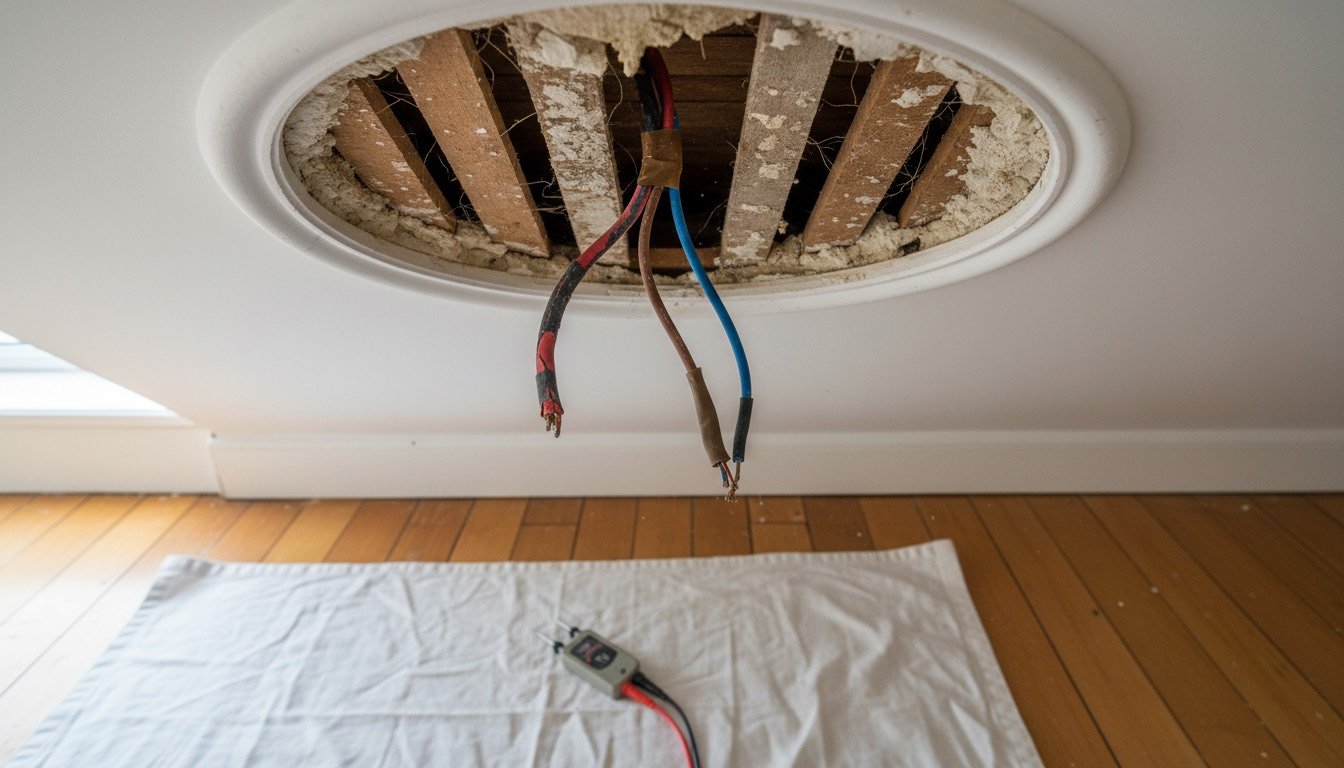
Open a ceiling rose in a 1930s semi and you can find red, black, brown, blue, an unsleeved bare copper earth, and a black conductor that is very much live. None of that is a fault in itself. It is what happens when a house has been rewired once, extended twice and had a bathroom fan added by somebody's brother-in-law.
Colour is a starting point, never a conclusion. Treat it as a hypothesis and a two-pole voltage indicator as the proof. Here is how to read it, in the order that keeps you safe.
Safety first: what is legal and what is simply not worth it
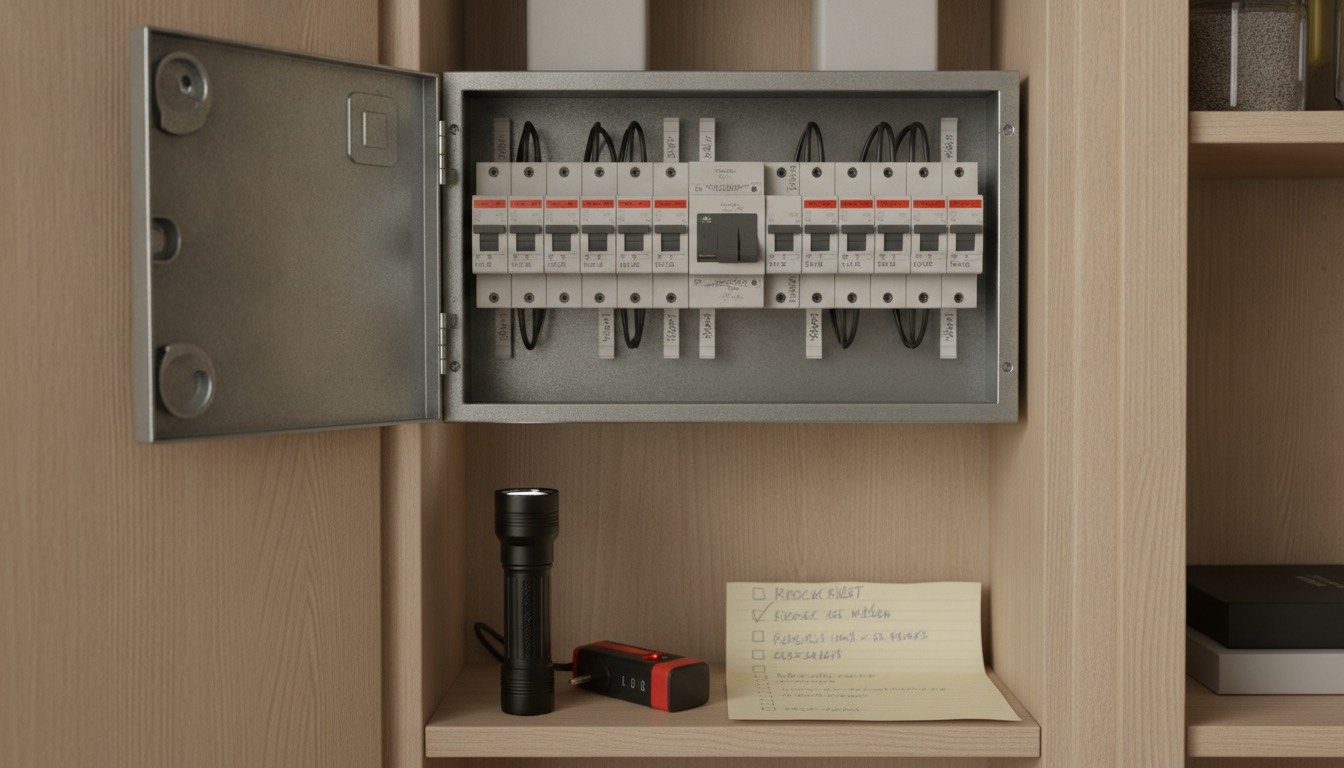
Identifying conductors means exposing them, so the circuit must be dead and locked off. Isolate at the consumer unit, fit a lock-off device or pocket the fuse carrier, and note it on the board. Switching a light off at the wall is not isolation — the permanent line at the rose stays live.
In England and Wales, Part P makes new circuits, consumer unit work and work in special locations such as bathroom zones notifiable. Like-for-like accessory replacement is not, though it must still comply with BS 7671. Scotland works through Building Standards; our guide on when electrical work needs notifying sets out the boundaries, and a short list of jobs are never worth doing yourself.
Tools, materials, time and realistic cost
You are buying test equipment, not tools. A neon screwdriver is neither, and has killed people. Buy once, keep it for life.
- •Two-pole voltage indicator to GS38, £45-£90 (Kewtech, Martindale, Di-Log); a basic Fluke about £110.
- •Proving unit, £35-£60 — without one you cannot confirm the tester still works.
- •Lock-off kit for MCBs, £12-£20, and VDE 1000V insulated screwdrivers, £20-£35 a set.
- •Brown, blue and green-and-yellow sleeving, £5-£10 for a whole house, plus labels and a marker.
- •Skill level: confident DIY. Time: 20-40 minutes to isolate, prove dead and label one lighting point; a full morning for a circuit.
The three eras of British cable colour
Fixed wiring here falls into three generations, and most houses over forty years old contain at least two. Harmonised colours were permitted from March 2004 and mandatory from 31 March 2006, so anything from that window can go either way.
- •Pre-2004 single phase: line = red, neutral = black, earth = bare copper, sleeved green-and-yellow at terminations.
- •Post-2006 single phase: line = brown, neutral = blue, earth = bare copper sleeved green-and-yellow.
- •Old three phase: red, yellow and blue lines with a black neutral.
- •New three phase: brown, black and grey lines with a blue neutral. This is the trap — black is a line in new three-phase and a neutral in old single-phase.
- •Flexible cords changed earlier, around 1970: green, red and black became green-and-yellow, brown and blue. A plain green earth on a flex is a reliable age marker.
- •A black, grey or blue conductor sleeved brown is a line — normal in a switch drop.
Step by step: identifying conductors without guessing
Work in this order every time. The sequence protects you when the wiring does not match the colours.
- •1. Identify the circuit at the consumer unit, switch off, lock off, and remove the fuse carrier on an older rewireable board.
- •2. Prove the indicator on the proving unit, test the conductors, prove it again. Dead-live-dead, no exceptions.
- •3. Date the installation first. A cast-iron or wooden fuse board, rewireable fuses, round-pin sockets or metal-clad switches point to pre-1966 work.
- •4. Read the sheath. Grey or white flat twin-and-earth is 6242Y, 1960s onwards. Black rubbery sheath, lead sheath or fabric braiding is pre-war, and means stop.
- •5. Match the conductors to the era list above, then confirm with the tester.
- •6. At lighting points, expect a switched line: black in old cable, needing red sleeve; blue in new, needing brown. Missing sleeving is the commonest defect.
- •7. Sleeve and label before closing up: brown over line blacks, green-and-yellow over bare earths.
- •8. Photograph the terminals before disconnecting anything.
Old houses: solid walls, lath ceilings and cable that crumbles
Solid brick with lime plaster cannot be chased as freely as a plasterboard partition, so cables in Victorian and Edwardian stock are often surface-run, dropped down chimney breasts, or buried in shallow chases that ignore modern safe zones. Never assume a cable runs vertically above a socket in a solid-wall house. Above lath-and-plaster ceilings, cables were routinely laid loose on the laths with no capping — which is why a foot through a bedroom floor is an electrical incident too.
The real hazard is the age of the insulation. Rubber-insulated cable, common until the early 1960s and sometimes lead sheathed, perishes from the inside out. Red and black both oxidise to a dull brown-grey, and the insulation cracks the moment a conductor is flexed. Find rubber, cotton braiding, lead sheath or wiring cleated to porcelain and do not try to identify it by colour — the colour is gone and the cable is at end of life. It sits alongside the other problems common in century-old houses, and the answer is a full rewire: £3,500-£6,500 for a three-bed terrace, broken down in our rewiring cost guide.
One more quirk: lighting circuits installed before 1966 frequently have no circuit protective conductor. Two conductors and no earth at a rose is not a missing wire — it is an installation that cannot legally take a metal light fitting.
Troubleshooting the ones that catch people out
These account for most of the confusion we get called out to untangle. None means the wiring is wrong — only that the colour is lying.
- •Two or three reds in one terminal at a rose: a loop-in arrangement, with one line going off to the switch. Normal.
- •A live black conductor: either a switched line missing its red sleeve, or a line in modern three-phase. Test, then sleeve.
- •A blue conductor reading 230V: a switched line that needs brown sleeve. Common on replacement light switches fitted without it.
- •Red and brown in one accessory: a partial rewire. Both are lines; label the joint.
- •A borrowed neutral on a two-way stair light: two circuits sharing a neutral, so isolating one does not make the other safe. Endemic in 1960s-70s work and a real shock risk.
- •Green-only earth on a fixed appliance: pre-1970 flex. Replace it, do not reuse it.
When to stop and call a registered electrician
Stop if you find perished rubber or lead-sheathed cable, aluminium conductors, scorching, a melted terminal, a rewireable board with no RCD protection, or any circuit you cannot positively isolate. Stop too if the wiring makes no sense — mixed colours with no logic usually mean an alteration you cannot see from one accessory.
The next step is an Electrical Installation Condition Report from a NICEIC, NAPIT or STROMA registered contractor: £150-£300 for a three-bed house, £200-£350 in London. That buys a coded schedule of every defect rather than a guess from one ceiling rose, and if you are buying, it is the strongest negotiating document you will get. Run through our homeowner electrical inspection checklist first so you know what it should pick up.
Identifying colours is a legitimate homeowner skill. Judging an installation safe on the strength of them is not.
Found this useful?
There's plenty more — hundreds of guides and honestly-tested product reviews for every corner of your home.
Browse All Guides