Electrical · 6 min read · 28 July 2026
Knob and Tube Wiring Safety: What Pre-War Wiring Really Means in a UK Home
Lift a ceiling rose in a 1930s semi and the wiring often crumbles in your hand. Here is what Britain's version of knob and tube looks like, which mistakes actually start fires, and what it costs to put right.
By the Nims Casa editorial team — written from professional cleaning experience and checked against our editorial standards.
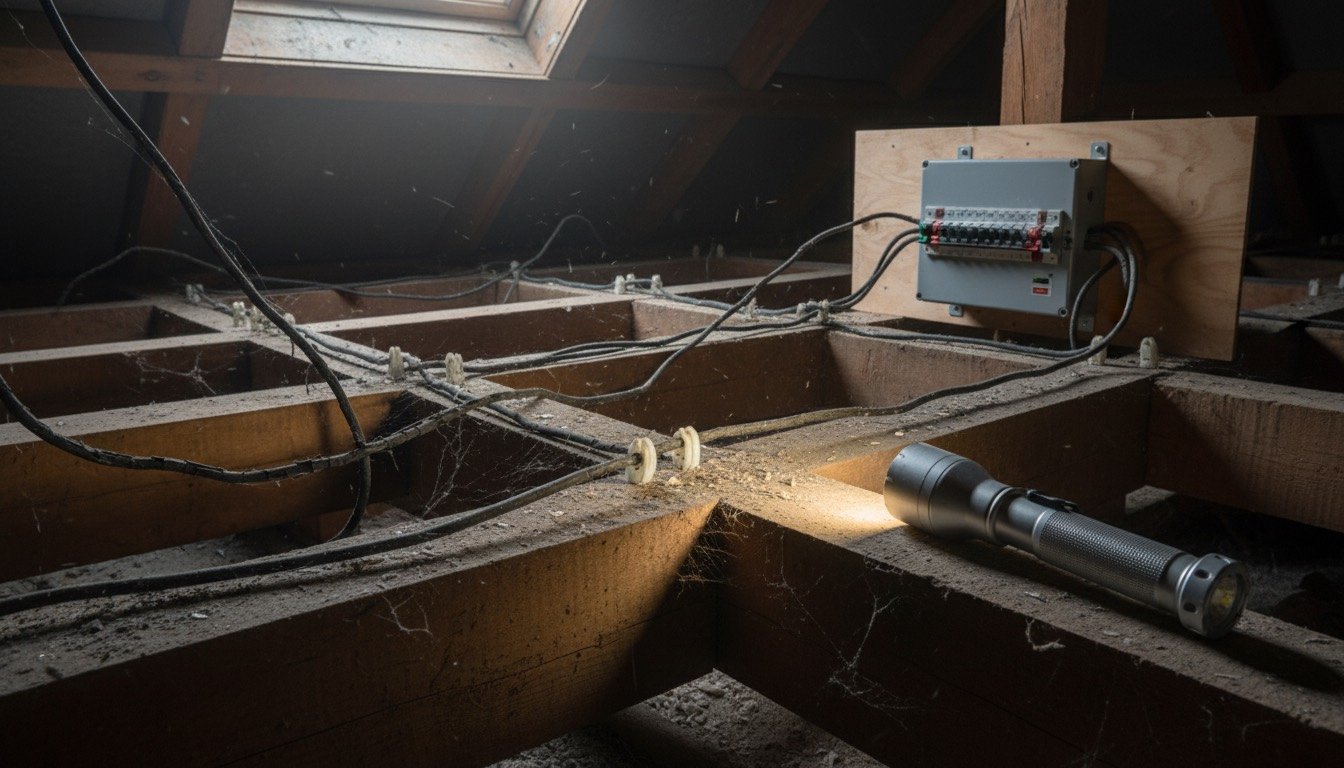
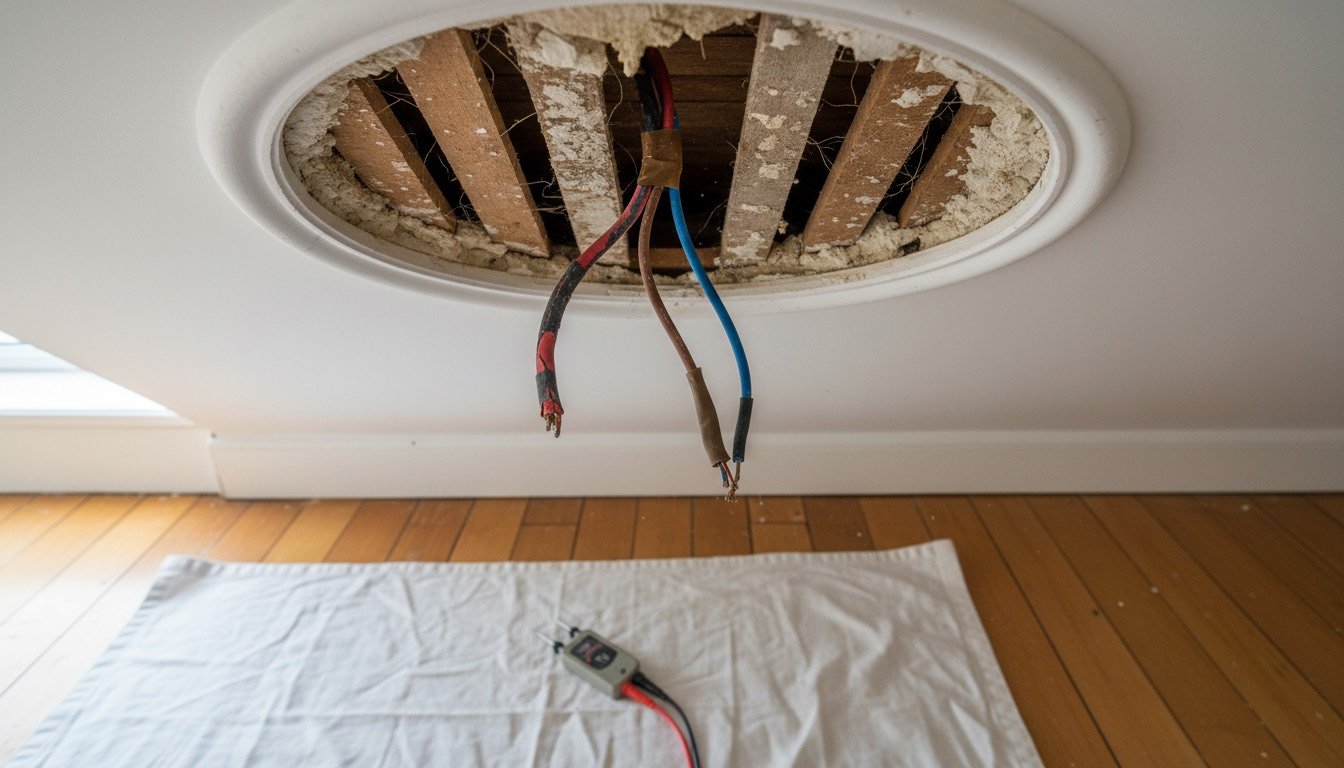
Take the cover off a ceiling rose in a pre-war semi and you can date the house by what lands on your head: black rubber flakes and cotton braid gone the colour of weak tea. North America calls that era knob and tube. Britain ended up with the same idea dressed differently — bare conductors on porcelain cleats, wood casing and capping, vulcanised india rubber (VIR) and tough rubber sheathed (TRS) cable, and lead-sheathed runs threaded through joists.
None of it was badly made. It was made for 1935: two lamps, a wireless and one round-pin socket per floor. What finishes it is chemistry, not workmanship. Rubber insulation has a working life of roughly 25 to 40 years, and every loft summer since has been cooking it. The danger is that it fails quietly for decades, then suddenly.
How to Recognise It Without Touching Anything
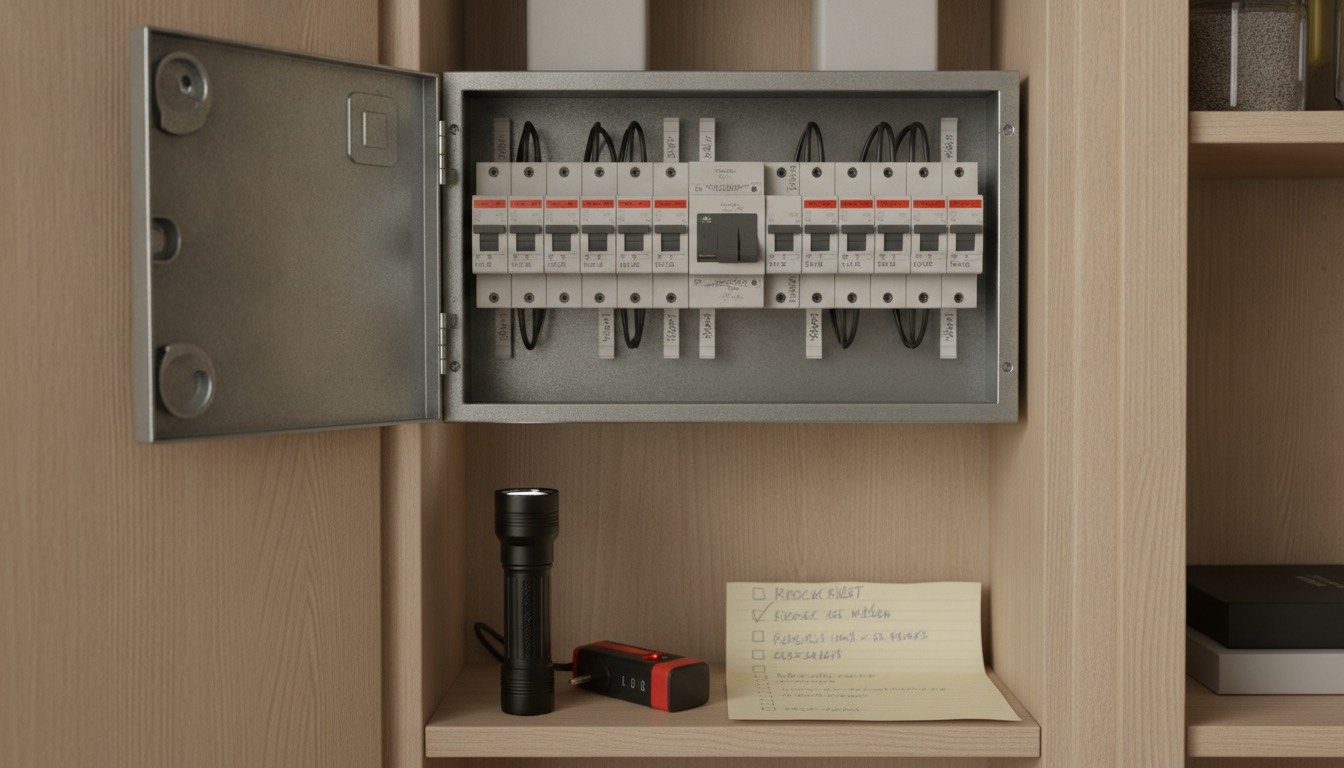
You do not need to open anything live to date an installation: stand at the consumer unit and look in the loft with a torch. The tells are the same everywhere, and old wiring sits near the top of the list of problems in 100-year-old houses.
- •A rewireable fuse board with porcelain carriers and fuse wire (BS 3036), or a cast-iron switchfuse — pre-1960s, and no RCD anywhere.
- •Round-pin sockets (2A, 5A or 15A) rather than the 13A rectangular pattern, which points to pre-1947 work.
- •Black and red conductor sleeving; brown and blue means post-harmonisation, so roughly 2004 onwards.
- •Braided cotton over rubber, or a dull grey lead sheath used as the earth path — both mean the circuit is past serviceable life.
- •No earth at the ceiling rose or switch, which is why period homes still have plastic switch plates.
- •Cable run bare on porcelain cleats or in timber casing.
The Mistakes, Ranked by What They Cost You
Worst first. The top three turn up in real fire investigation reports far more often than the rest.
- •1. Upsizing the fuse or MCB to stop nuisance tripping. The protective device is sized to the cable, not the appliance. Putting 30A fuse wire in a 15A carrier removes the only thing between a tired cable and a ceiling void fire.
- •2. Burying old rubber cable under loft insulation. A cable covered on both sides can lose 40–50 per cent of its current-carrying capacity, and heat is exactly what accelerates rubber decay. Clip cables above the quilt before you top up loft insulation.
- •3. Hanging modern loads off period circuits. Electric showers, induction hobs, EV chargers and banks of downlights on a 1950s radial is the commonest route to a scorched joint.
- •4. Plastering over junction boxes. BS 7671 wants connections accessible or in maintenance-free enclosures; buried screw terminals loosen, arc and cannot be inspected.
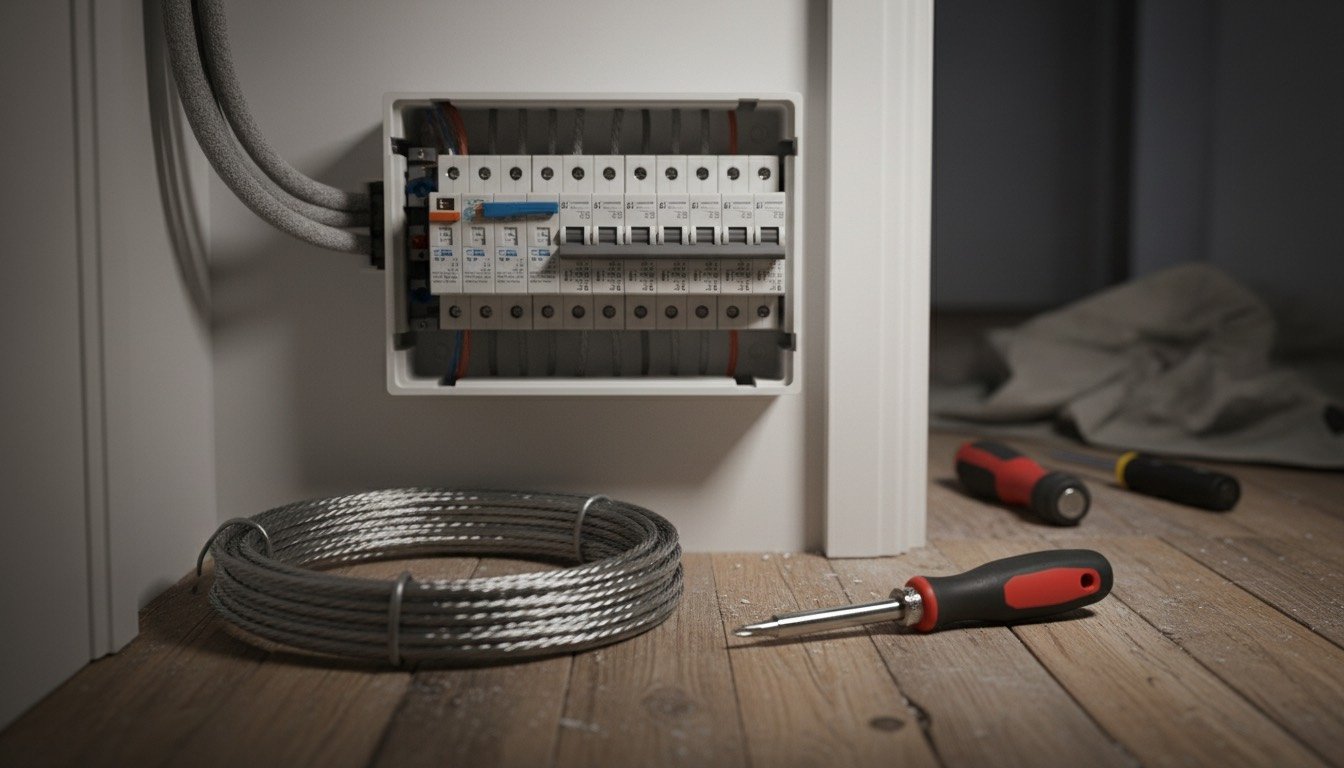
- •5. Bolting a new consumer unit onto perished wiring. It looks like progress, trips constantly because insulation resistance is on the floor, and falsely reassures the next buyer.
- •6. Fitting metal light fittings, downlights or metal switch plates on lighting circuits with no earth. Class II (double insulated) only, unless a CPC is run in.
- •7. Trusting a plug-in socket tester, which misses swapped and borrowed neutrals — both common in old work.
Why Sensible People Keep Making Them
Nearly all of these come from one piece of reasoning: it has worked for eighty years, so it must be sound. Old wiring does not decline like a boiler, with a warning noise first. It holds an acceptable insulation resistance for decades, then a hot summer, a rodent or a nail through a joist takes it below the 1 megohm minimum BS 7671 expects on a 230V circuit. Perished cable regularly tests at 0.02 megohms.
The second driver is cost sequencing. People do kitchens, bathrooms and windows first because those are visible, then chase new circuits into walls sitting on a system nobody ever tested. The right order is boring: test, rewire, then decorate — and chasing walls in a pre-1980 house also disturbs old lead paint.
Fixing It Properly: Order of Work and 2026 Prices
Start with an Electrical Installation Condition Report from an electrician registered with NICEIC, NAPIT, ELECSA or STROMA. Expect £150–£250 for a flat and £220–£400 for a three or four-bed house, more inside the M25. Faults are graded C1 (danger present), C2 (potentially dangerous), C3 (improvement recommended) or FI (further investigation); any C1, C2 or FI makes the report unsatisfactory. Work through an electrical inspection checklist first.
- •Full rewire: £2,800–£4,500 for a two-bed flat, £4,000–£7,000 for a three-bed semi, £7,000–£12,000 for a four-bed detached, plus £800–£2,000 for making good — the rewiring cost guide breaks it down room by room.
- •Consumer unit replacement alone: £500–£900, worth doing only where the wiring behind it tests sound.
- •Per extra point (socket, light or switch) during a rewire: £100–£160.
- •Lighting circuits only, as a staged first phase: £1,200–£2,200, sensible if the sockets are already PVC.
- •Timescale: five to ten working days for a three-bed, power off room by room.
The Renter-Safe Version: What a Tenant Can Actually Do
If you rent, the fixed wiring is not yours to touch — and not yours to pay for. In England, the Electrical Safety Standards in the Private Rented Sector Regulations 2020 require a landlord to hold an EICR no more than five years old, to give you a copy within 28 days of a written request, and to complete remedial work within 28 days. Wales and Scotland have equivalent five-yearly duties. Ask in writing, keep the email, escalate to the council's private-sector housing team if nothing moves.
Everything below is reversible, marks nothing and leaves with you on moving day, like other rental-friendly changes.
- •Plug-in RCD adaptor (£12–£20) on any socket feeding a kettle, heater, iron or garden tool — real protection on a circuit that has none.
- •Surge-protected extension leads with individually switched sockets, not block adaptors stacked two deep.
- •USB and smart-plug adaptors rather than new sockets or hard-wired smart switches.
- •Battery LED puck lights and clamp lamps on removable adhesive pads, rather than swapping pendant fittings.
- •Photograph the fuse board and any scorched faceplate on move-in day and email it to the agent — it protects the deposit and dates faults you did not cause.
Where DIY Has to Stop
In England and Wales, replacing or altering a consumer unit, adding a new circuit and any work in a room containing a bath or shower are notifiable under Part P of the Building Regulations — a registered competent person, or notification to building control with a £250–£450 council fee. Scotland and Northern Ireland run their own building standards, and a Scottish rewire can need a warrant, so ring the local authority first. Notifiable or not, everything must comply with BS 7671.
Call a registered electrician straight away for a burning or fishy smell at a socket, brown scorching round a faceplate, warm switch plates, a board that trips the instant it is reset, or lead sheath doing the job of an earth. Isolate the circuit, stop resetting it, treat it as an emergency. Our list of electrical repairs you should never DIY sets out the boundary — with pre-war wiring it sits far closer than most people assume.
Found this useful?
There's plenty more — hundreds of guides and honestly-tested product reviews for every corner of your home.
Browse All Guides