Electrical · 6 min read · 26 July 2026
Electrical Inspection Checklist for Homeowners (UK, Printable)
Most domestic electrical faults give you months of warning before they turn dangerous. This is the checklist that catches them, starting with the question almost every guide skips.
By the Nims Casa editorial team — written from professional cleaning experience and checked against our editorial standards.
Faults in a house rarely arrive suddenly. A faceplate that feels warm behind the kettle, a breaker that trips only when the dryer and the immersion run together, a downlighter that flickers when the fridge kicks in. These run for months before anything burns, and they get missed because nobody writes them down.
What follows is ordered the way an inspector works: date the installation, then look, then test. Every item is a visual check or a button you are entitled to press. Nothing asks you to remove a faceplate, because that crosses a legal line most people do not know exists.
Start Here: Date Your Installation Before You Check Anything
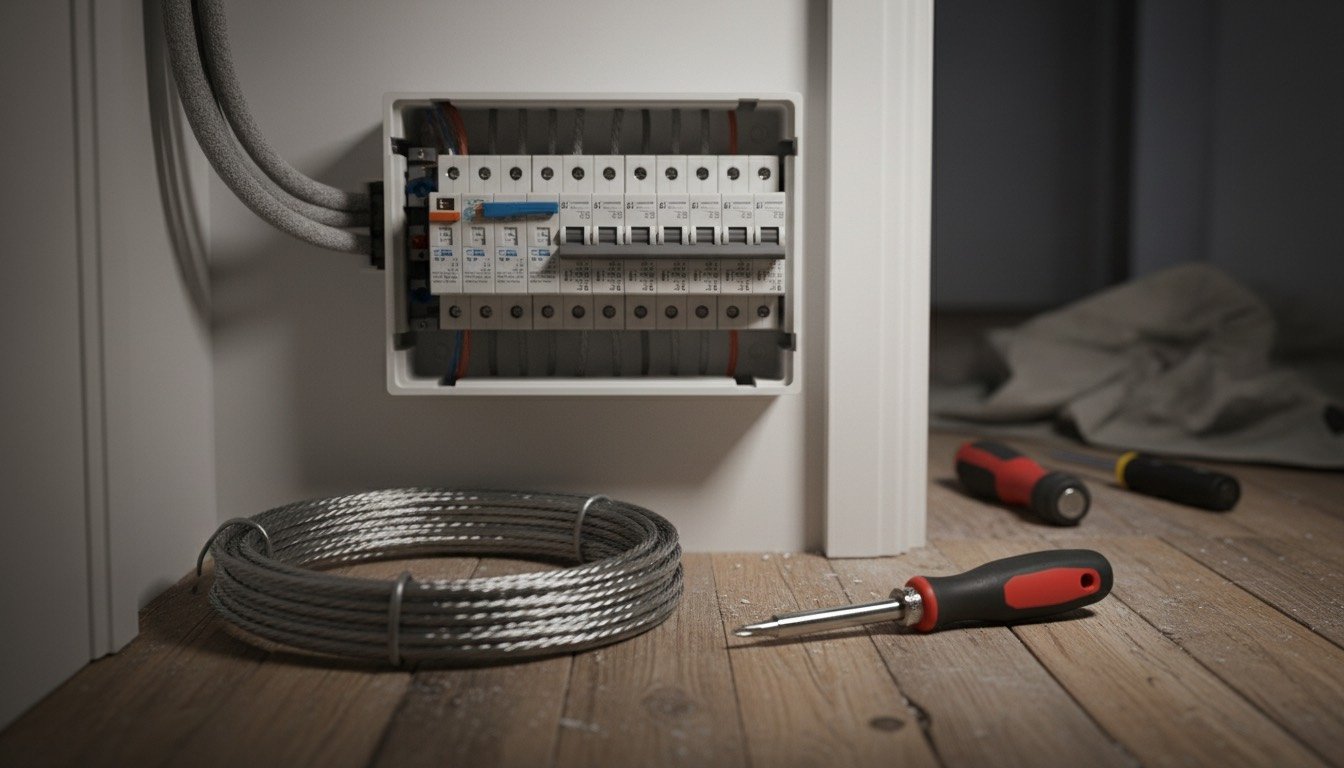
A 2019 new-build and a 1954 semi on its original fuseboard need different lists. Five minutes at the consumer unit narrows everything below to what applies to you.
- •Metal enclosure, an RCBO on each way, perhaps a surge protection device: fitted 2016 or later, after Amendment 3 to BS 7671 required non-combustible units. Maintenance only.
- •Plastic enclosure split into two banks behind two RCD switches: roughly 2008 to 2015. Compliant when fitted, but one earth fault kills half the house.
- •Plastic enclosure, miniature circuit breakers, no RCD except perhaps on the shower way: 1990s to mid-2000s. Sockets and lighting have no 30mA protection, which matters more than anything else here.
- •Wylex-pattern board with ceramic carriers and rewireable fuse wire: pre-1980. Expect PVC at best, perished rubber in the older runs.
- •Cast-iron or hardwood board, Bakelite switches, round-pin 5A or 15A sockets anywhere: pre-1960. Treat the installation as end of life until an electrician says otherwise.
Two Free Clues That Confirm It
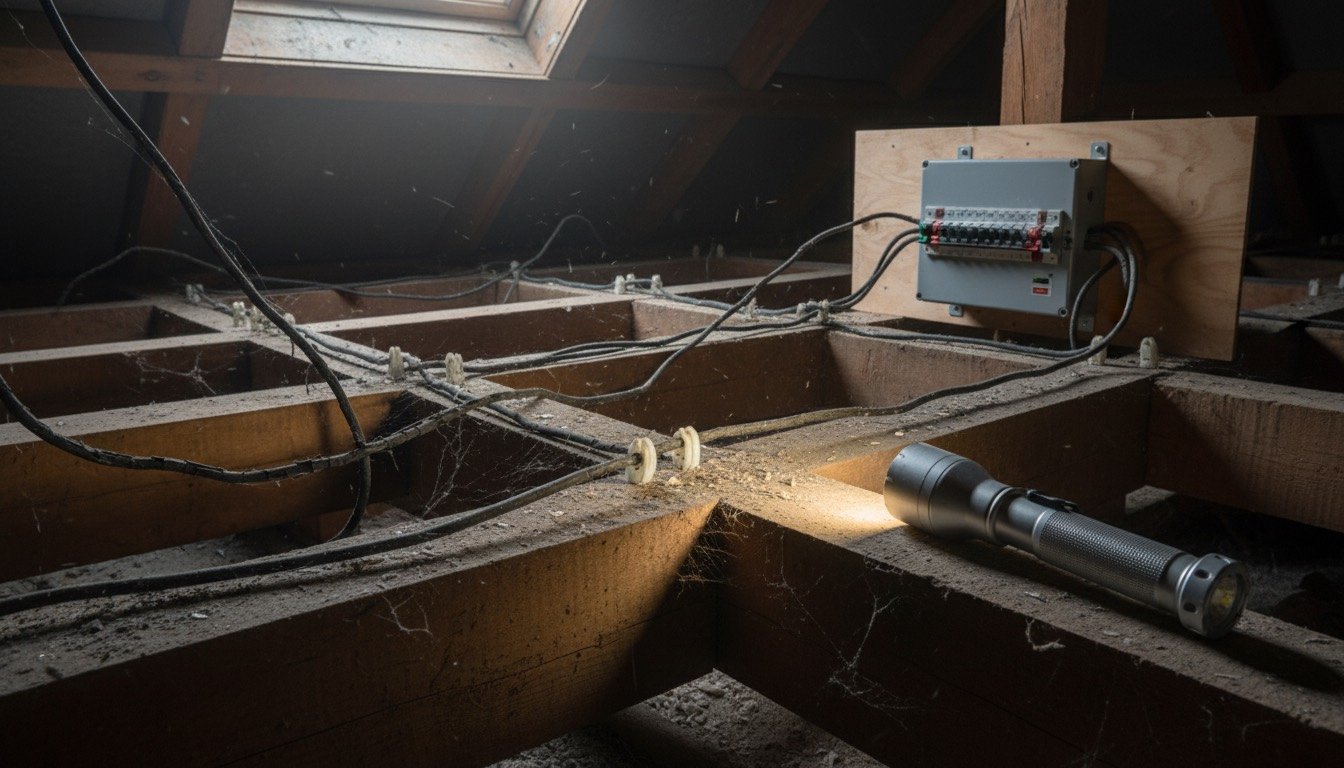
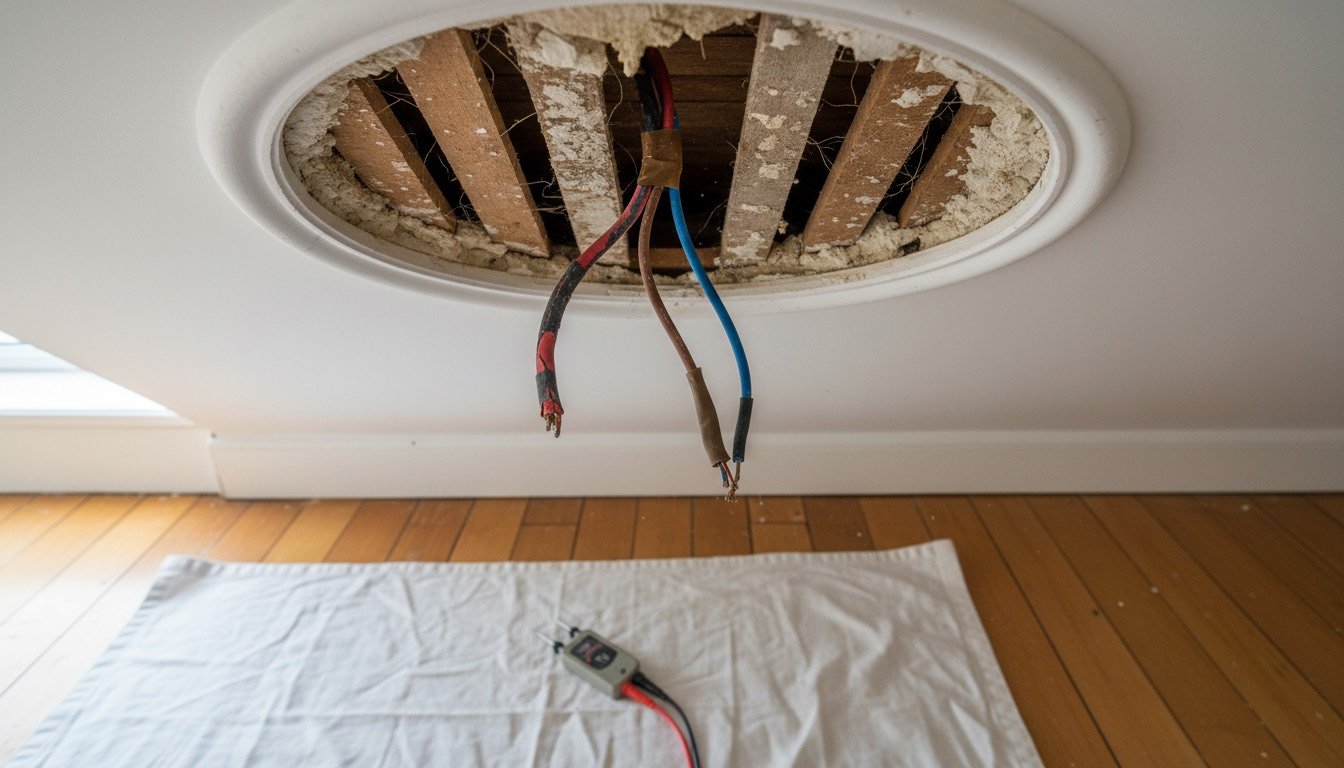
A modern board proves nothing about the cable behind it. Check runs already visible in the loft or meter cupboard: flat grey PVC twin-and-earth is fine, but a dull grey lead sheath, or black rubber that cracks when flexed, puts that circuit before about 1965, and rubber insulation only lasts 25 to 30 years.
Colour confirms it. Red and black conductors mean nothing has been altered since harmonised colours became mandatory in April 2006; a plain green earth sleeve puts it before 1977. Mixed colours mean a partial rewire, where awkward joins hide in most century-old houses.
What You Can Check, and Where the Law Stops
Looking, listening and pressing test buttons is not electrical work. The moment a screwdriver touches a faceplate it is, and in England and Wales that falls under Part P. Uncertified work surfaces at conveyancing years later. Our guide to repairs you should never DIY covers the jobs; these are the rules.
- •England: a new circuit, a consumer unit replacement, or any alteration inside a room containing a bath or shower is notifiable.
- •Wales kept the wider pre-2013 scope, so kitchens and outdoor work count too. Scotland runs through Building Standards section 4.5; Northern Ireland has an equivalent.
- •Notifiable work must be certified by a registered competent person (NICEIC, NAPIT, ELECSA, STROMA) or notified to building control beforehand. Retrospective sign-off is costly, sometimes refused.
- •Landlords across England, Scotland and Wales need a satisfactory EICR renewed at least every five years. Owner-occupiers have no legal duty; BS 7671 recommends ten.
Weekly and Monthly: Five Minutes, No Tools
Keep a phone note with the date, the circuit and the symptom. A trip log is worth more to an electrician than anything described from memory, and it turns a vague complaint into a diagnosis when a breaker keeps tripping.
- •Weekly, 30 seconds: press the test button on every smoke and heat alarm. A chirp rather than a full sounder is a separate fault, usually battery or end of life.
- •Monthly, 2 minutes: put the back of your hand on every socket in the kitchen and behind the television. Warm, discoloured, humming or cracked plates mean a loose connection, and loose connections start fires.
- •Monthly, 1 minute: audit extension leads. One 13A lead per socket, total load under 3,000W, never a lead into another lead.
- •Quarterly, 1 minute: press the T button on each RCD. It should trip instantly. Warn the household first: it kills freezers, routers and heating timers. Electrical Safety First sets six months as the minimum.
- •After any trip, note whether it was the RCD or a breaker. An RCD trip is an earth fault; a breaker trip is overload or a short.
The Annual Room-by-Room Inspection (About an Hour)
Do this on a dry afternoon with a torch and ladder. If the board shows more than one warning sign below, read signs your consumer unit needs an upgrade before spending elsewhere.
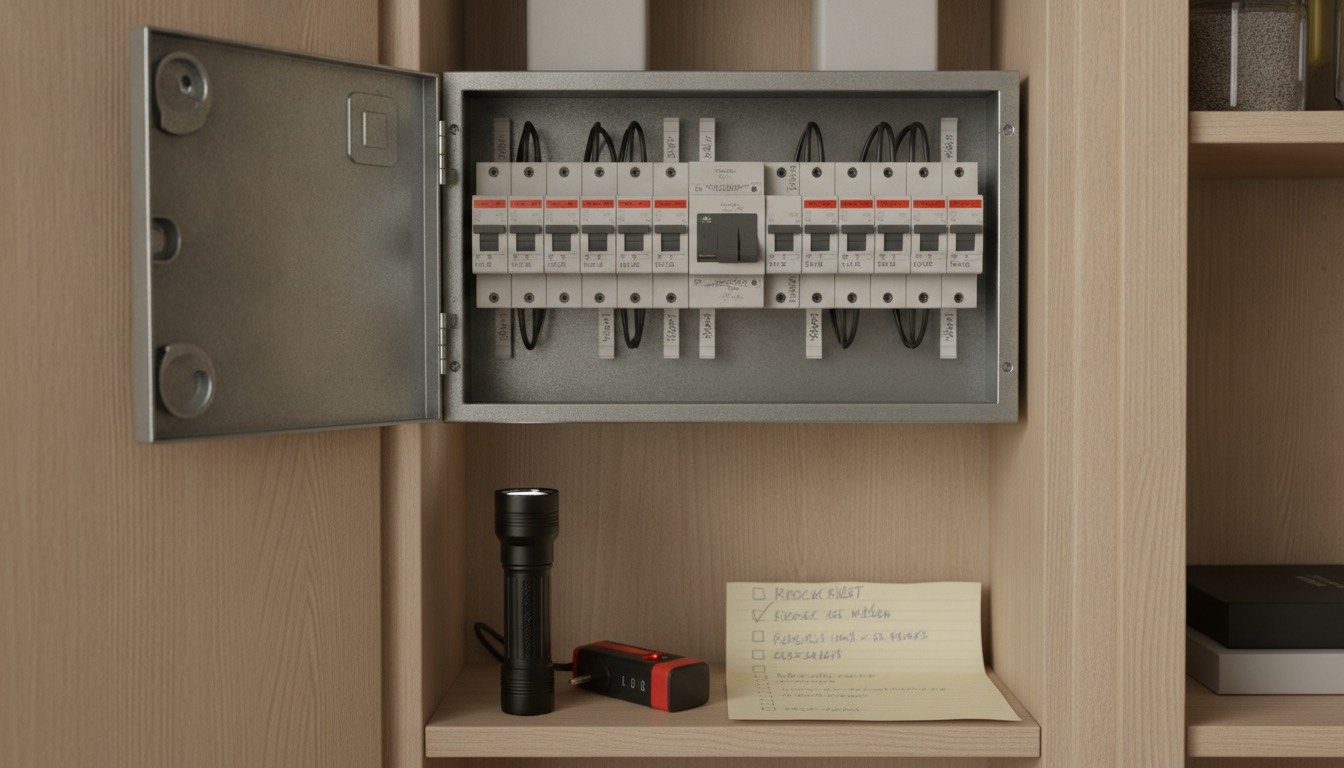
- •Consumer unit: every way labelled, no browning around the busbar chamber, main switch reachable in the dark, and 10mm sq bonding clamped to the gas and water pipes within 600mm of each meter.
- •Kitchen: sockets above worktop level and none within 300mm horizontally of a sink; appliance flex not resting on a hob or trapped behind a washing machine.
- •Bathroom: no 13A socket other than a shaver unit to BS EN 61558-2-5; switch on a pull cord or outside the door; extractor and shower isolator working.
- •Living rooms: check behind headboards and media units for scorching, and touch dimmer plates. A hot dimmer is usually overloaded by LED lamps.
- •Loft: cable buried under insulation loses its rating, downlighters smothered in loft roll are a fire risk unless fire-rated, and a junction box without its lid is a fault.
- •Outside: garden sockets need an IP66 enclosure and 30mA RCD protection, and buried cable should be armoured or at 450mm with warning tape. A shed submain in ordinary flex is a serious defect.
Every Five to Ten Years: Booking an EICR
An EICR is the only check that tests rather than looks, measuring insulation resistance, earth fault loop impedance and RCD trip times. Budget £120 to £180 for a flat, £180 to £300 for a three-bed semi and £300 to £450 for anything larger, and allow half a day with power off in blocks. Treat £79 offers with suspicion: the remedial quote is where the money is.
- •C1, danger present. The electrician should make it safe before leaving.
- •C2, potentially dangerous. Urgent remedial work: no RCD on a circuit feeding outdoors, or a missing protective conductor on lighting.
- •C3, improvement recommended. Does not fail the report.
- •FI, further investigation required, usually because something could not be accessed.
- •Any C1, C2 or FI makes the report Unsatisfactory; C3s do not.
Kit, Costs and the Twenty-Minute Version
The whole checklist runs on about £45 of kit: a non-contact voltage tester at £10 to £25, a plug-in socket tester with an RCD trip function at £15 to £30, and a torch. One caveat: plug-in testers cannot find every fault, notably a reversed neutral and earth, so read three green lights as no obvious fault rather than safe.
Short on time on moving day, do four things: press every RCD test button, test every alarm, feel every socket in the kitchen and behind the TV, and check whether the socket circuits have RCD protection at all. Price whatever you find using how much an electrician costs, and if the report returns a page of C2s, weigh it against the cost of a rewire before paying for piecemeal repairs.
Found this useful?
There's plenty more — hundreds of guides and honestly-tested product reviews for every corner of your home.
Browse All Guides