Energy & Insulation · 5 min read · 14 August 2026
Heat Pump Running Costs vs Gas in 2026: The Real UK Numbers
Whether a heat pump beats gas on running costs comes down to two numbers: your SCOP and the electricity-to-gas price ratio. Here's the 2026 maths, worked through for three UK house types.
By the Nims Casa editorial team — written from professional cleaning experience and checked against our editorial standards.
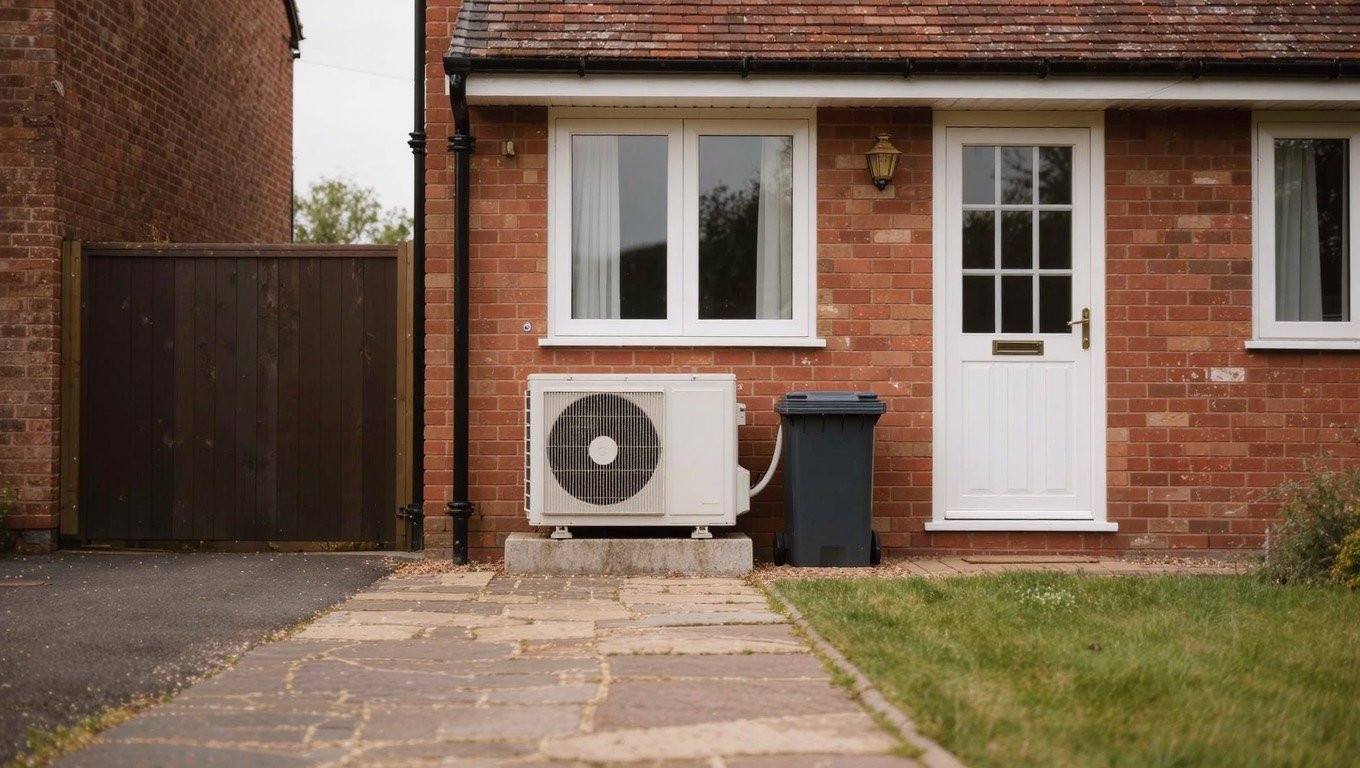
Every heat pump argument ends up in the same place: what it costs to run compared with the gas boiler it replaced. In 2026 the honest answer depends on two numbers — the efficiency your installer actually achieves, and the gap between electricity and gas prices on your tariff. Get both right and you save real money. Get either wrong and you will pay more than you did on gas.
Below is the maths in plain English: current unit rates, the SCOP arithmetic, worked examples for three typical UK homes, and the situations where a heat pump genuinely loses. Installation is a separate question — see how much a heat pump costs to install for that side of the ledger.
The Ratio That Decides Everything
Under the summer 2026 price cap, a typical home pays about 26p per kWh for electricity and 6.3p per kWh for gas. Divide one by the other and you get 4.1 — the electricity-to-gas price ratio, and the single most important number in this debate. Gas is cheap per unit; a heat pump only wins because it turns each unit of electricity into several units of heat.
The rule worth memorising: a heat pump is cheaper to run when its SCOP beats the price ratio multiplied by your boiler's real-world efficiency. With a ratio of 4.1 and a boiler running at 85%, break-even sits at a SCOP of roughly 3.5. Above that, the heat pump wins on a standard tariff; below it, the boiler is still cheaper, whatever the brochure implied.
2026 Unit Costs at a Glance
These are Great Britain direct-debit averages as of July 2026; your region will sit a penny or so either side.
- •Electricity, standard variable tariff: about 26p/kWh, standing charge around 51p/day
- •Gas, standard variable tariff: about 6.3p/kWh, standing charge around 32p/day — roughly £117 a year
- •Heat-pump time-of-use tariffs: 13–14p/kWh in off-peak windows, typically 18–20p/kWh averaged over a heating season
- •Type-of-use heat pump tariffs: around 15p/kWh flat for separately metered heat pump consumption
- •Annual servicing: £80–£110 for a gas boiler, £150–£200 for a heat pump, though many installers bundle the first year
SCOP Maths in Plain English
SCOP — seasonal coefficient of performance — is the kilowatt-hours of heat your system delivers per kilowatt-hour of electricity it draws, averaged across a whole year including cold snaps. Ignore the brochure COP of 4.5 or 5: that was measured at 7°C outside with 35°C water. A British January at -2°C with radiators demanding 45°C is a different job entirely.
Field monitoring of UK installations tells the real story. Well-designed systems achieve a SCOP of 3.5 to 4.0; rushed installs with undersized radiators limp along at 2.5 to 2.8. Meanwhile your 'A-rated, 93% efficient' boiler typically manages about 85% in practice, because most systems run return temperatures too hot for it to condense properly. Both machines fall short of the sticker — the question is by how much.
Three Worked Examples
All three assume 26p/kWh electricity, 6.3p/kWh gas and a boiler at 85%. Heat demand is annual, based on typical figures for each house type.
- •Two-bed terrace, 8,000 kWh of heat a year. Gas: 9,412 kWh of fuel, £593. Heat pump at SCOP 3.6: 2,222 kWh, £578 on a standard tariff, or about £422 on a 19p heat-pump tariff. Verdict: level on standard, £170 a year saved on the right tariff.
- •Three-bed semi, 12,000 kWh of heat a year. Gas: 14,118 kWh, £889. Heat pump at SCOP 3.5: 3,429 kWh, £891 on standard — a dead heat — or £651 on a 19p tariff, saving nearly £240.
- •Four-bed 1930s detached, partly insulated, 18,000 kWh of heat a year. Gas: 21,176 kWh, £1,334. A poor install at SCOP 2.8 needs 6,429 kWh, costing £1,672 on standard — £338 MORE than gas. A quality install at SCOP 3.7 uses 4,865 kWh: £1,265 on standard, or £924 on a heat-pump tariff.
When a Heat Pump Costs More to Run
Nobody selling heat pumps leads with this, but the losing scenarios are predictable:
- •SCOP below 3.5 on a standard tariff — the arithmetic simply doesn't close
- •Flow temperatures of 50°C or more because the radiators were never upsized; every 5°C higher costs roughly 10–12% in efficiency
- •Controls set to run it like a boiler — short on/off blasts instead of long, low, steady running
- •Hot water production, which manages a COP of only 2.5–2.8 even on good systems
- •Keeping a gas hob, which keeps the £117-a-year gas standing charge and eats a large slice of the saving
- •A leaky, uninsulated house forcing high flow temperatures all winter
Heat-Pump Tariffs Change the Answer
The standard-tariff comparison is really the worst case, because a heat pump owner has no business staying on a standard tariff. Time-of-use tariffs offer 13–14p/kWh in scheduled windows; run the pump slightly warmer during those windows and let the house coast, and your effective rate lands around 18–20p. Type-of-use tariffs go further, metering the heat pump separately at roughly 15p flat.
At 19p the price ratio drops from 4.1 to 3.0, and break-even SCOP falls to about 2.6 — a bar even mediocre installations clear. That is the fact that settles most heat pump vs boiler arguments in 2026: on the right tariff, a competently installed heat pump beats gas in almost every UK home. Fabric helps too — £300 on draught-proofing and topping up the loft insulation lets the system run cooler and can lift SCOP by 0.3–0.5, worth £80–£150 a year, every year.
Sanity-Checking a Quote — and Where DIY Must Stop
Any installer promising savings should show workings, and you can check them in five minutes. Take your annual gas kWh from a bill, multiply by 0.85 for the heat actually delivered, divide by the design SCOP they quote, then multiply by your electricity rate. If they won't put a design SCOP in writing, or can't produce the MCS room-by-room heat-loss calculation, walk away and price a straightforward boiler replacement while you find someone better.
The DIY boundary is clear-cut. A competent DIYer can do everything in this article: the maths, switching tariff, bleeding radiators, lowering the flow temperature, enabling weather compensation and draught-proofing. What you must never touch: the refrigerant circuit (F-Gas certified engineers only), the heat-loss survey and commissioning (MCS installers), capping or disconnecting the gas supply (Gas Safe registered only), and any work on an unvented hot water cylinder (G3 qualified). The savings live in the settings, which are yours to adjust; the refrigerant and the gas are not.
Methodology: prices are July 2026 Ofgem price-cap averages for Great Britain paid by direct debit; efficiency ranges come from published field monitoring of UK installations; heat demands are typical figures for each house type. Regional unit rates vary by 1–2p, which shifts every number here by a few percent but never flips a verdict on its own.
Found this useful?
There's plenty more — hundreds of guides and honestly-tested product reviews for every corner of your home.
Browse All Guides