Heating & Cooling · 6 min read · 18 May 2026
Heat Pump vs Furnace: Which Heating System Suits a UK Home?
The heat pump vs furnace question was written for American basements. Here is the honest UK version: air source heat pump against gas boiler, with real 2026 costs and a hard line on what you may legally touch.
By the Nims Casa editorial team — written from professional cleaning experience and checked against our editorial standards.
Almost nobody in Britain owns a furnace. The American furnace blows hot air through ducts; roughly 22 million UK homes run a gas boiler pushing hot water round radiators. So when the heat pump vs furnace comparison lands in your search results, the question you need answering is heat pump versus gas boiler — and the answer turns on your radiators, insulation and electricity tariff far more than on the kit.
Having specified and commissioned both, the honest position is this: a heat pump is a superb machine in a house that suits it and a slow, expensive disappointment in one that does not. The technology is not marginal in a British winter. The building around it decides.
What Each System Actually Is
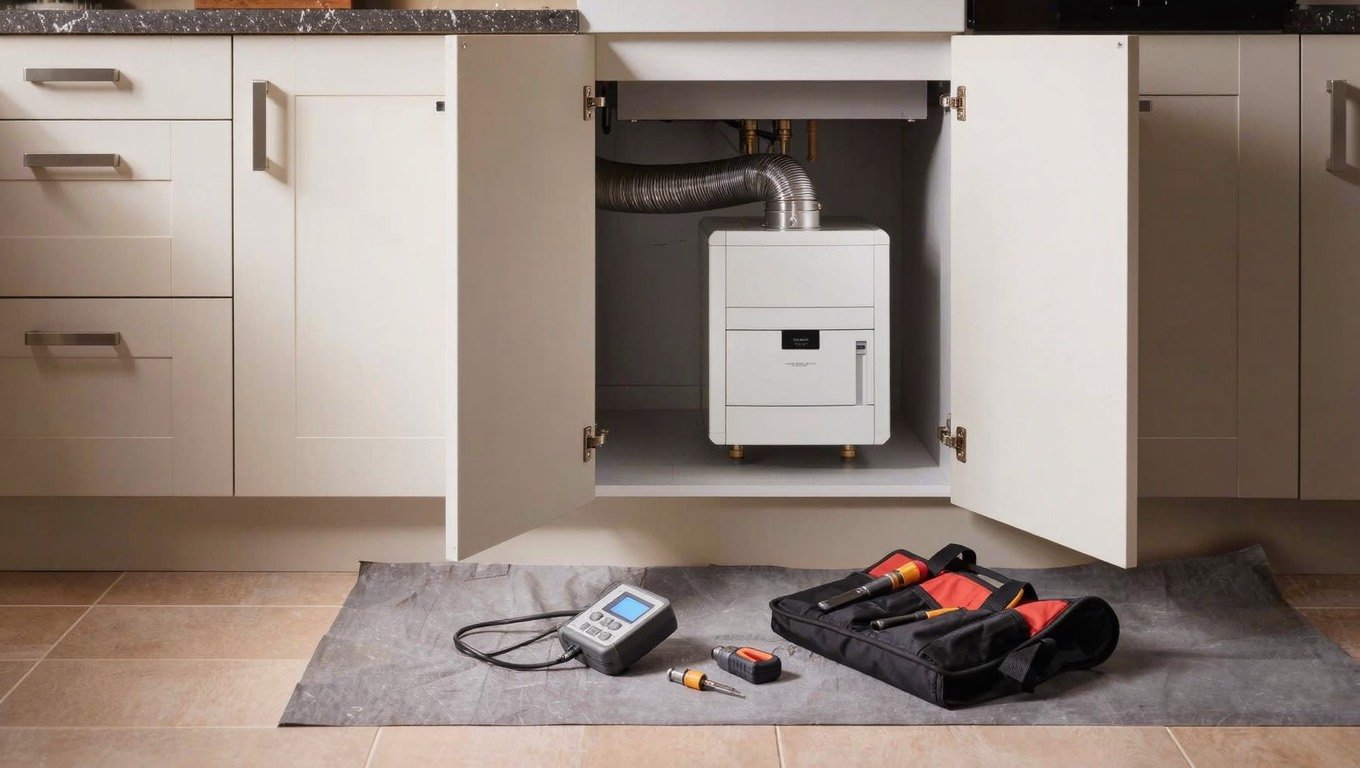
A gas boiler burns methane in a sealed combustion chamber, transfers the heat into water at 60–75°C and pumps it round steel panel radiators. Every kilowatt-hour of gas gives about 0.90 kWh of useful heat in a modern condensing unit. You cannot beat 1.0, because you are burning a fuel.
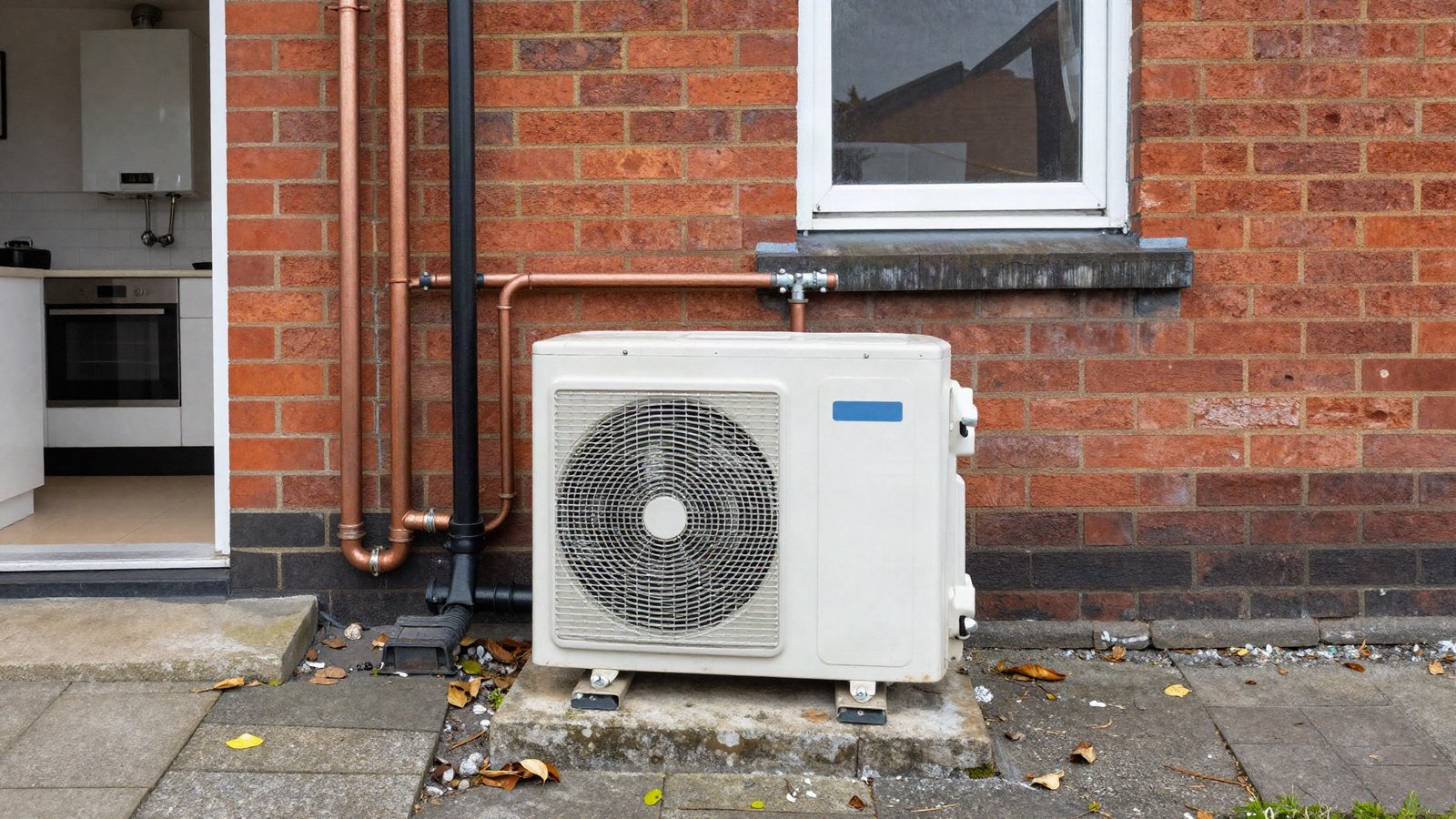
An air source heat pump does not make heat, it moves it. A refrigerant evaporates at around -10°C, absorbing energy from outdoor air even at 2°C, then a compressor raises its pressure so it condenses at 40–50°C into your heating water. Shifting heat rather than creating it, one unit of electricity delivers three to four units of heat. That ratio is the SCOP, and a well-designed UK system lands at 3.2–3.9 over a full year.
Ground source units hit SCOPs above 4.0, but the borehole or slinky trench adds £8,000–£15,000 and needs garden most homes lack. For 90% of UK houses the contest is air source against gas.
The Bit Everyone Skips: Flow Temperature
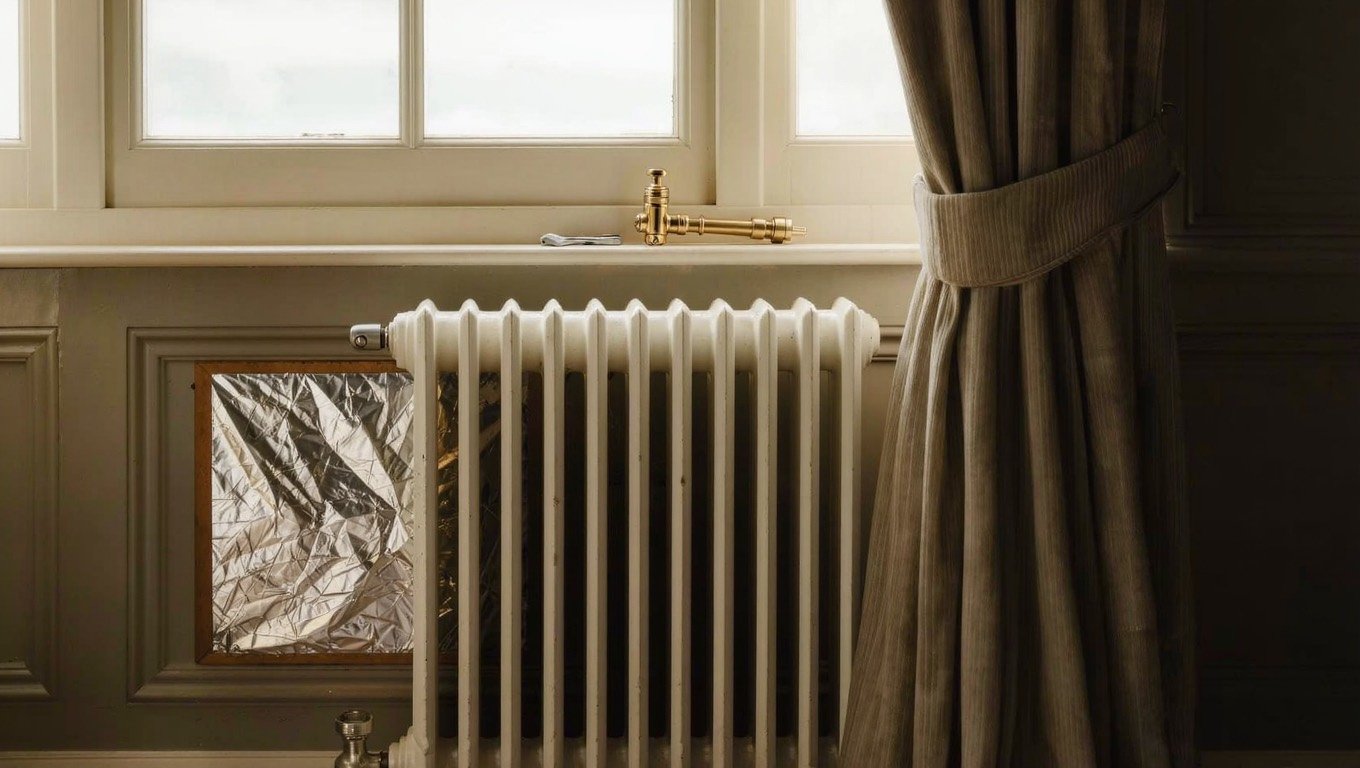
This is where heat pump installs go wrong. A radiator sized for 70°C water puts out roughly half its rated output at 45°C, so dropping the flow temperature means roughly doubling radiator surface area — or the room never reaches 21°C on a cold February morning.
A proper survey measures every room, calculates heat loss to BS EN 12831 and lists which radiators need upsizing — expect four to eight changed in a three-bed semi at £120–£250 fitted each. Skip that step and you get the horror stories. Wet underfloor heating is the ideal emitter, running happily at 35°C.
Insulation does the same job from the other direction: every kilowatt you stop losing is one the heat pump never has to make. Topping loft insulation to 270mm and a weekend of draught-proofing cuts heat demand 15–25% for a few hundred pounds. Do it before you size anything.
What Each Costs in 2026
Capital costs, fitted, for a standard three-bedroom UK semi:
- •Like-for-like gas combi swap: £2,000–£3,200 including flue, filter and flush.
- •Gas system boiler plus new unvented cylinder: £3,200–£4,800.
- •Air source heat pump, 8kW, with cylinder and radiator upgrades: £9,000–£14,000 before grant.
- •Boiler Upgrade Scheme (England and Wales, MCS installers only): £7,500 paid to the installer, so you see £1,800–£6,500.
- •Scotland: Home Energy Scotland grant of £7,500 plus an interest-free loan to £7,500.
Running Costs: The Tariff Decides It
Take a house needing 12,000 kWh of heat a year. On gas at 6.5p/kWh with a 90% efficient boiler that is 13,300 kWh, about £865 plus £110 standing charge. On a heat pump at SCOP 3.5 it is 3,430 kWh of electricity — £892 at a standard 26p unit rate. Line ball, no saving.
Switch to a heat pump tariff — Octopus Cosy, EDF or similar, with off-peak blocks near 13p — and the same heat costs £550–£650. That is where the saving lives, and why anyone promising dramatic savings without asking about your tariff is guessing. Second example: a draughty solid-wall Victorian terrace needing 22,000 kWh drops to SCOP 2.9 because it needs 50°C flow, and the sums stop working until the fabric is fixed. Our heat pump cost guide and boiler replacement breakdown cover the line items.
The DIY-or-Pro Boundary — Where It Is Illegal to Guess
This matters more with heating than with any other job in the house, so here it is plainly. A competent DIYer can legitimately do everything below, and bleeding and balancing the radiators is the best free hour you can spend on either system:
- •Bleeding and balancing radiators, and re-pressurising a sealed system to 1.0–1.5 bar cold.
- •Swapping thermostatic radiator valve heads — the top half only, no draining required.
- •Fitting a battery-powered wireless room thermostat with a plug-in receiver.
- •Lagging loft and underfloor pipework with 19mm foam.
- •Loft insulation, draught-proofing, and clearing leaves and snow from the outdoor unit.
- •Rinsing the outdoor fins yearly with a low-pressure hose, power off at the isolator.
Work That Must Go to a Registered Professional
None of the following is a grey area — each is covered by law or Building Regulations, and getting caught doing it yourself voids insurance at minimum.
- •Any gas pipework, boiler or flue work: Gas Safe registration is a legal requirement under the Gas Safety (Installation and Use) Regulations 1998, with no meaningful householder exemption.
- •Any refrigerant work — brazing line sets, charging, recovering gas: F-Gas certification required, and uncertified handling is a criminal offence.
- •Unvented hot water cylinders: Building Regulations Part G3, competent-person scheme only. An uncontrolled cylinder is a genuine explosion risk, not a paperwork risk.
- •New circuits, consumer unit work and the 16–32A supply a heat pump needs: notifiable under Part P in England and Wales, so use a registered electrician or building control.
- •MCS-certified design and commissioning, if you want the £7,500 grant. Self-install disqualifies you outright.
Which One Suits Your House
Choose a heat pump if you have insulated cavity or solid walls, an EPC of C or better, somewhere sensible for a 1m x 1m outdoor unit, an airing cupboard for a 180–250L cylinder, and the willingness to move tariff. Choose it especially if your boiler is at end of life anyway — scrapping a working boiler on principle rarely pays back inside 15 years.
Stay on gas if you are in a flat with no external wall for a unit, a listed building, or a poorly insulated solid-wall property you are not planning to upgrade. A paid heat-loss survey costs £150–£500 and tells you which camp you are in far more reliably than any online calculator.
Common Questions
Do heat pumps work in a British winter? Yes. Design temperature across most of England is -2°C to -4°C, and modern units still produce heat at -20°C, just at a lower COP.
Are they noisy? A modern unit runs 40–50dB at one metre, roughly a fridge in the next room. MCS 020 requires a noise assessment at the neighbouring property, and permitted development now covers most rear-garden siting in England.
Will it cool the house in summer? Only a reversible model plumbed to fan coils or cooling-rated underfloor — standard radiators cannot do it. Our heat pump versus air conditioner comparison covers that.
How long do they last? Fifteen to twenty years for a heat pump against ten to fifteen for a gas boiler, though the compressor is the expensive failure point. Servicing is £120–£180 a year either way. Fix the fabric before you commit to either: the cheapest kilowatt-hour is the one you never needed.
Found this useful?
There's plenty more — hundreds of guides and honestly-tested product reviews for every corner of your home.
Browse All Guides