Heating & Cooling · 6 min read · 18 July 2026
How Much Does a Heat Pump Cost? 2026 UK Price Guide
Installed heat pump prices in the UK vary by more than £8,000 for near-identical houses. Here is what each part of the job is actually worth, and how to tell a fair quote from a padded one.
By the Nims Casa editorial team — written from professional cleaning experience and checked against our editorial standards.
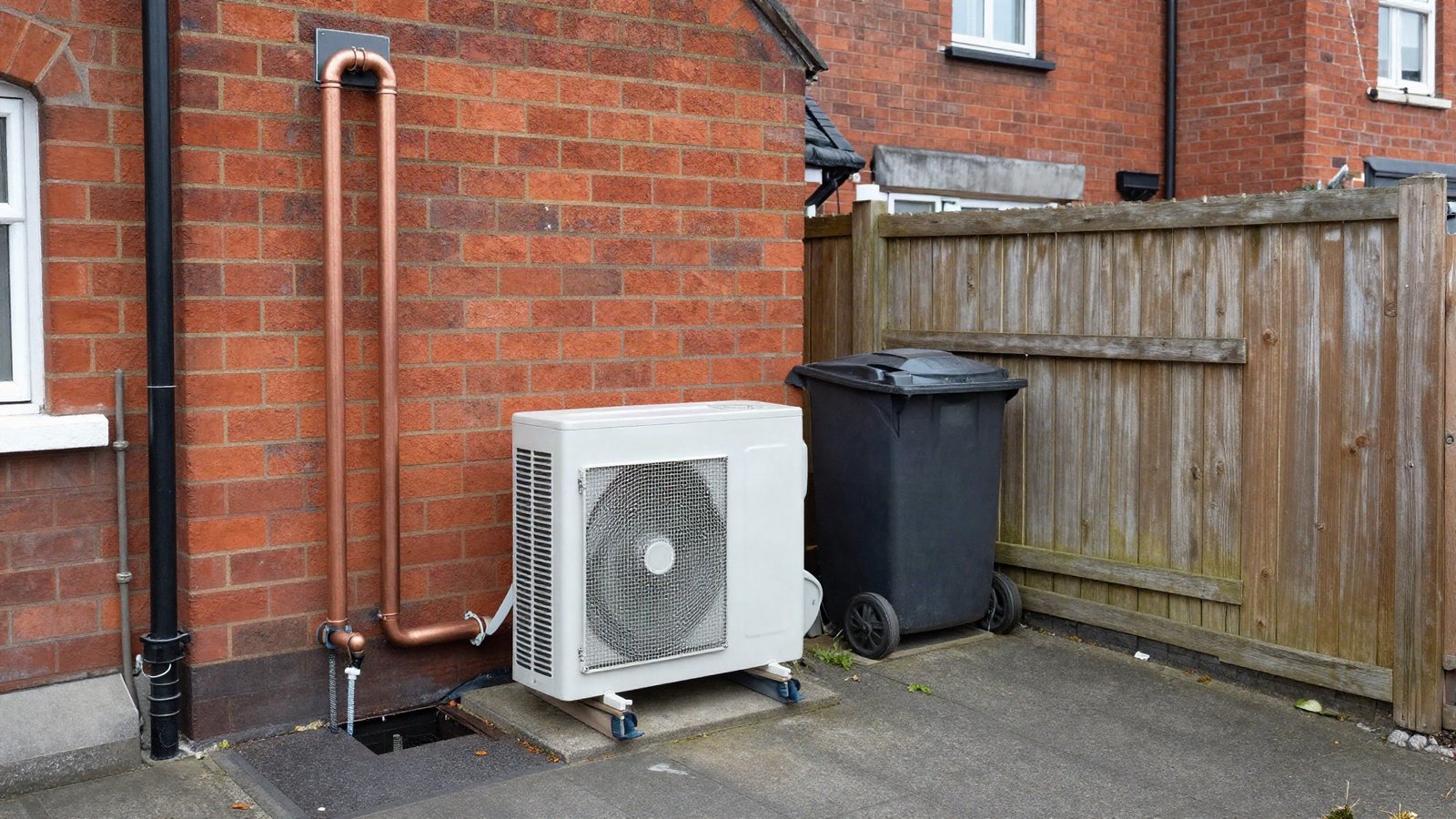
Ask three MCS-registered installers to price the same 1930s semi and you will get £9,200, £12,800 and £16,400. None is lying. The spread comes from what each assumed about your radiators, your cylinder cupboard and your design flow temperature — assumptions most quotes hide behind a single number.
Below, the job is broken into the parts an installer buys and the days they work, so you can read a quote line by line. Figures are 2026 UK prices, gross first, then grant-adjusted.
Typical UK price range in 2026
For an air source heat pump in a standard three-bedroom house, the honest working range is £8,000 to £14,500 gross, including a new hot water cylinder and radiator upgrades. Ground source is a different animal: £20,000 to £35,000 once you have paid for boreholes.
The Boiler Upgrade Scheme pays £7,500 towards an air or ground source heat pump in England and Wales. Your installer applies and deducts it before you pay, so it should appear as a line on the quote, not a rebate you chase later. Scotland runs its own £7,500 grant with a rural uplift; Northern Ireland has no equivalent. Scheme rules change most years — verify before budgeting.
- •Flat or well-insulated 2-bed (5kW): £7,500–£10,000 gross, £0–£2,500 after grant
- •Typical 3-bed semi (8–9kW): £10,000–£13,500 gross, £2,500–£6,000 after grant
- •4-bed detached or solid-wall property (12–16kW): £13,000–£19,000 gross, £5,500–£11,500 after grant
- •Ground source with boreholes: £24,000–£35,000 gross, £16,500–£27,500 after grant
- •VAT on a domestic heat pump install is currently zero-rated. A quote showing 20% VAT on the whole job is wrong
Unit costs: what each part is worth
Every quote is the same shopping list in a different order. These are supplied-and-fitted prices a fair installer would build from in 2026. Where a house already has wet underfloor heating downstairs, the radiator line almost disappears — that matters more to the total than the badge on the outdoor unit.
- •Heat pump unit — 5kW: £2,400–£3,400. 8.5kW: £3,400–£4,800. 12–16kW: £4,800–£7,000
- •Unvented cylinder with heat pump coil, 180–250 litres: £1,100–£1,900 fitted
- •Radiator swapped for a double or triple panel: £160–£340 each, five to eight typical
- •Pipework upgrades from microbore to 22–28mm primaries: £700–£2,400
- •Base, brackets, anti-vibration feet, condensate run: £180–£450
- •Electrics — dedicated circuit, isolator, occasional consumer unit change: £350–£950
- •Weather compensation controls and monitoring: £280–£650
- •MCS heat loss survey and design: £250–£500, usually credited back
- •Commissioning, certification and grant administration: £250–£450
Labour versus materials
On a straightforward air source retrofit, roughly 60% of the gross price is equipment and 40% is labour, design and certification. On a difficult house — lifting floorboards, chasing pipework through solid walls — labour climbs to half.
The work is three to five days for two engineers, plus half a day of electrician time. Skilled heating engineers cost £320–£480 per person per day outside London and £420–£600 inside the M25 — which is why identical kit costs more to fit in Surrey than County Durham. If the quote is £13,000 and the equipment adds up to £6,000, ask what the other £7,000 buys; a competent installer will show you the day count.
What moves the price
The heat pump is rarely the variable. What changes your number is how much of the house has to change with it — and fabric work done first genuinely shrinks the quote, so price up insulation and draught-proofing before committing to a kW figure.
- •Design flow temperature. A 45°C system needs bigger radiators than a 55°C one but runs 15–20% cheaper for fifteen years. Cheap quotes usually buy their price by designing hot
- •Heat loss. Solid brick, single glazing and a cold loft push you from an 8kW unit to a 14kW unit and add £2,000–£3,500
- •Cylinder space. No airing cupboard means building one, or a slimline cylinder at a £300–£600 premium
- •Siting. Over 10 metres from the plant room, or near a boundary needing planning: add £400–£1,500
- •Electrical headroom. An old fuse board or 60A supply can trigger a consumer unit upgrade or a DNO application
- •Region. London and the South East run 10–20% above average; rural jobs carry travel and second-visit costs
Three worked examples
Composites from 2026 quotations, itemised as a good installer would.
- •1935 three-bed semi, Nottingham, cavity filled. 8.5kW unit £4,100, 210L cylinder £1,450, six radiators £1,480, pipework £900, electrics £520, controls £380, base £310, labour and design £2,660. Gross £11,800, minus £7,500 = £4,300 to pay
- •2014 four-bed detached, Berkshire, underfloor downstairs. 11kW unit £5,200, 250L cylinder £1,700, three radiators £790, pipework £450, electrics £680, controls £520, labour and design £3,100. Gross £12,440, minus £7,500 = £4,940. Runs at 38°C and beat the old gas bills outright
- •1890 stone cottage, mid-Wales, oil-fired. 14kW unit £6,300, 250L cylinder £1,750, nine radiators £2,600, microbore stripped out £2,300, electrics £890, controls £550, base and drainage £420, labour and design £4,200. Gross £19,010, minus £7,500 = £11,510 — steep, but against oil at 78p/litre it repaid inside nine years
How to sanity-check a quote
Get three quotes and expect a legitimate spread of £2,500–£4,000 on the same house. Beyond that, someone has misread the job. The most useful test: ask for the room-by-room heat loss calculation and the design flow temperature. An installer who cannot produce both has not designed a system — they have sold you a box.
- •Green flag: an itemised schedule naming the unit model and kW output, cylinder litres, every radiator by size, and the grant as a visible deduction
- •Green flag: a stated SCOP at your actual design flow temperature, not a headline figure measured at 35°C
- •Green flag: MCS registration plus RECC or HIES membership and an insurance-backed warranty
- •Red flag: a price given over the phone or from photos, with no survey visit
- •Red flag: 'we keep all your existing radiators' on a 1930s house — possible, but it means a high flow temperature and high bills
- •Red flag: a deposit above 25%, or pressure to sign before a discount expires
- •Red flag: an oversized unit, typically 12kW on a modest semi. Oversizing causes short-cycling, which wastes electricity and shortens compressor life
Running costs and payback
A well-designed system returns a seasonal efficiency (SCOP) of 3.2 to 4.0 — roughly 3.5kWh of heat per kWh of electricity. At 26p a unit that is about 7.4p per kWh of heat, against 7.3p from a 90%-efficient gas boiler. Versus mains gas you are near break-even; a dedicated heat pump tariff improves that by 20–30%.
Against oil, LPG or old storage heaters the saving is real, often £400–£900 a year. Spend £150–£300 on assessment first — our home energy audit costs guide covers what a useful one contains. And if your boiler is only eight years old, compare honestly against boiler replacement costs first.
Methodology
Ranges come from installer quotations across England, Wales and Scotland in the first half of 2026, cross-checked against merchant list prices and published MCS installation data. Equipment figures are what a domestic customer pays fitted, not trade cost. Grant amounts were correct at the time of writing; equipment prices have fallen roughly 8% since 2024 while labour has risen, so revisit these totals annually.
Found this useful?
There's plenty more — hundreds of guides and honestly-tested product reviews for every corner of your home.
Browse All Guides