Garden & Outdoor · 6 min read · 15 April 2026
How Much Does a Fence Cost in the UK? 2026 Prices Per Metre
Two quotes for the same 30 metres of boundary can arrive at £900 and £3,600, and both can be honest. Here is how UK fencing prices are actually built up in 2026.
By the Nims Casa editorial team — written from professional cleaning experience and checked against our editorial standards.
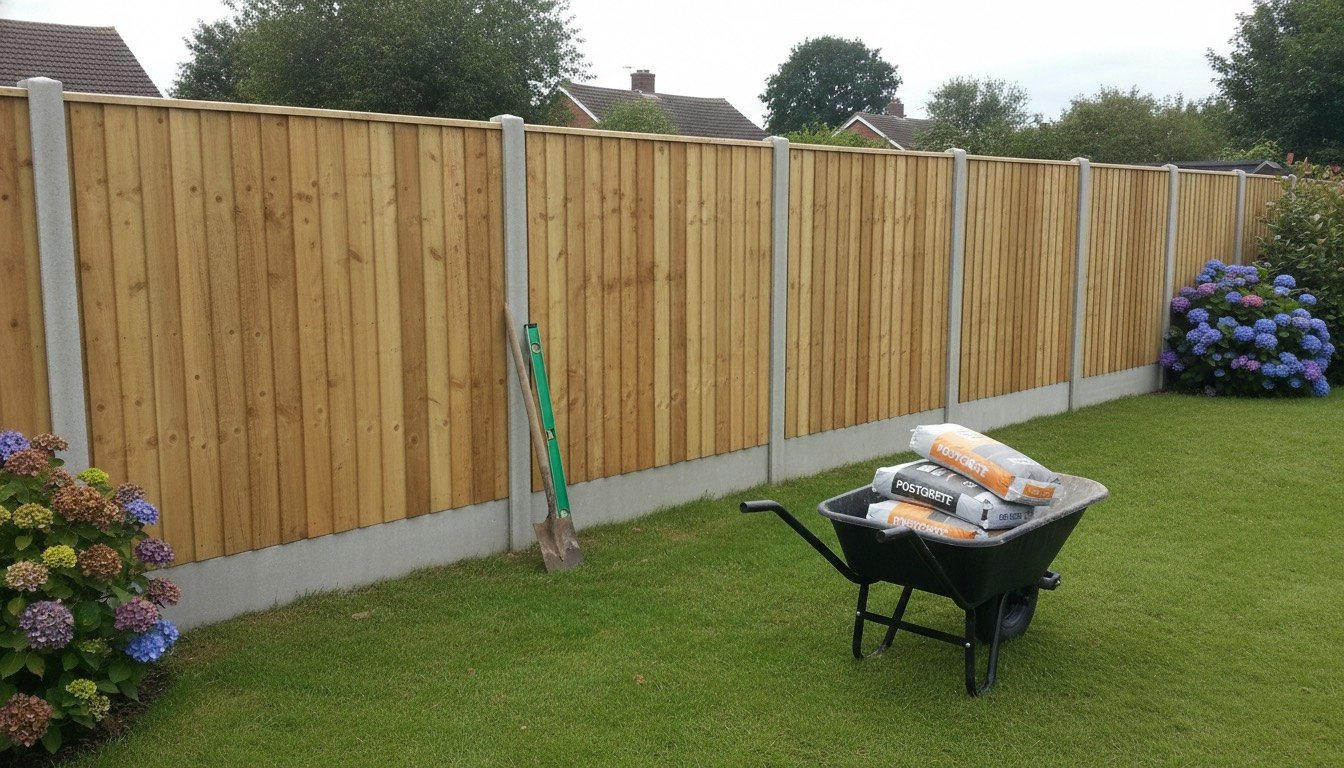
Two quotes for the same 30 metres of garden boundary can land at £900 and £3,600, and both can be honest. The gap sits in post material, hole depth, gravel boards, who tips the old fence, and whether the firm is VAT registered.
Here is how a fencing contractor builds a price up — per panel, per post, per metre — so you can read a quote properly.
What a fence costs in the UK in 2026
For a typical rear boundary of 25 to 35 metres at 1.8m high, most households pay £1,800 to £4,200 all in. Per metre, installed and including waste:
- •Overlap (waney lap) panels on timber posts — £55 to £80 per metre. Expect 8 to 12 years.
- •Overlap panels on concrete posts and gravel boards — £80 to £110 per metre. You then replace a £28 panel in 20 years, not the run.
- •Feather edge closeboard on concrete posts — £100 to £140 per metre. Built board by board on site, genuinely windproof, 20 to 25 years.
- •Slatted contemporary screening — £130 to £190 per metre. Less private than people expect; recoat every 2 to 3 years.
- •Composite on aluminium posts — £160 to £240 per metre. Near-zero maintenance; our wood vs vinyl fence comparison takes the longer view.
- •Post and rail or stock fencing, no privacy — £30 to £55 per metre.
Unit costs before anyone lifts a spade
Spring 2026 UK retail prices including VAT; contractors buy 15 to 25 per cent below. A bay is 1.83m wide, so a 30m run needs 17 panels and 18 posts.
- •Overlap panel, 1.83m x 1.8m: £22 to £35
- •Feather edge closeboard panel: £48 to £75
- •Timber post, 100 x 100mm x 2.4m, pressure treated: £16 to £26
- •Concrete slotted post, 2.4m: £20 to £30 (and roughly 45kg each — a genuine two-person lift)
- •Concrete gravel board, 1.83m: £15 to £24; timber equivalent £7 to £12
- •Postcrete or similar fast-set: £7 to £9 a bag, one to two bags per post
- •Caps, capping rail, galvanised fixings and stain: £8 to £13 per metre
Labour versus materials: where the money goes
On a panel fence, materials are roughly 55 per cent of the bill and labour 35 per cent, with disposal taking the rest. On closeboard that flips: labour climbs to about half, because a gang of two covers 8 to 12 metres a day rather than 20.
Fencing labour is priced by the day — £320 to £450 for a gang of two outside London, £450 to £600 inside the M25. Some firms quote labour-only at £28 to £45 per metre; multiply that out and it should land near their day rate.
The line nobody explains is VAT. A sole trader under the £90,000 registration threshold does not charge it, so an identical job can be 20 per cent cheaper from a smaller outfit — legitimate, but the cheapest quote is often the least insured. Ask for public liability cover either way, as with any garden makeover contractor.
Planning rules, boundaries and landlord duties
Fences rarely need planning permission, but the exceptions are expensive. Under permitted development in England you can build to 2m high except adjacent to a highway used by vehicles — including the footpath beside it — where the limit drops to 1m. Front gardens are where enforcement notices actually happen. Scotland and Northern Ireland use similar thresholds; confirm rather than assume.
Building control is not involved in a normal fence. It becomes involved the moment the structure retains ground: a boundary holding back a level change over about 600mm is a retaining wall, and above 1m you want a designed footing, not postcrete. Our guide to when you need planning permission and building regs covers that line.
Ownership is the other trap. There is no legal rule that you own the left-hand fence — download the title plan from the Land Registry for £3 and look for T-marks, which show who carries the maintenance obligation. If the property is let, garden fences generally fall outside the landlord's repairing duty under section 11 of the Landlord and Tenant Act 1985, which covers the dwelling's structure and exterior; responsibility comes down to the tenancy agreement.
- •Listed building: any new fence within the curtilage needs listed building consent, at any height.
- •Conservation area or Article 4 direction: permitted development rights may be removed entirely.
- •Trees with a TPO: cutting roots to dig post holes is an offence, with fines running to five figures.
What moves the price
- •No side access — every post carried through the house. Adds 10 to 20 per cent.
- •Removing and tipping the old fence — £8 to £15 per metre, more if the posts are concreted in.
- •Sloping ground — stepped or raked panels, more cutting, more posts. Adds 15 to 25 per cent.
- •Ground conditions — clay is fine; rubble-filled Victorian boundaries mean hand digging.
- •Concrete posts over timber — £180 to £280 extra on a 30m run, the best value upgrade here.
- •Region and season — the North East and Wales run 15 to 20 per cent below average and London 20 to 35 above; quotes soften in January and spike after winter storms.
Three worked examples
- •18m rear boundary, 1970s Midlands semi, overlap panels on concrete posts and gravel boards. Materials £890 (10 panels, 11 posts, 10 gravel boards, 22 bags of postcrete), labour a day and a half £560, removal £130. Total £1,580, or £88 per metre.
- •32m of 1.8m feather edge closeboard, concrete posts, Bristol, good side access. Materials £1,850 (posts, gravel boards, 54 arris rails, roughly 290 boards, capping, fixings), labour three and a half days £1,330, waste £180. Total £3,360, or £105 per metre.
- •14m composite slatted screen replacing a collapsed run, South London, house-only access. Materials £1,950, labour two days at London rates £960, making good the old spurs £160. Total £3,070, or £219 per metre — above the band on access and location alone.
Sanity-checking a quote, and how we costed this
Get three quotes and discard anything more than 25 per cent below the median; that gap is almost always shallow holes or missing gravel boards, and you pay for it in five years. Ask for the split into materials, labour, waste and VAT — anyone who refuses is guessing.
Then check the spec: post depth (600mm minimum at 1.8m, 750mm on exposed or coastal sites), post section (100 x 100mm, not 75 x 75mm), bay centres of 1.83m, gravel boards in or out, and a waste carrier licence. If anyone mentions tipping dry cement into a hole without water, walk away. Doing it yourself? Our privacy fence build sets out the real day's work, and privacy fence costs by material goes deeper on panels.
Methodology: materials sampled in March 2026 across four national UK merchants, retail and inclusive of VAT; labour from day rates quoted by contractors in six regions. Ranges are wide because access and ground swing fencing more than any other trade. If the budget will not stretch, price a planted boundary too — fast-growing privacy hedges cost less per metre but take three to five years to do the job.
Found this useful?
There's plenty more — hundreds of guides and honestly-tested product reviews for every corner of your home.
Browse All Guides