Garden & Outdoor · 6 min read · 6 June 2026
Wood vs Vinyl Fence: An Honest UK Comparison of Cost, Lifespan and Upkeep
Plastic fencing has been sold in Britain for twenty years and still barely dents the market. Here is why, what each option really costs per metre, and the boundary rules people get wrong.
By the Nims Casa editorial team — written from professional cleaning experience and checked against our editorial standards.
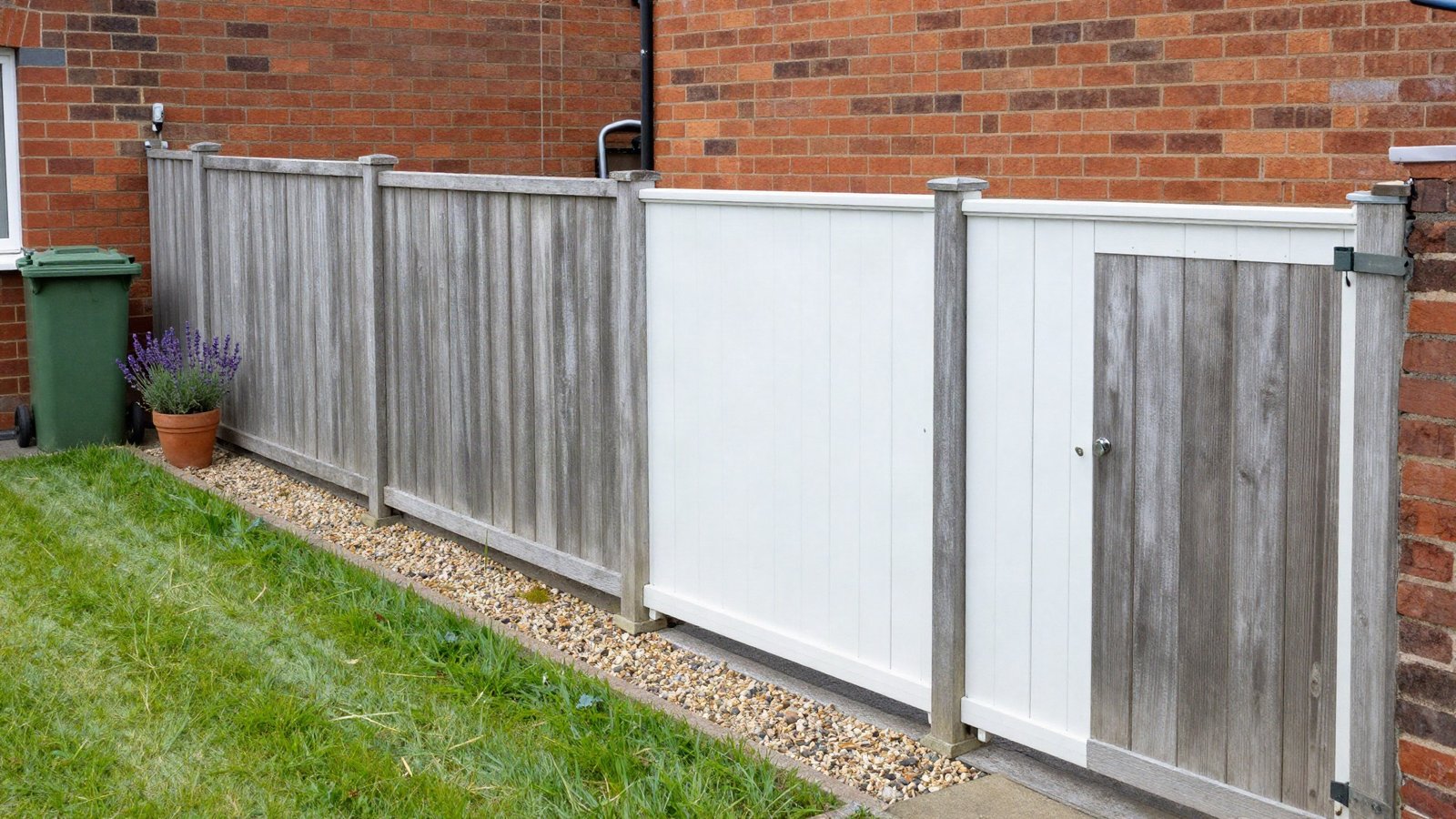
Ask a fencing crew in Britain what they fit and the answer is timber, week in and week out. PVC-u fencing — what American catalogues call vinyl — has been on sale here for two decades and still accounts for a sliver of installations. That is not snobbery. It is price, wind loading, and the fact that our concrete-post-and-gravel-board system already solves the rot problem vinyl was invented to solve.
None of which makes plastic fencing a bad choice. On the right boundary we would specify it over timber without hesitation. But the comparison the marketing sets up is not the one that plays out in a Yorkshire garden.
What "vinyl fencing" actually means over here
The word vinyl barely appears on British merchants' shelves. What you are buying is rigid PVC-u — the same polymer family as your window frames — extruded into hollow rails and posts that slot together dry, with no visible fixings. It comes in white, cream, grey or woodgrain-effect brown, and it gets confused with two other products whose prices sit nowhere near it.
- •PVC-u (vinyl): hollow extruded plastic panels and posts, £130–£200 per metre installed. Never needs painting.
- •Composite: wood flour and recycled polymer boards in aluminium posts, £120–£180 per metre installed. Heavier, better in wind, and now far more common here than true PVC-u.
- •Timber, for reference: £45–£75 per metre for lap panels on timber posts, £70–£110 for closeboard on concrete posts with gravel boards.
Side by side: the differences that matter
Strip out the sales copy and the two materials differ on six things. For brick, metal and hedging, our breakdown of privacy fence costs by material covers what this piece leaves out.
- •Upfront cost: timber wins outright. Twenty metres of lap panels lands around £1,200 fitted; the same run in PVC-u is £3,000–£3,600.
- •Lifespan: pressure-treated timber panels give 10–15 years, closeboard on concrete posts 20–25, PVC-u 20–30 if it survives the storms.
- •Repairs: a broken timber board is £4 and ten minutes. A cracked PVC-u rail means sourcing a matching panel from the original supplier, who may no longer exist.
- •Appearance: timber weathers to silver-grey if left alone. PVC-u looks identical in year fifteen, which people either love or find slightly municipal.
- •Wind: solid PVC-u panels are light and act as a sail. Closeboard on concrete posts is the storm-proof standard.
- •Resale: most UK buyers read plastic fencing as unusual rather than premium. Composite reads as an upgrade; PVC-u often does not.
Performance through a British winter
Timber fails from the ground up, almost always at the post. Water wicks into the end grain where the post meets soil and that section rots through while the rest of the fence is fine. Hence concrete posts and gravel boards: the timber never touches wet ground, so a panel that used to last eight years lasts twenty. Insist on that spec rather than 100mm timber posts in Postcrete.
PVC-u fails differently. It does not rot, but it goes brittle below roughly 2°C, and a football or a wheelie bin catching it in a January cold snap cracks a rail that would only have dented in July. The bigger problem is named storms: a solid 1.8m plastic panel has huge wind load for its weight, and 60–70mph gusts lift panels clean out of the rails. Some systems release deliberately rather than snapping the posts, which saves the fence but leaves you rebuilding it in the rain.
The 10-year cost, worked out
Take a standard semi-detached rear boundary: 20 linear metres at 1.8m, level ground, old fence taken away. These are 2026 supply-and-fit figures from independent contractors. DIY removes roughly 40% — read our guide to building a privacy fence yourself first.
- •Lap panels on timber posts: £1,200 installed, plus treatment every three years at £40 and half a day, plus a post or two replaced around year nine. Ten-year total: £1,900–£2,300.
- •Closeboard on concrete posts and gravel boards: £1,900 installed, two treatments at £60, no post failures. Ten-year total: about £2,050 — the cheapest long-run option in Britain, and not by a small margin.
- •PVC-u: £3,200 installed, plus perhaps £30 of cleaner. Ten-year total: about £3,300, assuming no storm damage.
- •Composite: £2,900 installed, near-zero upkeep, ten-year total around £2,950.
Maintenance: what each one actually asks of you
The honest framing is not maintenance versus none. It is a Saturday every three years versus a permanent commitment to whatever the plastic looks like in 2041. Treating 20 metres takes about four hours with a sprayer and £18–£25 of spirit-based product. If you prefer stain, the choice between solid and semi-transparent decides how often you are back out there.
PVC-u genuinely needs almost nothing beyond an annual wash — green algae builds on the shaded side of any UK fence. Keep the pressure washer below 100 bar and stand back: the same discipline that stops you furring timber decking applies here, because close-range pressure scores plastic and gives algae somewhere to grip.
Planning permission, boundaries and landlord duties
Material makes no difference to the rules; height and position do. Permitted development allows a fence up to 2m, except where it fronts a highway used by vehicles or a footpath alongside one, where the limit drops to 1m. Above either, you need planning permission. Listed buildings need listed building consent for any boundary work, and Article 4 directions in conservation areas can remove permitted development rights altogether — our guide to planning permission and building regulations explains how to check before ordering materials.
Two things catch people out. Ownership first: check your Land Registry title plan for T-marks, which show who is responsible for each boundary — there is no legal rule that you own the left-hand fence. Second, restrictive covenants on estates built since about 1990 routinely cap boundary treatments. If you rent, garden fencing usually sits in the tenancy agreement rather than the landlord's Section 11 repairing obligation, so read the clause before assuming someone else pays.
- •Leave a 13cm gap at ground level for hedgehogs — concrete gravel boards otherwise seal the garden completely, and many councils now expect it.
- •Removing a hedge to fit a fence? Do it outside March to August — disturbing an active nest is an offence under the Wildlife and Countryside Act 1981.
- •Check for service runs before digging post holes. Augers find water pipes with depressing regularity.
Who each suits, and the verdict
Choose PVC-u for a sheltered urban or courtyard boundary if you cannot manage ladder work and intend to stay put fifteen years or more. It is also the better call around pools and hot tubs. Choose composite if you want the same freedom from upkeep with more weight behind it.
For most British gardens, closeboard timber on concrete posts with gravel boards is the correct answer, and it is not a compromise. It installs for 40% less than plastic, lasts as long, survives storms better, and can be repaired board by board from any merchant. Spend the £1,300 you save on getting the posts right, or on planting — a fast-growing privacy hedge in front of a plain fence does more for a garden than any panel upgrade.
Found this useful?
There's plenty more — hundreds of guides and honestly-tested product reviews for every corner of your home.
Browse All Guides